
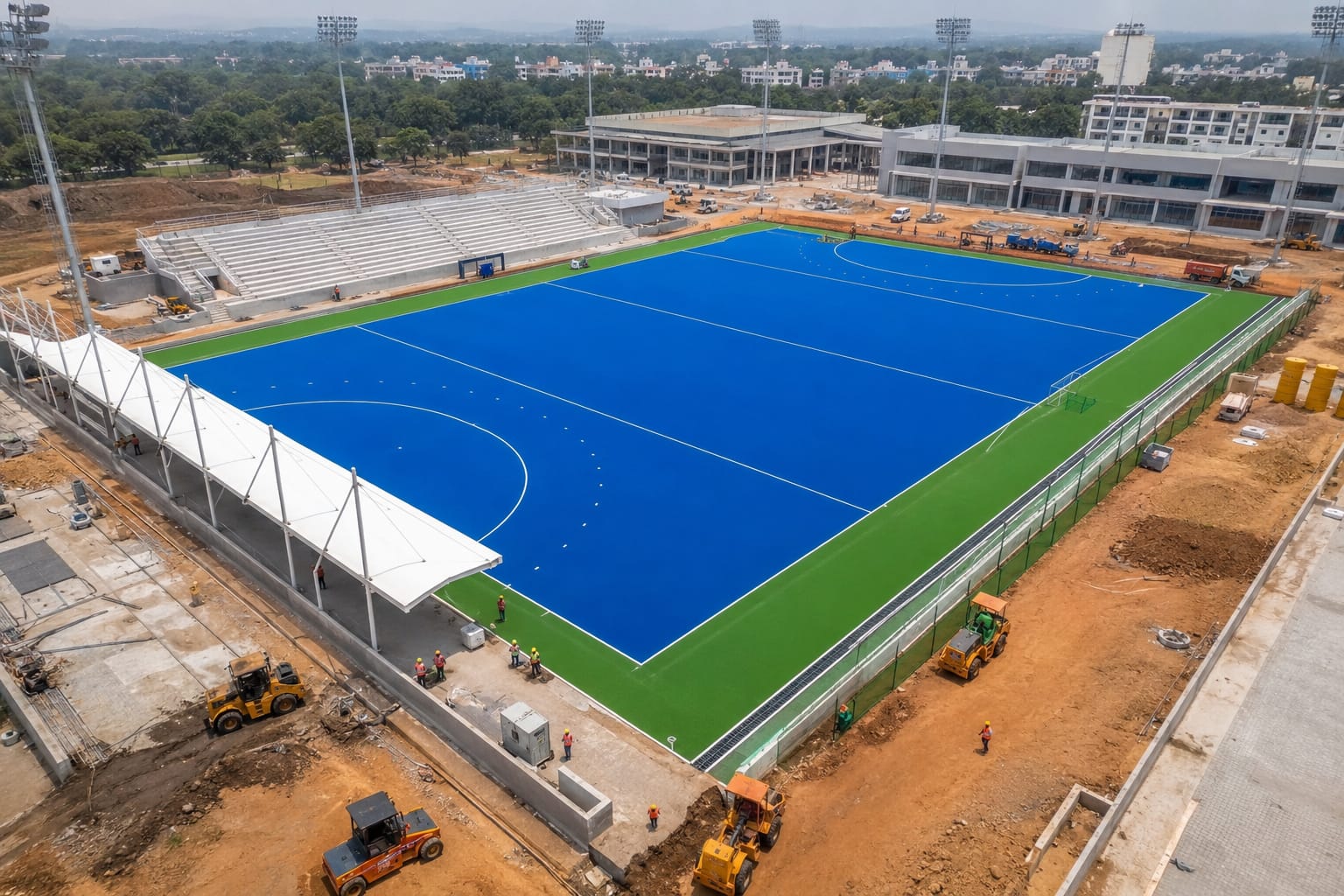
India has always shared a deep connection with hockey. From legendary Olympic victories to the rise of modern training academies, the game continues to inspire schools, universities, sports clubs, and government organizations across the country. As hockey evolves into a faster and more technical sport, the demand for world-class hockey infrastructure is increasing rapidly. This growth has created strong demand for professional hockey court construction companies in India that can deliver international-standard synthetic turf facilities.
A professionally designed hockey ground is not simply an open playing surface. It is a complete engineered sports infrastructure project involving excavation, drainage systems, shock pads, synthetic turf installation, fencing, lighting, and long-term maintenance planning. Whether the project is for a school, sports academy, stadium, or government institution, choosing the right hockey court construction company plays a major role in performance, safety, and durability.
Growing Demand for Hockey Turf Construction in India
The popularity of synthetic hockey turf has grown significantly in recent years. Earlier, natural grass fields were common, but they required extensive maintenance and failed to deliver the consistent playing speed needed for modern hockey. Today, synthetic hockey turf is considered the global standard because it improves ball control, player movement, and match consistency.
Across India, multiple sectors are investing in hockey infrastructure:
- Educational institutions
- Sports academies
- Universities
- Government sports departments
- Residential townships
- Corporate sports facilities
- Professional stadiums
The expansion of sports programs such as Khelo India has further accelerated demand for advanced hockey courts and multi-sports infrastructure.
What Does a Hockey Court Construction Company Do?
A professional hockey court construction company handles the complete planning, engineering, and execution of hockey turf projects. Their work goes far beyond laying synthetic grass. The process involves technical construction stages that ensure long-term durability and professional playing conditions.
Services Offered by Hockey Turf Construction Companies
Site Inspection and Feasibility Analysis
The construction team first evaluates the land condition, soil quality, drainage feasibility, slope levels, and project dimensions.
Ground Preparation
The base structure is one of the most important parts of hockey court construction. Proper excavation and compaction are necessary to prevent waterlogging and uneven settlement.
Drainage System Installation
Advanced drainage systems help maintain the field during heavy rainfall conditions. Poor drainage can damage the turf and reduce playing quality.
Synthetic Turf Installation
Professional-grade synthetic hockey turf is installed according to international sports standards. This stage requires precision and specialized machinery.
Shock Pad Construction
Shock pads improve player comfort and reduce injury risk. They also enhance ball response and field performance.
Lighting and Fencing
Modern hockey grounds include LED sports lighting systems, perimeter fencing, player benches, and spectator arrangements.
Maintenance Support
Reliable companies provide ongoing maintenance services including brushing, cleaning, infill management, and turf repairs.
Types of Hockey Turf Used in India

Different hockey projects require different turf systems based on budget, playing level, and usage frequency.
Water-Based Hockey Turf
Water-based turf is commonly used for international-level competitions. It delivers excellent speed and ball movement. These surfaces require irrigation systems to maintain optimal performance.
Benefits include:
- Fast gameplay
- Professional ball roll
- International competition standards
- Enhanced player movement
Sand-Filled Hockey Turf
Sand-filled synthetic turf is more affordable and widely used in schools and training centers. It offers durability and reduced maintenance costs.
Advantages include:
- Cost-effective installation
- Long lifespan
- Lower water usage
- Suitable for training facilities
Sand-Dressed Hockey Turf
This surface combines synthetic fibers with partial sand infill. It balances performance and affordability.
Important Features of a Professional Hockey Court
A high-quality hockey court must meet performance, safety, and durability standards. Leading hockey court construction companies in India focus on several essential technical aspects.
Proper Dimensions
International hockey field dimensions generally follow official regulations:
- Length: 91.4 meters
- Width: 55 meters
Accurate measurements are crucial for tournament-level play.
Surface Uniformity
An uneven surface affects gameplay and increases injury risk. Professional contractors ensure proper leveling and precision installation.
Drainage Efficiency
Efficient drainage systems prevent standing water and protect the turf during monsoon seasons.
UV Resistance
India experiences intense sunlight in many regions. UV-resistant synthetic turf helps maintain color and durability over time.
Shock Absorption
Shock absorption layers improve player safety and reduce physical stress during training and matches.
Benefits of Hiring a Professional Hockey Court Construction Company
Choosing an experienced construction company ensures long-term project success. Sports infrastructure projects require technical expertise, certified materials, and professional project management.
Better Construction Quality
Experienced contractors use advanced machinery, engineered sub-bases, and certified synthetic turf materials.
Compliance with Sports Standards
Professional companies understand national and international sports specifications.
Faster Project Completion
Skilled teams manage timelines efficiently and reduce construction delays.
Long-Term Cost Savings
Proper installation minimizes repair and maintenance expenses in the future.
Technical Expertise
From drainage engineering to turf seam alignment, technical accuracy improves field lifespan and performance.
Hockey Court Construction Process in India
The construction process follows multiple carefully planned stages.
Step 1: Site Survey and Planning
The project begins with technical site inspection and land analysis. Engineers evaluate:
- Soil stability
- Water flow
- Land slope
- Space availability
- Environmental conditions
Detailed project drawings and cost estimates are then prepared.
Excavation and Earthwork
The land is excavated and leveled according to design specifications. Heavy compaction equipment stabilizes the ground.
Base Construction
A layered stone aggregate base is created to support drainage and structural stability.
Drainage Installation
Pipe systems and drainage channels are installed to remove excess rainwater efficiently.
Shock Pad Installation
Shock pads are laid over the base surface to improve player comfort and reduce injuries.
Synthetic Turf Installation
The synthetic hockey turf is rolled out, aligned, joined, and secured carefully.
Marking and Finishing
Field markings, fencing, lighting poles, and accessories are installed before final inspection.
Cost of Hockey Court Construction in India
The total cost of hockey court construction depends on several factors.
Factors Affecting Construction Cost
Type of Turf
Water-based turf is more expensive than sand-filled turf systems.
Ground Size
Larger projects require more materials and labor.
Drainage Requirements
Advanced drainage systems increase project cost but improve durability.
Lighting Systems
Professional LED floodlights significantly impact the budget.
Location
Transportation and labor costs vary across states and cities.
Additional Infrastructure
Seating areas, changing rooms, scoreboards, and fencing increase total expenses.
Approximate Price Range
In India, hockey turf construction costs may range from medium-budget institutional projects to premium international-standard stadium developments depending on specifications.
Why Synthetic Hockey Turf is Better Than Natural Grass
Synthetic hockey turf has transformed modern sports infrastructure.
Consistent Playing Conditions
Unlike natural grass, synthetic surfaces maintain uniform speed and ball movement.
Reduced Maintenance
Natural grass requires regular watering, mowing, and fertilization. Synthetic turf reduces maintenance demands.
Weather Resistance
Synthetic fields remain playable even during rainy conditions.
Higher Durability
Professionally installed turf systems last many years with proper maintenance.
Increased Usage Capacity
Synthetic courts can handle continuous training sessions and tournaments without surface damage.
How to Choose the Best Hockey Court Construction Company in India
Selecting the right contractor is one of the most important project decisions.
Check Experience
Choose companies with proven expertise in sports infrastructure and hockey turf projects.
Review Previous Projects
Evaluate completed hockey grounds, stadiums, and academy facilities.
Material Quality
Ensure the company uses certified synthetic turf and high-grade construction materials.
Technical Team
Experienced engineers and installation specialists improve project quality.
Maintenance Services
Post-installation maintenance support is essential for long-term field performance.
Client Reviews
Testimonials and project references help verify reliability.
Common Challenges in Hockey Turf Construction
Sports infrastructure projects involve technical and environmental challenges.
Soil Instability
Weak soil conditions may require additional stabilization work.
Water Drainage Issues
Improper drainage can damage turf and reduce field lifespan.
Climate Conditions
Extreme temperatures and heavy rainfall influence construction planning.
Budget Management
Balancing performance quality with project cost requires careful planning.
Importance of Maintenance After Construction
Even the best hockey turf requires routine maintenance to preserve quality and safety.
Routine Cleaning
Dust, leaves, and debris should be removed regularly.
Surface Brushing
Brushing keeps synthetic fibers upright and maintains consistent playing conditions.
Drainage Inspection
Drainage systems must remain clear to prevent water accumulation.
Seam Repairs
Minor turf seam damage should be repaired immediately to prevent larger issues.
Periodic Performance Testing
Professional inspections help maintain international playing standards.
Future of Hockey Infrastructure in India
India’s sports infrastructure sector is growing rapidly. Government initiatives, private academies, and educational institutions are investing heavily in modern sports facilities.
Several trends are shaping the future of hockey court construction:
- Eco-friendly turf systems
- Smart LED sports lighting
- Advanced drainage technology
- Sustainable construction materials
- Multi-sports infrastructure integration
- International-standard training facilities
As India strengthens its sports ecosystem, professional hockey turf construction companies will continue playing a vital role in athlete development and sports excellence.
Role of Technology in Modern Hockey Court Construction
Technology has significantly improved sports infrastructure quality in recent years.
Laser Leveling Systems
Advanced laser equipment ensures accurate field leveling.
Modern Turf Manufacturing
New-generation synthetic fibers improve durability and gameplay performance.
Efficient Drainage Engineering
Computer-designed drainage systems enhance water management.
Energy-Efficient Lighting
LED floodlights reduce energy consumption while improving visibility.
Smart Maintenance Equipment
Automated brushing and cleaning equipment extend turf lifespan.
Environmental Sustainability in Hockey Turf Projects
Modern construction companies are increasingly adopting sustainable practices.
Water Conservation
New turf systems reduce excessive water usage.
Recyclable Materials
Eco-friendly synthetic materials support environmental responsibility.
Solar Lighting Integration
Some sports complexes now use solar-powered lighting systems.
Efficient Resource Management
Sustainable construction planning reduces environmental impact.
Conclusion
The growth of hockey infrastructure in India reflects the nation’s strong commitment to sports development and athletic excellence. A professionally constructed hockey field improves player performance, safety, and long-term operational efficiency. Whether for schools, universities, academies, or stadiums, selecting the right hockey court construction company in India is essential for creating world-class sports facilities.
From site preparation and drainage engineering to synthetic turf installation and maintenance, every stage of construction requires technical expertise and precision. Modern hockey turf systems provide superior gameplay, durability, and reduced maintenance compared to traditional grass fields.
As India continues investing in sports infrastructure, demand for reliable hockey court construction companies will rise further. Organizations that focus on quality materials, advanced technology, professional engineering, and long-term maintenance will lead the future of hockey turf development in the country.
(FAQs) About Hockey Court Construction in India
1. What is the standard size of a hockey court?
The standard hockey field size approved for professional play is approximately 91.4 meters long and 55 meters wide. Additional space is usually required for fencing, runoff areas, and player movement.
2. What is the cost of hockey court construction in India?
The cost depends on factors such as turf type, drainage system, lighting, fencing, and project location. International-standard synthetic hockey turf projects generally require a higher investment compared to training or school-level grounds.
3. Which type of hockey turf is best for professional matches?
Water-based synthetic hockey turf is considered the best option for professional and international-level matches because it provides faster ball movement and better playing performance.
4. How long does it take to construct a hockey turf ground?
A complete hockey court construction project may take several weeks to a few months depending on site conditions, weather, project size, and infrastructure requirements.
5. Why is synthetic turf preferred over natural grass?
Synthetic turf offers better durability, lower maintenance, improved drainage, consistent gameplay, and year-round usability compared to natural grass fields.
6. What services do hockey court construction companies provide?
Professional companies usually provide:
- Site inspection
- Ground leveling
- Drainage system installation
- Synthetic turf installation
- Shock pad construction
- Sports lighting setup
- Fencing and accessories
- Maintenance services
7. How long does synthetic hockey turf last?
High-quality synthetic hockey turf can last around 8 to 15 years depending on usage frequency, maintenance quality, and environmental conditions.
8. Does hockey turf require regular maintenance?
Yes, regular maintenance is important for performance and durability. Maintenance includes brushing, cleaning, drainage inspection, seam repair, and surface checking.
9. Can hockey turf be installed in schools and colleges?
Yes, many schools, colleges, universities, and sports academies in India install synthetic hockey turf for training and competitive sports activities.
10. What is the difference between water-based and sand-filled hockey turf?
Water-based turf provides faster gameplay and is commonly used in professional tournaments, while sand-filled turf is more affordable and suitable for practice grounds and educational institutions.
11. Is drainage important in hockey court construction?
Yes, proper drainage is one of the most important elements of hockey court construction. A strong drainage system prevents waterlogging and increases turf lifespan.
12. What materials are used in hockey turf construction?
Construction usually involves:
- Stone aggregates
- Compacted soil layers
- Drainage pipes
- Shock pads
- Synthetic grass turf
- Adhesives and joint tapes
13. Can hockey turf be customized according to project needs?
Yes, construction companies can customize turf systems, lighting, fencing, seating, and other features according to the client’s requirements and budget.
14. Which organizations usually invest in hockey turf construction?
Common clients include:
- Government sports departments
- Schools and colleges
- Universities
- Sports academies
- Stadium authorities
- Private sports clubs
- Residential townships
15. What should I check before hiring a hockey court construction company in India?
You should evaluate:
- Company experience
- Previous sports projects
- Turf quality certifications
- Technical expertise
- Maintenance support
- Client reviews and reputation
16. Does synthetic hockey turf work during the rainy season?
Yes, professionally installed hockey turf with proper drainage systems performs well during rainy conditions and dries much faster than natural grass fields.
17. Are LED floodlights necessary for hockey grounds?
LED floodlights are highly recommended for professional training sessions, evening matches, and tournaments because they provide energy-efficient and high-quality illumination.
18. What is a shock pad in hockey turf construction?
A shock pad is a cushioning layer installed below the synthetic turf surface to improve player comfort, reduce injuries, and enhance gameplay quality.
19. Can a hockey field be converted into a multi-sports ground?
Yes, many sports infrastructure companies design multi-purpose synthetic turf grounds suitable for hockey, football, and training activities.
20. Why is India seeing rapid growth in hockey infrastructure?
Growing sports awareness, government initiatives, sports academy expansion, and rising investment in athletic development are driving demand for modern hockey infrastructure across India.