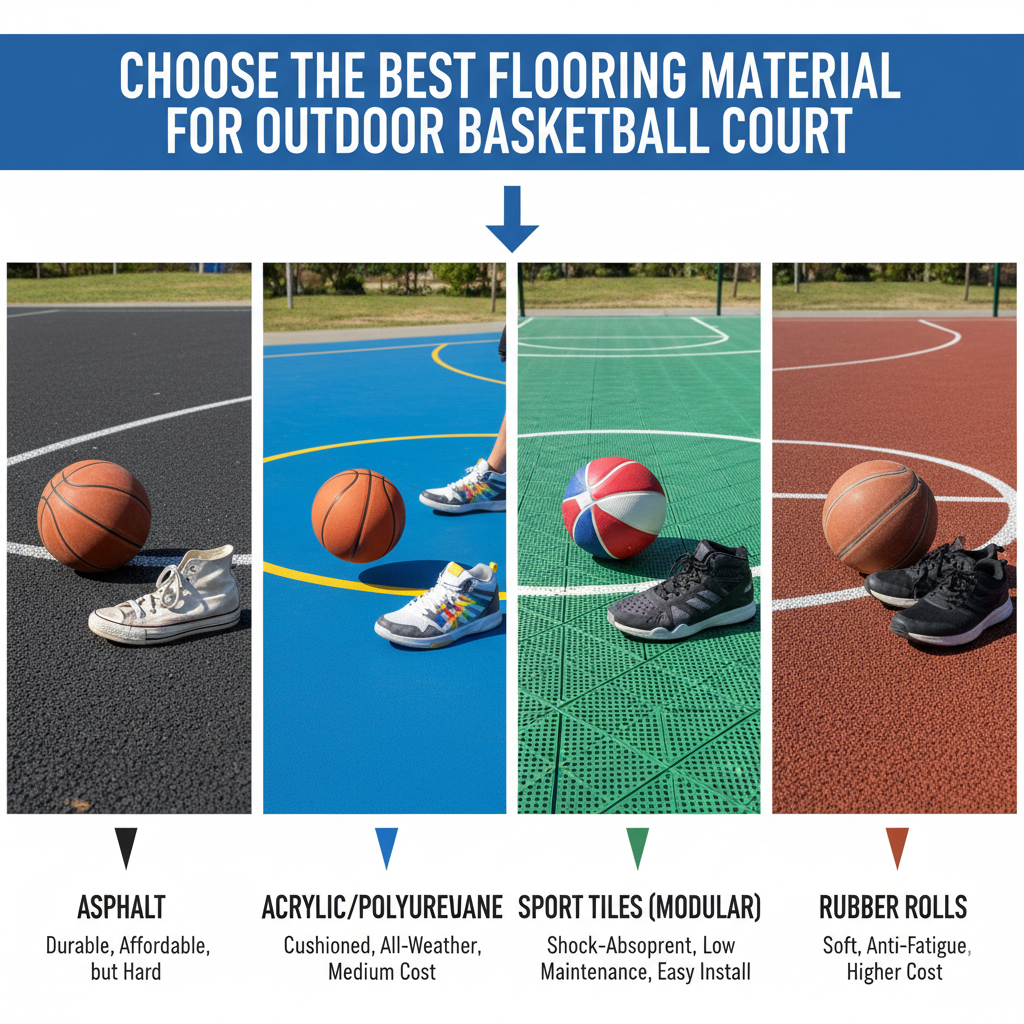
Building an outdoor basketball court is one of the most valuable investments for sports development, fitness promotion, and community engagement. Whether it is planned for a school, residential society, sports academy, commercial sports complex, or public park, the success of the project depends heavily on one critical decision—choosing the right flooring material.
Outdoor basketball courts face continuous exposure to sunlight, rain, dust, humidity, and temperature variations. Unlike indoor courts, where environmental conditions are controlled, outdoor surfaces must withstand harsh weather while maintaining performance, safety, and durability. This makes flooring selection a technical and long-term decision rather than just a construction choice.
This detailed guide explains everything you need to know to choose the best flooring material for an outdoor basketball court, including material types, advantages, limitations, cost considerations, maintenance needs, and expert recommendations.
Why Flooring Matters in an Outdoor Basketball Court
The flooring of a basketball court is not just a playing surface—it directly affects gameplay quality, player safety, and the lifespan of the facility.
A well-designed outdoor basketball flooring system ensures:
- Proper grip for fast movements and direction changes
- Consistent and predictable ball bounce
- Reduced risk of slips, falls, and injuries
- Resistance to weather conditions such as rain and UV exposure
- Long-lasting performance with minimal maintenance
- Professional playing experience for all skill levels
If the flooring is poor, even the best-designed court will fail to deliver a good experience. Cracks, uneven surfaces, fading paint, and water damage can quickly make the court unsafe and unusable.
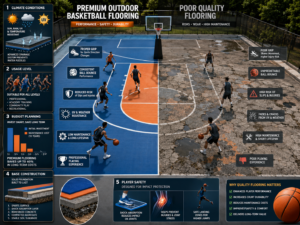
Key Factors to Consider Before Choosing Flooring Material
Before selecting any surface, it is important to evaluate several technical and practical factors. These factors help determine which material is best suited for your specific project.
1. Climate Conditions
Weather plays a major role in outdoor court performance. In hot regions, UV-resistant materials are essential to prevent fading and surface damage. In rainy or humid areas, waterproof and anti-slip surfaces are necessary to avoid accidents and water retention issues.
2. Usage Level
The frequency of use significantly impacts flooring selection. A court used for professional training and tournaments requires high-performance flooring, while a community or recreational court may prioritize affordability and low maintenance.
3. Budget Planning
Budget is not only about installation cost but also long-term maintenance expenses. Some flooring options are affordable initially but require frequent repairs, while others are more expensive upfront but last longer with minimal maintenance.
4. Base Construction Quality
A strong base is essential for any outdoor basketball court. Concrete or asphalt foundations are commonly used to ensure stability, drainage, and long-term performance of the flooring system.
5. Player Safety
Safety is one of the most important considerations. Flooring must provide shock absorption to reduce stress on joints, prevent injuries, and support safe gameplay during jumps, stops, and turns.
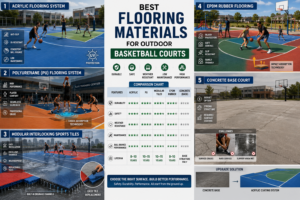
Best Flooring Materials for Outdoor Basketball Courts
There are several flooring systems available in the market, each designed for different needs and budgets. Below are the most reliable and widely used options.
1. Acrylic Flooring System
Acrylic flooring is one of the most popular choices for outdoor basketball courts due to its balance of performance, durability, and cost-effectiveness. It consists of multiple layers of acrylic coating applied over a concrete or asphalt base.
Advantages
- Excellent resistance to weather conditions
- UV-stable colors that do not fade quickly
- Anti-slip textured surface for safe movement
- Consistent ball bounce and smooth gameplay
- Low maintenance requirements
- Available in multiple color combinations
Limitations
- Moderate shock absorption compared to cushioned systems
- Requires periodic resurfacing after several years
Ideal Applications
- Schools and colleges
- Residential societies
- Public parks
- Community sports courts
Lifespan
Typically lasts 8–10 years with proper maintenance and periodic resurfacing.
Why It Is Popular
Acrylic flooring is widely preferred because it offers the best balance between affordability and performance. It performs especially well in varying weather conditions, making it highly suitable for Indian climates.
2. Polyurethane (PU) Flooring System
PU flooring is a high-performance synthetic system designed for advanced sports applications. It provides a seamless and cushioned surface, making it suitable for professional-level gameplay.
Advantages
- Excellent shock absorption for player comfort
- Seamless, joint-free surface
- High durability and crack resistance
- Smooth and uniform playing experience
- Customizable thickness and design options
Limitations
- Higher installation cost compared to acrylic
- Requires skilled professional installation
Ideal Applications
- Professional training courts
- Sports academies
- Multi-sport outdoor complexes
- High-usage basketball facilities
Lifespan
Can last 10–15 years with proper maintenance.
Why Choose PU Flooring
PU flooring is ideal when performance and player comfort are top priorities. It reduces joint stress and provides a premium playing experience suitable for competitive environments.
3. Modular Interlocking Sports Tiles
Modular polypropylene tiles are a modern flooring solution that has gained popularity in recent years. These tiles interlock to form a flexible and durable surface installed over a solid base.
Advantages
- Fast and easy installation
- Excellent drainage system prevents water accumulation
- UV-resistant and weatherproof
- Shock-absorbing design improves safety
- Easy replacement of damaged tiles
- Visually attractive and customizable layouts
Limitations
- Slightly higher bounce variation compared to acrylic or PU
- Requires a perfectly leveled base for best performance
Ideal Applications
- Community courts
- Rooftop basketball courts
- Schools and institutions
- Temporary or portable sports setups
Lifespan
Approximately 10–15 years depending on usage.
Why It Is Gaining Popularity
Modular tiles are ideal for projects that require flexibility. They can be dismantled, relocated, or replaced easily, making them a practical long-term investment.
4. EPDM Rubber Flooring
EPDM rubber flooring is a soft and cushioned surface primarily designed for recreational and safety-focused sports environments.
Advantages
- High shock absorption reduces injury risk
- Soft and comfortable underfoot
- Weather-resistant and UV-stable
- Slip-resistant surface
- Suitable for multi-purpose recreational use
Limitations
- Not suitable for professional basketball tournaments
- Slightly lower ball bounce consistency
Ideal Applications
- Children’s play courts
- Residential recreational areas
- Multi-use sports zones
Lifespan
Typically 8–10 years depending on usage intensity.
Why It Is Used
EPDM is preferred where safety is more important than competitive performance, especially in family-friendly environments.
5. Concrete Flooring (Basic Option)
Concrete is the most fundamental and cost-effective base for outdoor basketball courts. However, it is rarely used alone without additional coating or finishing.
Advantages
- Low initial construction cost
- Strong structural durability
- Easy availability of materials
Limitations
- Hard surface increases risk of injury
- Poor grip when wet
- Prone to cracks over time
- Uncomfortable for long gameplay
Ideal Applications
- Budget projects
- Temporary courts
- Base layer for acrylic or synthetic systems
Recommendation
Concrete should always be combined with acrylic or synthetic coatings to improve safety and performance.
Comparison of Outdoor Basketball Flooring Materials
| Flooring Type | Durability | Shock Absorption | Weather Resistance | Maintenance | Best Use |
|---|---|---|---|---|---|
| Acrylic | High | Medium | Excellent | Low | General outdoor courts |
| PU Flooring | Very High | Excellent | Good | Medium | Professional courts |
| Modular Tiles | Very High | Good | Excellent | Very Low | Flexible installations |
| EPDM Rubber | Moderate | Excellent | Very Good | Low | Recreational courts |
| Concrete | High | Low | Moderate | Medium | Base structure |
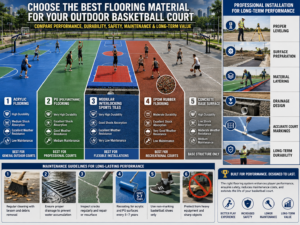
Maintenance Guidelines for Long-Term Performance
Proper maintenance ensures that your basketball court remains safe, functional, and visually appealing for years.
- Clean the surface regularly to remove dust and debris
- Ensure proper drainage to prevent water stagnation
- Repair cracks or damaged areas immediately
- Reapply coating for acrylic or PU surfaces every 5–7 years
- Encourage players to wear non-marking sports shoes
- Avoid heavy loads or sharp objects on the surface
Regular care significantly extends the lifespan of the flooring system.
Importance of Professional Installation
Even the best flooring material can fail if installation is not done correctly. Professional installation ensures:
- Proper leveling and surface preparation
- Correct material layering and thickness
- Efficient drainage system design
- Accurate court marking and finishing
- Long-term durability and performance stability
Expert installers also help in selecting the most suitable flooring based on climate conditions, budget, and usage requirements.
Final Conclusion
Choosing the best flooring material for an outdoor basketball court is a critical decision that impacts safety, performance, maintenance, and long-term value. Each material offers unique benefits depending on your project requirements.
- Acrylic flooring is ideal for balanced performance and affordability
- PU flooring delivers premium comfort and professional quality
- Modular tiles offer flexibility and modern design advantages
- EPDM rubber ensures maximum safety for recreational use
- Concrete serves as a base but requires coating for best results
A well-planned flooring decision ensures that your basketball court remains durable, safe, and enjoyable for many years. Investing in the right material today guarantees better gameplay experience, lower maintenance costs, and long-term satisfaction for players of all ages.
1. What is the best flooring material for an outdoor basketball court?
Acrylic flooring is widely considered the best option for most outdoor basketball courts because it offers excellent durability, weather resistance, slip resistance, and cost-effectiveness.
2. Which basketball court flooring lasts the longest?
Polyurethane (PU) flooring and modular interlocking tiles can last 10–15 years or more with proper installation and maintenance.
3. Is acrylic flooring suitable for Indian weather conditions?
Yes. Acrylic sports flooring is highly resistant to UV rays, heat, rain, and humidity, making it ideal for outdoor basketball courts across India.
4. Are modular sports tiles good for basketball courts?
Yes. Modular interlocking tiles provide good shock absorption, excellent drainage, easy maintenance, and quick installation, making them a popular outdoor court solution.
5. Which flooring provides the best shock absorption?
PU flooring and EPDM rubber flooring offer the highest level of shock absorption, reducing stress on players’ knees, ankles, and joints.
6. Can a basketball court be built directly on concrete?
Yes, but plain concrete is not recommended for regular play. Applying an acrylic or synthetic sports coating improves grip, safety, comfort, and overall performance.
7. How often does outdoor basketball court flooring need maintenance?
Routine cleaning should be done regularly, while acrylic and PU surfaces typically require resurfacing every 5–7 years depending on usage.
8. Which flooring is best for schools and community basketball courts?
Acrylic flooring is usually the preferred choice for schools, colleges, parks, and residential communities due to its balance of durability, performance, and affordability.
9. Is outdoor basketball flooring waterproof?
Most modern sports flooring systems, including acrylic coatings, PU surfaces, and modular tiles, are designed to withstand rain and outdoor weather conditions.
10. How do I choose the right basketball court flooring?
Consider climate, budget, usage frequency, player safety, maintenance requirements, and expected lifespan before selecting the flooring material for your outdoor basketball court.