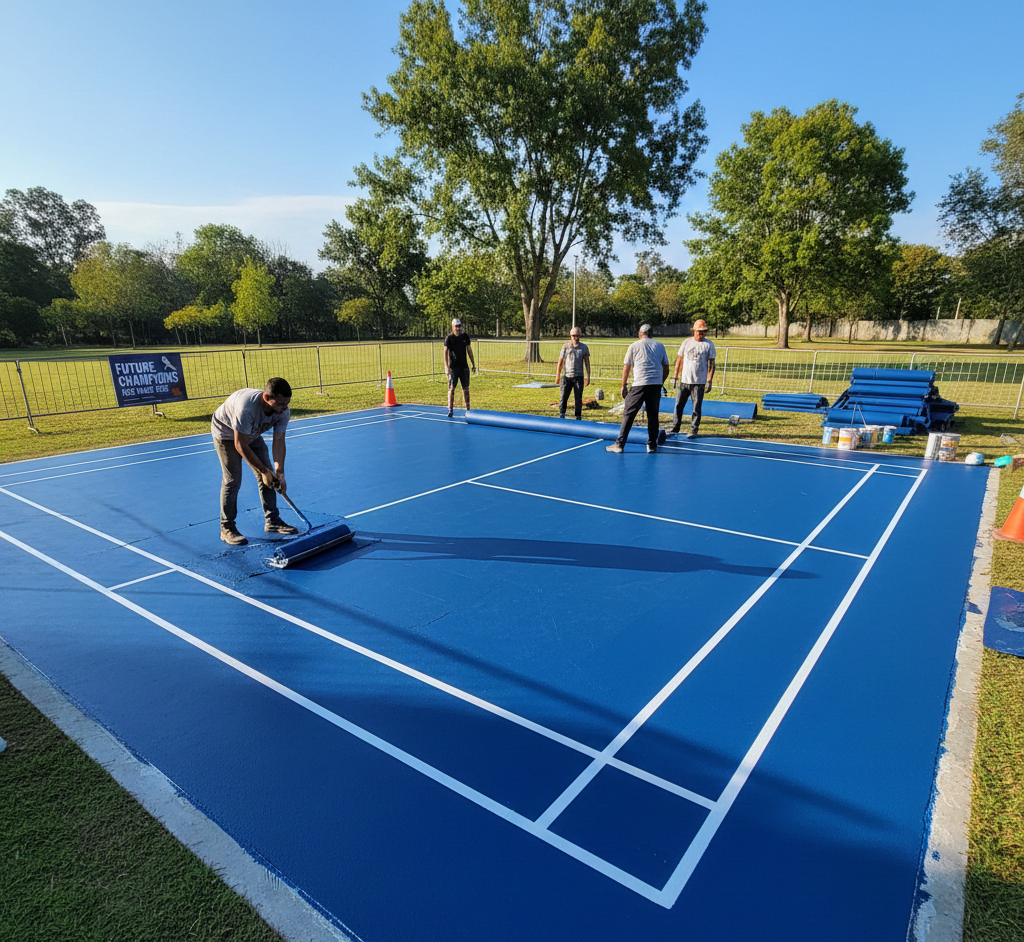
Outdoor badminton courts are becoming increasingly popular in schools, colleges, residential societies, sports academies, parks, and recreational facilities across India. As more people embrace outdoor sports and fitness activities, the demand for durable, safe, and weather-resistant badminton court surfaces continues to grow. Selecting the right flooring system is essential for creating a court that offers reliable performance, player comfort, and long-term value.
Installing an outdoor badminton court surface involves several important steps, including site inspection, ground preparation, drainage planning, surface selection, professional installation, and regular maintenance. The right combination of materials and installation techniques helps protect the court from changing weather conditions while providing a suitable playing environment for recreational and training purposes.
This guide covers the major aspects of outdoor badminton court surface installation, including available flooring options, court dimensions, installation procedures, maintenance requirements, safety measures, and cost considerations.
Why Choosing the Right Outdoor Badminton Court Surface Matters
Unlike indoor badminton courts, outdoor playing surfaces are exposed to sunlight, rain, dust, humidity, and temperature fluctuations. Without proper surface selection and installation, these conditions can lead to cracks, fading, uneven areas, poor traction, and increased maintenance expenses.
A professionally installed outdoor badminton court surface offers several advantages:
Enhanced Player Safety
A properly selected surface provides suitable grip and underfoot comfort, helping players move confidently during quick turns, jumps, lunges, and rallies. The surface should be designed for badminton-specific movement and appropriate outdoor use.
Consistent Playing Performance
A smooth, level, and uniform playing area supports predictable footwork and comfortable movement. Accurate court dimensions and clearly visible line markings also help players maintain proper positioning during practice and matches.
Weather Resistance and Durability
Outdoor sports flooring should be suitable for exposure to sunlight, moisture, and changing temperatures. Choosing weather-resistant materials and preparing the base correctly can help minimize premature surface deterioration.
Lower Long-Term Maintenance Costs
Durable flooring, effective drainage, and professional installation can reduce the frequency of repairs and help maintain the court’s appearance and usability over time.
Standard Dimensions for an Outdoor Badminton Court
Outdoor badminton courts generally follow the same playing dimensions as indoor badminton courts. Accurate measurements are important for recreational play, structured training, and competitive use.
| Court Specification | Standard Measurement |
|---|---|
| Court length | 13.40 metres |
| Doubles court width | 6.10 metres |
| Singles court width | 5.18 metres |
| Net height at posts | 1.55 metres |
| Net height at centre | 1.524 metres |
In addition to the playing area, sufficient surrounding space should be provided for safe player movement. The required clearance depends on the intended level of play, site conditions, and applicable facility standards. Outdoor court planning should also account for fencing, access pathways, lighting, and drainage.
Types of Outdoor Badminton Court Surfaces
Selecting the right outdoor badminton flooring depends on the available budget, expected playing frequency, weather exposure, maintenance requirements, and intended use of the facility.
1. Synthetic PVC or Vinyl Badminton Flooring
Synthetic PVC or vinyl badminton flooring is designed to provide a more cushioned and comfortable playing surface. Depending on the product specification, certain systems may be suitable for covered or appropriately protected outdoor installations.
Key features:
- Textured surfaces designed to provide traction.
- Cushioned construction in selected flooring systems.
- Easy cleaning and routine maintenance.
- Multiple colour and thickness options.
- A professional appearance for badminton facilities.
Suitable applications:
- Schools and colleges.
- Sports training facilities.
- Covered outdoor courts.
- Recreational badminton centres.
Before installing PVC or vinyl flooring outdoors, confirm that the selected product is specifically approved for the expected sunlight, moisture, temperature, and drainage conditions. Many indoor PVC sports floors are not intended for prolonged exposure to outdoor weather.
2. Acrylic-Coated Concrete or Asphalt Flooring
Acrylic sports flooring is a widely used option for outdoor courts. It is typically applied over a properly prepared concrete or asphalt base to create a durable, seamless playing surface.
Key features:
- Weather-resistant sports coating systems.
- Customizable colours and court markings.
- Consistent surface texture when correctly installed.
- Suitability for regular recreational use.
- Maintenance through cleaning and periodic resurfacing as required.
Suitable applications:
- Community sports parks.
- Schools and colleges.
- Outdoor sports complexes.
- Residential communities and clubs.
Acrylic flooring requires a stable base, effective drainage, and appropriate curing conditions. The finished surface quality depends on the coating system, substrate condition, and installation workmanship.
3. Interlocking Outdoor Sports Tiles
Interlocking sports tiles are modular flooring units commonly manufactured from polypropylene or similar synthetic materials. Their locking design allows individual tiles to be connected across the court area.
Key features:
- Modular construction and relatively quick installation.
- Replacement of individual damaged tiles.
- Drainage features in selected outdoor tile systems.
- Multiple colours and layout options.
- Suitability for certain multipurpose sports areas.
Suitable applications:
- Schools and sports clubs.
- Residential sports facilities.
- Recreational courts.
- Temporary or semi-permanent sports installations.
The tiles should be installed on a stable, level base according to the manufacturer’s instructions. Expansion allowances, edge finishing, and drainage must be considered during planning.
4. Artificial Grass with a Shock-Absorbing Underlay
Artificial grass can be considered for leisure-oriented sports areas where appearance and a softer feel are priorities. However, it is generally less suitable than purpose-designed sports flooring for competitive badminton because the surface can affect footwork and movement.
Key features:
- Green, natural-looking appearance.
- Softer feel when installed with a suitable underlay.
- Potential use in landscaped recreational spaces.
- Suitability for selected leisure and multipurpose applications.
Suitable applications:
- Parks and resorts.
- Recreational facilities.
- Informal outdoor sports areas.
For regular badminton training or competitive play, choose a surface specifically designed for badminton rather than selecting artificial grass based on appearance alone.
Sub-Base Preparation: The Foundation of a Long-Lasting Court
Proper ground preparation is one of the most important stages of outdoor badminton court construction. Even high-quality flooring can fail prematurely if it is installed over an uneven, unstable, or poorly drained base.
Site Clearing and Ground Preparation
Remove vegetation, loose soil, stones, debris, and other unwanted materials from the proposed court area. Inspect the site to identify drainage challenges, existing surface defects, and any constraints that could affect construction.
Levelling and Compaction
Prepare and compact the ground according to the selected base construction system. Accurate levelling helps prevent uneven playing areas, water accumulation, and potential tripping hazards.
Drainage Planning
Outdoor badminton courts need an effective drainage strategy to prevent standing water and reduce moisture-related damage. The base slope, drainage channels, and surrounding ground levels should be designed according to the site conditions and flooring manufacturer’s recommendations.
Base Layer Construction
Depending on the project, the foundation may include compacted granular material, concrete, or asphalt. The base must be strong, stable, and suitable for the selected surface system.
Final Base Inspection
Before installing the flooring, inspect the base for cracks, unevenness, moisture issues, and surface contamination. Any required repairs should be completed before proceeding to the installation stage.
Step-by-Step Process for Installing an Outdoor Badminton Court Surface
The installation procedure varies according to the selected flooring material. A structured approach helps achieve better surface quality, durability, and playing performance.
Site Inspection and Planning
Measure the available area and determine the court layout, playing dimensions, surrounding clearance, access points, and drainage requirements. Select a surface appropriate for the intended use and local environmental conditions.
Surface and Material Selection
Compare available outdoor sports flooring options based on durability, grip, maintenance, comfort, installation requirements, and total project cost. Confirm that the selected material is suitable for outdoor exposure.
Base Preparation
Clean, level, and repair the existing base or construct a new foundation as required. Ensure that the substrate meets the flooring system’s requirements before installation begins.
Install the Selected Flooring System
For PVC or vinyl flooring: Prepare the approved substrate, position the flooring rolls, align the seams, and use compatible installation methods and adhesives where specified by the manufacturer.
For acrylic sports flooring: Repair and clean the concrete or asphalt base, apply the specified primer if required, and install the coating layers according to the manufacturer’s application and curing instructions.
For interlocking sports tiles: Arrange the tiles according to the planned court layout, connect the locking edges, and finish the perimeter using the recommended edge components.
For artificial grass: Prepare the base, install the required underlay if specified, position and trim the turf, secure the seams, and apply infill where required by the product design.
Court Line Marking
Mark the singles and doubles playing areas accurately using a method compatible with the chosen flooring system. Ensure that the lines are clearly visible and comply with the intended court layout.
Install Court Accessories
Fit suitable net posts, a badminton net, and other necessary accessories. Depending on the location, additional features may include perimeter fencing, windbreaks, access gates, and outdoor lighting.
Quality Inspection and Handover
Inspect the finished surface for uneven areas, loose components, installation defects, and clear line markings. Confirm that drainage works as intended and follow the manufacturer’s recommended waiting or curing period before allowing play.
Essential Accessories for an Outdoor Badminton Court
A complete outdoor badminton facility requires more than flooring alone. The right accessories improve usability, safety, and convenience.
- Weather-appropriate net posts and nets: Provide a suitable playing setup for regular badminton use.
- Accurate court markings: Define the singles and doubles playing areas clearly.
- Perimeter fencing: Helps separate the court from surrounding spaces and may improve security.
- Windbreaks: Can reduce some effects of wind where the site layout permits.
- Outdoor LED lighting: Supports evening use when properly designed for visibility and glare control.
- Drainage infrastructure: Helps manage rainwater and protect the playing surface.
The choice of accessories should be based on the court’s location, intended usage, and available budget.
Maintenance Tips for Outdoor Badminton Court Surfaces
Regular maintenance helps preserve the court’s playing quality and extends the useful life of the flooring system.
Recommended Maintenance Practices
- Sweep the court regularly to remove leaves, dust, and debris.
- Clean the surface using products approved for the installed flooring.
- Inspect the court for cracks, loose tiles, damaged seams, or uneven sections.
- Check drainage channels and remove blockages.
- Monitor the surface for fading, loss of traction, or other signs of wear.
- Recoat acrylic surfaces when required by their condition and maintenance schedule.
- Repair damaged areas promptly to prevent further deterioration.
- Follow the manufacturer’s instructions for cleaning, repairs, and seasonal care.
Routine inspection is particularly important after heavy rainfall or prolonged exposure to harsh weather.
Safety Considerations During Outdoor Court Installation
Player safety should be considered from the planning stage through installation and ongoing maintenance.
- Select a sports surface with appropriate traction for badminton movements.
- Provide a stable, even playing base.
- Prevent water accumulation through effective drainage.
- Finish edges and transitions carefully to reduce tripping risks.
- Use materials suitable for the local outdoor environment.
- Keep the playing area free from obstacles and debris.
- Position lighting to provide adequate visibility without excessive glare.
- Inspect the surface regularly and restrict access when repairs are necessary.
These measures help create a more reliable playing environment for children, recreational players, and training groups.
Benefits of Installing a Professional Outdoor Badminton Court
A well-planned outdoor badminton court can deliver long-term value to a variety of facilities.
Better Access to Sports and Fitness
Outdoor courts provide convenient opportunities for exercise, recreation, and regular badminton practice.
Durable Sports Infrastructure
Appropriate flooring, a stable base, and effective drainage can improve the court’s resistance to everyday use and environmental exposure.
Flexible Applications
Outdoor badminton courts can serve schools, residential communities, sports clubs, parks, and recreational facilities.
Easier Routine Maintenance
Selecting the right surface system and following a planned maintenance schedule can simplify cleaning and help control repair expenses.
Improved Facility Appeal
A professionally finished court with clear markings and suitable accessories can enhance the appearance and usability of a sports facility.
Factors Affecting the Cost of Outdoor Badminton Court Surface Installation
The total installation cost depends on the project specifications rather than flooring material alone.
Important cost factors include:
- Type and quality of the selected flooring.
- Court dimensions and total installation area.
- Existing ground and sub-base condition.
- Excavation, levelling, and foundation requirements.
- Drainage and water-management provisions.
- Surface preparation and installation labour.
- Court line marking and accessories.
- Fencing and lighting requirements.
- Transportation, material availability, and project location.
- Future maintenance and resurfacing requirements.
For an accurate estimate, arrange a site assessment and request a detailed quotation covering materials, base preparation, installation, accessories, and applicable taxes. Confirm product suitability for outdoor use before comparing prices.
Conclusion
Installing an outdoor badminton court surface requires careful planning, suitable materials, reliable base preparation, and professional installation. From selecting weather-resistant flooring to ensuring proper drainage, accurate line marking, and routine maintenance, each stage contributes to the court’s durability, safety, and overall usability.
Whether you are developing a badminton court for a school, residential society, sports academy, park, or private recreational facility, choosing the right surface for the site’s conditions is essential. A well-designed outdoor badminton court can provide a practical space for exercise, training, and recreation while supporting the long-term development of sports infrastructure.
Sports Facility India can be positioned as a service provider for outdoor badminton court planning, sports flooring selection, installation, and related court development requirements. Project-specific recommendations should be based on the site conditions, intended use, and selected flooring manufacturer’s specifications.
Frequently Asked Questions (FAQs)
1. Which surface is best for an outdoor badminton court?
Acrylic sports flooring and purpose-designed interlocking outdoor sports tiles are common options. The best choice depends on the climate, base condition, budget, maintenance needs, and intended playing level.
2. Can PVC badminton flooring be installed outdoors?
Some PVC flooring systems may be suitable for protected outdoor installations, but many are designed for indoor use. Always verify the manufacturer’s approval for UV exposure, moisture, temperature changes, and other outdoor conditions.
3. What is the standard size of an outdoor badminton court?
The playing area measures 13.40 metres long. The width is 6.10 metres for doubles and 5.18 metres for singles. Additional space is required around the court for safe movement.
4. What type of base is required for outdoor badminton flooring?
Depending on the flooring system, a properly prepared concrete, asphalt, or compacted granular base may be suitable. The base should be stable, level, and designed to provide effective drainage.
5. How long does it take to install an outdoor badminton court surface?
The installation period depends on the flooring type, court size, base preparation, weather, and curing requirements. A contractor should provide a project schedule after assessing the site.
6. How much does outdoor badminton court installation cost in India?
The price varies according to flooring material, site preparation, drainage, court size, accessories, and installation requirements. A site-specific quotation is the most reliable way to determine the overall cost.
7. Are outdoor badminton court surfaces waterproof?
Some flooring materials resist moisture, but waterproofing and drainage performance depend on the complete surface system and base design. No court should be assumed to be suitable for standing water or unrestricted play during heavy rain.
8. How can I maintain an outdoor badminton court?
Sweep and clean the surface regularly, inspect for damage, maintain drainage, and repair defects promptly. Follow the flooring manufacturer’s guidance for cleaning and periodic maintenance.
9. Can outdoor badminton courts be used throughout the year?
Usage depends on local weather conditions and the installed surface. Rain, strong winds, standing water, and extreme temperatures may affect safety and playability, so inspect the court before use.
10. Is artificial grass suitable for badminton?
Artificial grass can be used for casual recreational activities, but it is generally not the preferred choice for competitive badminton. Purpose-designed badminton or outdoor sports flooring is usually more appropriate for consistent footwork.
11. How long does an outdoor badminton court surface last?
Service life varies according to material quality, installation, weather exposure, playing frequency, and maintenance. Follow the manufacturer’s expected service-life guidance for the selected system.
12. Why should I hire a professional outdoor badminton court installer?
An experienced installer can help with surface selection, site measurements, base preparation, drainage, installation quality, and accurate court markings. Professional planning can reduce installation problems and improve long-term usability.