
Introduction
The popularity of box cricket has transformed the way cricket is played in urban and suburban areas. As cities continue to expand and open spaces become increasingly limited, sports enthusiasts, schools, clubs, and entrepreneurs are searching for innovative ways to develop quality cricket facilities within smaller footprints. One of the most practical and economical solutions is the installation of an affordable box cricket turf, which combines professional playing performance with lower construction and maintenance costs.
Unlike traditional cricket grounds that require large areas of natural grass, extensive irrigation systems, and continuous maintenance, box cricket facilities utilize advanced synthetic turf technology to create compact, durable, and visually appealing playing environments. These facilities provide an enjoyable cricket experience while significantly reducing operational expenses, making them ideal for recreational play, coaching academies, residential communities, educational institutions, and commercial sports businesses.
Modern synthetic turf systems are engineered to deliver consistent ball bounce, reliable grip, excellent drainage, and enhanced player safety. With advancements in artificial grass manufacturing, shock-absorbing underlays, and durable construction materials, affordable box cricket turfs now offer professional-quality performance without the high investment associated with conventional cricket grounds.
Whether you are planning to establish a commercial sports arena, upgrade an existing facility, or build a recreational cricket court for a school or residential society, understanding the construction process, material selection, installation techniques, and maintenance requirements is essential for achieving long-term value. This comprehensive guide explains everything you need to know about developing a cost-effective box cricket turf that delivers exceptional durability, functionality, and return on investment.
Understanding Affordable Box Cricket Turf
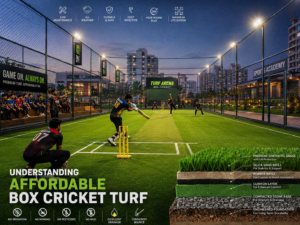
An affordable box cricket turf is a specially designed synthetic cricket playing surface created for compact cricket formats played within enclosed or semi-enclosed spaces. Unlike conventional cricket grounds that demand significant land, labor, and ongoing maintenance, box cricket facilities are designed to maximize available space while delivering a professional and enjoyable playing experience.
Artificial turf has become the preferred surface for modern box cricket because it offers consistent playing conditions throughout the year. High-quality synthetic grass closely replicates the feel and performance of natural grass while eliminating common maintenance challenges such as watering, mowing, fertilizing, and weed control.
Affordable box cricket turf systems are carefully engineered using durable artificial grass fibers, compacted foundation layers, cushioning systems, silica sand or rubber infill, and protective boundary netting. These components work together to provide excellent shock absorption, predictable ball movement, improved player comfort, and long-lasting durability under heavy daily usage.
One of the biggest advantages of synthetic turf is its ability to maintain consistent performance regardless of weather conditions. Players can enjoy reliable gameplay during hot summers, light rainfall, and varying climatic conditions without worrying about muddy surfaces or damaged grass.
As urban sports infrastructure continues to evolve, affordable box cricket turf has become one of the most practical investments for organizations looking to promote cricket while minimizing long-term operating costs.
Why Affordable Box Cricket Turf Is Becoming Increasingly Popular
The demand for box cricket facilities has grown rapidly over the past decade. Urbanization, changing lifestyles, and increasing interest in recreational sports have encouraged schools, businesses, sports clubs, and residential communities to invest in compact cricket infrastructure.
One of the primary reasons behind this growth is efficient land utilization. Traditional cricket grounds require several acres of open space, which is often unavailable or prohibitively expensive in metropolitan areas. Box cricket facilities solve this challenge by providing an engaging cricket experience within a much smaller footprint.
Another major factor is affordability. Natural grass grounds require continuous irrigation, fertilization, mowing, pest control, and landscaping, leading to high maintenance costs throughout the year. Synthetic box cricket turf eliminates most of these recurring expenses while maintaining an attractive appearance and excellent playing conditions.
Commercial sports operators also recognize the strong revenue potential offered by box cricket arenas. Hourly bookings, league tournaments, coaching sessions, corporate events, birthday parties, and weekend recreational matches create multiple income streams, allowing facility owners to recover their investment relatively quickly.
Educational institutions increasingly prefer synthetic cricket turfs because they remain usable throughout the year. Students can practice regularly without interruptions caused by muddy grounds or damaged natural grass, ensuring uninterrupted sports programs.
In addition, modern synthetic turf technology enhances player safety by incorporating shock-absorbing layers that reduce stress on joints and minimize the risk of injuries during fast-paced matches.
Major Benefits of Affordable Box Cricket Turf
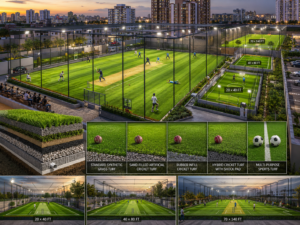
Installing an affordable box cricket turf offers numerous advantages that extend beyond cost savings. These facilities provide an excellent balance between performance, durability, and operational efficiency.
Cost-Effective Infrastructure Development
Compared to conventional cricket grounds, synthetic box cricket turfs require significantly lower investment in land preparation, irrigation systems, landscaping, and maintenance equipment. This makes them accessible to schools, housing societies, startups, sports academies, and private investors working within a defined budget.
Low Maintenance Requirements
One of the biggest financial advantages of synthetic turf is its minimal maintenance. Unlike natural grass, artificial surfaces do not require watering, mowing, reseeding, or fertilization. Regular brushing, debris removal, and occasional infill replenishment are generally sufficient to maintain excellent playing conditions.
Consistent Playing Performance
Modern synthetic grass delivers uniform ball bounce, smooth ball roll, and dependable player traction. These characteristics help players develop better batting, bowling, and fielding skills while ensuring fair and enjoyable gameplay.
Enhanced Player Safety
Premium turf systems often include cushioning pads and rubber infill that absorb impact during running, diving, and sudden directional changes. These safety features reduce strain on knees, ankles, and joints, making the playing surface suitable for players of all age groups.
Excellent Weather Resistance
High-quality artificial turf performs effectively throughout the year. Efficient drainage systems allow rainwater to pass through quickly, minimizing downtime after rainfall and enabling continuous use in different weather conditions.
Long Service Life
When installed correctly using quality materials, affordable box cricket turf can provide reliable performance for many years. Durable synthetic fibers resist wear, fading, and UV damage, making them an excellent long-term investment.
Attractive Appearance
Artificial grass maintains its lush green appearance throughout the year without seasonal discoloration. A professionally installed turf enhances the overall aesthetics of sports facilities and creates an inviting environment for players and spectators alike.
Types of Affordable Box Cricket Turf
Selecting the right turf system is one of the most important decisions during cricket ground development. Different turf types are designed to meet varying performance requirements, budgets, and usage levels.
Synthetic Grass Turf
Synthetic grass turf is the most widely used surface for box cricket facilities due to its excellent balance of affordability, durability, and realistic playing characteristics. It is manufactured using high-quality polyethylene or polypropylene fibers that closely resemble natural grass.
These surfaces provide reliable ball bounce, excellent grip, and long-lasting performance under frequent use. Synthetic grass is suitable for both indoor and outdoor installations and requires very little maintenance compared to natural lawns.
Artificial Cricket Turf with Sand Infill
Sand-filled synthetic turf systems use specially graded silica sand between the artificial grass fibers. The infill stabilizes the turf, supports the fibers, and improves ball response while enhancing overall durability.
This option is commonly selected for community sports complexes, schools, and recreational cricket venues because it offers dependable performance at a competitive cost.
Rubber Infill Cricket Turf
Rubber-infused turf systems incorporate recycled rubber granules or EPDM rubber particles to provide additional cushioning beneath the playing surface. The extra shock absorption improves player comfort and reduces fatigue during extended matches.
These systems are particularly beneficial for sports academies and training centers where athletes spend long hours practicing.
Hybrid Cricket Turf Systems
Hybrid turf combines synthetic grass with advanced underlays, elastic shock pads, and reinforced base layers to create a premium playing experience. Although slightly more expensive than standard synthetic turf, hybrid systems offer improved comfort, durability, drainage, and performance.
Commercial sports arenas and professional coaching centers often choose hybrid turf because of its ability to withstand intensive daily usage while maintaining consistent playing quality.
Multi-Purpose Sports Turf
Many modern sports facilities prefer multi-purpose synthetic turf that accommodates cricket along with football, futsal, and other recreational activities. This versatile option maximizes facility utilization and increases revenue opportunities by supporting multiple sports on a single surface.
Standard Dimensions and Layout Planning for Box Cricket Turf
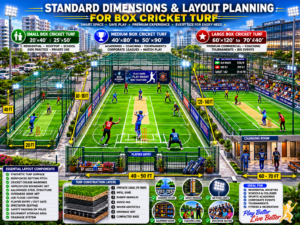
A well-planned layout is one of the most important aspects of building an affordable box cricket turf. Proper dimensions not only improve gameplay but also ensure player safety, efficient space utilization, and smooth movement inside the facility. Since box cricket is played in enclosed areas, the dimensions can be customized according to the available land while maintaining a comfortable playing environment.
Small Box Cricket Turf
A compact box cricket turf is suitable for residential societies, schools, rooftop sports facilities, and private training centers where space is limited.
Typical Size:
- 20 × 40 feet
- 25 × 50 feet
These layouts are ideal for practice sessions, children’s coaching programs, and recreational games. Despite the smaller size, they offer an exciting cricket experience while minimizing construction costs.
Medium Box Cricket Turf
The medium-sized layout is the most popular option for commercial operators and sports academies because it provides a balance between affordability and gameplay quality.
Typical Size:
- 40 × 80 feet
- 50 × 90 feet
This configuration allows multiple players to participate comfortably and is widely used for local tournaments, coaching sessions, and corporate cricket events.
Large Commercial Box Cricket Turf
Larger facilities are designed for professional coaching academies, sports clubs, and commercial sports complexes that host regular tournaments and high-volume bookings.
Typical Size:
- 60 × 120 feet
- 70 × 140 feet
These facilities often include seating areas, floodlights, scoreboards, changing rooms, and additional amenities to create a premium sports experience.
Essential Components of a Box Cricket Turf Layout
An efficiently designed cricket arena consists of several structural elements that contribute to safety, functionality, and player comfort.
Cricket Playing Surface
The synthetic turf forms the heart of the facility. It should be perfectly level to ensure consistent ball bounce and smooth player movement.
Central Pitch Area
The pitch is designed using reinforced synthetic turf that can withstand continuous bowling and batting activities without excessive wear.
Boundary Netting
High-strength HDPE or nylon nets are installed around the playing area to prevent balls from leaving the enclosure. Proper netting also improves safety for spectators and nearby properties.
Galvanized Steel Support Structure
Durable galvanized steel poles support the boundary nets and roof enclosure. Galvanization protects the structure from rust and corrosion, making it suitable for outdoor installations.
Entry and Exit Gates
Dedicated entry and exit points improve player movement while maintaining safety during busy matches and tournaments.
Lighting System
LED floodlights allow games to continue during evenings and improve visibility for tournaments and commercial bookings.
Spectator Area
Commercial facilities often include seating arrangements for parents, visitors, and spectators, creating a better overall experience.
Materials Used in Affordable Box Cricket Turf Construction
Selecting high-quality materials is essential for ensuring durability, safety, and long-term cost efficiency. While affordability is important, compromising on material quality can increase maintenance costs and reduce the lifespan of the turf.
Synthetic Grass Fibers
Artificial grass is manufactured using premium polyethylene (PE) or polypropylene (PP) fibers that closely replicate the appearance and performance of natural grass.
Key characteristics include:
- UV resistance
- High wear resistance
- Soft playing surface
- Excellent durability
- Consistent ball response
Premium synthetic fibers maintain their color and structural integrity even after years of exposure to sunlight and frequent usage.
Infill Materials
Infill provides stability and improves the overall performance of synthetic turf.
Common infill materials include:
- Silica sand
- Rubber granules
- EPDM rubber particles
- Performance infill blends
Proper infill distribution keeps the fibers upright, improves traction, enhances shock absorption, and supports consistent ball movement.
Shock Pad Layer
Many modern box cricket turfs include an elastic shock pad beneath the artificial grass.
Benefits include:
- Better impact absorption
- Reduced player fatigue
- Lower risk of joint injuries
- Improved comfort during long matches
Shock pads are particularly valuable for sports academies and high-traffic commercial facilities.
Base Construction Materials
The base provides structural stability for the entire turf system.
Common base options include:
- Compacted soil
- Granular sub-base
- Crushed stone aggregates
- Asphalt foundation
- Reinforced concrete platform
A properly constructed base prevents uneven settlement and significantly extends the life of the playing surface.
Importance of Proper Drainage System
Effective drainage is often overlooked during turf construction, yet it is one of the most critical components for long-term performance.
Without adequate drainage, rainwater can accumulate beneath the turf, causing uneven surfaces, unpleasant odors, and structural damage.
Professional drainage systems typically include:
- Perforated drainage pipes
- Crushed stone drainage layers
- Surface grading
- Water outlet channels
- Geotextile membranes
These components allow rainwater to flow quickly through the turf system, ensuring the playing surface dries rapidly after rainfall.
Efficient drainage enables year-round usability and reduces maintenance requirements.
Step-by-Step Installation Process of Affordable Box Cricket Turf
Professional installation ensures the turf performs consistently for many years while minimizing repair costs.
Step 1: Site Survey and Planning
Construction begins with a detailed inspection of the project site.
Engineers evaluate:
- Land dimensions
- Soil condition
- Drainage requirements
- Accessibility
- Utility connections
- Environmental factors
Accurate planning helps optimize material usage and reduces unnecessary construction expenses.
Step 2: Ground Preparation
The site is cleared of vegetation, debris, loose soil, and obstacles.
The surface is then excavated and leveled to create a stable foundation. Proper grading ensures water flows toward designated drainage points.
Step 3: Base Construction
A strong base is created using compacted aggregates, crushed stone, asphalt, or reinforced concrete, depending on the project requirements.
Each layer is mechanically compacted to achieve maximum stability and load-bearing capacity.
A well-prepared base prevents future settlement and surface deformation.
Step 4: Installing the Shock Pad
If included in the design, the shock pad is laid evenly across the prepared base.
This layer improves player comfort, absorbs impact, and enhances the overall playing experience.
Step 5: Synthetic Turf Installation
The artificial grass rolls are carefully positioned across the playing area.
Professional installers ensure:
- Accurate alignment
- Tight seams
- Smooth surface finish
- Secure adhesive bonding
- Proper stretching
Precision installation eliminates wrinkles and prevents seam separation over time.
Step 6: Infill Application
Silica sand or rubber granules are evenly distributed throughout the turf using specialized equipment.
The infill is brushed into the fibers until the desired depth is achieved.
Proper infill application improves durability, cushioning, traction, and ball performance.
Step 7: Installation of Netting and Steel Structure
Galvanized steel poles are erected around the perimeter, followed by the installation of heavy-duty boundary nets and roof netting where required.
This enclosure keeps the ball within the playing area and enhances player safety.
Step 8: Final Inspection and Quality Testing
Before the facility is handed over, every component undergoes a comprehensive quality inspection.
Engineers verify:
- Surface level accuracy
- Turf alignment
- Seam strength
- Infill consistency
- Drainage performance
- Structural stability
- Safety compliance
Only after passing these quality checks is the turf considered ready for regular use.
Benefits of Investing in an Affordable Box Cricket Turf
An affordable box cricket turf is much more than a synthetic playing surface—it is a long-term investment that delivers value through durability, lower maintenance costs, and year-round usability. Whether the facility is built for recreational activities or commercial operations, synthetic turf offers numerous advantages over conventional natural grass cricket grounds.
Reduced Construction and Maintenance Costs
One of the biggest reasons property owners choose synthetic turf is its cost-effectiveness. Unlike natural grass grounds, artificial turf eliminates the need for irrigation systems, lawn mowing, fertilization, pest control, and frequent landscaping.
Although the initial installation requires professional planning, the ongoing maintenance expenses are significantly lower, helping owners save money over the long term.
Excellent Durability
Modern synthetic cricket turf is manufactured using high-quality polyethylene or polypropylene fibers that are designed to withstand heavy foot traffic and regular gameplay.
Whether the facility hosts daily coaching sessions, local tournaments, or recreational matches, the turf maintains its appearance and performance for many years with proper care.
Consistent Playing Conditions
Natural grass surfaces often change depending on weather conditions, soil quality, and maintenance practices. Synthetic turf, on the other hand, provides a uniform playing surface with predictable ball bounce, smooth ball roll, and reliable player traction throughout the year.
This consistency improves the overall cricket experience for players of all skill levels.
Improved Player Safety
Player safety is a major priority in modern sports infrastructure. Affordable box cricket turf systems often include shock-absorbing layers and rubber infill that reduce impact stress on knees, ankles, and joints.
The anti-slip surface also minimizes the risk of falls, making it suitable for children, beginners, and professional athletes alike.
Year-Round Usability
Unlike natural grass, synthetic turf is not affected by seasonal weather changes. Efficient drainage systems allow rainwater to pass through quickly, enabling the field to become playable shortly after rainfall.
This ensures maximum utilization throughout the year and minimizes interruptions caused by unfavorable weather.
Applications of Affordable Box Cricket Turf
The versatility of synthetic cricket turf makes it suitable for a wide range of projects across residential, educational, commercial, and recreational sectors.
Residential Communities
Many housing societies are developing box cricket facilities to encourage outdoor recreation and promote healthy lifestyles among residents.
Compact cricket turfs create a dedicated sports area where children and adults can enjoy regular matches without leaving the community.
Schools and Educational Institutions
Schools and colleges increasingly prefer synthetic cricket turf because it requires minimal maintenance while providing a safe environment for physical education classes, sports competitions, and coaching programs.
Its durability makes it an excellent long-term investment for educational campuses.
Cricket Coaching Academies
Professional coaching centers need a reliable playing surface that can withstand intensive daily practice.
Affordable box cricket turf provides consistent bounce and grip, allowing players to improve their batting, bowling, and fielding techniques under professional conditions.
Commercial Sports Complexes
Commercial sports facilities benefit significantly from synthetic cricket turf due to its ability to generate steady revenue through:
- Hourly ground rentals
- Weekend tournaments
- Corporate cricket events
- Coaching sessions
- Membership programs
- School partnerships
The combination of low maintenance costs and high booking potential makes synthetic turf an attractive business investment.
Corporate Campuses
Many organizations now include sports facilities within their office campuses to promote employee wellness and team-building activities.
A compact cricket turf provides an engaging recreational space that enhances workplace culture and employee satisfaction.
Public Parks and Recreation Centers
Municipal authorities and community organizations are increasingly installing affordable cricket turfs in public parks to encourage sports participation and provide safe recreational facilities for local residents.
Maintenance Tips for Long-Term Performance
Although synthetic turf requires much less maintenance than natural grass, regular care is essential to preserve its appearance, safety, and performance.
Routine Cleaning
Dust, leaves, litter, and other debris should be removed regularly using a soft broom, leaf blower, or vacuum designed for synthetic turf.
Keeping the surface clean prevents drainage blockages and maintains an attractive appearance.
Brushing the Turf
Frequent brushing helps keep the artificial grass fibers upright and evenly distributed.
This simple maintenance practice improves ball movement, player grip, and the overall playing experience.
Infill Level Inspection
Over time, silica sand or rubber infill may shift due to continuous play.
Periodic inspection and replenishment ensure proper cushioning, fiber support, and surface stability.
Drainage Maintenance
Drainage channels and outlet pipes should be inspected regularly to ensure unrestricted water flow.
Proper drainage prevents water accumulation, protects the base structure, and extends the life of the turf.
Net and Pole Inspection
Boundary netting and galvanized steel poles should be checked periodically for signs of wear, corrosion, or damage.
Timely repairs improve player safety and prevent more costly structural issues.
Professional Maintenance
Commercial facilities with heavy daily usage should schedule professional inspections at regular intervals to identify minor issues before they become major repairs.
Preventive maintenance helps maximize the lifespan of the investment.
Lifespan of Affordable Box Cricket Turf
One of the major advantages of synthetic cricket turf is its impressive service life.
A professionally installed turf constructed with premium materials typically lasts 8 to 12 years, while high-end systems with superior maintenance may continue performing effectively for even longer.
Several factors influence the lifespan of a box cricket turf, including:
- Quality of artificial grass fibers
- Base construction standards
- Frequency of use
- Climatic conditions
- Exposure to sunlight
- Maintenance practices
- Quality of installation
Routine maintenance and timely repairs can significantly extend the functional life of the turf while maintaining excellent playing performance.
Factors Affecting the Cost of Box Cricket Turf Construction
The overall cost of developing an affordable box cricket turf depends on several important factors.
Project Size
Larger playing areas naturally require more synthetic grass, infill materials, steel structures, and labor, resulting in higher project costs.
Turf Quality
Premium synthetic grass with advanced UV protection, higher stitch density, and improved durability generally costs more than standard turf, but it also provides better long-term value.
Base Preparation
The condition of the existing site influences construction expenses.
Sites requiring extensive excavation, leveling, or reinforced foundations typically involve additional costs.
Drainage System
Installing an efficient drainage system increases the initial investment but reduces maintenance expenses and improves the lifespan of the facility.
Steel Structure and Netting
The height, quality, and design of the galvanized steel framework and protective netting also contribute to the total project cost.
Additional Features
Optional amenities such as LED floodlights, scoreboards, spectator seating, changing rooms, parking areas, and landscaping can further enhance the facility while increasing the overall investment.
Careful planning allows project owners to prioritize essential features and stay within budget without compromising quality.
Common Mistakes to Avoid During Construction
Avoiding common construction mistakes helps ensure better performance and lower maintenance costs.
Some of the most frequent errors include:
- Choosing low-quality synthetic turf to reduce initial costs
- Ignoring proper drainage planning
- Using an uneven or poorly compacted base
- Incorrect infill application
- Weak seam bonding during turf installation
- Installing inadequate boundary netting
- Skipping regular maintenance after installation
- Hiring inexperienced installation contractors
Working with experienced professionals and using quality materials helps prevent these issues and ensures a durable, high-performing cricket facility.
Return on Investment (ROI) of Affordable Box Cricket Turf
One of the primary reasons investors and sports entrepreneurs choose an affordable box cricket turf is its excellent return on investment (ROI). Unlike many sports infrastructure projects that require substantial ongoing expenses, a synthetic box cricket facility offers consistent earning potential while keeping maintenance costs relatively low.
Commercial operators can generate revenue through multiple channels, including hourly ground rentals, coaching programs, tournament hosting, corporate events, school partnerships, and membership plans. Because artificial turf remains playable throughout the year, facility owners can maximize bookings without worrying about seasonal damage or lengthy maintenance closures.
The durability of high-quality synthetic turf also reduces the frequency of repairs and replacements, helping owners recover their investment over time. As the popularity of recreational cricket continues to grow, well-maintained box cricket facilities often experience strong customer demand, making them a sustainable long-term business opportunity.
Why Affordable Box Cricket Turf Is a Smart Business Investment
The demand for organized sports facilities is increasing across cities, towns, educational institutions, and residential communities. Limited land availability and changing lifestyles have encouraged people to seek compact recreational spaces that provide convenience and high-quality sporting experiences.
Affordable box cricket turf meets this demand by offering a professional playing environment within a relatively small area. Entrepreneurs benefit from lower operational expenses compared to natural grass grounds, while customers enjoy a clean, safe, and consistent playing surface.
Some of the key business advantages include:
- Low maintenance and operational costs
- High utilization throughout the year
- Multiple revenue streams from bookings and tournaments
- Attractive facility for schools, academies, and corporate clients
- Long-lasting infrastructure with minimal downtime
- Opportunity to expand with additional sports facilities
With proper planning and quality construction, a box cricket turf can become a profitable sports destination that serves the local community while generating stable long-term income.
Future Trends in Box Cricket Turf Development
The sports infrastructure industry continues to evolve with new technologies and sustainable construction practices. Modern box cricket facilities are no longer limited to basic playing surfaces; they are becoming smart, multi-functional sports venues designed to enhance the overall player experience.
Some emerging trends include:
Eco-Friendly Turf Systems
Manufacturers are increasingly developing recyclable synthetic grass, environmentally friendly infill materials, and sustainable construction methods that reduce environmental impact while maintaining excellent playing performance.
Advanced Shock-Absorbing Technology
Modern turf systems now feature improved cushioning layers that enhance player comfort, reduce fatigue, and minimize the risk of injuries during high-intensity matches.
Smart Sports Facilities
Many commercial operators are integrating digital technologies such as online booking platforms, automated lighting systems, electronic scoreboards, surveillance cameras, and cashless payment options to improve operational efficiency and customer convenience.
Multi-Sport Infrastructure
To maximize space utilization and increase revenue, many facilities are designed to accommodate multiple sports such as cricket, football, futsal, volleyball, and recreational fitness activities on a single synthetic surface.
Energy-Efficient Lighting
LED floodlighting has become the preferred choice for box cricket facilities due to its lower energy consumption, brighter illumination, and longer operational lifespan compared to traditional lighting systems.
These innovations continue to make affordable box cricket turf an increasingly attractive option for both private and commercial sports infrastructure projects.
Choosing the Right Contractor for Box Cricket Turf Construction
The quality of construction plays a significant role in determining the performance, durability, and lifespan of a box cricket turf. Selecting an experienced contractor ensures that every stage of the project is completed according to industry standards.
Before finalizing a contractor, consider the following factors:
- Experience in sports infrastructure projects
- Portfolio of completed box cricket turf installations
- Quality of synthetic turf and construction materials
- Drainage and foundation expertise
- Warranty on products and workmanship
- Compliance with safety standards
- Transparent pricing and project timelines
- Availability of post-installation maintenance support
Working with a trusted contractor helps minimize future maintenance issues and ensures the facility delivers consistent performance for years to come.
Conclusion
Affordable box cricket turf has become one of the most practical and efficient solutions for developing modern cricket facilities in today’s space-conscious and budget-driven environment. By combining advanced synthetic turf technology, durable construction materials, and professional installation methods, these facilities provide an outstanding balance of performance, safety, and long-term value.
Compared to traditional natural grass grounds, synthetic box cricket turf offers lower maintenance costs, greater durability, excellent drainage, and year-round usability. These advantages make it an ideal choice for schools, sports academies, residential societies, corporate campuses, recreational clubs, and commercial sports complexes.
A successful box cricket project begins with careful planning, quality material selection, and expert construction. Investing in a strong foundation, premium artificial grass, reliable drainage systems, and regular maintenance ensures that the facility continues to perform efficiently for many years.
As interest in recreational cricket continues to grow, affordable box cricket turf will remain an important part of modern sports infrastructure. Whether your objective is to promote community sports, establish a professional coaching center, or build a profitable commercial venue, a well-designed synthetic cricket turf provides a durable, attractive, and cost-effective solution that delivers lasting benefits for players, owners, and the wider community.
Frequently Asked Questions (FAQs)
1. What is an affordable box cricket turf?
An affordable box cricket turf is a synthetic cricket playing surface designed for enclosed or compact spaces. It offers a professional playing experience while reducing construction and maintenance costs compared to natural grass grounds.
2. How long does a synthetic box cricket turf last?
With proper installation and regular maintenance, a high-quality synthetic box cricket turf typically lasts 8 to 12 years, depending on usage, material quality, and environmental conditions.
3. Is synthetic cricket turf suitable for outdoor use?
Yes. Modern artificial cricket turf is designed with UV-resistant fibers and efficient drainage systems, making it suitable for both indoor and outdoor installations.
4. Does a box cricket turf require regular maintenance?
Yes, but maintenance requirements are minimal. Routine cleaning, brushing, infill inspection, drainage checks, and periodic professional servicing help maintain performance and extend the turf’s lifespan.
5. Can a box cricket turf be used throughout the year?
Yes. Synthetic turf performs well in different weather conditions and dries quickly after rainfall, allowing year-round use with minimal interruption.
6. Which sectors commonly install box cricket turf?
Box cricket turf is widely used in schools, sports academies, residential communities, corporate campuses, commercial sports complexes, recreation centers, and public parks.
7. What factors influence the cost of box cricket turf construction?
Project size, turf quality, base preparation, drainage system, steel structure, boundary netting, lighting, and additional amenities all contribute to the overall construction cost.
8. Is box cricket turf a profitable investment?
Yes. Commercial facilities can generate income through hourly rentals, coaching sessions, tournaments, memberships, and corporate events. Combined with low maintenance costs, this makes box cricket turf a strong long-term investment.
9. Why is proper drainage important for synthetic cricket turf?
An effective drainage system prevents waterlogging, protects the foundation, extends the life of the turf, and ensures the playing surface is ready for use soon after rainfall.
10. How do I choose the best contractor for a box cricket turf project?
Look for a contractor with proven experience in sports flooring, high-quality materials, transparent pricing, strong client references, warranty support, and expertise in drainage, base construction, and synthetic turf installation.