Introduction
Badminton is a fast-paced indoor sport that demands agility, balance, and quick directional movement. Because of this, the surface of a badminton court plays a critical role in player safety, performance, and long-term durability. Among modern flooring options, badminton court rubber flooring has become a trusted and practical solution for many indoor sports environments.
Rubber flooring is widely used in badminton courts across sports academies, educational institutions, fitness centers, training halls, and residential sports complexes. Its ability to absorb shock, reduce slipping hazards, and withstand heavy usage makes it highly suitable for daily practice sessions and multi-purpose facilities.
Unlike traditional court surfaces such as untreated concrete or wooden flooring, rubber flooring offers a balance of cushioning, grip, and resilience. It is engineered to support repetitive movements like lunges, jumps, and rapid footwork without compromising player comfort or safety.
This guide explains everything you need to know about badminton court rubber flooring, including its features, advantages, types, installation methods, maintenance practices, and factors influencing cost.
What is Badminton Court Rubber Flooring?
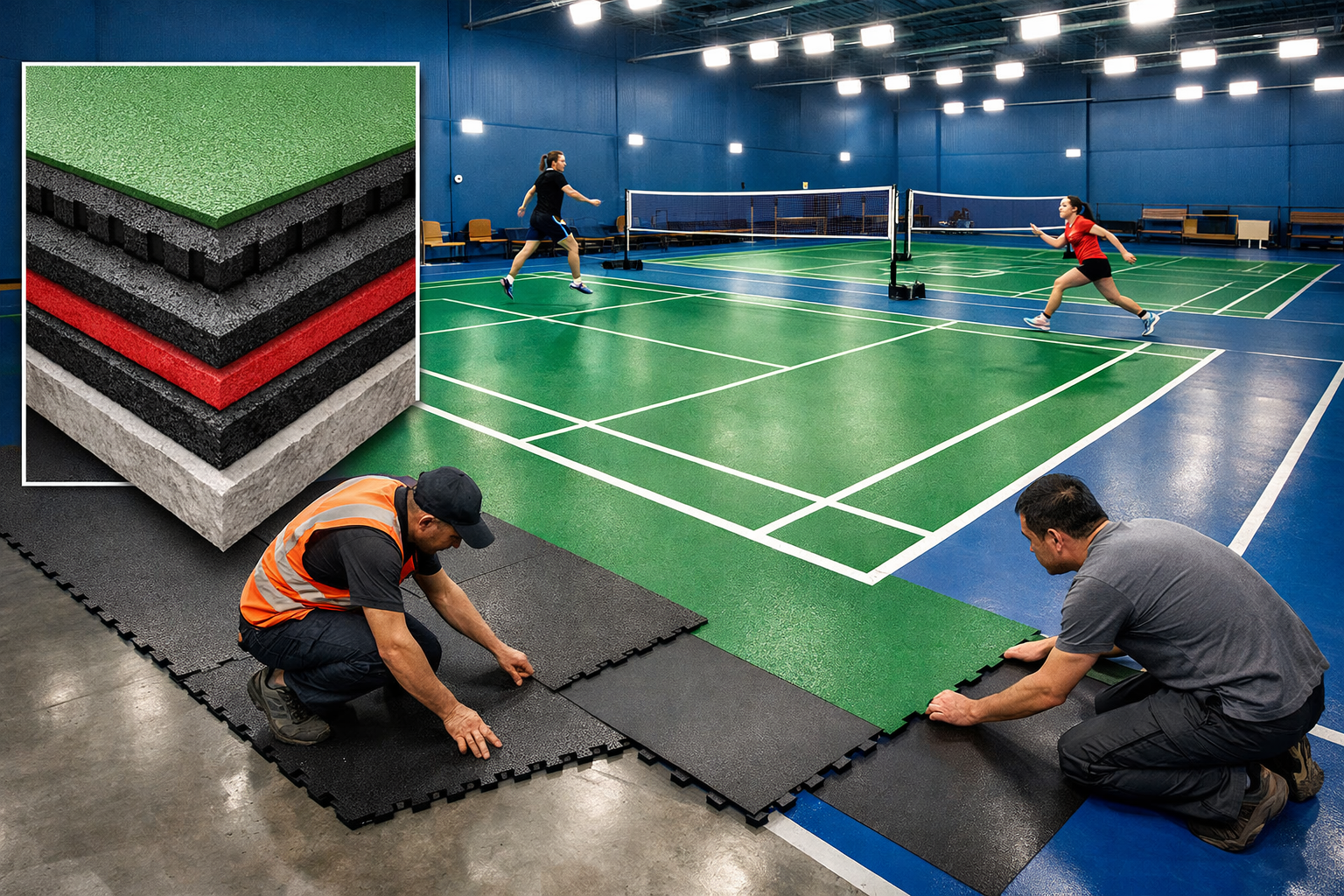
Badminton court rubber flooring is a specially designed sports surface made from processed rubber materials, synthetic compounds, or recycled rubber blends. It is manufactured to provide a resilient playing area that reduces physical strain while maintaining stability and traction.
The structure of rubber flooring typically consists of layered materials that provide flexibility and support. The upper layer is engineered to deliver grip and durability, while the lower layer absorbs impact energy generated during movement.
This type of flooring is specifically created to handle the demands of indoor sports, including frequent movement, sudden stops, and directional changes. Rubber flooring ensures that players experience consistent footing and reduced fatigue during extended gameplay sessions.
In addition to performance benefits, rubber flooring also resists moisture, abrasion, and deformation, making it suitable for indoor sports facilities with regular usage.
Importance of Proper Flooring in Badminton Courts
The quality of court flooring directly affects player performance and injury prevention. In badminton, players perform high-speed footwork and continuous jumps, which can place stress on knees, ankles, and joints.
Hard surfaces without cushioning can lead to fatigue and increase the risk of injuries. Slippery floors can also result in falls, especially during sudden directional changes.
Rubber flooring addresses these issues by offering:
- Shock absorption that reduces pressure on joints
- Slip-resistant texture that improves traction
- Stable surface support during fast movements
- Consistent comfort during extended play
For sports facilities aiming to create safe and comfortable playing environments, rubber flooring provides a reliable foundation.
Key Benefits of Badminton Court Rubber Flooring
1. Excellent Shock Absorption
One of the most significant advantages of rubber flooring is its ability to absorb impact. Every jump or step generates force that travels through the legs and joints. Rubber surfaces cushion this impact, reducing stress on the body.
This feature is especially beneficial for:
- Training academies
- School sports programs
- Recreational badminton courts
- High-frequency practice environments
Shock absorption not only improves comfort but also helps prevent long-term injuries.
2. Reliable Slip Resistance
Badminton involves sudden turns and rapid lateral movements. A slippery surface can lead to dangerous falls and loss of control.
Rubber flooring is designed with textured finishes that provide strong grip even during intense gameplay. This ensures better balance and reduces the risk of slips.
Slip-resistant flooring improves player confidence and supports faster, more precise movements.
3. Long-Term Durability
Durability is essential in sports facilities where courts are used frequently. Rubber flooring is known for its resistance to wear, tearing, and surface damage.
Even under heavy foot traffic, rubber flooring maintains its structural integrity. It does not crack easily and can withstand repeated impacts without losing performance quality.
This durability makes it suitable for:
- Indoor sports complexes
- Multi-use training halls
- High-traffic sports centers
4. Noise Reduction Capability
Indoor sports environments often experience echo and impact noise. Rubber flooring naturally absorbs sound, reducing noise levels created by footsteps and ball contact.
Noise reduction benefits include:
- Improved indoor acoustics
- Reduced disturbance in shared facilities
- Better comfort for spectators and players
This feature is particularly useful in schools, residential complexes, and community sports halls.
5. Low Maintenance Requirements
Maintaining sports flooring can be time-consuming and costly. Rubber flooring simplifies maintenance due to its stain-resistant and moisture-resistant properties.
Routine cleaning generally involves:
- Sweeping dust and debris
- Mopping with mild cleaning solutions
- Occasional inspection for damage
Unlike wooden floors, rubber surfaces do not require frequent polishing or refinishing.
6. Multi-Purpose Usability
Rubber flooring is highly versatile and supports multiple indoor activities beyond badminton.
Facilities often use rubber flooring for:
- Basketball practice
- Fitness sessions
- Aerobics
- Indoor training programs
This flexibility allows facility owners to maximize space utilization.
Types of Badminton Court Rubber Flooring
Different types of rubber flooring are available depending on performance needs, installation preferences, and budget.
Roll Rubber Flooring
Roll rubber flooring is supplied in large sheets that are installed across the court surface. It creates a seamless and uniform finish with minimal joints.
Advantages include:
- Smooth playing surface
- Professional appearance
- Reduced risk of uneven joints
- Strong structural stability
Roll flooring is commonly used in permanent indoor badminton courts.
Interlocking Rubber Tiles
Interlocking rubber tiles feature a modular design that allows easy assembly. Each tile fits into the next using locking edges.
Benefits include:
- Quick installation
- Easy replacement of damaged sections
- Suitable for temporary courts
- Adaptable to different room sizes
Tile-based flooring is often used in multi-purpose spaces.
PU-Coated Rubber Flooring
PU-coated rubber flooring includes a protective polyurethane layer on the surface. This layer enhances durability and resistance to abrasion.
Features include:
- Improved surface strength
- Enhanced grip
- Resistance to surface wear
- Suitable for high-traffic environments
PU-coated systems are recommended for sports academies and professional training areas.
Recommended Thickness for Rubber Badminton Flooring
Selecting the right thickness is essential for achieving the desired performance level.
Common thickness recommendations include:
8 mm Thickness
Suitable for school courts and basic training environments. Provides moderate cushioning and comfort.
10 mm Thickness
Offers improved shock absorption and is ideal for regular training usage.
12 mm Thickness
Provides maximum cushioning and comfort. Recommended for intensive practice sessions and high-usage facilities.
Choosing the correct thickness ensures balanced performance without affecting movement stability.
Installation Process for Badminton Court Rubber Flooring
Professional installation is necessary to ensure safety, performance, and durability.
Step 1: Surface Preparation
The base surface must be clean, dry, and level before installation begins.
This step includes:
- Removing dust and debris
- Repairing cracks
- Leveling uneven surfaces
- Applying primers when required
Proper preparation prevents future damage and ensures stability.
Step 2: Flooring Placement
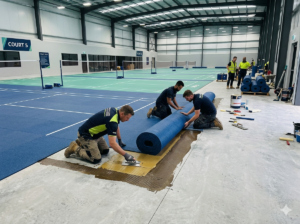
Rubber rolls or tiles are carefully laid onto the prepared surface.
Key tasks include:
- Accurate alignment
- Secure bonding using adhesives
- Eliminating air gaps
- Ensuring seamless joints
Precise placement ensures a smooth and safe playing surface.
Step 3: Court Marking
After installation, court lines are marked using sports-grade paint.
These markings follow standard badminton court dimensions to maintain accuracy and gameplay consistency.
Step 4: Quality Inspection
The final stage involves checking the completed flooring for:
- Surface uniformity
- Adhesion strength
- Grip quality
- Safety compliance
This step ensures that the flooring meets performance standards.
Factors Affecting Rubber Flooring Cost
The cost of badminton court rubber flooring varies based on several factors.
Flooring Type
Roll flooring generally costs differently compared to tile systems. PU-coated surfaces may have higher costs due to additional protective layers.
Thickness Selection
Thicker flooring requires more material, which increases overall cost. However, thicker surfaces often provide better durability and cushioning.
Court Size
Larger courts require more material and labor, affecting total installation expenses.
Customization Features
Additional features such as color selection, cushioning layers, and anti-slip coatings may influence pricing.
Despite initial investment costs, rubber flooring provides long-term value due to its durability and low maintenance requirements.
Maintenance Guidelines for Rubber Badminton Flooring
Regular maintenance helps extend the life of rubber flooring and maintain safety standards.
Daily Cleaning
Remove dust and debris using soft brooms or vacuum cleaners. This prevents dirt accumulation and surface wear.
Weekly Cleaning
Use a damp mop with mild detergent to clean stains and maintain surface hygiene.
Avoid harsh chemicals that may damage the rubber material.
Prevent Surface Damage
Avoid dragging heavy furniture or sharp objects across the surface. Protective pads can be used under equipment to prevent scratches.
Periodic Inspection
Inspect the surface regularly for:
- Loose edges
- Minor cracks
- Surface wear
Early detection of damage allows timely repairs.
Advantages of Rubber Flooring in Multi-Purpose Sports Facilities
Many modern sports complexes require flooring that supports multiple activities.
Rubber flooring is suitable for multi-purpose halls because it can handle different types of movement and sports equipment.
Common uses include:
- Indoor fitness sessions
- School physical education programs
- Recreational sports activities
- Training drills
This versatility makes rubber flooring a practical solution for shared spaces.
Safety Benefits for Players
Player safety remains a top priority in sports infrastructure.
Rubber flooring enhances safety by providing:
- Stable footing
- Reduced slipping hazards
- Improved joint protection
- Controlled impact response
These features create a safer environment for both beginners and experienced athletes.
Environmental Considerations
Many rubber flooring products are made using recycled materials such as reclaimed rubber. This reduces environmental waste and supports sustainable manufacturing practices.
Eco-friendly rubber flooring contributes to:
- Waste reduction
- Sustainable construction
- Responsible resource utilization
Choosing recycled rubber flooring supports environmentally conscious development.
Limitations of Rubber Flooring in Badminton Courts
Although rubber flooring offers many benefits, it also has certain limitations.
Some rubber surfaces may slightly reduce shuttle response compared to specialized wooden flooring. This difference is usually noticeable in professional-level competitions.
Additionally, initial installation costs may vary depending on quality and customization.
Understanding these limitations helps in making informed decisions.
Choosing the Right Rubber Flooring for Your Court
Selecting the appropriate flooring requires careful evaluation of facility needs.
Key considerations include:
- Frequency of court usage
- Player skill level
- Budget availability
- Maintenance capability
- Space requirements
Consulting professionals can help determine the best flooring type and thickness.
Conclusion
Badminton court rubber flooring has become a dependable choice for modern indoor sports environments. Its combination of shock absorption, slip resistance, durability, and versatility makes it highly suitable for training centers, schools, community halls, and recreational facilities.
By reducing injury risks, enhancing comfort, and providing long-lasting performance, rubber flooring supports both beginner and advanced players. When installed correctly and maintained regularly, it offers excellent value over time.
Whether building a new badminton court or upgrading an existing facility, rubber flooring provides a practical and performance-oriented solution that meets the demands of modern sports infrastructure..
(FAQ)
1. What is badminton court rubber flooring?
Badminton court rubber flooring is a resilient sports surface made from processed rubber materials such as EPDM, synthetic rubber, or recycled rubber compounds. It is designed to provide cushioning, grip, and durability for indoor badminton play. The flooring absorbs impact from jumps and movements, helping protect players from stress-related injuries while maintaining consistent traction.
2. Is rubber flooring suitable for badminton courts?
Yes, rubber flooring is suitable for badminton courts, especially in training facilities, schools, academies, and recreational centers. It offers excellent safety and comfort for regular practice sessions. While professional tournaments often use wooden or PVC flooring, rubber flooring remains a practical choice for daily training and multi-use sports halls.
3. What types of rubber flooring are commonly used for badminton courts?
Several types of rubber flooring are used depending on performance requirements and budget. The most common options include:
- Rubber roll flooring – Installed in large sheets to create a seamless and smooth playing surface.
- Rubber tile flooring – Modular interlocking tiles that allow quick installation and easy replacement.
- PU-coated rubber flooring – Rubber flooring finished with a protective polyurethane layer for enhanced durability.
- EPDM rubber flooring – Made from synthetic rubber granules known for flexibility and long-term performance.
Each type has unique benefits suited to different indoor sports environments.
4. What thickness is recommended for badminton rubber flooring?
The recommended thickness depends on the intensity of use and level of play. Common thickness options include:
- 8 mm thickness – Suitable for schools and light training sessions.
- 10 mm thickness – Ideal for regular practice and medium-intensity usage.
- 12 mm thickness – Recommended for heavy use and professional-level training environments.
Choosing the correct thickness ensures optimal comfort and durability.
5. What are the main benefits of rubber flooring for badminton courts?
Rubber flooring provides multiple advantages that enhance performance and safety. Key benefits include:
- Strong shock absorption that reduces stress on knees and joints
- Slip-resistant surface that improves stability
- Long-lasting durability under heavy usage
- Reduced noise levels in indoor environments
- Low maintenance requirements
- Suitable for multi-purpose sports areas
These features make rubber flooring a reliable option for modern indoor sports facilities.
6. Does rubber flooring improve player safety?
Yes, rubber flooring significantly improves player safety. The cushioned surface reduces the impact on joints during jumps and lunges, lowering the risk of injuries. Its textured design provides strong grip, helping prevent slips and sudden falls during fast-paced movement.
Safety-focused flooring is especially important in schools, academies, and training centers where players practice regularly.
7. Can rubber flooring be installed over concrete surfaces?
Yes, rubber flooring can be installed over concrete, provided the surface meets certain conditions. The base must be:
- Clean and free from dust
- Completely dry
- Level and crack-free
- Properly prepared with primer if adhesive installation is used
Proper subfloor preparation ensures long-term durability and prevents surface irregularities.