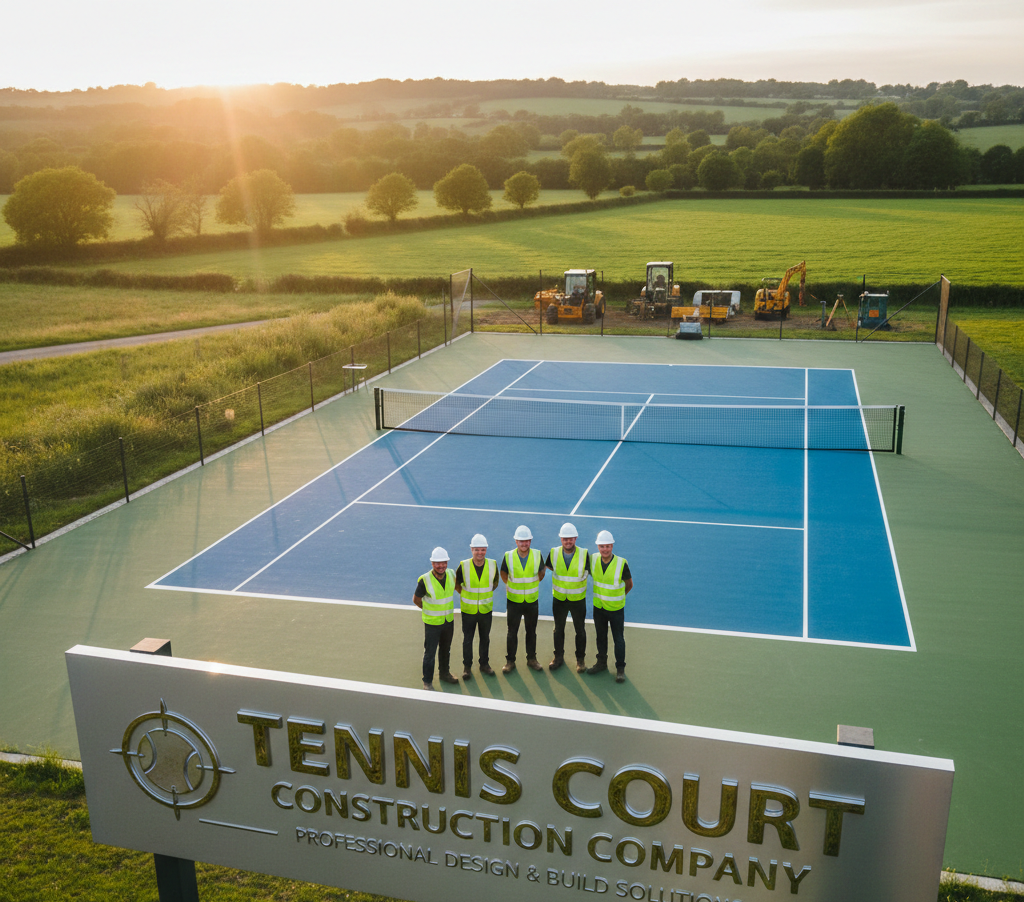
Choosing the right tennis court construction company is an important step toward creating a high-quality sports facility that offers excellent playing conditions, long-term durability, and reliable performance. Whether you are planning a tennis court for a school, sports academy, residential complex, private villa, hotel, resort, or professional sports club, the quality of construction directly influences the overall playing experience.
Sports Facility India provides tennis court construction solutions designed around project requirements, available space, site conditions, playing preferences, and budget. Our services cover essential stages of court development, including site assessment, ground preparation, foundation work, surface selection, court marking, fencing, lighting, and maintenance planning. We focus on creating functional, attractive, and durable tennis courts for recreational players, coaching facilities, and competitive sports environments.
A professionally constructed tennis court requires much more than applying a sports surface to the ground. Proper drainage, accurate dimensions, a stable base, suitable surface materials, and careful installation all contribute to the quality of the finished facility. By considering these elements from the beginning, property owners and sports facility developers can build courts that support consistent play and reduce avoidable maintenance expenses.
If you are searching for a reliable tennis court builder in India, Sports Facility India can help you plan a suitable solution for your project.
Professional Tennis Court Construction Services in India
Every tennis court project has its own requirements. A school may need a durable surface for regular physical education classes, while a sports academy may prioritize player training and consistent ball response. A private residential court might focus on appearance, convenience, and compatibility with the surrounding landscape.
Our tennis court construction services are planned to address these different needs. We consider the intended use of the court, expected playing frequency, environmental conditions, available land, and the type of surface best suited to the project.
Our key services include:
- Tennis court site inspection and feasibility assessment
- Ground preparation and excavation where required
- Sub-base construction and foundation preparation
- Surface selection and professional installation
- Acrylic tennis court flooring and coating systems
- Synthetic grass tennis court installation
- Clay court construction and drainage planning
- Court dimensions, layout design, and line marking
- Tennis net, posts, and boundary fencing installation
- Sports lighting and electrical planning
- Existing court repair, resurfacing, and maintenance
From an individual residential court to a multi-court sports complex, we aim to provide a coordinated construction process that helps clients manage their projects efficiently.
Types of Tennis Courts We Construct
Selecting the right tennis court surface is one of the most important decisions in the construction process. Different surfaces influence ball bounce, playing speed, player movement, maintenance requirements, and the overall cost of ownership.
1. Acrylic Tennis Court Construction
Acrylic tennis courts are widely used in sports academies, educational institutions, clubs, and public sports facilities. These courts typically feature specialized acrylic coatings applied over a properly prepared asphalt or concrete base.
Acrylic sports surfaces can be designed with different coating systems to achieve the required texture, appearance, and playing characteristics. Depending on the selected system, cushioned layers may also be incorporated to provide additional comfort.
Key advantages of acrylic tennis courts include:
- Consistent playing characteristics when correctly installed
- Customizable surface colours
- Clear and durable court markings
- Relatively straightforward routine maintenance
- Suitability for outdoor courts and selected indoor facilities
- Compatibility with many training and recreational applications
Acrylic court performance depends on the quality of the underlying base, surface preparation, drainage, and installation methods. This makes professional construction essential for achieving a reliable finish.
2. Synthetic Grass Tennis Courts
Synthetic grass tennis courts provide a green, natural-looking appearance with a different playing feel from conventional hard courts. They are commonly considered for residential properties, leisure clubs, resorts, and recreational sports facilities.
These courts use artificial turf systems designed for sports applications. Depending on the product specification, the installation may include a prepared base, drainage provisions, suitable infill, and carefully finished seams.
Synthetic grass can be an attractive option for projects where visual appeal and recreational usability are important. However, the selected turf must be appropriate for tennis, as not every artificial grass product is designed for sports performance.
Before installation, factors such as drainage, surface stability, pile characteristics, maintenance requirements, and expected usage should be evaluated.
3. Clay Tennis Court Construction
Clay tennis courts are associated with a slower playing surface and longer rallies. They are suitable for clubs, specialized training facilities, and projects where the characteristics of clay tennis are specifically desired.
Building a clay court requires careful attention to ground preparation, drainage, surface composition, and ongoing maintenance. The playing layer must be developed to provide suitable traction and consistent playing conditions.
Our clay court planning approach considers:
- Site grading and water management
- Stable foundation and drainage arrangements
- Appropriate clay court surface materials
- Correct court layout and boundary markings
- Maintenance access and watering requirements
- Regular surface preparation and upkeep
Clay courts can provide a distinctive playing experience, but they generally require more frequent maintenance than many acrylic hard courts. The local climate and water availability should therefore be considered before choosing this surface.
4. Cushioned Tennis Court Systems
Cushioned tennis courts incorporate additional resilient layers within a suitable sports surface system. These layers are intended to improve playing comfort compared with certain non-cushioned hard court systems.
They may be considered for tennis academies, clubs, and facilities that prioritize regular training and player comfort. The amount of cushioning and the resulting playing characteristics depend on the selected product and complete system specification.
Correct installation is essential because the cushioning system must be compatible with the base, coatings, and environmental conditions. Project owners should review manufacturer specifications rather than assuming that every cushioned system provides identical performance.
5. Modular Tile Tennis Courts
Modular sports tiles are another option for selected recreational and multi-purpose facilities. These interlocking systems can offer convenient installation and the possibility of replacing individual damaged tiles.
Their suitability for tennis depends on the specific tile design, surface texture, ball response, stability, and intended level of play. A system developed for general recreational use may not be appropriate for a competition-focused tennis court.
A professional assessment helps determine whether modular flooring is suitable for the intended application.
Tennis Court Design and Standard Dimensions
Accurate court dimensions are essential for a properly planned tennis facility. A standard tennis court measures 23.77 metres in length. Its playing width is 8.23 metres for singles matches and 10.97 metres for doubles matches.
These measurements represent the playing lines rather than the entire construction area. Additional space is required beyond the baselines and sidelines to allow players to move safely and comfortably.
During the design stage, the following factors should be considered:
- Standard singles and doubles court markings
- Available space around the playing area
- Net position, height, and post installation
- Surface slope and drainage requirements
- Boundary fencing and access gates
- Lighting positions and glare control
- Spectator areas, seating, and circulation routes
- Accessibility and safe movement around the court
The final site layout should reflect the intended level of play, applicable sports guidelines, and local project conditions. For facilities intended for official competition, relevant International Tennis Federation (ITF) requirements should be reviewed during planning.
Our Tennis Court Construction Process
A systematic construction process helps control quality and reduce the risk of problems developing after installation. Sports Facility India approaches tennis court projects through a series of coordinated stages.
Site Inspection and Project Planning
The first stage involves assessing the proposed construction location. The site is reviewed for available dimensions, ground conditions, access, drainage, surrounding structures, and potential installation challenges.
Project requirements, including surface preference, anticipated usage, budget, and additional facilities, are also discussed. This information helps establish an appropriate construction plan.
Ground Preparation and Earthwork
Depending on the existing site, preparation may involve vegetation removal, excavation, filling, compaction, and grading. The objective is to establish a suitable foundation for the planned court structure.
Poor ground preparation can contribute to settlement, uneven surfaces, drainage problems, and premature cracking. Appropriate preparation is therefore an important part of a durable tennis court.
Base Construction
The base provides structural support for the sports surface. Depending on the design, ground conditions, and selected flooring system, the project may use an engineered aggregate base with an asphalt or concrete playing-surface foundation.
The base must be designed and installed with suitable levels, stability, and drainage provisions. Material selection should be based on engineering requirements rather than a universal assumption that one base type suits every site.
Drainage and Surface Preparation
Effective water management is particularly important for outdoor tennis courts. The design should direct rainwater away from the playing area and prevent water from accumulating in unsuitable locations.
Before the final surface is applied, the base must be checked for cleanliness, moisture conditions, surface irregularities, and compatibility with the selected materials. Any necessary repairs or preparation work should be completed before proceeding.
Sports Surface Installation
The selected surface system is installed according to its technical requirements. Acrylic systems may involve multiple layers of compatible coatings, while synthetic grass, clay, and modular systems require different installation procedures.
Correct application, curing conditions, seam treatment where applicable, and surface finishing all influence the final result.
Court Marking and Equipment Installation
After the playing surface is ready, the court lines are marked according to the selected layout. The net, posts, fencing, gates, and other specified equipment are installed and checked.
Lighting systems, where included, should be planned to provide suitable visibility while minimizing glare and unwanted light spill.
Final Inspection and Handover
The completed court is inspected for visible surface defects, line accuracy, equipment installation, and general finish. Any applicable curing periods and product-specific restrictions must be observed before the court is opened for play.
Clients should also receive practical guidance on cleaning, maintenance, and recommended inspection intervals.
Why Choose Sports Facility India for Tennis Court Construction?
Selecting an experienced tennis court construction contractor can make a meaningful difference to project planning, material selection, and the quality of the completed facility.
Project-Specific Construction Solutions
We understand that tennis courts are built for different purposes. Our approach considers site dimensions, expected usage, surface preferences, and budget before recommending a suitable construction solution.
Quality-Focused Material Selection
The performance of a tennis court depends on using materials that are appropriate for the application. Surface coatings, base materials, adhesives, turf systems, and installation accessories should all be selected according to the requirements of the complete system.
Attention to Surface Preparation
A good-looking surface cannot compensate for an unsuitable foundation. Proper grading, compaction, leveling, and drainage planning are essential considerations throughout construction.
Complete Project Coordination
Coordinating ground preparation, flooring, court marking, fencing, lighting, and equipment helps maintain consistency across different project stages. We aim to make the construction process clearer and more manageable for our clients.
Solutions for Different Budgets
A residential recreational court and a professional training facility do not necessarily require the same specification. Comparing appropriate surface systems and optional features helps clients make informed decisions without compromising essential construction quality.
Maintenance and Resurfacing Support
Regular maintenance helps protect the investment made in a tennis court. Depending on the project and service requirements, support may include surface repairs, repainting, line remarking, cleaning recommendations, and resurfacing.
Sports Facility India works with the objective of creating sports facilities that combine functional design, dependable construction practices, and a professional appearance.
Tennis Court Construction for Different Applications
Our tennis court construction solutions can be planned for a variety of environments.
Schools and colleges: Educational institutions can benefit from tennis courts that support sports periods, extracurricular activities, and student training. The surface should be selected according to expected usage, available space, and maintenance capacity.
Tennis academies and coaching centres: Training facilities need practical layouts, consistent playing conditions, and durable materials that can accommodate regular sessions. Lighting and equipment arrangements may also be important for extended training hours.
Sports clubs and complexes: Clubs may require multiple courts, spectator areas, organized circulation, and coordinated maintenance planning. A consistent construction specification across courts can simplify facility management.
Residential properties and private villas: Residential tennis courts can be designed to fit available land while considering landscaping, fencing, privacy, drainage, and access.
Hotels and resorts: Leisure properties may use tennis courts as recreational amenities for guests. Surface appearance, weather suitability, safety, and ease of maintenance are important planning considerations.
Government and institutional facilities: Public sports projects often require careful planning around site conditions, durability, accessibility, maintenance, and applicable project specifications.
Tennis Court Construction Cost in India
The cost of tennis court construction in India varies according to the project specification. A reliable quotation should account for the full construction scope instead of considering only the visible sports flooring.
Important cost factors include:
- Court dimensions and total development area
- Site clearing, excavation, and ground preparation
- Soil conditions and foundation requirements
- Asphalt, concrete, or other approved base construction
- Selected surface type and material specification
- Drainage and water management arrangements
- Fencing, gates, nets, and posts
- Lighting and electrical installations
- Site accessibility and transportation expenses
- Number of courts and project location
- Landscaping and additional amenities
- Future maintenance and resurfacing requirements
For example, an acrylic tennis court may have a different initial cost and maintenance profile from a synthetic grass or clay court. Similarly, a site that requires extensive excavation or drainage improvements may need a larger construction budget than a properly prepared site.
The most practical approach is to arrange a site assessment and obtain a detailed quotation that separates essential construction work from optional features. This makes it easier to compare proposals and understand the long-term value of each solution.
Tennis Court Maintenance and Resurfacing Services
Regular maintenance is essential for keeping a tennis court safe, attractive, and functional. The appropriate maintenance routine depends on the surface type, climate, frequency of use, and manufacturer recommendations.
Our maintenance-related services may include:
- Cleaning and removing accumulated dust or debris
- Inspecting cracks and surface irregularities
- Repairing suitable surface defects
- Recoating and resurfacing worn acrylic courts
- Refreshing faded court markings
- Inspecting drainage and water runoff
- Checking fencing, gates, nets, and posts
- Reviewing lighting equipment and fixtures
- Replacing damaged components where appropriate
Outdoor courts may require more frequent cleaning and inspection because they are exposed to rain, sunlight, dust, and changing temperatures. Synthetic grass and clay courts have their own maintenance requirements, including attention to infill or surface preparation where applicable.
Timely maintenance can help identify small problems before they become more extensive repairs. It also supports better playing conditions and helps property owners plan future maintenance budgets.
Build a High-Quality Tennis Court with Sports Facility India
A successful tennis court project begins with the right planning, continues with careful construction, and benefits from an appropriate maintenance strategy. From selecting the surface to preparing the base and installing the final court markings, every stage contributes to the quality of the finished facility.
Sports Facility India offers tennis court construction solutions for residential, educational, commercial, and institutional projects across India. Whether you are developing a new tennis court, upgrading an existing facility, or planning a dedicated sports complex, we can help you evaluate the available options according to your project requirements.
Contact Sports Facility India today to discuss your tennis court construction project, arrange a site assessment, and request a customized quotation.
Website: https://www.sports-facility.in/index.php
Explore our tennis court services: https://www.sports-facility.in/tennis-court.php
Frequently Asked Questions About Tennis Court Construction Companies
1. What does a tennis court construction company do?
A tennis court construction company plans, builds, and, where offered, maintains tennis courts. Its services may include site inspection, earthwork, foundation construction, drainage, sports flooring, line marking, fencing, lighting, and equipment installation.
2. How do I choose a reliable tennis court construction company in India?
Compare relevant project experience, construction methods, surface options, material specifications, quality-control procedures, quotations, and after-sales support. Ask for a site inspection and ensure the proposed design addresses drainage, base preparation, and the intended level of play.
3. What types of tennis court surfaces are available?
Common options include acrylic hard courts, synthetic grass, clay, cushioned sports surfaces, and selected modular tile systems. Each has different playing characteristics, installation requirements, and maintenance needs.
4. What is the standard size of a tennis court?
A standard tennis court is 23.77 metres long. The playing width is 8.23 metres for singles and 10.97 metres for doubles. Additional surrounding space is necessary for player movement and safe access.
5. How much does tennis court construction cost in India?
The price depends on court size, ground conditions, foundation work, surface selection, drainage, fencing, lighting, equipment, and location. A site-specific quotation provides a more dependable estimate than a general price range.
6. How long does it take to construct a tennis court?
The timeline depends on site preparation, foundation requirements, surface type, weather, material curing periods, and additional facilities. A contractor should provide a project schedule after assessing the site and confirming the scope of work.
7. Which tennis court surface is best for outdoor use?
Acrylic hard courts and suitable synthetic grass systems are common outdoor options, while clay is appropriate for projects prepared for its particular playing and maintenance requirements. The best choice depends on climate, drainage, intended use, budget, and maintenance capacity.
8. Are tennis court dimensions regulated by the ITF?
The International Tennis Federation publishes tennis rules and technical guidance relevant to court dimensions and playing conditions. Projects intended for competition should be planned against the applicable requirements, including any additional venue-specific criteria.
9. Can a tennis court be built on an existing concrete surface?
Potentially, yes. The existing concrete must be assessed for structural stability, cracks, level variations, moisture conditions, and drainage. Repairs or other preparation may be necessary before installing a compatible sports surface.
10. Can tennis court colours and markings be customized?
Yes. Many acrylic systems allow clients to select suitable colour combinations, subject to product availability and project specifications. Court markings must remain clear and accurately positioned for the intended format of play.
11. Does a tennis court construction company provide fencing and lighting?
Many contractors offer fencing and lighting as part of a complete project or as additional services. These features should be specified in the quotation, with attention to safety, visibility, access, and the intended hours of operation.
12. How often should a tennis court be resurfaced?
There is no single resurfacing interval for every court. The requirement depends on the surface system, usage, climate, maintenance practices, and visible wear. Periodic inspections can help determine when repairs or resurfacing are appropriate.
13. Can tennis courts be constructed for schools and residential properties?
Yes. Tennis courts can be planned for schools, colleges, private villas, residential communities, clubs, hotels, and sports academies. The design should match available space, intended usage, safety needs, and the property’s maintenance capabilities.
14. Does Sports Facility India provide tennis court construction across India?
Sports Facility India offers tennis court construction solutions for projects in India. Contact the company to confirm service availability, project requirements, site inspection arrangements, and the scope of work for your location.
15. What information is required to get a tennis court construction quotation?
Useful details include the project location, available site dimensions, preferred surface, intended usage, existing ground conditions, number of courts, and requirements for lighting or fencing. Site photographs or a site visit can help the contractor understand the project more accurately.