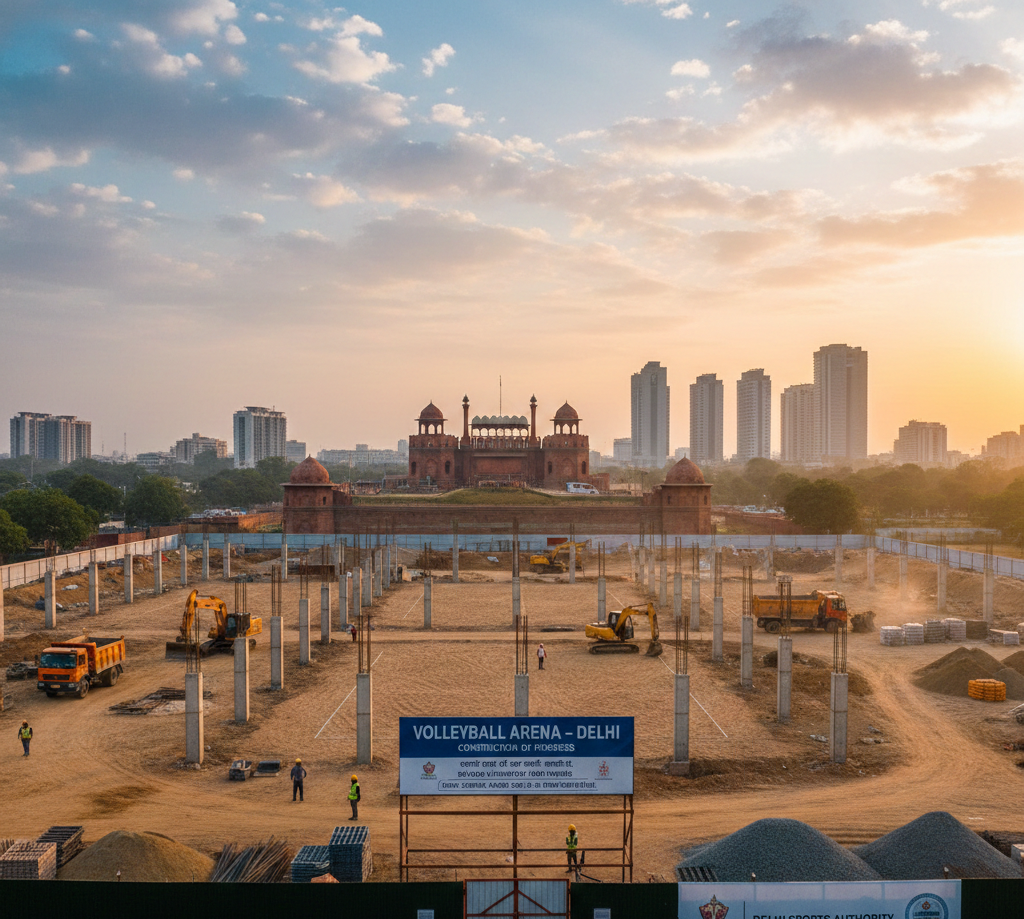
Introduction
The demand for modern sports infrastructure is increasing across Delhi as schools, colleges, residential societies, sports academies, fitness centres, and private clubs invest in better recreational facilities. Volleyball, known for its fast-paced gameplay, teamwork, and fitness benefits, is becoming an important part of these developments. As a result, volleyball court construction in Delhi is gaining attention among institutions, property developers, sports facility owners, and individuals planning dedicated playing spaces.
Constructing a volleyball court requires more than preparing a flat surface and installing a net. A successful project involves proper site evaluation, ground preparation, foundation development, suitable sports flooring, accurate court markings, drainage planning, and the installation of essential accessories. Each component contributes to player safety, court performance, and long-term durability.
Delhi’s climate also makes material selection an important consideration. High summer temperatures, seasonal rainfall, dust, and changing weather conditions can affect outdoor sports surfaces if the court is not designed and installed correctly.
Whether you are planning an outdoor volleyball court for a school, a synthetic court for a sports academy, an indoor facility for professional training, or a beach volleyball area for recreational use, understanding the construction process helps you make informed decisions.
This guide explains volleyball court dimensions, flooring options, construction stages, estimated costs, maintenance requirements, and the key factors to consider when choosing a volleyball court construction company in Delhi.
Why Invest in Volleyball Court Construction in Delhi?
Delhi has a diverse range of sports facilities, from educational campuses and community playgrounds to professional training centres. Adding a well-designed volleyball court can improve the usability of a property while encouraging physical activity and organised sports participation.
1. Growing Demand for Sports Facilities
Schools, colleges, universities, and sports academies require dedicated spaces for physical education, team practice, and competitions. A professionally constructed volleyball court can support regular training sessions and school-level tournaments.
2. Fitness and Recreation
Volleyball helps develop agility, coordination, balance, endurance, and teamwork. Installing a court in a residential society, club, or recreational complex gives residents and members an accessible place to exercise and socialise.
3. Opportunities for Sports Training
A properly planned volleyball court can accommodate beginner coaching, advanced practice, and organised matches. Sports academies can use the facility to conduct training programmes for different age groups and skill levels.
4. Better Utilisation of Available Space
Where sufficient clearance and safety requirements can be maintained, a volleyball court can become a valuable addition to school grounds, institutional campuses, and multipurpose sports complexes.
5. Long-Term Value
Quality construction, suitable flooring, and regular maintenance can help reduce avoidable repairs and extend the useful life of a court. The best results come from choosing materials according to the intended use, available budget, and environmental conditions.
Types of Volleyball Courts Available in Delhi
The right court design depends on the location, expected playing frequency, budget, and level of competition.
1. Outdoor Volleyball Court
Outdoor volleyball courts are commonly installed in schools, colleges, parks, residential communities, and sports clubs. They can be constructed using concrete-based systems with suitable sports coatings or other surfaces designed for outdoor athletic use.
A good outdoor court should have a stable foundation, appropriate surface texture, effective drainage, and clear boundary markings. In Delhi, UV resistance and weather suitability should be considered when selecting the flooring system.
2. Indoor Volleyball Court
Indoor volleyball courts are suitable for year-round training, institutional sports facilities, competitive play, and professional coaching. Depending on the project, flooring may include sports timber, resilient synthetic systems, or other purpose-designed indoor sports surfaces.
Indoor facilities also require adequate ceiling clearance, suitable lighting, ventilation, and sufficient space around the playing area. The subfloor must be designed for the selected flooring system to ensure consistent performance.
3. Synthetic Volleyball Court
Synthetic volleyball courts are designed to provide a sports surface suited to the intended level of use. Outdoor acrylic systems are commonly considered for suitable prepared bases, while indoor facilities may use resilient synthetic flooring systems.
The term “synthetic flooring” covers different products with different performance characteristics. Buyers should evaluate slip resistance, surface consistency, impact characteristics, maintenance requirements, and manufacturer specifications before choosing a system.
4. Beach Volleyball Court
Beach volleyball courts use specially selected sand rather than conventional hard sports flooring. They are suitable for resorts, recreational clubs, sports campuses, and dedicated beach volleyball facilities.
Construction generally includes excavation, a suitable drainage arrangement, appropriate separation layers where required, and a carefully selected sand profile. Sand depth, cleanliness, particle characteristics, and drainage must be established according to the intended use and applicable competition requirements.
Standard Volleyball Court Dimensions
Accurate measurements are essential for a functional volleyball court. For conventional indoor volleyball, the standard playing court measures 18 metres long and 9 metres wide.
Important dimensions and planning considerations include:
- Playing area: 18 m × 9 m.
- Centre line: Divides the court into two equal halves.
- Attack lines: Positioned 3 m from the centre line on each side.
- Net height for men’s competitions: 2.43 m.
- Net height for women’s competitions: 2.24 m.
- Free playing zone: Additional unobstructed space surrounding the court, with the required dimensions depending on the competition level.
These measurements describe the playing area, not the total land required for construction. The overall site must also accommodate safety clearances, poles, access routes, drainage features, fencing where necessary, and spectator areas if included.
Beach volleyball follows different playing-area dimensions, generally 16 m × 8 m. Therefore, the intended sport and applicable governing-body requirements should be confirmed before construction begins.
For projects intended for official tournaments, the latest applicable rules from the relevant volleyball governing body should be checked before finalising the design.
Best Volleyball Court Flooring Options in Delhi
Flooring selection affects playing comfort, maintenance, durability, and the overall construction budget. There is no single flooring material that suits every volleyball court.
1. Acrylic Sports Flooring
Acrylic sports flooring is a popular option for suitable outdoor hard courts. It is applied over a properly prepared base and can provide a coloured playing surface with clear, visible line markings.
Advantages:
- Available in different colours.
- Suitable for many outdoor sports applications.
- Relatively straightforward routine cleaning.
- Can be used for multipurpose facilities when designed appropriately.
The quality of the base, coating system, and application process is crucial. Acrylic coatings should not be treated as a substitute for repairing cracks, correcting unevenness, or solving drainage problems in the underlying structure.
2. Wooden Sports Flooring
Purpose-designed timber sports flooring is often considered for premium indoor facilities. Depending on the system, it can provide resilience and playing characteristics suitable for indoor volleyball.
Advantages:
- Professional indoor appearance.
- Potentially suitable for high-performance training and competition.
- Can offer designed shock absorption and controlled surface response.
Wooden flooring requires appropriate subfloor construction, moisture management, controlled environmental conditions, and specialist maintenance. It is generally a more substantial investment than a basic outdoor hard court.
3. PVC or Vinyl Sports Flooring
Sports-grade PVC and vinyl flooring are used in selected indoor sports facilities. These products are manufactured in different thicknesses and constructions, so their suitability for volleyball depends on the product’s technical specifications.
Advantages:
- Smooth, consistent finish.
- Available in a range of designs and colours.
- Some systems provide resilient playing characteristics.
- Can be suitable for multipurpose indoor venues.
Choose a sports-specific product rather than ordinary residential vinyl. Installation should follow the manufacturer’s requirements for the subfloor, seams, adhesion, and maintenance.
4. Polyurethane Sports Flooring
Polyurethane, commonly called PU flooring, is available in different sports flooring systems for indoor and selected outdoor applications. Depending on its construction, it can offer a seamless finish and designed levels of resilience.
Its suitability depends on the product specification, substrate, weather exposure, and intended sport. A professional contractor should explain the complete system rather than quote only the top coating.
5. Concrete or Cement-Based Courts
Concrete or cement-based surfaces can provide a structural foundation for an outdoor volleyball court. However, a basic hard surface may not offer the same playing comfort as a purpose-designed sports flooring system.
Where concrete is selected as the finished surface, its suitability, texture, joint arrangement, drainage, and player-safety implications should be evaluated carefully. For many projects, a concrete base with an appropriate sports coating offers a more suitable solution than untreated concrete alone.
Step-by-Step Volleyball Court Construction Process
A systematic installation process helps ensure that the completed facility meets its intended requirements.
Site Inspection and Planning
The contractor evaluates the available land, existing ground conditions, access, drainage, and surrounding structures. The design should account for the playing area, free zone, fencing, lighting, and any future expansion plans.
The project scope should be documented before construction starts, including the selected flooring, foundation, accessories, and expected completion schedule.
Ground Preparation and Excavation
The site is cleared of vegetation, loose material, debris, and unsuitable soil. Excavation and ground preparation are carried out according to the proposed foundation design.
Proper compaction is important because poorly prepared ground can contribute to settlement, cracking, and uneven surfaces later.
Foundation and Base Construction
The base must be suitable for the selected flooring system and local ground conditions. Depending on the design, construction may involve compacted sub-base layers, concrete work, reinforcement, or other specified components.
Levels and surface regularity should be checked before flooring installation. A strong base is particularly important for outdoor courts exposed to repeated temperature changes and rainfall.
Drainage and Surface Slope
Outdoor courts need a drainage plan that prevents water from accumulating on the playing surface or damaging the foundation. Surface gradients, drainage channels, and surrounding ground levels should be coordinated with the chosen sports flooring system.
The contractor should ensure that any slope is compatible with the intended court design and does not compromise safe play.
Sports Flooring Installation
Once the base is ready and has met the required conditions, the selected flooring system is installed. Depending on the material, this may involve surface preparation, primers, cushioning layers, synthetic coatings, prefabricated flooring, or timber installation.
Temperature, moisture, curing time, and manufacturer instructions should be observed throughout the process.
Court Marking and Net Installation
The playing lines are measured and marked according to the required court dimensions. The contractor then installs suitable net posts, anchoring systems, and the volleyball net.
Post foundations and net tensioning arrangements should be stable and safe. Where competition use is planned, equipment should meet the applicable specifications.
Lighting, Fencing, and Additional Facilities
Depending on the project, the court may include LED floodlights, perimeter fencing, protective padding, seating, storage, and spectator access.
Lighting design should minimise glare and provide adequate visibility across the playing area. Electrical installations must be suitable for outdoor exposure where applicable.
Final Inspection and Handover
Before the court is opened for use, the contractor should inspect surface quality, court measurements, markings, drainage, net installation, and accessories.
The handover should include relevant maintenance instructions, product details, warranty information, and recommendations for cleaning and repairs.
Volleyball Court Construction Cost in Delhi
The cost of volleyball court construction in Delhi depends on the type of court, site conditions, foundation requirements, flooring specification, accessories, and project size.
The following figures are indicative planning estimates rather than verified current contractor quotations.
| Court type | Indicative budget |
|---|---|
| Basic outdoor concrete-based court | ₹3–6 lakh |
| Outdoor court with synthetic sports flooring | ₹5–12 lakh |
| Premium outdoor court with additional facilities | ₹8–15 lakh or more |
| Indoor court with sports-grade flooring | ₹12–25 lakh or more |
| Beach volleyball court | ₹4–10 lakh or more |
These estimates are broad and may vary considerably. Indoor court budgets may exclude the cost of constructing a new building or enclosing an existing space. Beach court budgets depend on excavation, sand specifications, drainage, retaining arrangements, and site access.
The actual cost should be calculated using the complete project scope rather than the playing area’s square footage alone.
Factors That Affect Construction Cost
1. Site condition: Uneven ground, weak soil, demolition, excavation, and additional earthwork can increase the budget.
2. Flooring material: Acrylic, timber, vinyl, PU, and sand-based systems have different material and installation costs.
3. Foundation quality: The required sub-base, concrete thickness, reinforcement, and drainage arrangement affect total expenditure.
4. Court accessories: Net posts, nets, fencing, lighting, seating, and protective equipment add to the overall cost.
5. Labour and transportation: Local labour rates, material delivery, site accessibility, and equipment requirements influence the quotation.
6. Project specifications: Professional training and tournament facilities may require additional safety clearances, specialised equipment, and higher-performance flooring.
To compare contractors accurately, request itemised quotations that specify material brands, surface preparation, foundation details, flooring layers, line marking, accessories, taxes, warranties, and exclusions.
How to Choose a Volleyball Court Construction Company in Delhi
Selecting the right contractor is essential for achieving a durable and functional sports facility.
Check Relevant Experience
Look for a company with experience in volleyball court construction and similar sports flooring projects. Ask for photographs, completed project details, and references where available.
Evaluate Material Quality
Request product specifications and clarify whether the quoted system is designed for indoor or outdoor use. A low initial quotation may not represent good value if essential foundation work or surface preparation is excluded.
Confirm Technical Knowledge
The contractor should understand court dimensions, surface preparation, drainage, sports flooring installation, and equipment placement. For competition facilities, confirm the applicable standards before approving the design.
Review the Scope of Work
A written quotation should clearly describe every major construction stage. This reduces the risk of unexpected expenses or disagreements during installation.
Understand Warranty and Maintenance
Ask which components are covered by warranty and what maintenance is required to preserve the flooring. Warranty terms should be documented rather than assumed.
Compare Overall Value
Price is important, but it should not be the only deciding factor. A technically appropriate design, good workmanship, reliable materials, and a clear maintenance plan can help deliver better long-term value.
Maintenance Tips for Volleyball Courts in Delhi
Regular maintenance helps preserve the playing surface and reduces avoidable repair costs.
- Clean the court regularly: Remove dust, leaves, and loose debris using suitable cleaning equipment.
- Inspect for cracks: Check outdoor surfaces for cracks, coating damage, and signs of settlement.
- Maintain drainage: Clear drains and channels before and during the rainy season.
- Use appropriate cleaning products: Follow the flooring manufacturer’s recommendations and avoid harsh chemicals that could damage the surface.
- Check sports equipment: Inspect nets, posts, anchors, and protective padding for wear or looseness.
- Maintain indoor conditions: Wooden floors may require particular attention to moisture, temperature, and humidity.
- Repair damage promptly: Address small defects before they develop into larger problems.
- Schedule professional inspections: Periodic technical assessments can identify issues that routine cleaning may not reveal.
Delhi’s summer heat and monsoon conditions make seasonal inspections particularly valuable for outdoor facilities.
Common Mistakes to Avoid During Volleyball Court Construction
A successful project depends on more than selecting attractive flooring colours. Avoid these common mistakes:
Ignoring ground conditions: Inadequate compaction can cause unevenness and structural problems.
Choosing flooring on price alone: The cheapest material may not suit the sport, climate, or expected usage.
Overlooking drainage: Standing water can affect the base, damage coatings, and disrupt court availability.
Incorrect measurements: Poorly marked playing lines or inadequate clearance can make the court unsuitable for its intended purpose.
Using unsuitable equipment: Poorly installed poles and anchoring systems can create safety concerns.
Skipping the maintenance plan: Even a quality court needs routine cleaning, inspections, and timely repairs.
Accepting an unclear quotation: Missing specifications can lead to additional expenses and disputes.
Careful planning and professional execution help minimise these risks.
Why Professional Volleyball Court Construction Matters
Professional construction brings together site planning, foundation engineering, sports flooring expertise, accurate measurements, and appropriate equipment installation. These elements work together to create a court suited to its intended users.
For schools and colleges, a properly designed court supports physical education and sports activities. For residential societies, it creates a shared recreational facility. For academies and clubs, the right surface and layout can support regular coaching and organised competition.
The most appropriate construction solution will depend on the project rather than a single universal specification. A detailed site assessment and transparent quotation are therefore valuable starting points for any new volleyball court in Delhi.
Conclusion
Investing in volleyball court construction in Delhi can create a valuable sports facility for educational institutions, residential communities, sports academies, clubs, and private developments. From choosing the right flooring to preparing a stable foundation, planning drainage, installing accurate court markings, and selecting suitable accessories, every stage contributes to the quality of the finished court.
Before starting construction, evaluate the available space, intended playing level, local site conditions, budget, and maintenance requirements. Compare contractors on technical capability, material specifications, workmanship, and the completeness of their quotations.
A well-planned volleyball court can provide a dependable space for training, fitness, recreation, and competitive play for years to come.
For project-specific guidance, contact an experienced sports infrastructure contractor such as Sports-Facility.in to discuss your site requirements, flooring preferences, construction scope, and budget before finalising your volleyball court project.
Frequently Asked Questions
1. What is the standard size of a volleyball court?
A conventional indoor volleyball playing court measures 18 metres long and 9 metres wide. Additional free space is required around the playing area, with exact requirements depending on the level of play.
2. What is the cost of volleyball court construction in Delhi?
The cost varies according to the foundation, flooring, accessories, and site conditions. A basic outdoor project may cost a few lakh rupees, while a synthetic court or premium indoor facility can require a substantially larger investment. A site-specific quotation is the best way to determine the actual budget.
3. Which flooring is best for an outdoor volleyball court?
Acrylic sports flooring is a common option for suitable outdoor hard-court bases. The best choice depends on weather exposure, expected usage, surface performance, drainage, and maintenance requirements.
4. Which flooring is suitable for an indoor volleyball court?
Sports-grade timber, resilient synthetic flooring, PVC, vinyl, and PU-based systems may be suitable depending on their technical specifications and the intended level of play.
5. How long does it take to construct a volleyball court?
A straightforward outdoor court may take several weeks, while projects requiring extensive groundwork, specialised flooring, lighting, or indoor building work can take longer. The schedule depends on site conditions, material availability, weather, and curing requirements.
6. Can a volleyball court be used for other sports?
Yes. A volleyball court may form part of a multipurpose sports facility if there is adequate space, suitable flooring, and a layout that accommodates the other sports safely. Separate markings and appropriate equipment may be necessary.
7. Is drainage necessary for an outdoor volleyball court?
Yes. Proper drainage helps prevent standing water and reduces the risk of damage to the foundation and sports surface. The drainage design should be established before flooring installation.
8. What should I check before hiring a volleyball court contractor?
Review the contractor’s relevant experience, previous projects, flooring specifications, foundation design, drainage plan, itemised quotation, warranty terms, and maintenance recommendations.
9. Can a volleyball court be installed in a school or residential society?
Yes. Schools, colleges, residential societies, clubs, and sports complexes can develop volleyball courts if the available space, safety clearances, ground conditions, and local requirements are suitable.
10. How can I extend the life of a volleyball court?
Regular cleaning, prompt repairs, proper drainage, equipment inspections, and maintenance according to the flooring manufacturer’s instructions can help preserve the court and maintain safe playing conditions.