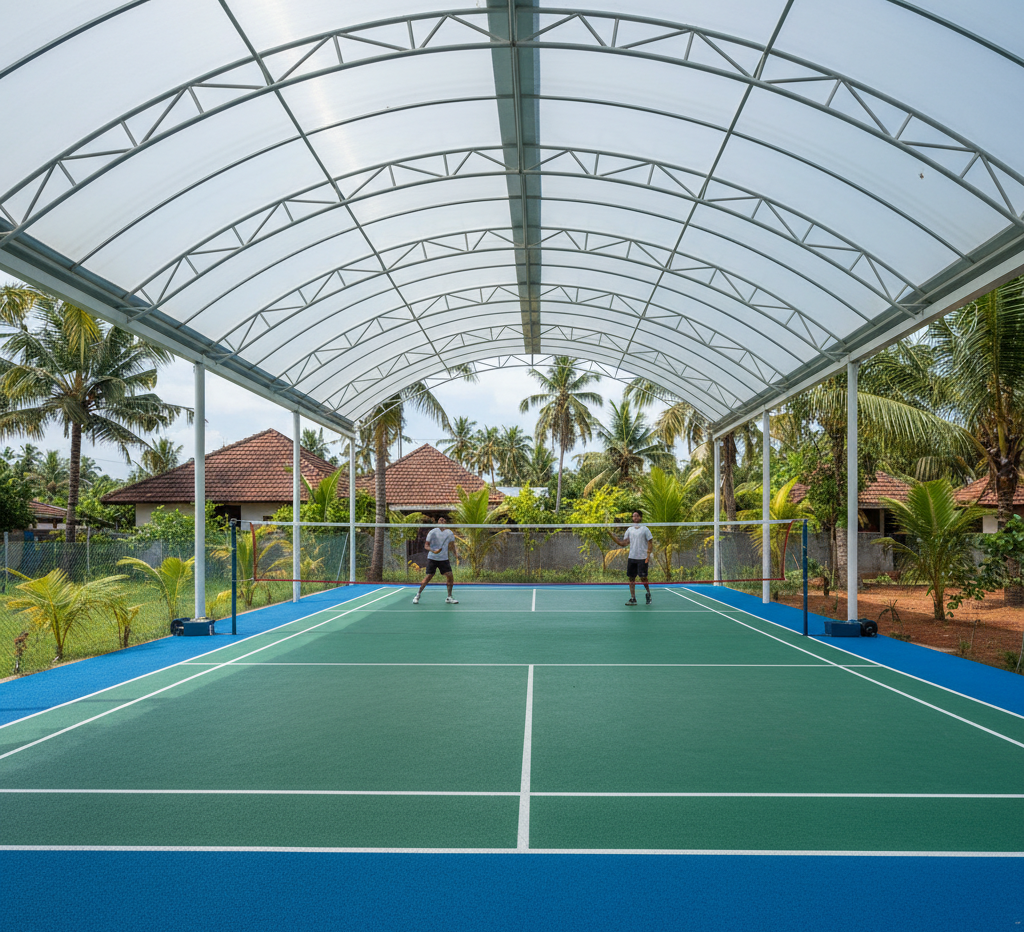
Kerala has witnessed growing interest in badminton as a recreational activity and a competitive sport. Schools, colleges, residential communities, sports clubs, professional training academies, and indoor stadiums are increasingly investing in modern badminton facilities to encourage physical fitness and develop sporting talent. As this demand continues to expand, synthetic badminton court flooring in Kerala has become an important consideration for facility owners looking to create durable, comfortable, and performance-oriented playing environments.
A badminton court requires much more than a flat surface. Players depend on reliable traction, controlled foot movement, consistent playing conditions, and adequate cushioning to perform quick turns, jumps, lunges, and sudden directional changes. Poor-quality flooring can affect movement and comfort while increasing maintenance requirements. Selecting an appropriate synthetic sports surface helps create a more dependable playing environment for beginners, recreational players, and competitive athletes.
Sports Facility India offers sports infrastructure solutions for projects requiring professionally planned badminton courts and modern sports flooring systems. From evaluating the site and preparing the base to selecting the flooring material, installing the playing surface, and completing court markings, every stage should be planned according to the facility’s intended use, available space, and project budget.
Whether you are developing a badminton academy in Kochi, upgrading a school sports hall in Thrissur, planning an indoor court in Thiruvananthapuram, or constructing a recreational facility in Kozhikode, choosing the right flooring system is essential for long-term performance. With options such as PVC vinyl sports flooring, polyurethane flooring, and acrylic court coatings, facility owners can select a surface suited to indoor or outdoor playing conditions.
Explore synthetic sports flooring solutions to understand the available options for modern sports facilities.
Why Synthetic Badminton Court Flooring Is in Demand Across Kerala
Badminton is popular because it combines fitness, coordination, speed, and competitive excitement. As more institutions and private organisations invest in dedicated playing areas, the demand for professionally finished courts has increased. Synthetic flooring offers a practical alternative to untreated concrete and other surfaces that may not provide the playing characteristics required for regular badminton activities.
Kerala’s climate also makes material selection particularly important. High humidity, seasonal rainfall, and moisture exposure can affect building interiors, concrete bases, adhesives, and certain traditional flooring materials. A suitable synthetic flooring system, installed over a properly prepared base and maintained according to manufacturer recommendations, can help provide consistent playing conditions and reduce routine maintenance.
The increasing use of synthetic badminton flooring is associated with several practical advantages:
- Better traction for controlled movement and quick changes in direction.
- Cushioning options that improve underfoot comfort.
- A uniform playing surface when installation and subfloor preparation are completed correctly.
- Multiple material choices for different budgets and facility requirements.
- Professional court markings and attractive colour combinations.
- Straightforward routine cleaning and maintenance.
- Suitable solutions for schools, academies, clubs, and indoor sports complexes.
The most appropriate flooring depends on whether the facility is intended for indoor training, competitive play, outdoor recreation, or multipurpose sports use.
Benefits of Installing Synthetic Badminton Court Flooring in Kerala
1. Suitable Flooring Solutions for Humid Conditions
Kerala’s humid environment requires careful planning when installing sports flooring. Moisture trapped beneath a floor covering can contribute to adhesive failure, bubbling, or other surface problems if the base has not been adequately prepared.
Synthetic badminton flooring can provide reliable service when the selected product is appropriate for the application and the installation follows the manufacturer’s specifications. Before work begins, the contractor should assess the concrete base, moisture levels, drainage requirements, and indoor ventilation conditions.
For indoor courts, controlling moisture in the subfloor is particularly important when installing PVC or PU systems. For outdoor courts, the selected coating and base must be suitable for exposure to sunlight and rainfall. Proper drainage and waterproofing are essential wherever water may collect.
2. Improved Player Comfort and Footwork
Badminton involves frequent jumping, landing, lunging, and rapid movement across the court. Flooring characteristics therefore influence how players interact with the playing surface.
Cushioned PVC and selected polyurethane sports flooring systems can provide impact attenuation and improved underfoot comfort compared with a bare concrete surface. Appropriate traction also supports controlled movement during rallies.
The level of cushioning and grip should match the intended application. A recreational court for school students may have different requirements from a dedicated training facility used for intensive daily practice.
A properly specified sports surface can help create a more comfortable playing environment, although no flooring system can eliminate the risk of sports injuries.
3. Consistent Playing Conditions
A well-installed badminton court should offer a level, even surface with clearly visible boundary lines. Changes in surface texture, uneven joints, or damaged areas can interfere with movement and affect the overall playing experience.
Professional synthetic flooring installation focuses on suitable subfloor preparation, accurate alignment, secure bonding where required, and precise court marking. These steps help produce a uniform surface throughout the playing area.
For academies and clubs, consistent playing conditions are valuable because athletes can concentrate on footwork, positioning, agility, and shot placement without unnecessary distractions caused by flooring irregularities.
4. Lower Routine Maintenance Requirements
Synthetic sports flooring can be easier to maintain than certain traditional surfaces that require regular polishing or refinishing. Routine maintenance generally involves removing dust, cleaning the surface with suitable products, and checking for visible wear or damage.
PVC indoor flooring normally requires regular dry cleaning and occasional damp mopping with a manufacturer-approved cleaner. PU systems should be maintained according to the coating specifications, while outdoor acrylic courts require periodic inspection for coating deterioration, cracks, drainage issues, and biological growth in damp areas.
The maintenance schedule will depend on the flooring material, number of players, daily usage, and environmental exposure.
5. Attractive and Professional Court Appearance
The appearance of a badminton court contributes to the overall quality of a sports facility. Synthetic surfaces are available in a range of colours, allowing schools, sports clubs, academies, and commercial venues to develop a visually organised playing environment.
Popular choices include blue, green, and contrasting combinations that make the court boundaries easy to identify. Depending on the flooring system, facilities may also incorporate approved branding or institutional logos outside the playing lines.
Colour selection should consider visibility, lighting conditions, product availability, and the facility’s intended use.
Types of Synthetic Badminton Court Flooring Available in Kerala
Selecting the correct material is one of the most important decisions in a badminton court project. Each flooring category has different performance characteristics, installation requirements, and ideal applications.
1. PVC Vinyl Badminton Court Flooring
PVC vinyl sports flooring is a widely used option for indoor badminton courts. It is commonly supplied in rolls or sheets and may incorporate multiple layers designed to provide surface durability, dimensional stability, and cushioning.
Depending on the product specification, PVC flooring can offer textured grip, comfortable foot contact, and a professional sports appearance. It is suitable for many school gymnasiums, indoor stadiums, sports clubs, and dedicated badminton academies.
Key features include:
- Cushioned construction options for improved underfoot comfort.
- Textured surfaces designed for sports traction.
- Multiple colour and thickness options.
- Easy routine cleaning when maintained correctly.
- Suitability for indoor facilities with a properly prepared base.
PVC flooring is generally best protected from standing water and excessive subfloor moisture. For Kerala projects, moisture testing and correct adhesive selection are essential before installation.
2. Polyurethane (PU) Sports Flooring
Polyurethane flooring is another option for selected indoor sports applications. PU systems are applied in layers over a suitable prepared substrate and can be designed with cushioning components according to the product specification.
Depending on the system, PU flooring can provide a continuous finish, reliable traction, and impact-attenuation characteristics. It may be considered for multipurpose indoor sports halls and facilities that require a seamless or coated surface.
Before choosing PU flooring for badminton, verify that the proposed system is specifically designed for the intended sport. General-purpose polyurethane coatings do not automatically provide the cushioning, grip, or performance characteristics required for a badminton court.
3. Acrylic Badminton Court Flooring
Acrylic court systems are commonly considered for outdoor badminton courts and selected suitable hard-court applications. They are applied over an appropriately prepared base and can be finished with sports-specific colours and line markings.
Acrylic systems are generally valued for their weather-resistant surface options, colour retention, and relatively straightforward maintenance. However, their cushioning characteristics differ from those of dedicated cushioned indoor PVC systems.
For outdoor installations in Kerala, the project should include a suitable base, effective drainage, correct surface slope, and a coating system intended for outdoor exposure. Rainwater must not be allowed to accumulate on the court.
4. Rubber Sports Flooring
Rubber flooring is used in a range of gyms, exercise rooms, and training areas because of its resilience and impact-absorbing characteristics. Some rubber systems may be useful in conditioning zones or multipurpose sports environments.
However, not every rubber floor is suitable for a dedicated badminton playing surface. The texture, grip, ball or shuttle interaction, and movement characteristics must be assessed before selecting it for a court.
For regular badminton use, choose a sports-specific flooring system that matches the facility’s requirements rather than selecting a material solely for its cushioning.
Indoor and Outdoor Badminton Flooring Solutions in Kerala
PVC vinyl and selected PU sports systems are common options for indoor facilities.
When planning an indoor court, facility owners should assess ceiling clearance, lighting, ventilation, available court dimensions, and the condition of the concrete base. The flooring should be compatible with the building environment and installed according to the manufacturer’s instructions.
Indoor synthetic flooring is suitable for schools, colleges, residential clubhouses, sports academies, private training centres, and indoor stadiums.
Outdoor Synthetic Badminton Court Flooring
Outdoor badminton courts require different planning considerations because the playing surface is exposed to sunlight, rainfall, and changing temperatures. Acrylic sports court systems may be appropriate when installed over a correctly designed and drained base.
The construction plan should account for surface slope, rainwater runoff, weather-resistant materials, and safe access around the court. A court that remains wet for extended periods may become slippery and can experience premature surface deterioration.
PVC flooring intended for indoor use should not be installed outdoors unless the manufacturer explicitly approves that application.
Professional Synthetic Badminton Court Flooring Installation Process
A high-quality sports surface depends on the complete installation process, not simply the material chosen. Correct preparation and workmanship help minimise avoidable problems and support long-term service.
Site Inspection and Project Planning
The installation team evaluates the available area, intended usage, existing floor condition, moisture exposure, and project requirements. This assessment helps determine the suitable flooring type and identifies any civil work required before installation.
Base Preparation
The concrete substrate should be stable, clean, level, and sufficiently cured. Cracks, loose sections, uneven areas, and other defects must be assessed and repaired using compatible materials.
Moisture testing is particularly important before installing bonded indoor flooring. Outdoor bases must also be checked for adequate drainage and surface slope.
Flooring Material Selection
The flooring material is selected according to whether the court is indoors or outdoors, expected playing intensity, performance requirements, available budget, and manufacturer recommendations.
The quotation should clearly identify the flooring system, thickness or coating specification, surface preparation requirements, and included installation work.
Synthetic Surface Installation
For PVC flooring, the installer positions the rolls or sheets, aligns the material, and applies the specified adhesive or installation method. Seams and edges are finished according to the product requirements.
For PU and acrylic systems, application involves the appropriate sequence of preparation, primers where specified, coating layers, and curing periods.
Court Marking
Singles and doubles court markings are measured and applied according to the selected court layout. Line widths, colours, and positioning should be consistent with the applicable badminton rules and the chosen flooring system.
Final Quality Inspection
The completed court should be inspected for surface uniformity, visible defects, joint quality where applicable, line accuracy, and overall finish. The facility should not be opened for play until the flooring system has reached the manufacturer’s specified curing or installation-readiness stage.
Badminton Court Dimensions and Layout Planning
Accurate court layout is essential for training and competitive play. A standard badminton court has a playing length of 13.40 metres. The doubles court is 6.10 metres wide, while the singles court uses a narrower playing width of 5.18 metres.
In addition to the marked court, a project requires appropriate surrounding clearance, safe access, and sufficient overhead space. Indoor facilities must also consider lighting placement and the position of structural beams, fans, and other overhead obstructions.
Before construction begins, the designer should confirm the intended court arrangement, including the number of courts, spectator areas, circulation space, and supporting facilities. Multiple-court projects require careful planning to prevent overlapping safety zones and to maintain adequate space between adjacent playing areas.
For tournaments or facilities seeking formal competition approval, the layout and flooring specification should be checked against the latest applicable badminton regulations and venue requirements. Using a synthetic material alone does not automatically establish compliance with international competition standards.
Where to Install Synthetic Badminton Court Flooring in Kerala
Synthetic badminton flooring can be used across a variety of educational, commercial, and recreational settings.
Schools and colleges: Dedicated badminton courts provide students with a space for physical education, organised games, and extracurricular sports programmes.
Sports academies: Training centres benefit from surfaces selected for repeated footwork drills, coaching sessions, and structured player development.
Indoor stadiums: Larger sports venues can install dedicated courts or develop multipurpose halls with clearly defined playing areas.
Residential communities: Apartments, gated communities, and housing societies can provide residents with convenient facilities for exercise and recreation.
Private sports clubs: Clubs can create attractive courts for members, coaching programmes, and organised tournaments.
Corporate recreation centres: Workplace sports facilities can encourage physical activity and support employee recreation programmes.
Government sports facilities: Public sports complexes can consider synthetic court systems when developing or upgrading badminton infrastructure.
Sports facility projects can be planned in Thiruvananthapuram, Kochi, Kozhikode, Thrissur, Kollam, Alappuzha, Palakkad, Kannur, Kottayam, Malappuram, Kasaragod, Pathanamthitta, and other parts of Kerala. The appropriate material and construction method should be selected for the actual site conditions rather than assuming that a single flooring system suits every location.
Factors Affecting Synthetic Badminton Court Flooring Cost in Kerala
The total cost of a badminton flooring project varies according to material selection, installation requirements, and the condition of the site. A reliable estimate should be based on a project inspection and a clearly defined scope of work.
Important cost factors include:
- Flooring material: PVC, PU, and acrylic systems have different material and installation costs.
- Product specification: Thickness, cushioning, wear-layer construction, and performance characteristics affect pricing.
- Court area: Total square footage and the number of courts influence material quantities and labour requirements.
- Subfloor condition: Cracks, unevenness, moisture issues, and repairs can increase preparation costs.
- Civil construction: New courts may require excavation, concrete work, curing, and drainage systems.
- Installation complexity: Site access, indoor conditions, material handling, and finishing requirements affect labour costs.
- Court markings: Standard line markings and any approved branding should be included in the estimate.
- Additional facilities: Lighting, fencing, posts, nets, and other accessories may be quoted separately.
- Transportation and logistics: Delivery requirements can vary depending on the project location.
When comparing quotations, check whether the price includes only the flooring material or also covers surface preparation, adhesive, installation, court marking, taxes, transportation, and after-installation support.
A lower initial quotation may not represent the best long-term value if it excludes essential base preparation or uses a flooring product that is unsuitable for the intended application.
Maintenance Tips for Synthetic Badminton Courts
Regular care helps preserve the appearance and playing characteristics of synthetic sports flooring.
- Remove dust and loose debris using a soft broom, suitable dust mop, or vacuum designed for the surface.
- Clean the floor with a lightly damp mop and a manufacturer-approved cleaning solution.
- Avoid harsh chemicals, abrasive brushes, and cleaning methods that may damage the finish.
- Ensure players use clean, non-marking indoor sports shoes on indoor courts.
- Clean spills promptly and investigate any persistent moisture around seams or floor edges.
- Avoid dragging heavy equipment across the playing surface.
- Inspect the court periodically for loose joints, damaged coating, cracks, worn markings, or uneven areas.
- Maintain proper drainage and remove organic debris from outdoor courts to discourage moss or algae growth.
- Follow the manufacturer’s recommendations for repairs, recoating, and professional inspections.
The service life of a court depends on the material, installation quality, usage frequency, maintenance, and environmental conditions. Regular inspection and timely repairs can help prevent minor defects from becoming more extensive problems.
Why Choose Sports Facility India for Synthetic Badminton Court Flooring?
Selecting a suitable sports flooring provider is an important step in developing a reliable badminton facility. The project should be approached with attention to material suitability, site conditions, installation procedures, and the intended level of play.
Sports Facility India provides sports infrastructure solutions for facilities planning new courts or upgrading existing playing areas. A project can be evaluated according to the available space, indoor or outdoor conditions, usage requirements, and budget.
When planning a badminton court, facility owners should look for:
- Assistance in identifying suitable sports flooring materials.
- Site assessment and base-preparation planning.
- Clear specifications for the selected flooring system.
- Proper alignment and installation of the playing surface.
- Accurate badminton court marking.
- Practical maintenance guidance after completion.
- Transparent quotations identifying the work included in the project.
Whether the requirement involves a single school court, an academy training area, a residential sports facility, or a larger indoor complex, careful planning can help create a functional and attractive badminton environment.
Explore badminton court construction and flooring solutions for further project information.
Conclusion: Choose the Right Synthetic Badminton Court Flooring in Kerala
Synthetic badminton court flooring is an important investment for organisations seeking to create modern, dependable sports facilities in Kerala. With the right surface, appropriate base preparation, and professional installation, a badminton court can provide suitable traction, consistent playing conditions, and improved underfoot comfort for regular sports activities.
PVC vinyl flooring is often considered for dedicated indoor courts, while selected PU systems offer alternatives for specialised indoor applications. Acrylic sports coatings are frequently considered for outdoor courts where weather exposure and drainage must be carefully managed. Each option has specific advantages, so the best choice depends on the facility’s intended use and site conditions.
From educational institutions in Thrissur to training academies in Kochi and recreational facilities in Thiruvananthapuram, professionally planned synthetic badminton courts can support wider participation in sport and encourage active lifestyles.
Sports Facility India can help project owners explore sports flooring and court development options according to their requirements. By comparing product specifications, evaluating installation quality, and planning for routine maintenance, facility owners can make informed decisions about their badminton court projects.
Frequently Asked Questions – Synthetic Badminton Court Flooring in Kerala
1. What is synthetic badminton court flooring?
Synthetic badminton court flooring is a sports surface made from materials such as PVC vinyl, polyurethane, or acrylic. The appropriate system is selected according to the court’s location, usage, and performance requirements.
2. Which synthetic flooring is best for badminton courts in Kerala?
PVC vinyl sports flooring is a common choice for indoor badminton courts because cushioned products can provide traction and underfoot comfort. Acrylic sports flooring is often considered for outdoor courts. The best choice depends on the site, intended use, and product specifications.
3. Is synthetic badminton flooring suitable for Kerala’s humid climate?
Yes, suitable systems can be used in Kerala, provided the material is appropriate for the application and the installation accounts for moisture. Indoor flooring requires a properly prepared, moisture-controlled base, while outdoor courts need effective drainage and weather-appropriate coatings.
4. What is the price of synthetic badminton court flooring in Kerala?
The cost depends on the flooring material, product specification, court area, base condition, and installation requirements. Civil construction, lighting, accessories, and transportation may add to the total project cost. A site-specific quotation provides a more reliable estimate than a general per-square-foot figure.
5. Can synthetic badminton flooring be installed outdoors?
Yes. Outdoor badminton courts can use suitable acrylic sports flooring systems installed over a properly prepared and drained base. Indoor PVC flooring should only be used outdoors if the manufacturer specifically approves it for that purpose.
6. How long does synthetic badminton court flooring last?
Service life varies according to material quality, usage, installation, and maintenance. Rather than relying on a fixed lifespan, review the manufacturer’s warranty, maintenance requirements, and expected performance under the proposed operating conditions.
7. What base is required for synthetic badminton court installation?
A stable, properly cured concrete base is commonly used. It should be sufficiently level, structurally sound, and free from unacceptable moisture or surface defects. Outdoor courts also require appropriate slope and drainage.
8. Is synthetic badminton court flooring safe for players?
A suitable sports-specific surface can provide appropriate traction and, where designed into the system, cushioning. Player safety also depends on correct installation, regular maintenance, suitable footwear, adequate court clearance, and keeping the playing area clean and dry.
9. How do you maintain a synthetic badminton court?
Routine care includes removing dust, damp mopping with suitable cleaners, inspecting the surface, and addressing damage promptly. Outdoor courts also need drainage maintenance and checks for algae or moss in damp conditions.
10. Can badminton courts be customised with different colours?
Yes. Many synthetic sports flooring systems are available in multiple colours. Court markings, approved logos, and selected branding elements may also be incorporated where the flooring system allows them.
11. How long does badminton court flooring installation take?
The timeline depends on base preparation, curing requirements, material type, court size, and site conditions. Flooring installation may take several days after the base is ready, while new court construction requires additional time for civil work and concrete curing.
12. Is synthetic badminton flooring suitable for schools and sports academies?
Yes. Suitable flooring systems can be installed in schools, colleges, sports academies, clubs, and indoor recreation centres. Material selection should account for daily usage, player age groups, maintenance capacity, and budget.
13. What should I check before hiring a badminton court flooring contractor in Kerala?
Review the proposed material specifications, installation method, subfloor preparation plan, moisture-control measures, court dimensions, warranty terms, and maintenance instructions. Ask for a detailed quotation that clearly distinguishes flooring costs from civil work and additional equipment.
14. Does synthetic flooring automatically make a badminton court BWF-approved?
No. Using synthetic flooring does not automatically make a court compliant with Badminton World Federation requirements. Competition suitability depends on the applicable rules, product specifications, court layout, lighting, clearance, and any relevant approval or certification requirements.