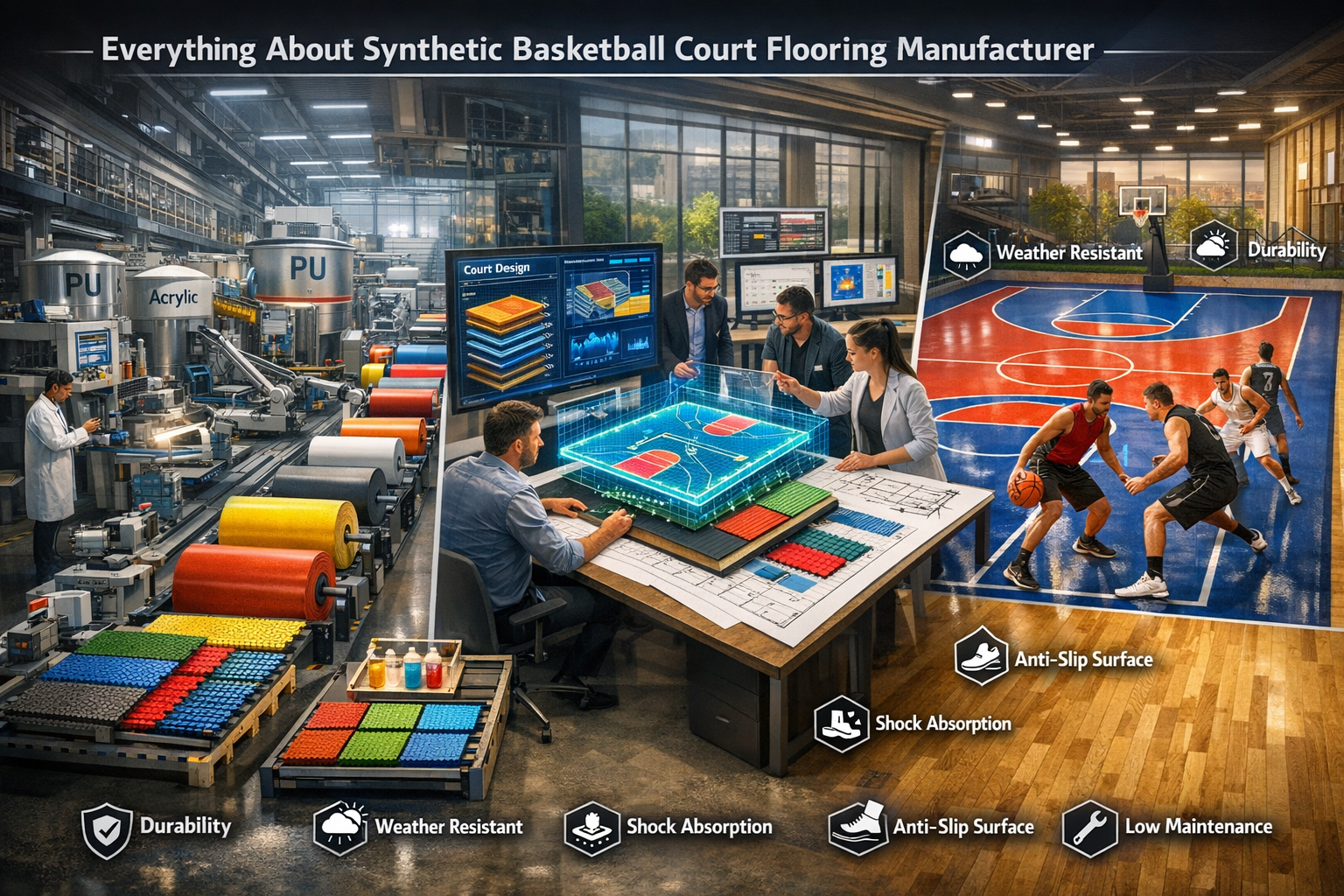
Creating a high-quality basketball court is not just about drawing boundary lines or installing hoops. The real foundation of a professional playing experience lies in the flooring system. In modern sports infrastructure, synthetic basketball court flooring has become the preferred solution due to its durability, safety, performance consistency, and adaptability for both indoor and outdoor environments.
This comprehensive guide explains everything about synthetic basketball court flooring manufacturers, including materials, benefits, installation process, cost factors, maintenance, and how to choose the right supplier for your project.
What is Synthetic Basketball Court Flooring?
Synthetic basketball court flooring refers to specially engineered sports surfaces made using advanced materials such as polyurethane (PU), acrylic coatings, PVC vinyl, or modular interlocking tiles. These surfaces are designed to replicate the performance characteristics of professional sports courts while offering greater durability and lower maintenance requirements.
Unlike traditional wooden courts, synthetic flooring systems are built to withstand harsh weather conditions, heavy usage, and long-term wear and tear. They are widely used in schools, sports academies, residential complexes, stadiums, and recreational facilities.
The primary goal of synthetic flooring is to provide:
- Safe shock absorption to reduce injury risk
- Consistent ball bounce for fair gameplay
- Strong surface grip for quick movement and agility
- Resistance to weather, moisture, and UV exposure
Role of a Synthetic Basketball Court Flooring Manufacturer
A synthetic basketball court flooring manufacturer plays a crucial role in delivering a complete sports surface solution. Their work goes beyond producing materials—they are responsible for designing, engineering, supplying, and often installing the entire flooring system.
A professional manufacturer typically handles:
1. Material Production
They develop high-performance materials such as PU compounds, acrylic coatings, and modular tiles that meet sports standards.
2. Court Design Engineering
Manufacturers plan the court layout, thickness levels, cushioning systems, and surface texture based on usage type.
3. Customization
They offer customization in terms of color combinations, logos, court markings, and branding elements.
4. Installation Services
Many manufacturers also provide on-site installation using trained technicians to ensure precision and performance.
5. Maintenance Support
They guide clients on cleaning procedures, recoating schedules, and long-term upkeep.
Types of Synthetic Basketball Court Flooring
Different types of synthetic flooring systems are available depending on the application, budget, and performance requirements.
1. Polyurethane (PU) Flooring
PU flooring is widely used in professional indoor basketball courts. It offers excellent elasticity, cushioning, and impact resistance.
Key features:
- High shock absorption
- Seamless surface
- Ideal for indoor professional play
- Long lifespan
2. Acrylic Flooring
Acrylic surfaces are commonly used for outdoor basketball courts. They are applied as multi-layer coatings over asphalt or concrete bases.
Key features:
- UV and weather resistant
- Anti-slip texture
- Cost-effective solution
- Vibrant color options
3. PVC Vinyl Flooring
PVC flooring is suitable for multi-purpose indoor sports areas. It is available in rolls or tiles.
Key features:
- Smooth surface finish
- Good ball response
- Easy installation
- Low maintenance
4. Modular Interlocking Tiles
These are made from polypropylene or similar polymers and are assembled like puzzle pieces.
Key features:
- Quick installation
- Easy replacement of damaged sections
- Good drainage for outdoor courts
- Portable and flexible usage
Benefits of Synthetic Basketball Court Flooring
Synthetic flooring systems have become the preferred choice for modern sports facilities due to their wide range of benefits.
1. Enhanced Player Safety
One of the biggest advantages is injury prevention. The cushioned layers absorb impact and reduce stress on knees, ankles, and joints.
2. Consistent Playing Surface
Synthetic courts provide uniform ball bounce and predictable movement, which is essential for competitive games.
3. Weather Resistance
Outdoor synthetic courts can withstand rain, sunlight, humidity, and temperature changes without losing performance quality.
4. Low Maintenance Requirements
Unlike wooden courts that require polishing and refinishing, synthetic surfaces need only basic cleaning and occasional recoating.
5. Long-Term Durability
High-quality synthetic flooring can last several years with minimal wear, making it a cost-effective investment.
6. Aesthetic Flexibility
Courts can be designed in multiple colors, patterns, and branding layouts to enhance visual appeal.
Materials Used in Synthetic Flooring Systems
The performance of a basketball court depends heavily on the quality of materials used in construction.
Polyurethane (PU)
Used as a base or top layer, PU provides elasticity and shock absorption, making it suitable for high-performance courts.
Acrylic Resins
Applied mainly in outdoor courts, acrylic enhances surface grip and protects against UV damage.
Rubber Layers
Rubber cushioning is often added beneath the surface to increase comfort and reduce impact injuries.
Polypropylene Tiles
These modular tiles are used for quick installation systems and offer excellent drainage and durability.
Each material contributes to the overall performance, safety, and longevity of the court.
Installation Process of Synthetic Basketball Courts
A properly installed court ensures long-term performance and safety. The installation process is carried out in multiple stages:
1. Site Preparation
The base surface is cleaned, leveled, and inspected for cracks or uneven areas.
2. Base Construction
A strong foundation is created using concrete or asphalt to support the flooring system.
3. Primer Application
A bonding layer is applied to ensure proper adhesion of synthetic materials.
4. Flooring Layer Installation
Depending on the selected system, PU, acrylic, or tiles are installed in multiple layers.
5. Court Marking
Professional markings are applied for boundaries, three-point lines, free-throw zones, and logos.
6. Final Inspection
The surface is checked for uniformity, grip, bounce quality, and finishing standards.
Proper installation directly affects the performance and lifespan of the court.
Cost of Synthetic Basketball Court Flooring
The cost of synthetic flooring varies depending on material type, court size, base preparation, and customization requirements.
Approximate pricing ranges include:
- Acrylic flooring: economical option for outdoor courts
- PVC flooring: mid-range pricing for indoor multipurpose use
- PU flooring: premium pricing for professional courts
- Modular tile systems: flexible pricing based on design and area
Additional costs may include groundwork, drainage systems, lighting, fencing, and seating arrangements.
How to Choose the Right Manufacturer
Selecting the right synthetic basketball court flooring manufacturer is essential for ensuring quality and long-term value.
Experience and Expertise
Choose manufacturers with proven experience in sports infrastructure projects.
Material Quality
High-grade raw materials ensure durability and performance consistency.
Project Portfolio
Review previous installations to understand their capability and design standards.
Customization Options
A good manufacturer should offer flexible design, branding, and color options.
Installation Team
Professional installation ensures proper leveling, adhesion, and finishing.
After-Sales Support
Maintenance guidance and service support are important for long-term performance.
Maintenance Guidelines
Even though synthetic courts are low maintenance, proper care improves lifespan and performance.
- Clean the surface regularly to remove dust and debris
- Avoid dragging heavy equipment across the floor
- Inspect for cracks or damage periodically
- Recoat surfaces when required to maintain grip and finish
- Ensure proper drainage in outdoor courts
Advantages Over Traditional Wooden Courts
Synthetic flooring offers several advantages compared to wooden surfaces:
- Better weather resistance
- Lower maintenance costs
- More affordable installation in large outdoor areas
- Greater customization options
- Improved durability under heavy usage
Wooden courts may offer premium aesthetics, but synthetic systems are more practical for most modern sports facilities.
Conclusion
Synthetic basketball court flooring has transformed modern sports infrastructure by combining safety, durability, and performance into a single system. Whether used in schools, professional arenas, or recreational spaces, it offers a reliable and cost-effective solution for long-term use.
A professional synthetic basketball court flooring manufacturer ensures that every aspect—from material selection to installation—is handled with precision and expertise. By choosing the right system and maintaining it properly, facility owners can create a high-performance basketball environment that delivers value for years to come.
(FAQ) – Synthetic Basketball Court Flooring Manufacturer
1. What is synthetic basketball court flooring?
Synthetic basketball court flooring is a specially engineered sports surface made from materials such as polyurethane (PU), acrylic, PVC vinyl, or modular interlocking tiles. It is designed to provide durability, shock absorption, and consistent playing performance for both indoor and outdoor courts.
2. What does a synthetic basketball court flooring manufacturer do?
A synthetic basketball court flooring manufacturer designs, produces, and supplies sports flooring systems. Many manufacturers also provide end-to-end services such as site inspection, customization, installation, and long-term maintenance support for schools, academies, stadiums, and sports complexes.
3. Which types of synthetic basketball court flooring are available?
The most common types include:
- PU (Polyurethane) flooring – Ideal for indoor professional courts
- Acrylic flooring – Best suited for outdoor courts
- PVC vinyl flooring – Common for indoor multi-sport use
- Modular interlocking tiles – Flexible option for quick installation and portability
4. How much does synthetic basketball court flooring cost?
The cost varies depending on material, thickness, base preparation, and court size. On average:
- Acrylic flooring: Budget-friendly outdoor option
- PVC flooring: Mid-range indoor solution
- PU flooring: Premium professional system
- Modular tiles: Flexible pricing based on design and area
Final pricing is always calculated per square foot and project requirements.
5. How long does synthetic basketball court flooring last?
The lifespan depends on the material and maintenance:
- PU flooring: approximately 8–15 years
- Acrylic flooring: around 5–8 years
- PVC flooring: about 6–10 years
- Modular tile systems: 6–12 years
Regular maintenance can significantly extend durability.
6. Is synthetic basketball court flooring suitable for outdoor use?
Yes, especially acrylic and modular tile systems. These materials are UV-resistant, weatherproof, and designed to handle rain, sunlight, and temperature changes without losing performance.
7. What are the main benefits of synthetic basketball court flooring?
Key benefits include:
- Shock absorption and injury prevention
- Anti-slip surface for better grip
- Consistent ball bounce and playability
- Low maintenance requirements
- High durability and weather resistance
- Customizable design and color options
8. How is synthetic basketball court flooring installed?
Installation generally includes:
- Surface cleaning and leveling
- Base construction (concrete or asphalt)
- Primer application for bonding
- Layer installation (PU, acrylic, or tiles)
- Court marking and finishing
- Final inspection and quality testing
Professional installation ensures better performance and longer lifespan.
9. Is synthetic basketball court flooring safe for players?
Yes, it is designed to improve player safety by reducing impact stress on joints and minimizing slip risks. The cushioned surface helps prevent common sports injuries.
10. Which synthetic flooring is best for basketball courts?
- PU flooring is best for indoor professional courts due to its high performance and cushioning.
- Acrylic flooring is ideal for outdoor courts because of its durability and weather resistance.