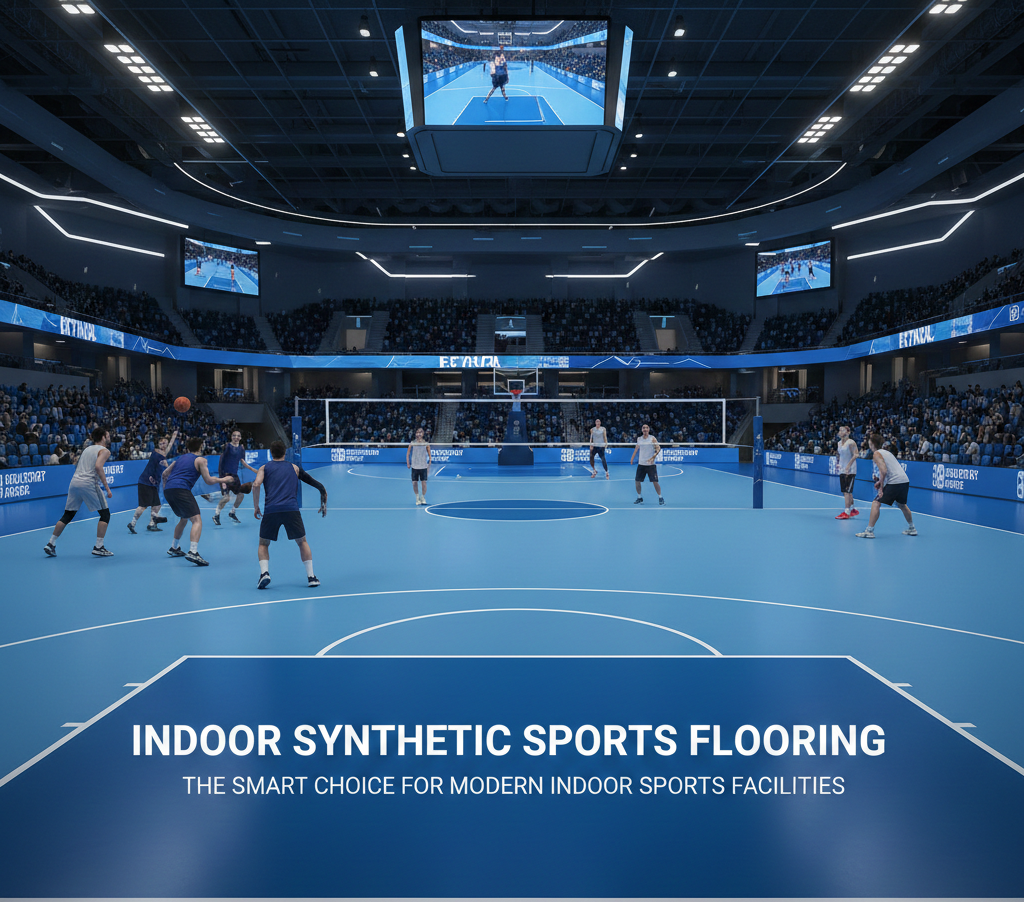
Modern indoor sports facilities require flooring that delivers excellent performance, player safety, durability, and visual appeal. Whether it is a school gymnasium, professional sports academy, fitness centre, or multipurpose indoor stadium, choosing the right flooring system is essential for creating a comfortable and reliable playing environment. Indoor synthetic sports flooring has become a popular choice because of its cushioning, consistent surface performance, and relatively low maintenance requirements.
Designed using advanced synthetic materials, these flooring systems provide suitable playing surfaces for various indoor sports and recreational activities. From badminton and basketball to volleyball and fitness training, synthetic sports flooring can be customized to meet the specific requirements of different facilities.
This guide explores the features, applications, benefits, types, installation process, maintenance requirements, and cost factors associated with indoor synthetic sports flooring.
What Is Indoor Synthetic Sports Flooring?
Indoor synthetic sports flooring is a specially engineered surface designed for indoor athletic, recreational, and fitness activities. Unlike conventional concrete floors, synthetic flooring systems use materials such as polyurethane (PU), polyvinyl chloride (PVC), vinyl, and rubber to create a resilient and functional playing surface.
Depending on the selected system, the flooring may include multiple layers that provide cushioning, surface stability, traction, and protection against regular wear and tear. These features help create a comfortable environment for athletes while supporting consistent movement and gameplay.
Key characteristics of indoor synthetic sports flooring include:
- Excellent shock absorption and cushioning.
- Reliable grip and slip resistance.
- Comfortable surfaces for extended training sessions.
- Consistent playing characteristics.
- Resistance to regular foot traffic and wear.
- Attractive colours and customizable court markings.
- Easy cleaning and routine maintenance.
With the right material selection and professional installation, indoor synthetic flooring can provide a practical solution for sports facilities of different sizes and performance requirements.
Applications of Indoor Synthetic Sports Flooring
Indoor synthetic sports flooring is suitable for a wide range of sports facilities, educational institutions, and recreational spaces. Its versatility makes it a practical option for both dedicated sports courts and multipurpose indoor halls.
Common applications include:
- Indoor badminton courts.
- Basketball courts and training facilities.
- Volleyball courts.
- Table tennis and squash facilities.
- School and college gymnasiums.
- Sports academies and training centres.
- Fitness centres and exercise studios.
- Indoor futsal and recreational sports areas.
- Multipurpose sports halls.
- Community sports complexes and private clubs.
Whether you are developing a single indoor court or a large sports complex, the appropriate synthetic flooring system can be selected according to the sport, expected usage, available space, and project budget.
Why Choose Indoor Synthetic Sports Flooring?
Selecting the right sports flooring can influence player comfort, movement, maintenance costs, and the overall usability of an indoor facility. Synthetic flooring offers several benefits that make it suitable for modern sports infrastructure.
1. Enhanced Shock Absorption and Player Comfort
Cushioned synthetic flooring systems are designed to absorb impact during running, jumping, landing, and rapid changes in direction. Depending on the flooring construction, this cushioning can help reduce repetitive stress on the joints and muscles.
This feature is particularly valuable in sports academies, school gymnasiums, and training facilities where players spend extended periods practising and competing.
2. Consistent Playing Performance
A properly installed synthetic sports floor provides a uniform surface across the playing area. This helps athletes maintain predictable movement and supports consistent ball response for sports that require controlled bounce characteristics.
The specific performance of the surface depends on the material, thickness, cushioning system, and requirements of the sport.
3. Slip Resistance and Better Traction
Indoor sports involve quick movements, sudden stops, and frequent changes in direction. Synthetic sports flooring can be designed with suitable surface textures and friction characteristics to support player grip and controlled movement.
Choosing a flooring system appropriate for the intended sport is essential for balancing traction, mobility, and player safety.
4. Improved Indoor Acoustics
Certain cushioned synthetic flooring systems help reduce impact noise generated by footsteps, jumping, and sports activities. This can improve the overall playing environment in enclosed gymnasiums, training halls, and multipurpose sports facilities.
The level of sound absorption depends on the flooring material, cushioning layers, and the acoustic characteristics of the building.
5. Durability and Easy Maintenance
Indoor synthetic sports flooring is designed to withstand regular sports activities and foot traffic. Many systems require only routine sweeping, dust removal, and damp mopping with suitable cleaning products.
With appropriate installation and maintenance, quality synthetic flooring can provide long-term value. Its service life depends on the material, installation quality, usage intensity, and maintenance practices.
6. Attractive Designs and Custom Court Markings
Synthetic flooring is available in a variety of colours, textures, thicknesses, and finishes. Facility owners can choose colour combinations that complement their branding or architectural design.
Court markings can also be incorporated for individual sports or multipurpose facilities, provided the selected flooring system supports the required marking method.
Types of Indoor Synthetic Sports Flooring
Different sports and indoor facilities require different flooring characteristics. Understanding the main flooring options helps facility owners select a solution that matches their requirements.
1. PU (Polyurethane) Indoor Sports Flooring
Polyurethane flooring is a popular option for indoor sports facilities that require a smooth, resilient, and professionally finished surface.
Key features:
- Seamless surface finish.
- Good elasticity and durability.
- Customizable cushioning characteristics.
- Smooth and uniform appearance.
- Relatively easy routine cleaning.
Suitable applications:
- Indoor badminton courts.
- Basketball and volleyball courts.
- Multipurpose indoor sports halls.
- Sports training and recreational facilities.
The performance of PU flooring depends on the system design, installation method, and intended sports application.
2. PVC and Vinyl Sports Flooring
PVC sports flooring, also known as vinyl sports flooring, is commonly supplied in rolls and installed in indoor courts and activity areas. Depending on the product, it may incorporate cushioning layers and a textured wear surface.
Key features:
- Available in different thicknesses and performance grades.
- Flexible surface construction.
- Wear-resistant finishes.
- Multiple colour options.
- Convenient cleaning and maintenance.
Suitable applications:
- Indoor badminton courts.
- School and college sports halls.
- Fitness and aerobics studios.
- Recreational indoor sports facilities.
PVC flooring is particularly useful for facilities seeking a dedicated synthetic surface with customizable performance characteristics.
3. Rubber Sports Flooring
Rubber sports flooring is designed for areas where impact resistance, durability, and noise reduction are important considerations.
Key features:
- Impact-absorbing properties.
- Good resistance to wear.
- Suitable for demanding training environments.
- Available in different thicknesses and formats.
- Practical for fitness and conditioning areas.
Suitable applications:
- Gymnasiums and fitness centres.
- Strength-training zones.
- Functional training areas.
- Sports conditioning facilities.
Rubber flooring should be selected according to the activity and equipment used in the space, as its characteristics differ from those of dedicated court flooring.
4. Acrylic Synthetic Flooring for Indoor Applications
Acrylic flooring systems may be used in suitable indoor recreational and training environments, depending on the product specification and substrate requirements.
Key features:
- Uniform surface finish.
- Customizable colours.
- Good wear resistance when properly specified.
- Suitable playing characteristics for selected applications.
Suitable applications:
- Indoor recreational courts.
- Training areas.
- Selected multipurpose sports spaces.
Before choosing an acrylic system, confirm that the product is designed for the intended indoor application and meets the performance requirements of the sport.
Indoor Synthetic Sports Flooring Installation Process
Professional installation is essential for achieving a durable, stable, and consistent sports surface. The installation procedure varies according to the flooring material, existing subfloor, and project specifications.
Site Inspection and Planning
The installation team evaluates the available space, existing floor condition, moisture levels, ventilation, and intended sports activities. These findings help determine the most suitable flooring system and installation approach.
Subfloor Preparation
The existing base is cleaned and checked for cracks, uneven areas, dust, and moisture-related problems. Grinding, repairs, and leveling are carried out where necessary to create a stable and suitable foundation.
Proper preparation helps reduce the risk of surface defects and installation failures.
Moisture Testing and Base Treatment
Moisture testing is performed according to the requirements of the selected flooring system. Primers, sealers, or other preparatory treatments may be applied when specified by the manufacturer.
The subfloor must meet the relevant moisture and surface-readiness requirements before installation proceeds.
Cushioning and Flooring Installation
Where the selected system includes cushioning layers, these are installed according to the product specifications. The PU coating, PVC flooring rolls, rubber surface, or other selected material is then applied or fitted using the recommended installation procedure.
Adhesives, joints, and finishing techniques must be appropriate for the flooring product.
Court Line Marking and Customization
Court markings are planned according to the dimensions and requirements of the intended sport. Multipurpose facilities may include separate colour-coded lines for different games.
Accurate measurements and suitable marking materials help create a professional and clearly defined playing area.
Quality Inspection and Handover
The completed floor is inspected for surface uniformity, joint quality, markings, and finishing. The installation team also provides guidance on cleaning, maintenance, and the recommended period before the floor can be used.
Following the manufacturer’s installation and curing instructions helps protect the new flooring and support its long-term performance.
Maintenance Tips for Indoor Synthetic Sports Flooring
Regular maintenance helps preserve the appearance, grip, and usability of synthetic sports floors.
Follow these recommended practices:
- Sweep or vacuum the surface regularly to remove dust and debris.
- Use a damp microfiber mop with a suitable neutral cleaner.
- Avoid harsh chemicals and abrasive cleaning materials.
- Do not drag heavy equipment or furniture across the floor.
- Inspect seams, joints, and court markings periodically.
- Maintain appropriate indoor ventilation and humidity levels.
- Address spills promptly using the recommended cleaning method.
- Arrange professional inspection or deep cleaning when necessary.
Always follow the maintenance instructions provided by the flooring manufacturer, as different materials may require different cleaning procedures.
Benefits of Professional Indoor Sports Flooring Installation
Choosing an experienced sports flooring contractor can help ensure that the flooring system is appropriate for the facility and installed according to the manufacturer’s specifications.
Professional installation offers several advantages:
- Expert assessment of site conditions and sports requirements.
- Appropriate flooring material and system selection.
- Proper subfloor preparation and moisture management.
- Accurate court layout and line marking.
- Correct installation of joints, adhesives, and cushioning layers.
- Inspection of surface quality and finishing.
- Guidance on cleaning and long-term maintenance.
- Applicable product warranties and installation support.
A properly planned installation can help minimize avoidable flooring problems and improve the overall functionality of the sports facility.
Factors Affecting the Cost of Indoor Synthetic Sports Flooring
The cost of indoor synthetic sports flooring varies according to the project requirements and selected flooring system. Understanding the main cost factors can help facility owners prepare a realistic budget.
Important factors include:
- Flooring material: PU, PVC, vinyl, and rubber systems have different material and installation costs.
- Flooring thickness: Thicker or more specialized cushioned systems may require a higher investment.
- Performance specifications: Sports-specific requirements and premium product features influence pricing.
- Area of installation: The total floor area affects material quantities, labour, and transportation.
- Subfloor condition: Uneven or damaged bases may require additional preparation and repairs.
- Installation complexity: Different flooring systems require different installation methods and equipment.
- Court markings: The number of courts and the complexity of the line-marking layout can affect the overall cost.
- Project location: Transportation, logistics, and local labour costs may influence the final quotation.
- Maintenance and warranty: Recommended maintenance arrangements and available warranty coverage should also be considered.
For an accurate estimate, request a project-specific quotation based on the site inspection, flooring specifications, total area, and installation requirements.
Conclusion: Choose the Right Indoor Synthetic Sports Flooring
Indoor synthetic sports flooring is an effective solution for creating functional, comfortable, and visually appealing sports environments. With options such as PU, PVC, vinyl, and rubber flooring, facility owners can select a system suited to their sport, budget, expected usage, and performance requirements.
From schools and colleges to professional training academies, fitness centres, and multipurpose sports complexes, the right flooring can improve the usability of an indoor facility while supporting consistent play and easier maintenance.
Investing in quality materials, professional installation, and proper maintenance helps protect the flooring investment over time. Before selecting a system, evaluate the subfloor, intended sport, cushioning requirements, maintenance needs, and applicable performance standards.
The result is an indoor sports surface designed to support athletes, encourage regular participation, and deliver lasting value for the facility.
Frequently Asked Questions (FAQs) – Indoor Synthetic Sports Flooring
1. What is indoor synthetic sports flooring?
Indoor synthetic sports flooring is a manufactured surface system designed for indoor courts, gymnasiums, fitness centres, and multipurpose sports facilities. Common materials include PU, PVC, vinyl, and rubber.
2. Which sports can be played on indoor synthetic flooring?
Depending on the selected system, synthetic flooring can be used for badminton, basketball, volleyball, table tennis, fitness training, and various recreational sports.
3. What are the main benefits of synthetic sports flooring?
Key benefits include cushioning, suitable traction, consistent surface performance, customizable designs, durability, and convenient routine maintenance. Actual performance varies by flooring type.
4. What types of indoor synthetic sports flooring are available?
Common options include polyurethane flooring, PVC or vinyl sports flooring, rubber flooring, and selected acrylic systems. Each type has different characteristics and applications.
5. How thick should indoor synthetic sports flooring be?
The required thickness depends on the sport, flooring material, cushioning system, and intended level of use. Follow the flooring manufacturer’s specifications and the relevant sport-specific requirements.
6. Is indoor synthetic sports flooring safe for athletes?
A properly selected and installed sports flooring system can provide suitable traction and cushioning for its intended application. Safety also depends on maintenance, footwear, surface condition, and compliance with relevant performance requirements.
7. How long does indoor synthetic sports flooring last?
Service life depends on material quality, installation, usage intensity, and maintenance. With appropriate care, some systems may last 8–15 years or longer, but actual lifespan varies by product and application.
8. How should synthetic sports flooring be cleaned?
Regular sweeping or vacuuming and damp mopping with a manufacturer-approved cleaner are common maintenance practices. Avoid abrasive products and cleaning chemicals that may damage the surface.
9. Can synthetic sports flooring be installed in a multipurpose hall?
Yes. Suitable synthetic flooring systems can accommodate multipurpose indoor halls. The selected surface must be appropriate for all intended sports and activities, and court markings should be planned accordingly.
10. How long does indoor synthetic sports flooring installation take?
The installation period depends on the floor area, material, subfloor preparation, installation method, and curing requirements. A contractor can provide a project-specific schedule after evaluating the site.
11. What is the cost of indoor synthetic sports flooring in India?
The cost varies according to material, thickness, product specifications, installation area, subfloor condition, and labour requirements. A site-specific quotation is the best way to establish the total project cost.
12. Do indoor synthetic sports floors meet international sports standards?
Some flooring systems are designed or certified for specific sports standards. Requirements vary by sport and governing body, so verify the relevant certification and technical documentation for the selected product before purchasing or installing it.