
Introduction
Pickleball has experienced extraordinary growth over the past decade, evolving from a niche recreational activity into one of the world’s fastest-expanding sports. Today, the game is played across residential communities, educational institutions, recreation centers, sports clubs, commercial developments, and professional tournament venues. As participation continues to increase, the demand for high-quality pickleball court construction has become a major focus for facility owners, developers, and sports organizations.
One of the most important factors influencing court performance is the playing surface. A well-designed surface directly affects ball bounce, player movement, safety, durability, maintenance requirements, and overall user experience. Among the various court surfacing options available today, acrylic pickleball court systems have established themselves as the industry standard for both recreational and professional facilities.
Acrylic court surfaces offer an ideal balance of performance, longevity, visual appeal, and cost efficiency. They provide a smooth yet textured finish that supports consistent gameplay while withstanding years of exposure to foot traffic and environmental conditions. Their adaptability makes them suitable for indoor and outdoor installations, ranging from backyard courts to large-scale sports complexes.
This comprehensive guide explores every aspect of acrylic pickleball court surfaces, including their composition, advantages, installation procedures, maintenance requirements, environmental benefits, cost considerations, and long-term value.
Understanding Acrylic Pickleball Court Surfaces
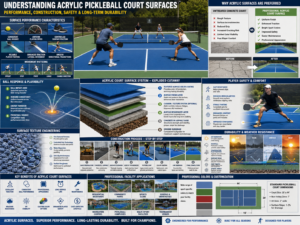
An acrylic pickleball court surface is a specialized coating system applied over a structurally sound base, typically concrete or asphalt. Rather than serving as a standalone flooring material, acrylic functions as a multi-layer surfacing system designed to enhance the durability, safety, and performance of the underlying foundation.
The acrylic coating creates a seamless, uniform playing area that delivers reliable ball response and excellent traction. Its textured finish is carefully engineered to balance grip and speed, allowing players to move confidently while maintaining control during fast-paced rallies.
Unlike untreated concrete surfaces, which can become slippery, uneven, or difficult to maintain, acrylic coatings provide a professional-grade finish specifically developed for athletic performance.
Because pickleball involves rapid directional changes, short sprints, quick reactions, and repetitive movement patterns, the quality of the court surface significantly impacts both gameplay and player comfort.
Why Acrylic Surfaces Have Become the Industry Standard
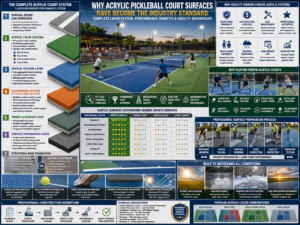
The popularity of acrylic court systems is driven by their ability to satisfy the core requirements of modern sports facilities.
Facility owners seek surfaces that are:
- Durable
- Safe
- Cost-effective
- Easy to maintain
- Visually appealing
- Suitable for heavy usage
Players, meanwhile, prioritize:
- Consistent ball bounce
- Reliable footing
- Comfort during movement
- Predictable court performance
Acrylic systems successfully address both sets of requirements, making them one of the most widely specified surfaces for pickleball court construction projects worldwide.
Structure of an Acrylic Pickleball Court System
The performance of an acrylic court depends on its layered construction process. Each layer contributes to the overall strength, appearance, and functionality of the finished surface.
1. Base Foundation
The foundation forms the structural backbone of the court.
Common base materials include:
Concrete Base
Concrete provides:
- Long-term stability
- Excellent load distribution
- Minimal surface movement
- Extended lifespan
Asphalt Base
Asphalt offers:
- Lower initial construction cost
- Faster installation
- Good flexibility in varying climates
Regardless of material, the foundation must be properly engineered, level, and capable of supporting the acrylic coating system.
2. Surface Preparation Layer
Before acrylic coatings are applied, the base surface undergoes detailed preparation.
This process typically includes:
- Cleaning contaminants
- Removing debris
- Filling cracks
- Correcting depressions
- Ensuring proper drainage slopes
Proper preparation significantly influences the longevity of the finished court.
3. Primer and Bonding Coat
The primer acts as the connection between the base and subsequent acrylic layers.
Its functions include:
- Improving adhesion
- Strengthening surface integrity
- Reducing coating failure risks
- Enhancing overall durability
A strong bond between layers is essential for long-term performance.
4. Cushioning System (Optional)
Many premium pickleball facilities incorporate cushioned acrylic systems.
These additional layers provide:
- Impact reduction
- Enhanced comfort
- Improved shock absorption
- Reduced stress on joints
Cushion systems are especially valuable for:
- Senior players
- High-volume facilities
- Training centers
- Tournament venues
They contribute significantly to player wellness and long-term comfort.
5. Acrylic Texture Layers
The texture coat forms the primary playing surface.
Specialized materials are blended into the coating to create controlled surface friction.
Benefits include:
- Reliable traction
- Consistent movement
- Improved safety
- Balanced playing speed
The texture level can be adjusted depending on facility requirements and playing preferences.
6. Color Coating Layers
Color coatings serve both functional and aesthetic purposes.
They provide:
- UV protection
- Enhanced visibility
- Professional appearance
- Surface durability
Popular court color combinations include:
- Blue and green
- Blue and red
- Green and dark green
- Gray and blue
Color selection often reflects branding requirements or facility design themes.
7. Court Line Markings
The final layer consists of official court markings.
These markings must be:
- Precisely measured
- Clearly visible
- Durable
- Weather resistant
Accurate line placement ensures compliance with pickleball regulations and fair gameplay.
Performance Advantages of Acrylic Pickleball Courts
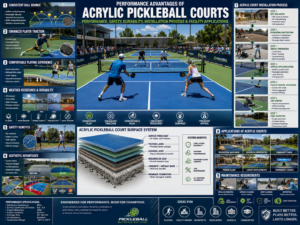
Consistent Ball Bounce
One of the most important characteristics of any pickleball court is bounce consistency.
Acrylic surfaces provide:
- Uniform hardness
- Even texture
- Predictable rebound characteristics
This consistency helps players:
- Improve accuracy
- Develop timing
- Execute strategic shots
Reliable ball behavior is essential for both recreational enjoyment and competitive performance.
Enhanced Player Traction
Pickleball involves frequent stopping, starting, and directional changes.
Acrylic texture systems provide:
- Excellent grip
- Controlled sliding resistance
- Improved stability
This allows players to move confidently without compromising speed.
Good traction contributes significantly to injury prevention and performance optimization.
Comfortable Playing Experience
Modern acrylic systems can be customized to provide varying levels of cushioning.
Benefits include:
- Reduced fatigue
- Lower joint stress
- Improved endurance
- Greater comfort during extended play
Comfort becomes increasingly important in facilities hosting daily activities or tournaments.
Weather Resistance and Outdoor Performance
Outdoor sports surfaces must withstand continuous environmental exposure.
Acrylic coatings are specifically designed to resist:
Ultraviolet Radiation
UV-resistant pigments help prevent:
- Color fading
- Surface degradation
- Premature aging
Rain and Moisture
The sealed surface minimizes water penetration and supports efficient drainage.
Temperature Variations
Quality acrylic systems tolerate:
- Intense summer heat
- Cold weather conditions
- Seasonal expansion and contraction
This durability allows courts to maintain performance throughout the year.
Safety Benefits of Acrylic Court Surfaces
Safety is a major consideration in sports facility development.
Acrylic pickleball courts improve safety through:
Slip Resistance
Textured coatings enhance footing even under challenging conditions.
Surface Uniformity
Smooth, consistent surfaces reduce tripping hazards.
Shock Absorption
Cushioned systems help decrease impact forces during movement.
Clear Visibility
High-contrast colors improve court awareness and line recognition.
Collectively, these features create a safer environment for players of all ages.
Aesthetic Advantages
Beyond performance, acrylic courts offer exceptional visual appeal.
Facility owners can customize:
- Court colors
- Border designs
- Branding elements
- Logos
- Sponsor graphics
Professionally finished courts enhance:
- Facility image
- User satisfaction
- Community engagement
- Property value
A visually attractive court often becomes a centerpiece of a sports facility.
Acrylic Pickleball Court Installation Process
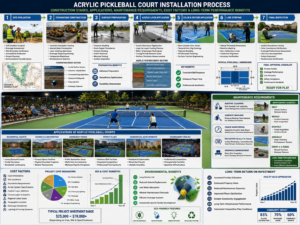
Professional installation is essential for achieving maximum performance and longevity.
Step 1: Site Evaluation
Engineers assess:
- Soil conditions
- Drainage requirements
- Site dimensions
- Accessibility
Proper planning minimizes future issues.
Step 2: Foundation Construction
Concrete or asphalt foundations are constructed according to project specifications.
Attention is given to:
- Surface flatness
- Structural strength
- Drainage slopes
The foundation serves as the base for all subsequent layers.
Step 3: Surface Preparation
Technicians clean and repair the base before coating application.
This stage ensures:
- Strong adhesion
- Smooth finish
- Long-term durability
Step 4: Acrylic Layer Application
Multiple coating layers are installed sequentially.
Each layer must cure properly before the next is applied.
This process creates:
- Uniform thickness
- Strong bonding
- Consistent performance
Step 5: Color and Texture Application
Specialized acrylic mixtures create the final playing surface.
The result is a durable, textured finish optimized for pickleball.
Step 6: Line Striping
Official court dimensions are carefully measured and marked.
Precision is critical for maintaining compliance with competitive standards.
Step 7: Final Inspection
Before opening the court, installers verify:
- Surface smoothness
- Color consistency
- Line accuracy
- Drainage performance
- Overall quality
Only after passing inspection is the court ready for use.
Applications of Acrylic Pickleball Courts
The versatility of acrylic systems allows installation across a wide variety of environments.
Residential Courts
Homeowners increasingly install private courts to support active lifestyles and family recreation.
Schools and Universities
Educational institutions use acrylic courts for physical education and athletic programs.
Community Parks
Municipal facilities benefit from the durability and low maintenance of acrylic systems.
Sports Clubs
Private clubs often choose acrylic surfaces for their professional appearance and performance.
Commercial Developments
Residential communities and mixed-use developments use pickleball courts as premium amenities.
Tournament Venues
Many competitive facilities rely on acrylic systems due to their consistency and compliance with sports standards.
Maintenance Requirements
One of the greatest advantages of acrylic courts is their relatively low maintenance burden.
Routine Cleaning
Remove:
- Dust
- Leaves
- Debris
- Organic matter
Regular cleaning preserves appearance and traction.
Surface Washing
Periodic washing helps eliminate:
- Dirt buildup
- Surface stains
- Environmental contaminants
Crack Monitoring
Routine inspections identify small issues before they become major repairs.
Recoating
Most courts benefit from recoating every three to five years.
Recoating restores:
- Surface texture
- Color vibrancy
- Playing characteristics
Drainage Management
Maintaining effective drainage protects the court from moisture-related damage.
Cost Factors
Several variables influence project costs.
These include:
- Court dimensions
- Site conditions
- Foundation requirements
- Surface system type
- Cushion layer inclusion
- Custom graphics
- Geographic location
- Labor costs
Although initial expenses vary, acrylic systems provide excellent long-term value due to their durability and low maintenance requirements.
Environmental Benefits
Modern acrylic court systems contribute to sustainable facility development.
Advantages include:
- Long service life
- Reduced material replacement
- Low water absorption
- Minimal maintenance chemicals
- Efficient drainage performance
These characteristics help reduce environmental impact throughout the court’s lifespan.
Long-Term Return on Investment
An acrylic pickleball court is more than a sports surface—it is a long-term infrastructure asset.
Benefits include:
- Increased facility utilization
- Enhanced property value
- Lower maintenance costs
- Improved user satisfaction
- Greater community engagement
When properly installed and maintained, an acrylic court can deliver years of reliable performance while supporting recreational and competitive activities.
Conclusion
Acrylic pickleball court surfaces have become the preferred choice for modern sports facilities because they combine durability, safety, performance, and visual appeal in a single system. Their ability to provide consistent ball bounce, reliable traction, weather resistance, and low maintenance requirements makes them suitable for virtually every type of pickleball environment.
From residential backyards and schools to commercial developments and professional tournament venues, acrylic court systems continue to set the benchmark for quality and long-term value. By investing in proper design, professional installation, and routine maintenance, facility owners can create a high-performance playing environment that serves athletes and communities for many years.
Frequently Asked Questions (FAQs)
1. What is an acrylic pickleball court surface?
An acrylic pickleball court surface is a multi-layer coating system applied over concrete or asphalt to create a durable, textured, and high-performance playing area.
2. How long do acrylic pickleball courts last?
With proper construction and maintenance, acrylic courts can provide excellent performance for 8–15 years or more, depending on usage and environmental conditions.
3. Are acrylic courts suitable for outdoor installation?
Yes. Acrylic systems are specifically designed to resist sunlight, moisture, and temperature fluctuations, making them ideal for outdoor environments.
4. Do acrylic courts provide good traction?
Yes. The textured surface offers excellent grip, helping players move safely and confidently during gameplay.
5. How often should an acrylic court be recoated?
Most facilities benefit from recoating every three to five years to maintain appearance and playing performance.
6. Can acrylic courts be customized?
Yes. Courts can be customized with various colors, logos, branding elements, and decorative features.
7. Is acrylic surfacing suitable for professional pickleball?
Absolutely. Acrylic systems are widely used in competitive and tournament-level facilities because of their consistent performance and durability.