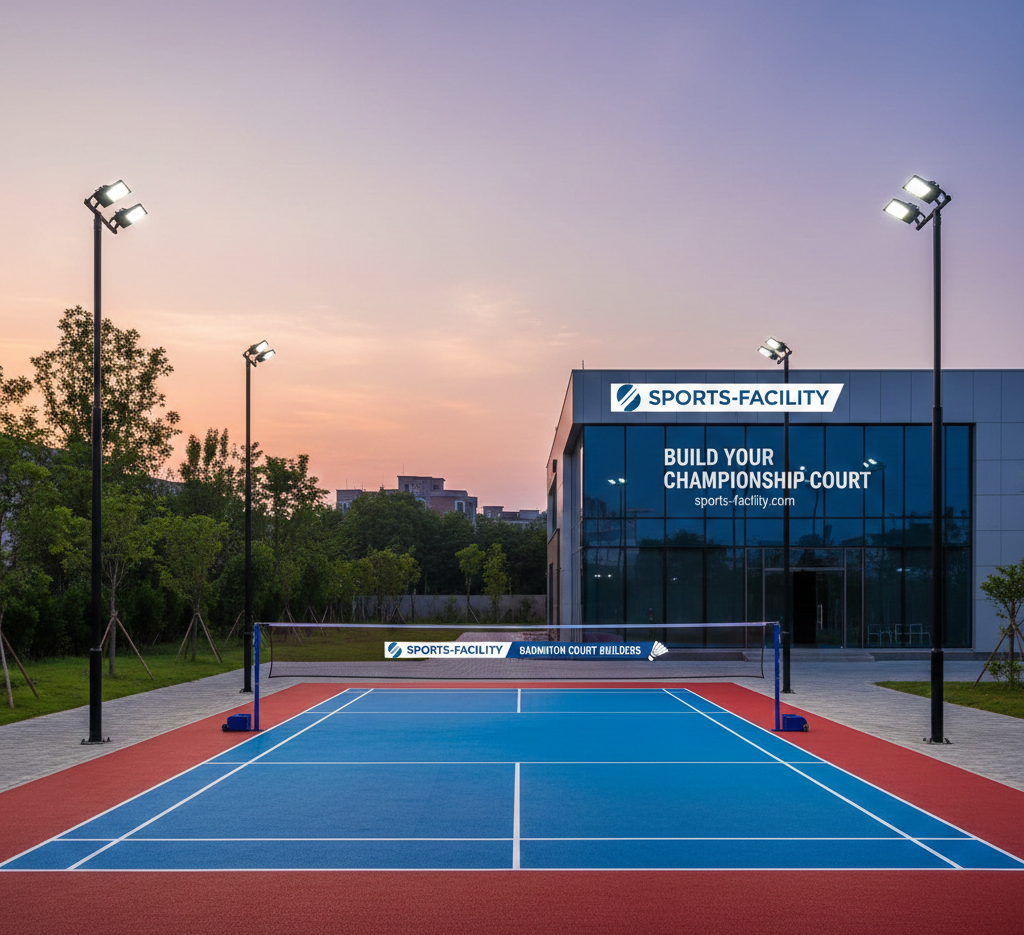
The growing popularity of badminton across schools, sports academies, residential communities, and professional arenas has created a strong demand for high-quality court construction. A well-designed badminton court is not just about marking lines on the ground—it is a carefully engineered playing surface that ensures safety, durability, and optimal performance.
Choosing a professional badminton court builder is the first and most crucial step toward developing a facility that meets international standards. From selecting the right flooring system to ensuring proper lighting and layout, expert construction plays a vital role in creating a court that delivers consistency and excellence.
In this comprehensive guide, we will explore everything you need to know about badminton court construction, its benefits, materials, process, and how to choose the right builder for your project.
Understanding the Importance of Professional Badminton Court Construction
Badminton is a fast-paced sport that requires agility, speed, and precise movement. The quality of the playing surface directly impacts player performance and safety. Poorly constructed courts can lead to injuries, uneven bounce, and faster wear and tear.
A professional badminton court builder ensures that every element—from subfloor preparation to final finishing—is executed with precision. This results in a court that offers consistent grip, shock absorption, and long-term durability.
Whether the court is intended for recreational use or competitive tournaments, proper construction ensures compliance with international standards and enhances the overall playing experience.
Key Features of a High-Quality Badminton Court
1. Standard Court Dimensions
A standard badminton court must follow internationally accepted measurements to ensure fair play. Proper spacing, boundary lines, and clearance areas are essential for both singles and doubles matches.
2. Advanced Flooring Systems
The flooring system is the most critical component of a badminton court. High-performance courts typically use:
- PVC Vinyl Flooring – Popular for indoor courts due to its excellent grip and cushioning.
- PU (Polyurethane) Flooring – Seamless surface offering durability and shock absorption.
- Wooden Flooring – Preferred for professional tournaments for its natural feel and performance.
- Synthetic Acrylic Flooring – Suitable for outdoor courts with weather resistance.
Each flooring type is selected based on the usage, location, and budget of the facility.
3. Shock Absorption and Player Safety
A well-built badminton court reduces stress on players’ joints. Shock-absorbing layers beneath the surface help minimize injuries and fatigue, making the court suitable for long training sessions.
4. Anti-Slip Surface
Traction is essential in badminton, where quick directional changes are frequent. A high-quality surface ensures players can move confidently without the risk of slipping.
5. Proper Lighting System
Lighting plays a crucial role, especially for indoor courts. Uniform LED sports lighting ensures clear visibility of the shuttlecock without glare or shadows.
6. Durable Line Markings
Accurate and long-lasting line markings are essential for fair gameplay. Professional builders use high-quality paints that resist fading and wear.
Why Hire an Expert Badminton Court Builder?
Building a badminton court is a specialized process that requires technical knowledge and experience. Hiring an expert ensures that the project is executed efficiently and meets all performance requirements.
Expertise in Design and Planning
Professional builders conduct site analysis, assess space availability, and create optimized layouts that maximize usability.
Use of Premium Materials
Experts source high-quality materials that meet industry standards, ensuring durability and long-term performance.
Precision Installation
From leveling the base to applying the final surface, every step is carried out with accuracy to avoid defects.
Compliance with Standards
Experienced builders follow recognized guidelines to ensure the court is suitable for training and competitive play.
Time and Cost Efficiency
With a structured approach, professional builders complete projects within timelines while avoiding costly mistakes.
Step-by-Step Badminton Court Construction Process
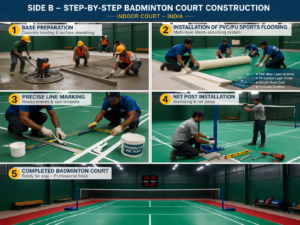
1. Site Inspection and Planning
The process begins with a detailed site evaluation. Factors such as soil condition, drainage, available space, and intended usage are analyzed.
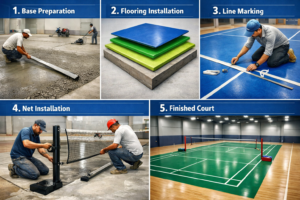
2. Base Preparation
A strong and level base is essential for court stability. Depending on the location, builders may use concrete, asphalt, or wooden subfloors.
3. Surface Installation
The selected flooring system is installed with precision. Multiple layers may be added to achieve the desired level of cushioning and performance.
4. Line Marking
Court lines are marked accurately using professional tools to ensure compliance with standard dimensions.
5. Installation of Net and Accessories
High-quality net systems, poles, and additional accessories are installed to complete the setup.
6. Lighting and Finishing
LED lighting, fencing, and seating arrangements are added to enhance functionality and aesthetics.
7. Quality Inspection and Handover
Before completion, the court undergoes thorough inspection to ensure it meets all quality standards.
Indoor vs Outdoor Badminton Courts
Indoor Courts
They typically use PVC, PU, or wooden flooring and include advanced lighting systems.
Advantages:
- Weather-independent
- Better playing conditions
- Longer lifespan
Outdoor Courts
Outdoor courts are suitable for recreational use and are constructed using weather-resistant materials like acrylic or synthetic surfaces.
Advantages:
- Cost-effective
- Easy installation
- Suitable for open spaces
Applications of Badminton Court Construction
Professional badminton court builders cater to a wide range of facilities:
Schools and Educational Institutions
Badminton courts encourage physical activity and sports development among students.
Sports Academies
High-performance courts are essential for professional training and coaching programs.
Residential Communities
Modern housing projects include badminton courts as part of their amenities to enhance lifestyle value.
Clubs and Fitness Centers
Badminton courts attract members and increase engagement in sports activities.
Indoor Stadiums
Large-scale venues require multiple courts designed for tournaments and events.
Maintenance Tips for Long-Lasting Courts
A well-constructed badminton court requires minimal maintenance, but regular care can significantly extend its lifespan.
- Clean the surface regularly to remove dust and debris
- Avoid dragging heavy equipment across the floor
- Inspect the court periodically for damage
- Repaint line markings when necessary
- Schedule professional resurfacing when required
Proper maintenance ensures consistent performance and reduces long-term costs.
Factors to Consider When Choosing a Badminton Court Builder
Selecting the right builder is essential for the success of your project. Here are key factors to consider:
Experience and Expertise
Look for builders with a proven track record in sports flooring and court construction.
Material Quality
Ensure that the builder uses certified, high-quality materials.
Customization Options
A good builder offers tailored solutions based on your specific needs.
Project Timeline
Choose a team that can deliver within the agreed timeframe without compromising quality.
After-Sales Support
Reliable maintenance and support services are crucial for long-term performance.
Cost of Building a Badminton Court
The cost of constructing a badminton court depends on several factors:
- Type of flooring (PVC, PU, wooden, or acrylic)
- Indoor or outdoor construction
- Size and number of courts
- Lighting and accessories
- Location and site conditions
While initial costs may vary, investing in high-quality construction ensures better durability and lower maintenance expenses over time.
Future Trends in Badminton Court Construction
The sports infrastructure industry is evolving rapidly, and badminton court construction is no exception. Some emerging trends include:
Eco-Friendly Materials
Sustainable and environmentally friendly materials are gaining popularity.
Smart Sports Facilities
Integration of digital scoreboards, performance tracking, and smart lighting systems.
Multi-Sport Surfaces
Courts designed to accommodate multiple sports for better space utilization.
Advanced Shock Absorption Technology
New materials that provide enhanced comfort and reduce injury risks.
Conclusion
From design and planning to installation and maintenance, expert builders provide end-to-end solutions that deliver exceptional results. Partner with a trusted badminton court builder and bring your vision to life with precision, quality, and excellence.
Frequently Asked Questions (FAQs) – Badminton Court Builder
1. What is the standard size of a badminton court?
A standard badminton court measures 13.4 meters in length and 6.1 meters in width for doubles play. For singles matches, the width is reduced to 5.18 meters. Proper dimensions are essential to ensure fair gameplay and compliance with international standards.
2. Which flooring is best for a badminton court?
The best flooring depends on usage and location:
- PVC Vinyl Flooring – Ideal for indoor courts with excellent grip and cushioning
- PU (Polyurethane) Flooring – Durable and seamless surface
- Wooden Flooring – Preferred for professional tournaments
- Acrylic/Synthetic Flooring – Suitable for outdoor courts
Indoor courts typically use PVC or wooden flooring for optimal performance.
3. How much does it cost to build a badminton court?
- Type of flooring
- Indoor or outdoor setup
- Court size and number of courts
- Lighting and accessories
On average, the cost can range from ₹5 lakh to ₹25 lakh or more depending on specifications and quality.
4. How long does it take to construct a badminton court?
A standard badminton court usually takes 2 to 6 weeks to complete, depending on:
- Site conditions
- Type of flooring
- Weather (for outdoor courts)
- Project complexity
5. What base is required for a badminton court?
A strong and level base is essential. Common base options include:
- Concrete base
- Wooden subfloor (for indoor courts)
- Asphalt base (for outdoor courts)
The base ensures stability, durability, and proper performance of the court.
6. Can badminton courts be built outdoors?
Yes, badminton courts can be built outdoors using weather-resistant acrylic or synthetic flooring.
7. What lighting is required for a badminton court?
Indoor badminton courts require LED sports lighting that provides:
- Uniform brightness
- Glare-free visibility
- Proper shuttlecock tracking
Lighting levels should meet professional standards for training and matches.
8. How do you maintain a badminton court?
Maintenance includes:
- Regular cleaning to remove dust and dirt
- Avoiding heavy loads or dragging objects
- Periodic inspection for damage
- Resurfacing after wear and tear
Proper maintenance increases the lifespan of the court.
9. What are the benefits of hiring a professional badminton court builder?
Hiring experts ensures:
- Accurate court dimensions
- High-quality materials
- Proper installation
- Long-term durability
- Compliance with standards
This results in a safe and high-performance playing surface.