Introduction
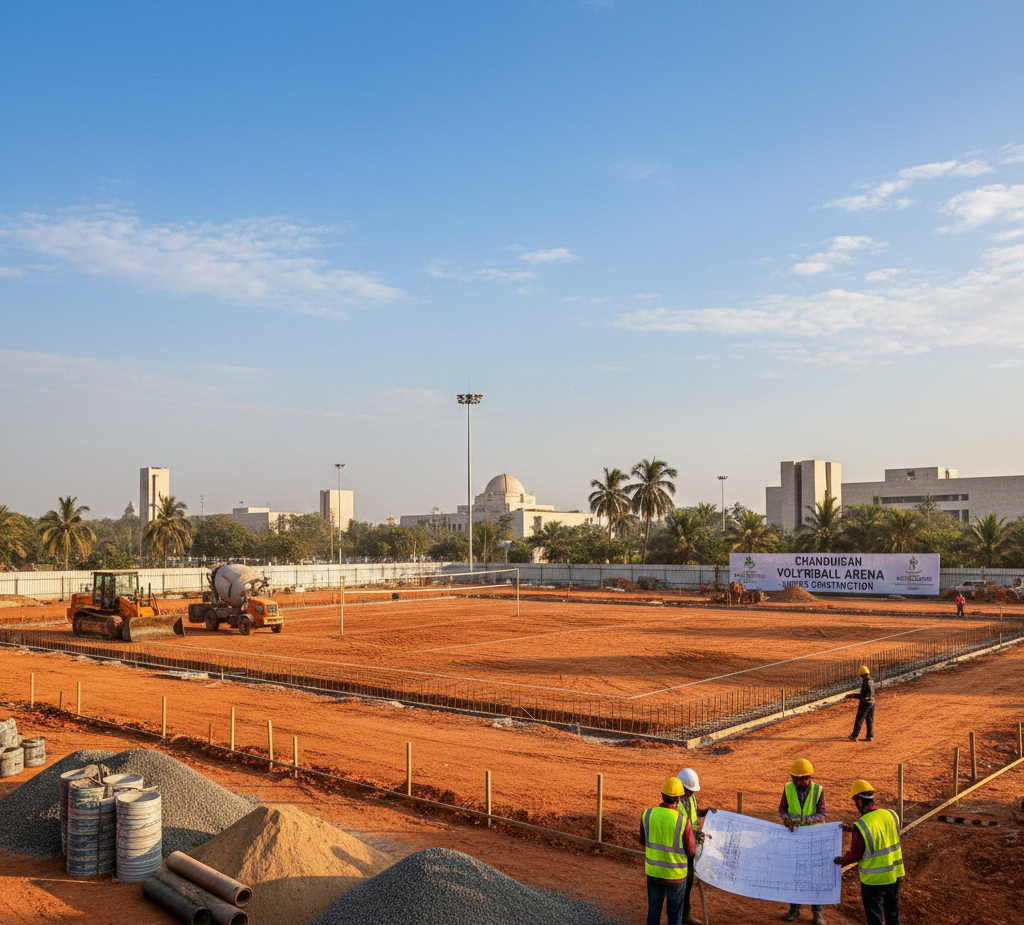
Chandigarh is steadily developing its sports infrastructure, with schools, colleges, sports academies, residential societies, fitness clubs, and private institutions investing in modern sports facilities. As volleyball continues to attract players of different age groups, the demand for professional volleyball court construction in Chandigarh is increasing. Whether the requirement is for a school playground, a training academy, a residential complex, or a professional sports facility, building a well-designed volleyball court requires careful planning, suitable flooring, and quality construction.
A professionally constructed volleyball court provides a stable playing surface, reliable ball response, and a safer environment for players. From selecting the right location and preparing the base to installing sports flooring, marking court boundaries, and fitting volleyball net systems, every stage contributes to the court’s performance and durability.
Choosing an experienced volleyball court construction company in Chandigarh can help property owners and sports facility managers develop a court that suits their available space, budget, and intended level of play. This guide explains volleyball court dimensions, flooring options, construction procedures, estimated costs, maintenance requirements, and important factors to consider before starting a project.
Why Is Volleyball Court Construction in Chandigarh in Demand?
Volleyball is widely played in educational institutions, sports clubs, community grounds, and recreational facilities. Its ability to encourage teamwork, physical fitness, and competitive participation makes it a valuable addition to modern sports infrastructure.
Several factors are contributing to the demand for volleyball court construction in Chandigarh:
- School and college sports facilities: Educational institutions are developing dedicated courts for physical education, inter-school competitions, and student training.
- Sports academies and coaching centres: Training facilities require durable surfaces and correctly marked playing areas for regular practice.
- Residential societies and community spaces: Apartment complexes and housing societies are adding volleyball courts to improve recreational amenities.
- Private clubs and fitness centres: Sports clubs are investing in well-maintained courts to attract members and organise tournaments.
- Professional sports development: Standard court dimensions, appropriate flooring, and quality equipment support structured training and competitive play.
- Outdoor recreation: Open spaces can be converted into functional sports areas with suitable surface preparation and drainage.
A carefully planned volleyball court can serve as a long-term sports facility while making better use of the available land.
Types of Volleyball Courts
The right volleyball court design depends on the intended use, available space, installation budget, and whether the facility will be indoors or outdoors.
1. Indoor Volleyball Court Construction
Indoor volleyball courts are suitable for sports academies, schools, colleges, indoor stadiums, and professional training facilities. Since the playing environment is protected from rain and direct sunlight, indoor courts can provide more consistent playing conditions throughout the year.
Common indoor flooring options include sports-grade wooden flooring, PVC vinyl sports flooring, and suitable polyurethane-based systems. The flooring should provide appropriate traction, impact absorption, and player comfort.
Important considerations for indoor volleyball court construction include:
- A stable, level subfloor.
- Suitable shock absorption and surface grip.
- Adequate ceiling height and unobstructed playing space.
- Uniform lighting across the court.
- Proper ventilation and equipment placement.
- Accurate boundary and attack-line markings.
For competitive facilities, flooring should be selected according to the applicable sporting requirements and the expected level of use.
2. Outdoor Volleyball Court Construction
Outdoor volleyball courts are commonly built in schools, residential communities, colleges, public recreation areas, and sports clubs. These courts must withstand changing weather conditions while maintaining a suitable playing surface.
Popular outdoor volleyball court flooring options include acrylic sports surfaces, suitable polyurethane systems, and concrete-based courts. The correct choice depends on the site conditions, maintenance budget, expected player activity, and desired level of performance.
A successful outdoor volleyball court project should include:
- Proper ground levelling and compaction.
- A stable concrete or engineered base where required.
- Effective surface drainage.
- Weather-appropriate sports flooring.
- Non-slip playing characteristics.
- Durable line markings and corrosion-resistant net equipment.
In Chandigarh, outdoor court planning should account for hot summers, seasonal rainfall, and winter conditions. Selecting materials suitable for local weather can help improve surface life and reduce maintenance requirements.
3. Beach Volleyball Court Construction
Beach volleyball courts are suitable for resorts, recreational clubs, sports complexes, schools, and specialised training facilities. Unlike conventional volleyball courts, these playing areas use sand rather than a hard sports surface.
Beach volleyball court construction involves preparing the ground, installing an appropriate drainage arrangement, providing suitable washed sand, and creating secure boundary lines.
Key construction requirements include:
- A properly excavated and prepared playing area.
- Clean, appropriately graded sand suitable for beach volleyball.
- Adequate sand depth based on the design and applicable regulations.
- Drainage that prevents prolonged water accumulation.
- Flexible boundary lines that are clearly visible.
- Properly secured volleyball net posts.
The final sand depth and court layout should be determined according to the intended recreational or competitive use and the relevant regulations.
Standard Volleyball Court Dimensions
Correct volleyball court dimensions are essential for organised training, recreational play, and competitive matches. The playing area for standard indoor volleyball measures 18 metres long and 9 metres wide.
The following dimensions are commonly used when planning a volleyball court:
| Court Specification | Standard Measurement |
|---|---|
| Court length | 18 metres |
| Court width | 9 metres |
| Each team’s playing area | 9 m × 9 m |
| Attack line | 3 metres from the centre line on each side |
| Men’s net height | 2.43 metres |
| Women’s net height | 2.24 metres |
| Minimum free zone for standard FIVB indoor play | 3 metres around the court |
For official competitions, the required free playing zone, overhead clearance, net equipment, and other specifications may vary according to the applicable competition regulations.
The total land requirement must therefore be larger than the 18 m × 9 m playing area. Space is also needed for player movement, access, safety, net posts, and any additional spectator or facility requirements.
Before beginning construction, confirm the layout with the project designer and check the current rules relevant to the intended level of play.
Step-by-Step Volleyball Court Construction Process in Chandigarh
Professional volleyball court construction involves several stages, from the initial site assessment to the final inspection. Proper execution at every stage helps create a stable and durable sports facility.
Site Inspection and Planning
The first step is to assess the proposed construction site. The contractor evaluates the available area, existing ground conditions, access, soil stability, drainage requirements, and intended court usage.
For outdoor volleyball court construction in Chandigarh, the design should also consider sunlight exposure, seasonal rain, and the direction of surface runoff.
During this stage, the project team finalises the court layout, flooring type, estimated budget, equipment requirements, and construction schedule.
Ground Preparation and Levelling
Once the layout is approved, the construction area is cleared of vegetation, debris, loose material, and unsuitable soil.
The ground is then levelled and prepared according to the engineering design. Appropriate compaction is essential to reduce the risk of settlement and unevenness.
For outdoor facilities, the site must be prepared to support effective drainage without compromising the playing surface.
Base Construction
The base is one of the most important elements of a volleyball court. A poorly prepared foundation can lead to cracks, uneven surfaces, water accumulation, and premature flooring failure.
Depending on the site and selected flooring system, the base may include compacted subgrade, granular layers, concrete, or another engineered substrate.
Indoor sports flooring may require a specially prepared subfloor or a sports-specific subfloor assembly. Beach volleyball courts require a suitable sand bed and drainage arrangement instead of a conventional hard court base.
The base design should reflect soil conditions, drainage needs, loading requirements, and the manufacturer’s installation specifications.
Volleyball Court Flooring Installation
After the base has been inspected and approved, the selected sports flooring can be installed.
Acrylic sports flooring: Commonly used for outdoor courts, acrylic systems provide a coloured playing surface and clear line markings when installed over a suitable base.
PU sports flooring: Selected polyurethane systems can offer useful traction and impact-management characteristics. Their suitability depends on whether the product is designed for indoor or outdoor sports use.
PVC vinyl sports flooring: Sports-grade vinyl is used in many indoor facilities because it can provide consistent traction and a practical surface for regular training.
Wooden sports flooring: Engineered wooden systems are used in certain indoor sports halls and higher-performance facilities. Their construction requires suitable subflooring and environmental control.
Concrete flooring: Concrete can be a lower-cost option for basic recreational use, but an untreated hard surface may offer less impact protection than a purpose-designed sports floor. Surface finish and safety should be considered carefully.
The selected system should be appropriate for volleyball rather than chosen solely on the basis of price or appearance.
Court Marking and Colour Application
Accurate court markings help players, coaches, and officials identify the playing boundaries and attack lines.
For a standard indoor volleyball court, the boundary lines form an 18 m × 9 m rectangle. The attack lines are marked 3 metres from the centre line on both sides.
Marking materials should be compatible with the installed flooring system. Line width, colour contrast, and placement must follow the relevant sporting requirements.
Where a multipurpose court is planned, additional markings should be designed carefully to prevent visual confusion during play.
Volleyball Net and Equipment Installation
The next stage involves installing the net, posts, tensioning equipment, and any additional accessories required for the facility.
Depending on the project’s scope, optional features may include:
- Protective padding for net posts.
- Outdoor floodlighting for evening games.
- Team benches and spectator seating.
- Perimeter fencing or ball-stop netting.
- Equipment storage and player access areas.
- Scoreboards and basic training accessories.
All equipment should be installed securely and positioned to preserve the required safety zones.
Step 7: Final Inspection and Handover
Before the court is opened for use, the completed facility should be checked for surface defects, drainage problems, accurate measurements, marking quality, and secure equipment installation.
The contractor should also explain the recommended cleaning methods, maintenance schedule, and any curing or waiting period required before the flooring can be used.
A proper handover helps the owner understand how to maintain the court and protect the investment over time.
Volleyball Court Flooring Options in Chandigarh
Choosing the correct flooring is an important part of any volleyball court construction project. The ideal surface depends on the location, playing level, weather exposure, available budget, and maintenance expectations.
| Flooring Type | Typical Application | Main Consideration |
|---|---|---|
| Acrylic sports flooring | Outdoor volleyball courts | Weather exposure, base quality, and drainage |
| PU sports flooring | Suitable indoor or outdoor systems | Product specification and impact characteristics |
| PVC vinyl sports flooring | Indoor courts and sports halls | Subfloor preparation and installation quality |
| Wooden sports flooring | Indoor sports facilities | Higher initial investment and ongoing maintenance |
| Concrete surface | Basic recreational courts | Hardness, surface finish, and player safety |
| Washed sand | Beach volleyball courts | Sand quality, depth, and drainage |
For many outdoor projects, acrylic sports flooring can be a practical option when installed over a properly engineered base. For indoor courts, sports-grade vinyl or wooden flooring may be more suitable depending on the intended performance requirements.
A site inspection and flooring assessment can help determine the most appropriate solution.
Volleyball Court Construction Cost in Chandigarh
The cost of volleyball court construction in Chandigarh varies according to court dimensions, site preparation, flooring materials, base construction, drainage, accessories, and labour.
The following figures are indicative planning estimates rather than verified current quotations. Actual project prices may differ depending on specifications and site conditions.
| Court Type | Indicative Cost |
|---|---|
| Basic concrete volleyball court | ₹3–6 lakh |
| Outdoor acrylic volleyball court | ₹7–12 lakh |
| Indoor synthetic sports court | ₹8–15 lakh |
| Indoor wooden sports court | ₹15–25 lakh or more |
| Beach volleyball court | ₹5–8 lakh |
These estimates are intended as broad budgeting guidance. They may not include land costs, a new indoor building, major earthwork, extensive fencing, premium lighting, taxes, or other optional facilities.
The price per square foot should also be evaluated carefully. Some contractors quote only for the sports flooring, while others include excavation, base preparation, drainage, court markings, and equipment.
Factors That Affect Volleyball Court Construction Cost
1. Site condition: Uneven land, weak soil, demolition, or extensive levelling can increase construction costs.
2. Flooring material: Acrylic, vinyl, PU, wooden, and beach sand systems have different material and installation requirements.
3. Base construction: The condition of the existing base and the need for a new engineered foundation influence the overall budget.
4. Drainage arrangements: Outdoor courts may require grading, drainage channels, or other water-management measures.
5. Court accessories: Net systems, lighting, fencing, seating, and protective padding add to the project cost.
6. Court specifications: Recreational facilities and competition-oriented courts may have different requirements for free zones, equipment, lighting, and flooring performance.
How to Plan Your Volleyball Court Budget
Before requesting quotations, establish whether the project is for a school, residential society, sports academy, club, or professional facility. Confirm the intended flooring type and whether the existing site already has a suitable base.
Ask contractors to provide a detailed quotation that separates civil work, flooring installation, court markings, equipment, drainage, and optional extras. This makes it easier to compare proposals and avoid unexpected expenses.
Benefits of Hiring a Professional Volleyball Court Construction Company
Working with an experienced contractor can help simplify project planning and improve construction quality.
Better Technical Planning
A professional team can assess the site, determine the appropriate base system, and recommend flooring based on the intended use.
Improved Playing Conditions
Correct surface preparation, suitable traction, and accurate court markings contribute to a more consistent playing environment.
Long-Term Durability
Using compatible materials and following the correct installation procedures can reduce the likelihood of premature surface damage.
Efficient Project Management
A coordinated construction process helps organise civil work, flooring installation, equipment fitting, and final inspection.
Maintenance Guidance
Experienced contractors can provide instructions on cleaning, repairs, seasonal maintenance, and protecting the flooring from avoidable damage.
When selecting a volleyball court construction contractor in Chandigarh, review previous projects, material specifications, warranty conditions, installation procedures, and the scope of the written quotation.
Volleyball Court Maintenance Tips
Regular maintenance helps preserve the playing surface, improve appearance, and identify minor issues before they become expensive repairs.
Outdoor Acrylic Courts
- Remove dust, leaves, and loose debris regularly.
- Clean the surface using suitable methods recommended by the flooring manufacturer.
- Check for cracks, peeling, surface wear, and water accumulation.
- Keep drainage outlets free from debris.
- Repair damaged areas with compatible materials.
Indoor Synthetic Courts
- Sweep or clean the floor according to the manufacturer’s instructions.
- Use suitable cleaning products rather than harsh chemicals.
- Prevent dirt and grit from being carried onto the playing surface.
- Inspect seams, joints, and worn areas periodically.
- Maintain the required conditions for the installed flooring system.
Wooden Volleyball Courts
- Use cleaning products specifically approved for sports wood flooring.
- Prevent prolonged exposure to moisture.
- Monitor indoor humidity and ventilation.
- Inspect the surface finish and subfloor periodically.
- Schedule refinishing when required by the flooring specialist.
Beach Volleyball Courts
- Rake and level the sand regularly.
- Remove stones, litter, and other foreign materials.
- Inspect boundary lines and net equipment.
- Check drainage after heavy rainfall.
- Replenish or redistribute sand when necessary.
The maintenance schedule should be adjusted according to usage frequency, weather exposure, and the manufacturer’s recommendations.
Common Challenges in Volleyball Court Construction in Chandigarh
Although volleyball court construction can improve a property’s sports facilities, several practical issues need attention during planning and installation.
Weather and Seasonal Rainfall
Outdoor courts are exposed to summer heat, rainfall, and seasonal temperature changes. Selecting appropriate materials and providing effective drainage can help reduce weather-related damage.
Limited Available Space
Schools, residential complexes, and urban properties may have restrictions on the available land. Planning must account for the actual playing area as well as the required free zone and access.
Poor Base Preparation
An uneven or unstable base can affect surface performance and increase the risk of cracks or settlement. Appropriate ground assessment, compaction, and base construction are essential.
Choosing Flooring Based Only on Price
A low initial quotation may exclude important work or specify materials that are not suitable for the intended application. Compare complete project specifications instead of relying solely on the quoted price.
Inadequate Safety Planning
Net posts, lighting poles, nearby walls, and other obstacles should not create unnecessary hazards. Adequate clearances and suitable protective measures should be incorporated into the design.
Addressing these challenges before construction begins can help reduce delays, improve the finished facility, and support long-term use.
Why Invest in Volleyball Court Construction in Chandigarh?
A well-planned volleyball court can benefit educational institutions, private sports academies, residential communities, and recreational clubs.
For schools and colleges, a dedicated court supports physical education, team activities, and sports competitions. For academies, it provides a space for structured coaching and regular practice. Residential societies can use volleyball courts to encourage outdoor recreation and community participation.
Sports clubs and commercial facilities may also use a properly designed court to support training sessions, local tournaments, and membership activities.
By selecting suitable flooring, maintaining correct dimensions, and investing in quality construction, property owners can develop a facility that serves players for years with appropriate care.
Choose Sports-Facility.in for Volleyball Court Construction in Chandigarh
Planning a new volleyball court requires coordination between site preparation, flooring selection, construction, and equipment installation. Working with a specialist sports infrastructure provider can help bring these elements together in a practical and organised manner.
Sports-Facility.in offers a starting point for exploring volleyball court solutions and understanding the requirements of a new project.
Whether you are planning an outdoor acrylic court for a school, an indoor sports facility for an academy, or a recreational volleyball court for a residential community, consider the available space, expected usage, flooring performance, and overall budget before making a decision.
A detailed project assessment and itemised quotation can help you understand the construction requirements and choose a solution suited to your facility.
Conclusion
Volleyball court construction in Chandigarh involves much more than installing a net and marking a playing area. It requires careful site preparation, an appropriate foundation, suitable sports flooring, accurate measurements, effective drainage, and properly installed equipment.
The best construction approach depends on whether the court is intended for indoor competition, outdoor recreation, academy training, or beach volleyball. By comparing flooring systems, planning the budget realistically, and working with an experienced contractor, you can create a court that supports safe play, consistent performance, and long-term durability.
If you are planning a new volleyball court for a school, college, sports academy, club, or residential society, start with a site assessment and a clear set of project requirements. These initial steps can help you make informed decisions and develop a sports facility that meets your needs.
Frequently Asked Questions (FAQs)
1. What is the standard size of a volleyball court?
A standard indoor volleyball playing court measures 18 metres long and 9 metres wide. Additional space is required around the court for safe player movement and access.
2. What is the cost of volleyball court construction in Chandigarh?
The cost depends on flooring, site conditions, base preparation, drainage, and accessories. As a broad planning estimate, an outdoor acrylic court may cost around ₹7–12 lakh, while an indoor wooden court may cost ₹15–25 lakh or more. A site-specific quotation is needed for an accurate price.
3. Which flooring is best for an outdoor volleyball court?
Acrylic sports flooring is a common option for outdoor volleyball courts when installed over a suitable base with effective drainage. The best choice depends on the site, budget, expected usage, and required playing characteristics.
4. Which flooring is suitable for indoor volleyball courts?
Sports-grade PVC vinyl and wooden sports flooring are common indoor options. Certain polyurethane systems may also be suitable. Selection should depend on the product specification, impact characteristics, subfloor, and intended level of play.
5. How long does it take to construct a volleyball court?
A straightforward outdoor project may take several weeks, while projects involving extensive civil work, drainage, specialised flooring, or an indoor building can take longer. The schedule also depends on weather, material availability, and required curing periods.
6. Can an existing playground be converted into a volleyball court?
Yes, provided the site has adequate space and its ground conditions are suitable. The existing surface, slope, drainage, and foundation should be assessed before installing the new sports flooring and markings.
7. Can a volleyball court be used for other sports?
A court can sometimes be designed for multiple sports, depending on available space, surface requirements, and the additional line markings needed. The layout should avoid confusing overlapping markings and preserve appropriate safety zones.
8. Is drainage necessary for an outdoor volleyball court?
Yes. Effective drainage helps prevent water from accumulating on the playing surface and reduces the risk of premature deterioration. The drainage arrangement should be designed according to site conditions and the selected flooring system.
9. What should I check before hiring a volleyball court contractor in Chandigarh?
Review the contractor’s relevant experience, previous installations, proposed flooring materials, base specifications, drainage design, itemised quotation, warranty terms, and maintenance recommendations. Confirm what is included in the final price before approving the project.
10. Where can I enquire about volleyball court construction services in Chandigarh?
You can explore volleyball court construction solutions through Sports-Facility.in and enquire about the requirements for your proposed project.