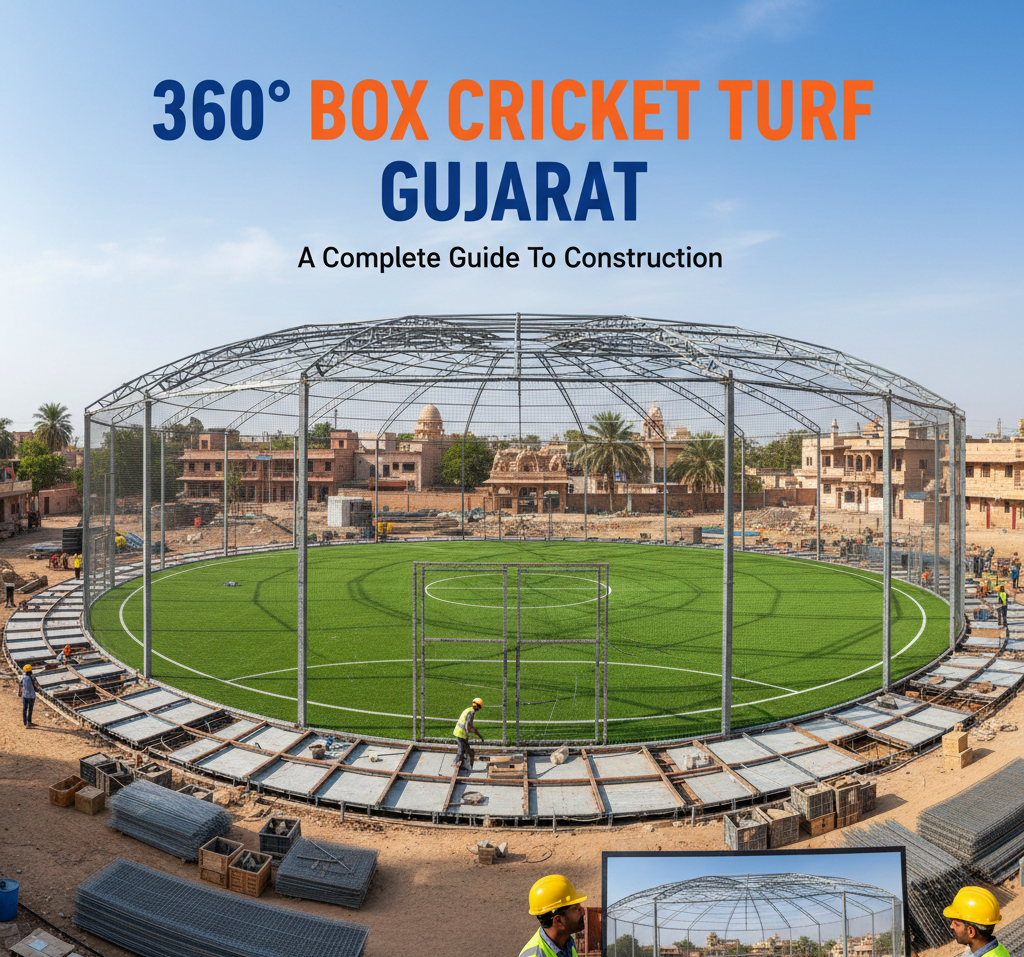
Gujarat, the land of entrepreneurship and rapid urban growth, has emerged as a key destination for sports infrastructure development. With booming cities like Ahmedabad, Surat, Vadodara, and Rajkot, there is a rising demand for innovative cricket facilities, particularly 360 degree box cricket turfs. These turfs are designed to optimize limited urban spaces while offering high-quality playing conditions, safety, and revenue potential.
This guide covers everything you need to know about constructing a 360 degree box cricket turf in Gujarat, including planning, design, materials, installation, maintenance, costs, and monetization opportunities.
What is a 360 Degree Box Cricket Turf?
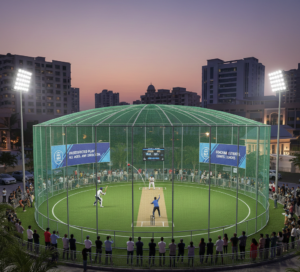
A 360 degree box cricket turf is a fully enclosed cricket arena that allows ball play in all directions. Unlike conventional cricket nets, which restrict movement to a linear path, the 360-degree design enables continuous, immersive cricket action.
Key Benefits:
-
Efficient use of limited land
-
Player and spectator safety with surrounding mesh
-
Uniform ball bounce and realistic cricketing experience
-
Suitable for all ages and skill levels
-
Ideal for coaching, corporate events, and organized leagues
In Gujarat, where urban space is often limited, a 360-degree turf combines compact design with maximum playability, making it perfect for residential complexes, sports academies, and corporate zones.
Why Gujarat is Ideal for Box Cricket Turfs
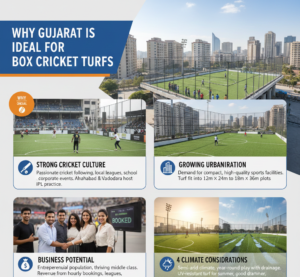
1. Strong Cricket Culture
Gujarat has a passionate cricket following, with many local leagues, school tournaments, and corporate events taking place year-round. Cities like Ahmedabad and Vadodara also host IPL practice sessions and franchise cricket events, making cricket facilities highly sought after.
2. Growing Urbanization
Rapidly expanding cities have created demand for compact, high-quality sports facilities. Box cricket turfs fit perfectly into smaller urban plots, typically ranging from 12m × 24m to 18m × 36m, while maintaining professional-quality play.
3. Business Potential
With Gujarat’s entrepreneurial population and a thriving middle class, cricket turfs can generate steady revenue through hourly bookings, leagues, coaching programs, and corporate tie-ups.
4. Climate Considerations
Gujarat has a semi-arid climate, which allows for year-round cricket play with proper drainage systems. Using UV-resistant turf ensures durability even under intense summer sun, while good drainage prevents waterlogging during the monsoon season.
Planning & Site Considerations
1. Location Selection
Ideal locations for turfs include:
-
Residential complexes with young families
-
IT parks and corporate hubs (Ahmedabad, Gandhinagar)
-
Schools and coaching academies
-
Commercial areas with foot traffic
Tip: Ensure easy accessibility, ample parking, and clear visibility to attract consistent users.
2. Size & Dimensions
Common configurations:
-
Small Turf: 60–75 feet radius – suited for residential setups
-
Medium Turf: 80–90 feet radius – ideal for academies and community spaces
-
Large Turf: 100+ feet radius – perfect for competitive leagues
Selecting the right size depends on budget, target audience, and land availability.
3. Legal & Regulatory Approvals
Gujarat municipal corporations require:
-
Land use approval from local authorities (AMC, SMC, VMC, etc.)
-
Fire safety and NOC for public use
-
Noise compliance if located in residential areas
Consulting with a local architect or civil engineer ensures smooth approvals.
Design & Structural Elements
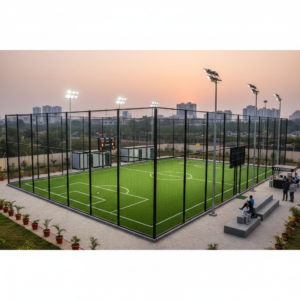
1. Ground Excavation & Base Layer
Gujarat’s soil varies from red soil to clayey soil, requiring proper preparation:
-
Excavate to the required depth
-
Install a perforated drainage system
-
Lay compacted sand and stone base
-
Laser-leveling ensures uniform ball roll and proper slope
2. Synthetic Turf Installation
Synthetic turf is the core of a box cricket facility. Features include:
-
Polyethylene or polypropylene fibers
-
Pile height of 10–14 mm for cricket
-
Sand + rubber infill for bounce and shock absorption
-
UV-stabilized, anti-fungal, and anti-static coating
High-quality turf ensures durability and a professional playing experience.
3. Protective Mesh & Boundary Fencing
360-degree turfs require strong fencing to:
-
Prevent balls from leaving the field
-
Ensure safety for players and spectators
-
Withstand strong winds and ball impact
Recommendation: Use galvanized steel poles and high-tensile polypropylene mesh.
4. Lighting & Amenities
Evening and night play is popular in urban Gujarat. Install:
-
LED floodlights with uniform illumination
-
Minimal shadow zones
-
Energy-efficient lighting solutions
Additional amenities:
-
Changing rooms and washrooms
-
Spectator seating
-
Refreshment counters or mini-cafes
-
Digital scoreboards
Materials & Technology
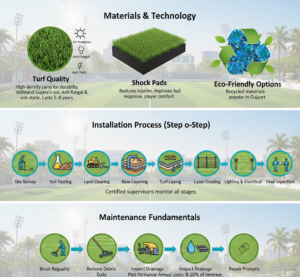
1. Turf Quality
-
High-density yarns for durability
-
UV protection to withstand Gujarat’s sun
-
Anti-fungal and anti-static coating
A good turf can last 5–8 years with proper care.
2. Shock Pads
Installing shock-absorbing pads beneath turf reduces injuries, improves ball response, and adds player comfort.
3. Eco-Friendly Options
Eco-conscious designs using recycled materials for turf are becoming popular in Gujarat’s urban centers.
Installation Process (Step-by-Step)
-
Site survey and measurement
-
Soil testing and drainage planning
-
Land clearing and base preparation
-
Drainage pipe installation
-
Stone and sand base layering
-
Laser grading
-
Turf laying and infill application
-
Mesh and fencing installation
-
Lighting and electrical setup
-
Final inspection and quality check
Certified supervisors should monitor all stages for quality assurance.
Maintenance Fundamentals
Maintaining a turf ensures longevity and consistent performance:
-
Brush turf regularly to prevent matting
-
Remove debris and leaves daily
-
De-compact turf every 3–4 months
-
Inspect drainage post-monsoon
-
Repair damaged sections promptly
Annual maintenance costs typically account for 8–10% of revenue.
Cost Overview (Gujarat)
Cost depends on turf size, materials, and amenities:
| Component | Estimated Cost (INR) |
|---|---|
| Land preparation | 5–10 lakh |
| Synthetic turf | 10–20 lakh |
| Drainage system | 3–7 lakh |
| Mesh & fencing | 4–8 lakh |
| Lighting | 5–15 lakh |
| Amenities | 3–10 lakh |
Total: ₹30 lakh – ₹70+ lakh depending on scale and features.
Monetization Strategies
-
Hourly Bookings: Casual play for individuals or teams
-
Leagues & Tournaments: Host city-wide or corporate leagues
-
Coaching Programs: Partner with certified coaches
-
Corporate Packages: Team-building activities and events
-
Sponsorship & Advertising: Brand boards, banners, and digital ads
Why Gujarat’s Market is Promising
-
Growing urban population with disposable income
-
Enthusiastic cricket culture across cities
-
High corporate and IT presence driving sports demand
-
Residential complexes increasingly investing in recreational facilities
A 360-degree box cricket turf offers high ROI, community engagement, and long-term sustainability.
Conclusion
Constructing a 360 degree box cricket turf in Gujarat is not just a sports infrastructure project — it is an investment in community development, business growth, and cricket culture. With the right site, high-quality materials, precise installation, and strategic marketing, such a turf becomes a hub for players, leagues, and corporates, operating year-round.
Gujarat’s fast-growing cities, active sports culture, and high demand for recreational facilities make it an ideal location for 360-degree box cricket turfs. By investing today, you can create a modern cricketing destination that combines fun, professionalism, and revenue potential.