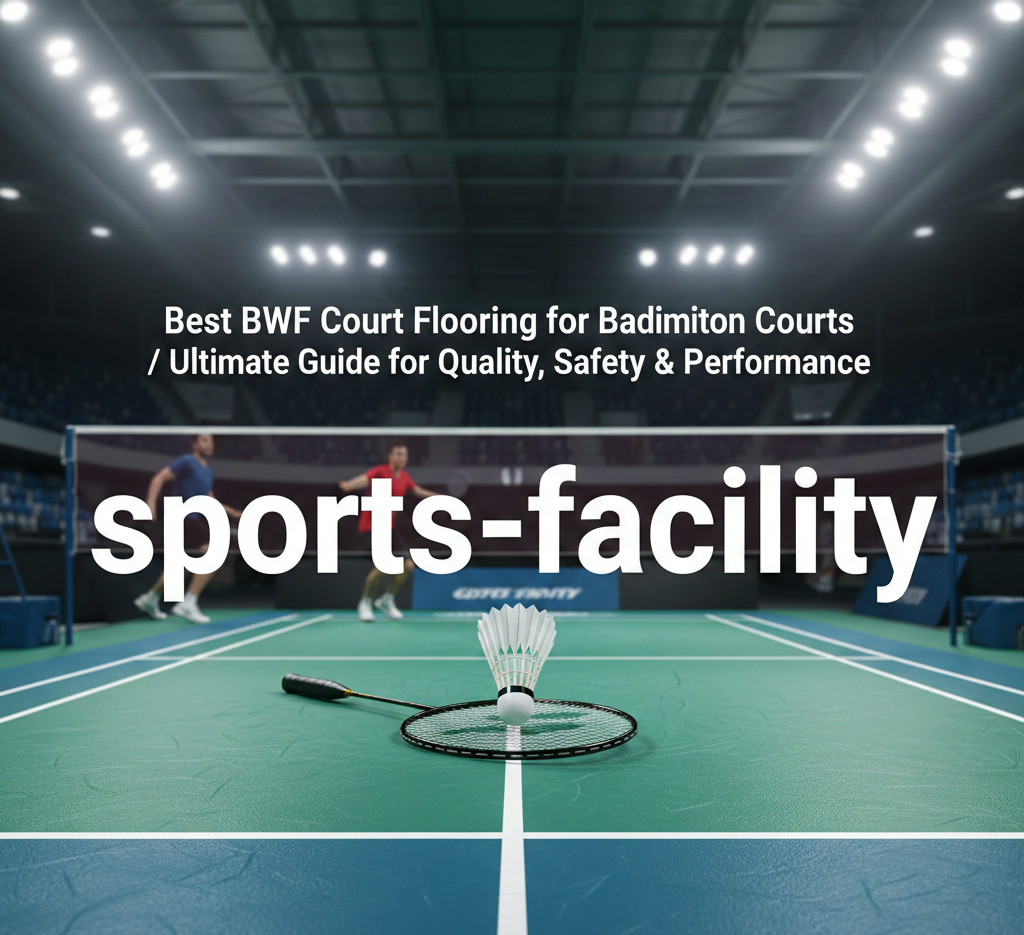
Choosing the right flooring for a badminton court is far more than a design decision. The court surface directly impacts player performance, safety, and the ability to host competitive events. For facility owners, coaches, sports managers, and academy directors, understanding the best BWF-approved flooring options is crucial to delivering a high-quality playing experience and meeting international standards.
In this guide, we’ll explore the top BWF-approved court flooring systems, their benefits, and how to choose the right surface based on usage, budget, and performance needs.
Why BWF-Approved Flooring Matters
The Badminton World Federation (BWF) sets strict flooring standards to ensure consistent gameplay and player safety. This is especially important for official tournaments and international competitions. The flooring must meet specific criteria including:
-
Anti-slip properties to prevent falls
-
Shock absorption to reduce joint strain
-
Consistent shuttle bounce across the entire court
-
Uniform performance with no soft or hard zones
Using non-approved flooring can lead to injuries, inconsistent bounce, and even disqualification from hosting sanctioned events. Therefore, BWF-approval is not just a certification—it is a guarantee of performance and safety.
Top BWF-Approved Flooring Systems
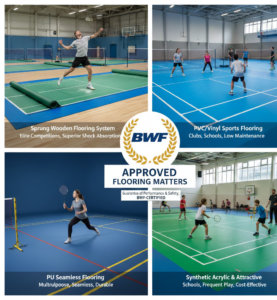
1. Sprung Wooden Flooring System (Elite Standard)
Best For: International tournaments, professional training centers, elite academies
Sprung wooden flooring is the premium standard for professional badminton courts. Typically constructed with maple wood, this system combines natural shock absorption with exceptional rebound and player comfort.
Why it’s considered elite:
-
Natural feel and rebound – players can move faster with more control
-
Superior shock absorption – reduces impact on knees and ankles
-
Enhanced energy return – improves agility and endurance
-
Long lifespan with proper maintenance
When combined with BWF-approved court mats, sprung wood flooring becomes the gold standard for elite competition venues.
Considerations:
-
Higher initial cost
-
Requires regular maintenance (sanding, refinishing)
-
Best suited for indoor environments with climate control
2. PVC/Vinyl Sports Flooring (Most Popular for Indoor Courts)
Best For: Clubs, schools, training halls, community centers
PVC or vinyl flooring is one of the most common BWF-approved surfaces worldwide. It provides a perfect balance of performance, cost, and maintenance.
Why PVC is widely chosen:
-
Consistent bounce and grip
-
Shock-absorbing foam layers under the surface
-
Textured finish for anti-slip performance
-
Easy installation and quick turnaround
Most PVC sports floors used for badminton range between 4.5–5.2 mm thickness, offering excellent durability without compromising comfort.
Pros:
-
Lower cost than wood
-
Ideal for high-usage courts
-
Low maintenance
Cons:
-
Less natural feel compared to wood
-
Not ideal for elite international tournaments
3. PU Seamless Flooring (Modern & Versatile)
Best For: Multi-purpose indoor arenas, modern sports complexes
PU (Polyurethane) seamless flooring is a poured synthetic surface that provides excellent cushioning and traction. Its seamless nature reduces joints and weak spots, making it a durable and safe option.
Why PU is a top choice:
-
Seamless surface eliminates joints
-
Excellent shock absorption and energy return
-
Customizable thickness and colors
-
Highly durable and easy to clean
PU floors are particularly suitable for multi-use halls where badminton is one of several sports.
Pros:
-
Strong durability
-
High performance with minimal maintenance
-
Excellent for multi-sports use
Cons:
-
Requires professional installation
-
Higher cost than PVC
4. Synthetic Acrylic Flooring (Durable & Attractive)
Best For: Schools, frequent play courts, low-maintenance facilities
Acrylic sports flooring is known for its resilience and long-lasting performance. It is a reliable choice for high-traffic badminton courts that need consistent grip and low upkeep.
Advantages:
-
High slip resistance
-
UV-resistant and color stable
-
Low maintenance
-
Cost-effective for schools and clubs
Ideal for:
-
Community courts
-
School gyms
-
Recreational centers
Comparison of Top Flooring Options
| Flooring Type | BWF Certified | Shock Absorption | Best For | Maintenance |
|---|---|---|---|---|
| Sprung Wooden | ✔️ (with mats) | Excellent | Elite competitions | Moderate–High |
| PVC/Vinyl | ✔️ | Good | Clubs & indoor halls | Low–Moderate |
| PU Seamless | ✔️ | Excellent | Multipurpose & indoor | Moderate |
| Acrylic | ✔️ | Good | Schools & frequent play | Low |
Note: Always verify the product’s BWF certification and test reports before installation. Only certified surfaces should be used for professional and competitive play.
How to Choose the Right Flooring for Your Facility
When selecting a badminton court surface, consider the following:
1. Usage Intensity
-
High-traffic courts require durable surfaces like sprung wood or PU.
-
School and community courts can use PVC or acrylic.
2. Player Level
-
Elite training and tournaments demand sprung wooden floors with BWF-approved mats.
-
Amateur and recreational courts can use PVC or acrylic.
3. Budget & ROI
-
PVC offers the best performance at a lower cost.
-
Sprung wood has higher upfront cost but offers superior long-term value for elite venues.
4. Maintenance & Climate
-
Wooden floors require climate-controlled environments and regular care.
-
Synthetic surfaces handle humidity and heavy use better.
Final Recommendation
For most modern badminton facilities, PVC/vinyl flooring offers the best balance of performance, durability, cost, and maintenance. It is the most popular choice for professional clubs and indoor courts worldwide.
However, if your goal is to host high-level competitions or provide a premium playing experience, sprung wooden flooring with certified mats remains the ultimate standard. It delivers unmatched player comfort, performance, and longevity.
Conclusion
Choosing the right BWF-approved flooring is essential to ensure safety, performance, and credibility for your badminton facility. Whether you opt for the elite performance of sprung wood, the practicality of PVC, the modern appeal of PU, or the durability of acrylic—your decision should align with player level, usage intensity, and budget.
With the right surface, your court won’t just look professional—it will play like one.
Frequently Asked Questions — BWF Court Flooring for Badminton
1. What is BWF-approved badminton court flooring?
BWF-approved flooring refers to court surfaces that meet Badminton World Federation technical standards for safety, performance, and consistency in competitive play. These include criteria for shock absorption, friction, ball bounce, flatness, and durability.
2. Why is flooring important for badminton?
Proper flooring:
-
Reduces risk of slips and falls
-
Cushions impacts to protect joints
-
Ensures consistent shuttle response
-
Supports quick directional changes and explosive movement
A compliant surface enhances gameplay quality and player safety.
3. What types of flooring materials can be BWF-certified?
Common materials with BWF certification include:
-
Wooden sports floors (e.g., maple/beech) — excellent shock absorption and feel
-
Engineered wood systems — slightly lower cost with strong performance
-
PVC or high-grade vinyl — durable and easier to maintain
-
Select rubber or synthetic systems — suitable for multipurpose venues
Always confirm certification from the manufacturer before installation.
**4. Is wooden flooring the best for badminton?
Wooden floors — especially sprung or engineered maple systems — are considered the gold standard for high-level indoor badminton due to excellent energy return, grip, and cushioning, making them ideal for competition and training.
**5. Can synthetic flooring be used for official games?
Yes. High-quality PVC, vinyl, or polyurethane (PU) floors that have been tested and certified by BWF are suitable for official matches and major tournaments. They often offer easy maintenance and moisture resistance.
**6. What performance features does BWF consider?
BWF flooring performance standards typically require:
-
Shock absorption to reduce joint impact
-
Slip resistance (grip) without stickiness
-
Uniform bounce and flatness
-
Durability and long-term performance
These features ensure fairness and player protection in competitive play.
**7. Are outdoor badminton court surfaces also BWF-approved?
Most BWF-approved systems are designed for indoor use where conditions are controlled. Outdoor surfaces may use acrylic or other synthetic coatings for durability, but these should still be checked for compliance with performance safety standards.
**8. How do BWF standards enhance player safety?
Certified floors include integrated underlayers or cushioning systems that mitigate impact forces during jumps and lunges, reducing stress on ankles, knees, and back. This helps prevent acute and chronic injuries.
**9. How long does a BWF-approved court flooring last?
Lifespan depends on material and usage:
-
Wooden floors: Often 12–25+ years with maintenance
-
PVC/Vinyl: ~8–12 years
-
Rubber/synthetic: ~6–10 years
Regular care and proper cleaning extend performance life.
**10. Do all badminton courts need BWF-certified flooring?
Not all — recreational or community courts may choose non-certified flooring for cost or multi-sport use. However, BWF certification is essential for tournaments, official events, and performance centres to ensure compliance with international standards.
**11. What maintenance is required?
Proper upkeep includes:
-
Regular sweeping and damp mopping
-
Ensuring the surface remains dry
-
Periodic inspections for wear or damage
Certified surfaces often come with manufacturer guidelines to maintain performance and warranty