Introduction
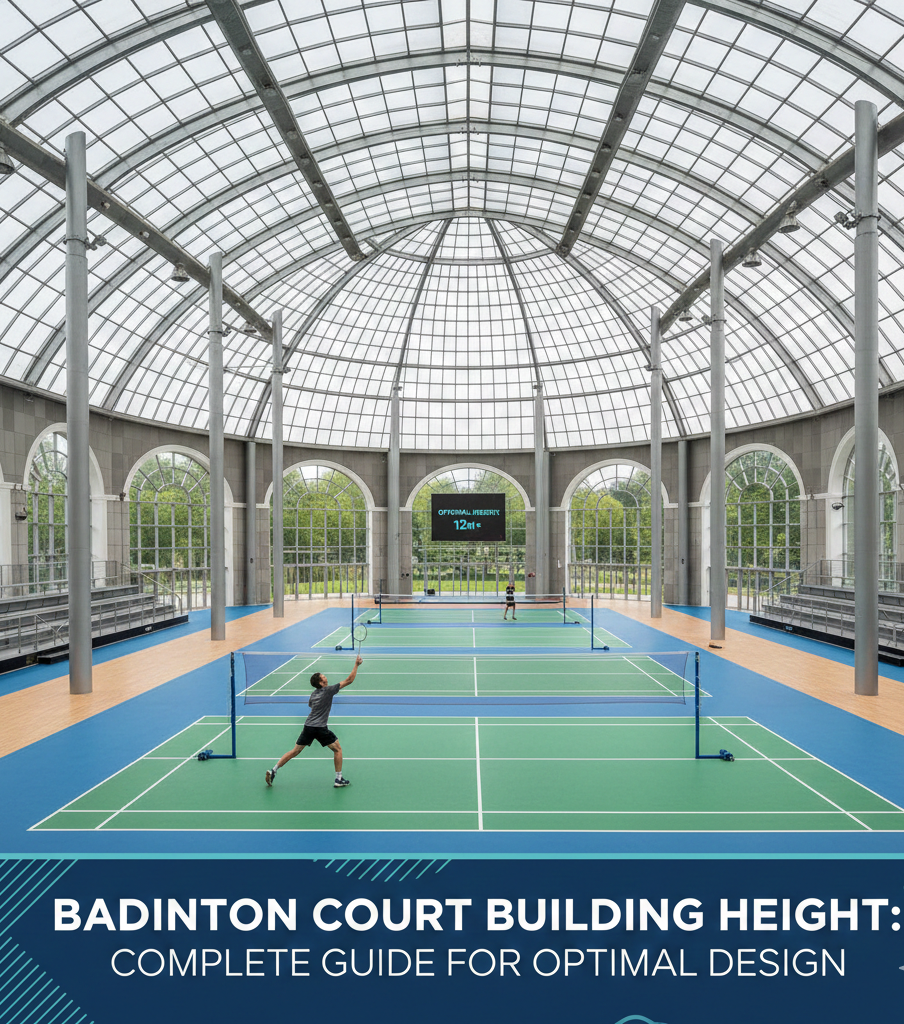
Badminton is a fast-paced sport requiring precision, agility, and quick reflexes. While standardized court dimensions are crucial, one of the most important yet often overlooked aspects of indoor badminton facility design is building height. Adequate vertical clearance is essential to allow high clears, smashes, and lobs without interference from the ceiling, lighting, or roof structures. Understanding the recommended building height, influencing factors, and design considerations is critical for constructing a facility that ensures player safety, comfort, and professional-level play.
Importance of Adequate Building Height
The height of a badminton court building plays a significant role in several areas:
-
Uninterrupted Gameplay: Sufficient height ensures high shots and smashes are not restricted, enabling competitive and recreational play.
-
Player Safety: Prevents accidental contact with fans, lights, or roof trusses, reducing injury risks.
-
Air Circulation and Comfort: Taller buildings improve airflow, prevent heat accumulation, and create a comfortable environment.
-
Lighting Flexibility: Adequate height allows proper installation of lighting fixtures without causing glare or shadows.
-
Multi-Court Accommodation: High ceilings are essential in multi-court facilities to maintain uniform play conditions and prevent shuttle interference.
Proper planning of building height is therefore critical for creating a safe, functional, and professional badminton environment.
Standard Height Recommendations
According to the Badminton World Federation (BWF):
-
Minimum Ceiling Height: 7.5 meters (24.6 feet) – suitable for recreational and casual play.
-
Preferred Ceiling Height: 8–9 meters (26–29.5 feet) – recommended for professional tournaments and multi-court facilities.
-
Maximum Considerations: There is no strict upper limit, but excessively high ceilings may increase costs without significant gameplay benefits.
Measurements are taken from the playing surface to the lowest obstruction, such as beams, lighting, or roof trusses, ensuring a clear vertical space for shuttle trajectory and safety.
Factors Influencing Building Height
Several factors determine the ideal height for a badminton court:
-
Type of Play: Recreational courts require a minimum of 7.5 meters, while professional and competitive courts benefit from 8–9 meters.
-
Number of Courts: Multi-court facilities need extra vertical clearance to prevent shuttle interference and allow shared lighting setups.
-
Roof Design: Flat roofs require precise clearance planning; pitched roofs can allow higher central clearance while maintaining structural integrity.
-
Lighting Placement: Overhead fixtures must be positioned above the minimum height to avoid interference and glare.
-
Ventilation Systems: Fans, HVAC ducts, and vents require additional space above courts for proper airflow.
-
Future Expansion: Considering potential additions of courts or equipment may influence building height.
Multi-Court Facilities
In facilities with multiple courts:
-
Two-Court Facilities: A minimum of 8 meters is recommended.
-
Four or More Courts: Heights of 8–9 meters ensure consistent play, prevent interference, and allow uniform lighting across all courts.
Structural Design Considerations
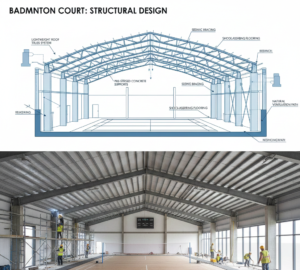
Building height impacts the overall structural design:
-
Roof Trusses: Should be positioned outside playable areas. Steel trusses are ideal for taller buildings.
-
Walls: Side walls should be unobstructed up to full building height; upper-level ventilation or windows may be incorporated.
-
Materials: Steel or aluminum frames with concrete footings provide stability for high ceilings.
-
Insulation & Roofing: Proper roofing materials prevent heat buildup and maintain structural integrity.
Safety and Accessibility
Adequate building height ensures:
-
Clearance Above Play Area: Avoids accidental contact with lights, fans, or beams.
-
Emergency Access: Allows installation of sprinklers, smoke detectors, and other safety systems.
-
Maintenance Access: Facilitates safe maintenance of lights, ventilation, and roofing.
Environmental and Comfort Considerations
Higher ceilings improve comfort and air quality:
-
Air Circulation: Reduces heat during intense gameplay.
-
Humidity Control: Supports effective HVAC operation for court longevity.
-
Lighting Efficiency: Elevated fixtures reduce glare while providing uniform illumination.
Cost Implications
While higher ceilings may increase initial construction costs due to additional materials, ventilation, and lighting requirements, the investment ensures long-term usability, safety, and flexibility for future facility upgrades.
Conclusion
Badminton court building height is a crucial design factor that directly affects gameplay, safety, comfort, and facility longevity. Recreational courts require a minimum of 7.5 meters, whereas professional and multi-court facilities benefit from 8–9 meters of vertical clearance. Factors such as roof design, number of courts, lighting, ventilation, and future expansion must all be considered in planning. Adequate height ensures uninterrupted play, a safe environment, optimal comfort, and professional-quality conditions, making it a cornerstone of successful badminton facility design.
By prioritizing building height during the planning and construction phase, facility owners and designers can create badminton courts that enhance performance, ensure safety, and provide a professional sports environment for years to come.