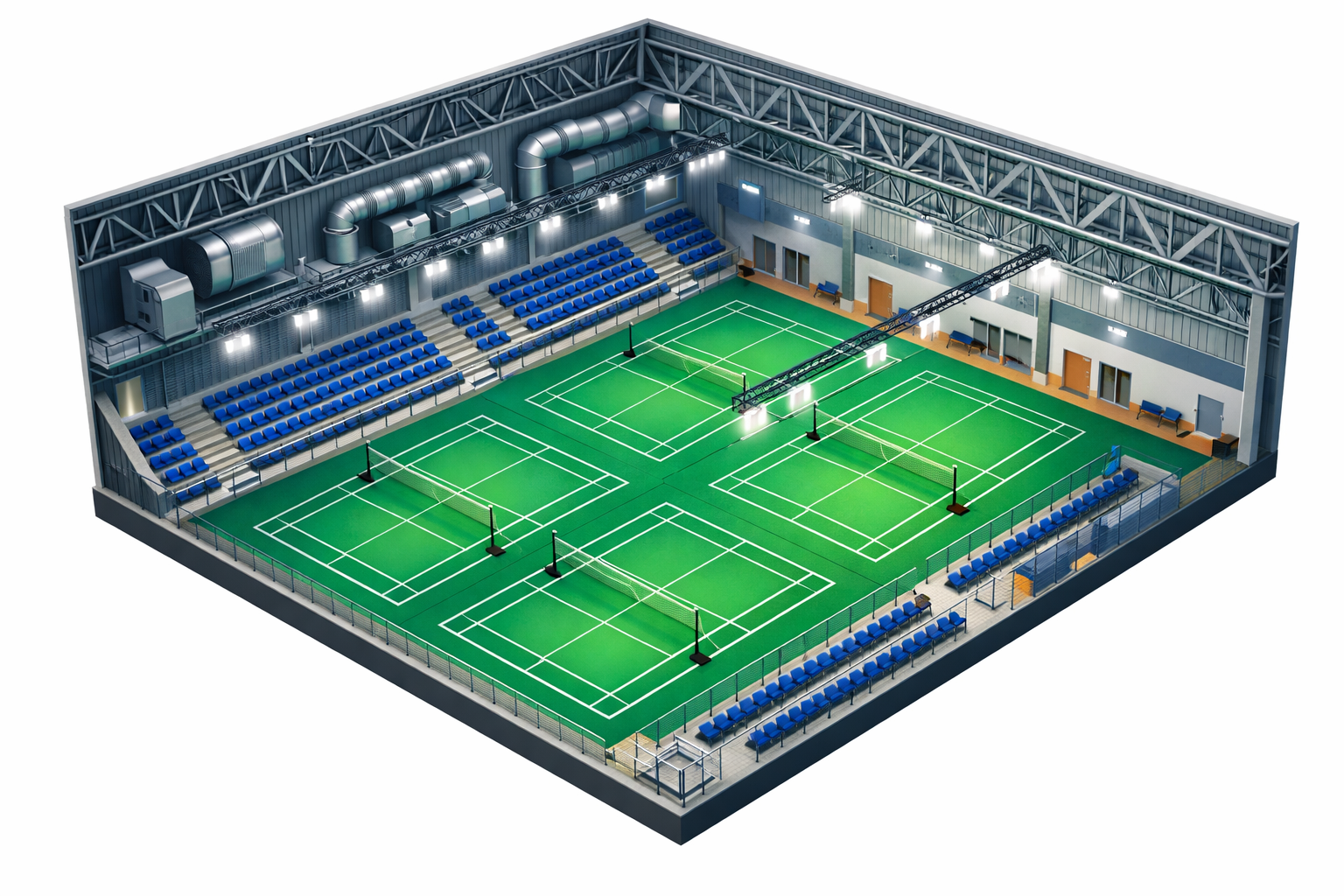
Badminton is one of the most popular indoor sports, known for its speed, precision, and competitive nature. While players focus on skill and strategy, the foundation of great gameplay lies in a well-planned infrastructure. A badminton court building plan is not just about marking a playing surface—it involves detailed planning of space, structure, lighting, ventilation, safety, and user experience.
Whether you are developing a school sports hall, a professional training academy, or a multi-court indoor stadium, a properly designed badminton court building plan ensures optimal performance, safety, and long-term durability. In this comprehensive guide, we explore every aspect of planning and constructing a badminton facility that meets modern standards.
What is a Badminton Court Building Plan?
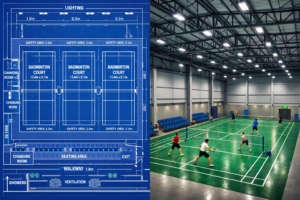
A badminton court building plan is a structured blueprint that outlines the layout, dimensions, structural design, and functional components of a badminton facility. It integrates architectural planning with sports engineering to create a space that enhances gameplay and ensures safety.
This plan includes:
- Court dimensions and layout
- Building size and height
- Structural framework and roofing
- Flooring systems
- Lighting and ventilation
- Safety and accessibility features
A well-prepared building plan minimizes construction errors, optimizes costs, and ensures compliance with international standards.
Why a Proper Building Plan is Essential
1. Efficient Space Utilization
A badminton court requires more than just the playing area. Adequate clearance zones around the court allow players to move freely without risk of injury. Proper planning ensures that space is used effectively without overcrowding.
2. Enhanced Player Safety
Safety is a top priority in sports infrastructure. A detailed plan ensures proper spacing, non-slip flooring, and structural stability to reduce the risk of accidents.
3. Long-Term Durability
The right materials and construction techniques increase the lifespan of the facility. A strong foundation and durable roofing system prevent structural damage over time.
4. Improved Playing Experience
Proper lighting, ventilation, and flooring contribute to better gameplay. Players can perform at their best when the environment is comfortable and well-designed.
5. Future Expansion Flexibility
A good building plan allows for future upgrades such as adding more courts, seating areas, or training facilities.
Standard Badminton Court Dimensions
Understanding court dimensions is the first step in creating a building plan. According to international standards:
- Court Length: 13.4 meters (44 feet)
- Court Width:
- Doubles: 6.1 meters (20 feet)
- Singles: 5.18 meters (17 feet)
- Net Height:
- 1.55 meters at the edges
- 1.524 meters at the center
While these dimensions define the playing area, additional space is required for safety and movement.
Recommended Building Dimensions
To ensure smooth gameplay and player safety, the building must provide adequate clearance around the court.
Single Court Facility
- Minimum Length: 20 meters
- Minimum Width: 12 meters
- Minimum Height: 7.5 meters
Multi-Court Facilities
Two Courts
- Length: 28–30 meters
- Width: 14–16 meters
Four Courts
- Length: 45–50 meters
- Width: 20–25 meters
These dimensions allow sufficient spacing between courts, ensuring that players do not interfere with each other during matches.
Structural Design Considerations
A strong and stable structure is essential for any badminton facility.
1. Frame Structure
Steel structures are widely preferred due to their strength, durability, and ability to support large spans without internal columns. This ensures unobstructed playing space.
2. Roofing Design
The roof must be high enough to allow free shuttle movement. Key features include:
- Pitched or curved roof for drainage
- Anti-glare interior surfaces
- Insulated panels to control temperature
3. Foundation
A solid concrete foundation ensures stability and prevents uneven surfaces. It also supports the weight of the structure and flooring system.
Flooring System and Court Layout
Flooring is one of the most important components of a badminton court building plan.
Types of Flooring
- Wooden Flooring: Preferred for professional tournaments due to natural feel and performance
- PVC Vinyl Flooring: Popular for indoor courts with excellent cushioning and grip
- PU (Polyurethane) Flooring: Seamless and durable surface
- Synthetic Flooring: Suitable for budget-friendly setups
Key Features of Good Flooring
- Shock absorption to reduce injuries
- Anti-slip surface for better traction
- Even and level surface for consistent gameplay
Court Layout
Accurate line marking is essential for fair play. The layout must strictly follow official measurements for singles and doubles matches.
Lighting Design for Badminton Courts
Lighting is a critical factor in indoor badminton facilities.
Key Requirements
- Uniform illumination across the court
- Glare-free lighting to avoid distraction
- Proper positioning above the playing area
Recommended Lighting System
LED sports lighting is widely used due to:
- Energy efficiency
- Long lifespan
- Consistent brightness
Lights should be mounted at a height that prevents shadows and ensures clear visibility of the shuttlecock.
Ventilation and Environmental Control
Indoor badminton courts must provide a comfortable playing environment.
Ventilation Features
- Natural ventilation through windows and vents
- Mechanical ventilation using fans and exhaust systems
- HVAC systems for temperature control
Good airflow prevents heat buildup and maintains player comfort during intense matches.
Safety Measures in Building Plan
Safety is an integral part of any badminton court design.
Essential Safety Features
- Minimum 3 meters clearance behind baselines
- Non-slip flooring surfaces
- Clearly marked emergency exits
- Fire safety systems including alarms and extinguishers
- Proper structural support to prevent collapse
Regular inspection and maintenance further enhance safety.
Accessibility and Player Amenities
A well-designed badminton facility goes beyond the court itself.
Key Amenities
- Changing rooms and lockers
- Restrooms and shower facilities
- Equipment storage areas
- Seating arrangements for spectators
- Reception and waiting areas
Accessibility Considerations
- Wide entry and exit points
- Barrier-free access for differently-abled individuals
- Clear signage for navigation
These features improve the overall user experience and functionality of the facility.
Cost Factors in Badminton Court Construction
The cost of building a badminton court depends on several variables:
- Number of courts
- Type of flooring
- Structural materials
- Lighting and ventilation systems
- Additional amenities
Budget Planning Tips
- Prioritize quality materials for long-term savings
- Choose energy-efficient lighting systems
- Plan for maintenance costs
Investing in a well-designed facility reduces repair costs and ensures long-term usability.
Common Mistakes to Avoid
When planning a badminton court building, avoid these common errors:
- Insufficient ceiling height
- Poor lighting placement causing glare
- Inadequate ventilation
- Lack of safety clearance zones
- Using low-quality flooring materials
Proper planning and expert consultation help prevent these issues.
Future Trends in Badminton Court Design
The sports infrastructure industry is evolving rapidly, and modern badminton facilities are adopting innovative solutions:
Smart Sports Facilities
Integration of digital scoreboards, performance tracking, and automated lighting systems.
Eco-Friendly Construction
Use of sustainable materials and energy-efficient systems.
Multi-Sport Infrastructure
Facilities designed to accommodate multiple sports for better space utilization.
Advanced Flooring Technology
New materials offering better shock absorption and durability.
Conclusion
A badminton court building plan is the foundation of a successful sports facility. From accurate dimensions and structural design to flooring, lighting, and safety measures, every detail plays a vital role in creating a high-performance environment.
Whether you are building a single court or a multi-court complex, careful planning ensures optimal space utilization, enhanced player safety, and long-term durability. By investing in a well-structured building plan, you can create a facility that not only meets international standards but also provides an exceptional playing experience.
If you are planning to develop a badminton court, now is the perfect time to focus on quality design, expert execution, and future-ready infrastructure. A well-built badminton facility is not just a sports venue—it is a long-term investment in health, performance, and community development.
Frequently Asked Questions (FAQs) – Badminton Court Building Plan
1. What is a badminton court building plan?
A badminton court building plan is a detailed layout or blueprint that includes court dimensions, building size, structure, flooring, lighting, ventilation, and safety features required to construct a complete badminton facility.
2. What is the minimum size required for a badminton court building?
For a single indoor court:
- Minimum Length: 20 meters
- Minimum Width: 12 meters
- Minimum Height: 7.5 meters
These dimensions include safety clearance areas around the court.
3. How high should a badminton court ceiling be?
The minimum recommended ceiling height is 7.5 meters, but for professional or tournament-level courts, a height of 9–12 meters is preferred to allow better shuttle movement.
4. How much space is needed around a badminton court?
A standard badminton court requires:
- Back clearance: 3–4 meters
- Side clearance: 2.5–3 meters
This ensures player safety and unrestricted movement during gameplay.
5. What type of flooring is best for badminton courts?
Common flooring options include:
- Wooden flooring – Best for professional courts
- PVC vinyl flooring – Popular for indoor use
- PU flooring – Durable and seamless
- Synthetic/acrylic flooring – Suitable for outdoor courts
6. Can multiple badminton courts be built in one building?
Yes, multiple courts can be constructed within a single building. Proper spacing between courts and adequate walkway areas must be included in the building plan to avoid interference.
7. What kind of lighting is required for a badminton court?
Badminton courts require uniform, glare-free LED lighting installed at a sufficient height. Proper lighting ensures clear visibility of the shuttlecock and enhances gameplay.