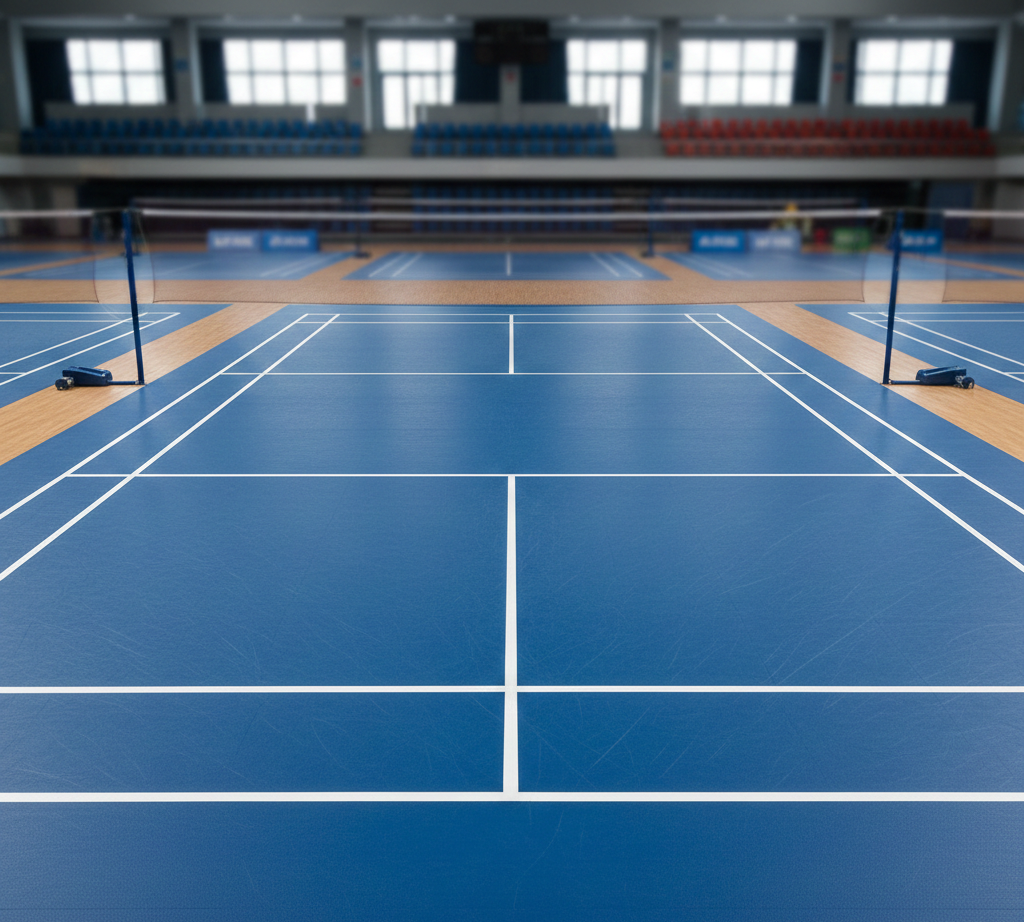
Badminton, a fast-paced and high-intensity sport, demands not only skill and agility but also a safe and high-performance playing surface. The flooring of a badminton court is one of the most crucial elements that directly affect players’ performance, safety, and overall experience. Selecting the right flooring material is essential for both indoor and professional badminton setups. This guide explores everything about badminton court flooring, its types, benefits, installation, and maintenance.
Importance of Quality Badminton Court Flooring
Badminton involves rapid changes in direction, sudden stops, and jumps. These movements place significant stress on a player’s joints, particularly knees and ankles. The flooring plays a critical role in providing shock absorption, grip, and stability to minimize the risk of injuries. Poor-quality surfaces can lead to slips, falls, or long-term joint problems, reducing both safety and performance. Additionally, the flooring influences the bounce of the shuttlecock, the speed of movement, and overall gameplay quality.
Types of Badminton Court Flooring
Badminton courts typically feature synthetic, wooden, or hybrid flooring systems, each with distinct characteristics suited for specific environments and budgets.
-
Wooden Flooring
Wooden flooring is traditionally preferred for professional and international badminton courts. Made from high-quality hardwood like maple or oak, wooden floors provide excellent shock absorption and a natural grip, allowing players to move confidently. Hardwood floors also offer a consistent rebound for the shuttlecock.-
Pros: Superior shock absorption, professional feel, aesthetic appeal.
-
Cons: High installation cost, sensitive to moisture, requires regular maintenance.
-
-
Synthetic Flooring (PVC or Vinyl)
Synthetic floors, especially PVC or vinyl sports flooring, are increasingly popular in modern badminton courts. They are designed to mimic the performance of wooden floors while offering enhanced durability and ease of maintenance. These surfaces are anti-slip, comfortable for joints, and come in various thicknesses and textures.-
Pros: Low maintenance, moisture resistant, affordable, suitable for multi-purpose halls.
-
Cons: Slightly less natural feel compared to hardwood.
-
-
Modular Interlocking Tiles
Some recreational or school badminton courts use interlocking modular tiles, which are easy to install and replace. They are usually made of high-density polypropylene or PVC and provide decent shock absorption. These floors are suitable for temporary setups or multi-sport usage.-
Pros: Quick installation, customizable, portable.
-
Cons: Not ideal for professional competitions due to slight surface inconsistencies.
-
Essential Features of Badminton Court Flooring
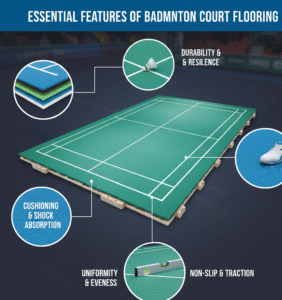
A high-quality badminton court flooring must fulfill several technical requirements:
-
Shock Absorption and Impact Resistance
A floor should absorb impact efficiently to reduce the risk of injury. Professional courts often have a cushioned underlay or multi-layered construction that balances energy return and shock absorption. -
Slip Resistance
Fast movements and sudden stops are common in badminton. The flooring must provide sufficient grip to prevent slipping, even if the surface becomes slightly moist from sweat. -
Durability and Wear Resistance
Frequent play can wear down the surface. High-quality flooring materials resist abrasion, scratches, and dents, ensuring long-lasting performance without compromising safety. -
Consistent Ball and Shuttlecock Bounce
In badminton, the shuttlecock’s movement is critical. A uniform, flat, and smooth surface ensures that shuttlecock rebounds predictably, maintaining fair and high-quality gameplay. -
Comfort and Fatigue Reduction
Flooring that supports proper posture and reduces stress on joints helps players perform longer without fatigue. Some advanced synthetic and wooden floors incorporate cushioning to optimize comfort during prolonged sessions.
Installation Considerations
Installing badminton court flooring requires careful planning and execution:
-
Surface Preparation: Ensure the subfloor is clean, level, and free from moisture. Uneven surfaces can compromise safety and performance.
-
Underlayment: Professional floors often use shock-absorbing underlays to enhance impact resistance.
-
Precision Measurement: Courts must adhere to official dimensions: 13.4 meters long and 6.1 meters wide for doubles, with proper markings for singles and doubles play.
-
Professional Installation: Especially for wooden or synthetic flooring, professional installation ensures proper alignment, joint sealing, and surface consistency.
Maintenance Tips for Longevity
Proper care significantly extends the life of badminton flooring:
-
Regular Cleaning: Sweep or vacuum daily to remove dust, dirt, and debris that can cause scratches. Use damp mopping with neutral pH cleaners.
-
Avoid Excessive Moisture: Wooden floors are sensitive to water; synthetic floors should also be protected from standing water.
-
Polishing and Re-coating: Wooden floors may require periodic polishing or surface refinishing, while synthetic floors may benefit from occasional wax coating to maintain slip resistance.
-
Preventive Measures: Encourage players to use proper badminton shoes, avoid dragging heavy objects, and maintain controlled humidity levels indoors.
Choosing the Right Flooring for Your Facility
Selecting the best flooring depends on factors like budget, usage frequency, and player level:
-
Professional Sports Complexes: High-grade wooden flooring or premium synthetic flooring with shock absorption is ideal.
-
Schools and Community Centers: Durable synthetic flooring or interlocking tiles offer affordability and multi-purpose usability.
-
Home or Recreational Courts: Modular synthetic tiles or mid-range PVC surfaces provide ease of installation and low maintenance.
Emerging Trends in Badminton Court Flooring
Advancements in material science have introduced eco-friendly, UV-resistant, and multi-layered flooring options. Modern synthetic surfaces now combine recycled materials with enhanced anti-slip properties, making them both sustainable and high-performing. Some courts also feature cushioned underlayers designed specifically for competitive players, reducing joint strain and improving agility.
Conclusion
Badminton court flooring is far more than a surface; it is a critical component that directly affects player safety, comfort, and performance. Choosing the right type of flooring, ensuring professional installation, and following regular maintenance practices can transform a simple court into a high-performance sports arena. Whether for professional athletes, recreational players, or educational institutions, investing in quality flooring ensures longevity, safety, and a superior playing experience.
A well-constructed badminton court flooring not only enhances gameplay but also promotes healthy sports habits, reduces injury risks, and provides an enjoyable environment for everyone who steps onto the court. As the sport grows globally, prioritizing the right surface has become essential for anyone serious about badminton.
Frequently Asked Questions (FAQ) – Badminton Court Flooring
1. What is badminton court flooring?
Badminton court flooring refers to the specialized sports surface used to build badminton courts. It is designed to provide proper grip, shock absorption, durability, and player safety. These floors ensure smooth movement, reduce injury risk, and support professional gameplay.
2. What types of flooring are used for badminton courts?
Common types of badminton court flooring include:
-
Wooden Flooring (Maple or Hardwood) – Used in professional indoor courts.
-
PVC Vinyl Sports Flooring – Popular for indoor sports halls and academies.
-
Synthetic Acrylic Flooring – Used for outdoor badminton courts.
-
PU (Polyurethane) Flooring – Provides seamless, cushioned surfaces.
3. Why is special flooring required for badminton courts?
Badminton requires quick footwork, sudden direction changes, and jumping, so specialized flooring helps:
-
Provide anti-slip grip
-
Absorb shock and reduce stress on joints
-
Ensure smooth player movement
-
Improve durability of the court
4. What is the best flooring for indoor badminton courts?
The best indoor badminton flooring options are:
-
Wooden sports flooring
-
PVC vinyl sports flooring
These surfaces offer excellent shock absorption, ball response, and professional playing conditions.
5. What flooring is suitable for outdoor badminton courts?
For outdoor courts, acrylic synthetic flooring or PU sports flooring is commonly used because it is weather-resistant, durable, and low maintenance.
6. What is the standard size of a badminton court?
A standard badminton court measures:
-
Length: 13.4 meters
-
Width: 6.1 meters (doubles)
-
Width: 5.18 meters (singles)
7. How thick is badminton court flooring?
The thickness depends on the flooring type:
-
PVC vinyl flooring: 4.5 mm – 8 mm
-
PU sports flooring: 3 mm – 5 mm
-
Wooden sports flooring: 70 mm – 130 mm (including substructure)
8. Is badminton court flooring shock absorbent?
Yes. Professional badminton flooring is designed with shock absorption technology to reduce impact on players’ knees, ankles, and joints during fast movements and jumps.
9. How long does badminton court flooring last?
With proper installation and maintenance, badminton court flooring can last:
-
PVC flooring: 8–12 years
-
PU flooring: 8–10 years
-
Wooden flooring: 20+ years
10. How much does badminton court flooring cost in India?
The cost depends on the material used:
-
PVC flooring: ₹180 – ₹350 per sq. ft.
-
PU flooring: ₹220 – ₹400 per sq. ft.
-
Wooden sports flooring: ₹450 – ₹900 per sq. ft.