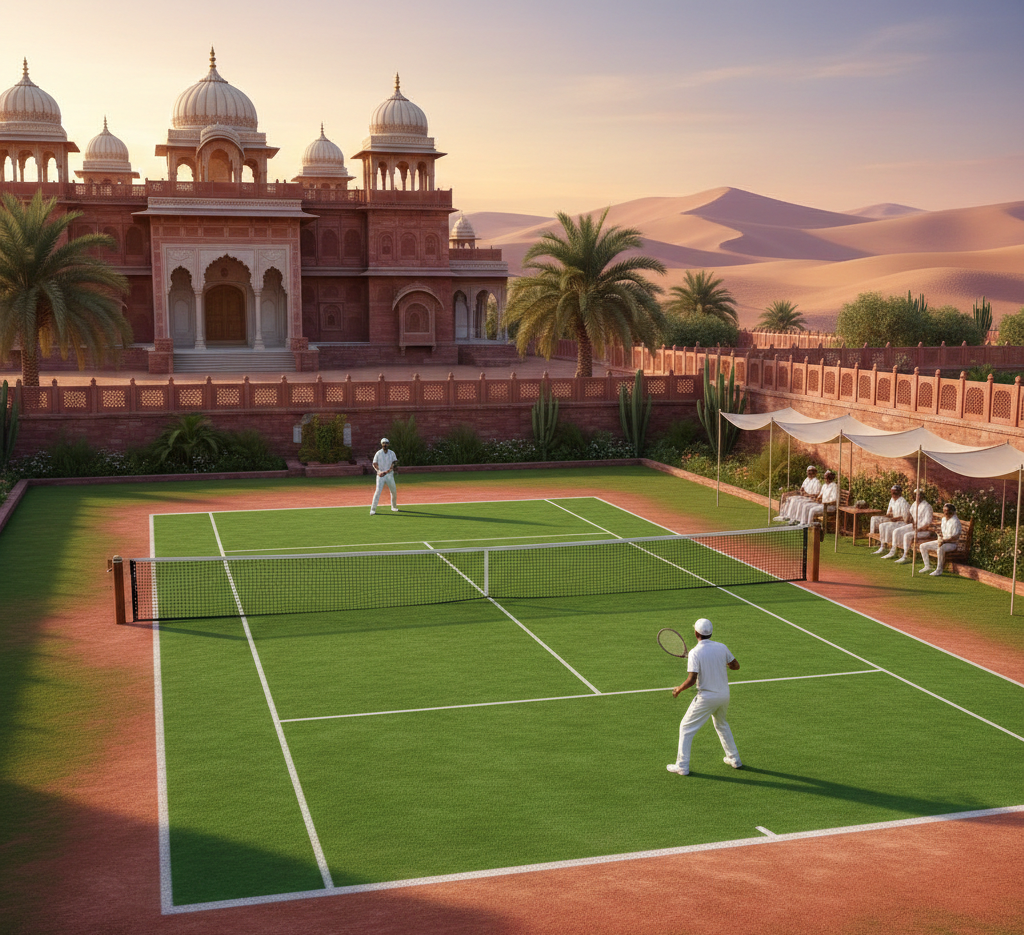
Rajasthan, known for its royal heritage, spacious landscapes, luxury tourism and rapidly growing sports infrastructure, is witnessing increasing demand for professional tennis courts across cities like Jaipur, Udaipur, Jodhpur, Kota, Alwar, Ajmer and Bikaner. While synthetic courts remain common in hot regions, many premium hotels, resorts, farmhouses, schools and sports academies are now opting for grass tennis court flooring due to its classic playing feel and luxurious appearance.
A grass court, when designed with proper irrigation and heat-resistant turf varieties, performs exceptionally well even in Rajasthan’s desert and semi-arid climate. This detailed guide explains everything about grass tennis court flooring in Rajasthan, including construction methods, benefits, cost, maintenance and ideal applications.
1. Introduction to Grass Tennis Courts
Grass tennis courts are one of the oldest and most prestigious surfaces in the sport of tennis. Famously used in tournaments like Wimbledon, grass courts offer fast gameplay, cushioned movement and elegant aesthetics. In Rajasthan, where luxury tourism, farmhouses and premium real-estate projects dominate, grass courts are increasingly being chosen to elevate the property’s overall value and provide a unique recreational experience.
2. Why Grass Tennis Courts Work in Rajasthan
Although Rajasthan is known for its warm climate, grass tennis courts can perform extremely well with proper planning, irrigation and heat-tolerant turf species.
2.1 Heat-Resistant Grass Varieties Thrive Here
Modern turf technology allows the use of drought-tolerant varieties such as:
-
Bermuda Grass
-
Zoysia Grass
-
Hybrid Ryegrass
These species can withstand high temperatures and require less water compared to traditional cool-season grasses.
2.2 Aesthetic Enhancement for Premium Properties
Many luxury hotels, desert resorts, wedding venues and palaces in Rajasthan prefer grass courts because they:
-
Enhance the property’s greenery
-
Offer a visually pleasing contrast to the desert surroundings
-
Provide a premium look that synthetic courts cannot match
2.3 Comfortable Playing Surface
Grass courts naturally stay cooler than synthetic surfaces, even in direct sunlight. This reduces heat-related fatigue and offers a much softer playing experience.
2.4 Eco-Friendly Sports Flooring
Grass courts rely on natural soil, organic fertilizers and minimal synthetic chemicals, making them one of the most environmentally friendly tennis flooring options in Rajasthan.
3. Construction Process of Grass Tennis Court Flooring in Rajasthan
Designing a long-lasting grass tennis court in Rajasthan requires careful planning and water-efficient engineering. Below is the complete construction process:
3.1 Site Selection & Land Preparation
A flat or gently sloping area is selected for construction. Land preparation includes:
-
Clearing vegetation and debris
-
Creating a level surface
-
Designing slope (typically 1%) for drainage
Since Rajasthan’s soil is often sandy, stabilization and compaction are essential.
3.2 Drainage & Irrigation Planning
In desert regions, water management is crucial. A professional grass court requires:
-
Subsurface drainage pipes
-
Water-efficient sprinkler systems
-
Moisture-controlled irrigation
-
Sand-based soil mix for faster absorption
These ensure the court remains playable throughout the year.
3.3 Base Layer Construction
A multilayer foundation helps the turf grow strong and remain durable. Typically, the base includes:
-
Compacted earth layer
-
Gravel or crushed stone layer for drainage
-
Coarse sand layer
-
Topsoil enriched with organic material
This layered structure prevents water stagnation and improves root strength.
3.4 Turf Selection
Heat-tolerant and drought-resistant grasses are preferred in Rajasthan. The best turf options include:
-
Bermuda TifSport
-
Celebration Bermuda Grass
-
Zoysia Grass
-
Hybrid Ryegrass (used seasonally)
These varieties maintain firmness, color and density even under harsh sunlight.
3.5 Turf Laying or Seeding
Two installation methods are available:
-
Turf Rolls (Sod Rolls): Instant surface, preferred by resorts and hotels.
-
Seeding: More cost-effective, though it requires several weeks for establishment.
3.6 Court Rolling & Leveling
Heavy rollers compact the turf to ensure:
-
Uniform ball bounce
-
Smooth playing surface
-
Firm footing for players
3.7 Installing Sports Accessories
The final stage includes:
-
High-grade tennis net
-
Net posts
-
Court line marking
-
Perimeter fencing
-
Optional LED floodlights
4. Benefits of Grass Tennis Court Flooring in Rajasthan
4.1 Luxurious Look for Properties
Grass courts add a royal and serene look, making them a perfect fit for hospitality businesses, villas and palaces.
4.2 Cooler Playing Surface
Grass remains significantly cooler than concrete, acrylic or synthetic flooring. Players experience less fatigue and heat stress.
4.3 Fast & Dynamic Gameplay
Grass offers the fastest tennis playing experience, suitable for:
-
Serve-and-volley players
-
Fast-paced training
-
Club-level matches
4.4 Joint-Friendly Surface
The natural cushioning of grass surface reduces impact on:
-
Knees
-
Ankles
-
Lower back
This makes it ideal for recreational players, seniors and children.
4.5 Eco-Friendly & Sustainable
Grass courts require fewer synthetic chemicals compared to synthetic turf, making them environmentally responsible.
5. Maintenance Requirements
Rajasthan’s climate requires specialized maintenance, but with a proper schedule, grass courts remain healthy and durable throughout the year.
Daily/Weekly Maintenance
-
Watering through automated sprinklers
-
Mowing to maintain uniform height
-
Brushing the turf
-
Rolling for firmness
-
Checking irrigation flow
Seasonal Maintenance
-
Aeration to improve oxygen supply to roots
-
Top dressing with sand
-
Fertilization
-
Overseeding during cooler months
-
Weed management
Advanced irrigation systems significantly reduce water usage.
6. Ideal Locations in Rajasthan for Grass Tennis Courts
Grass courts work exceptionally well in:
-
Jaipur (farmhouses, luxury villas, clubs)
-
Udaipur (resorts, lakeside hotels)
-
Jodhpur (palaces & boutique hotels)
-
Pushkar & Ajmer (eco-retreats)
-
Kota (schools and colleges)
-
Alwar (heritage properties)
-
Bikaner & Barmer (desert resorts)
These regions have suitable infrastructure and property spaces ideal for sports courts.
7. Cost of Grass Tennis Court Construction in Rajasthan
The cost depends on multiple factors:
-
Water availability & irrigation system
-
Turf type
-
Land leveling needs
-
Fencing and lighting options
On average, the cost ranges between ₹10 lakh to ₹26 lakh based on project specifications.
8. Why Choose Professional Installers
Because Rajasthan has unique soil and climate challenges, expert turf installers ensure:
-
Heat-resistant turf selection
-
Long-lasting root systems
-
Efficient irrigation design
-
Proper leveling and drainage
-
Professional finishing
A well-installed grass court can last 10–15 years with routine care.
Conclusion
Grass tennis court flooring in Rajasthan is an excellent choice for those seeking a premium, natural and comfortable playing experience. With the right engineering, irrigation planning and expert installation, grass courts perform beautifully even in hot climates. Whether for a resort, farmhouse, sports academy or private villa, a grass tennis court enhances property value while delivering world-class sports performance.