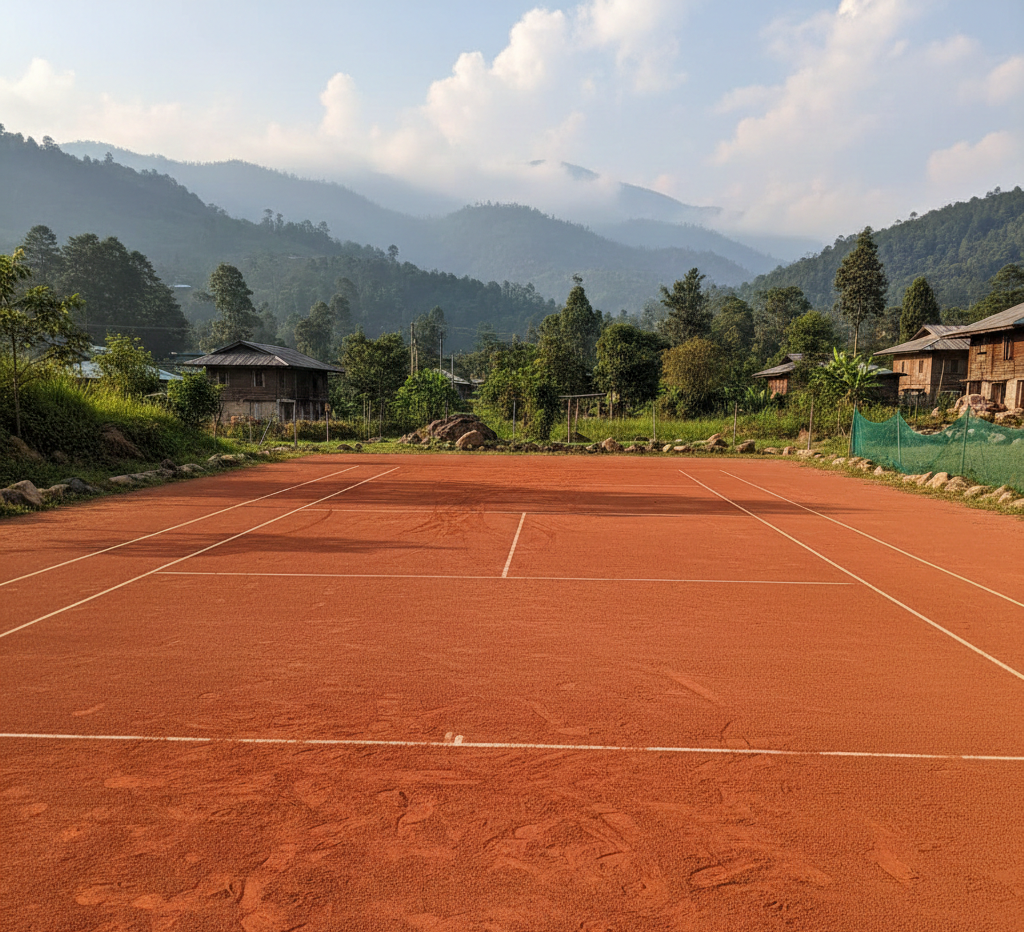
Introduction
Arunachal Pradesh, known for its breathtaking mountains, cool climate, and rapidly developing sports culture, is seeing increased interest in tennis across districts such as Itanagar, Naharlagun, Tawang, Pasighat, Ziro, Bomdila, Aalo, and Tezu.
With schools, universities, sports academies, government programs, and private clubs investing in outdoor sports infrastructure, clay tennis courts are emerging as a preferred surface due to their training benefits, softer impact, and suitability for players of all age groups.
Clay surfaces allow longer rallies, give players excellent sliding control, and reduce joint stress—making them ideal for both beginners and advanced trainees in the state.
Why Clay Courts Are a Great Choice for Arunachal Pradesh
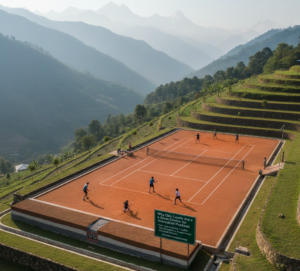
1. Soft, Joint-Friendly Surface
Clay naturally absorbs impact, offering:
-
Reduced knee and ankle stress
-
Injury prevention during long sessions
-
Safer movements during sliding
This is especially beneficial for junior athletes in sports academies.
2. Ideal for Skill & Endurance Development
Clay courts slow down the ball, allowing players to improve:
-
Footwork and agility
-
Topspin control
-
Shot placement
-
Defensive strategies
-
Stamina and rally tolerance
This makes clay the preferred training ground in high-altitude regions.
3. Perfect Match for Scenic Terrain
Clay courts blend beautifully with:
-
Mountain-view resorts
-
School and college campuses
-
Hilltop sports complexes
-
Adventure and sports hotels
4. Climate Compatibility
The state’s moderate temperatures and consistent moisture levels help maintain clay density without extreme cracking.
Challenges of Clay Courts in Arunachal Pradesh
Many areas experience heavy rain:
-
Surface can soften
-
Water stagnation is a risk
-
Requires engineered drainage
2. Uneven and Sloped Terrain
Hill regions require:
-
Land cutting and leveling
-
Retaining walls
-
Proper foundational compaction
3. Clay/Red Soil Availability
In some districts, suitable murram soil may need to be sourced from nearby regions like Assam.
4. Cold Winters in Higher Altitudes
Regions like Tawang or Ziro may need:
-
Additional surface rolling
-
Extra clay density
-
Frost protection around edges
Construction Guidelines for Clay Tennis Courts in Arunachal Pradesh
To build a durable clay tennis court in hilly or semi-hilly terrain, proper engineering and leveling are essential.
1. Site Planning & Leveling
Requirements:
-
Flat, leveled surface created through earthwork
-
Proper slope (0.8–1%)
-
North–South orientation to control sunlight exposure
2. Multi-Layer Construction System
Layer 1 – Sub-Base (150–200 mm)
-
Granular stones
-
Compacted with heavy rolling machines
-
Prevents sinking on hill-cut surfaces
Layer 2 – Fine Gravel / Stone Dust (50–80 mm)
-
Smooths the surface
-
Supports drainage
-
Provides secondary stability
-
Acts as the cushioning layer
-
Enhances firmness
-
Holds moisture for consistent play
Made of:
-
Pure clay
-
Crushed brick powder
-
Fine red soil
Ensures:
-
Uniform ball bounce
-
Smooth sliding feel
-
Controlled ball speed
Line Markings
Drainage System – Critical for Hilly & Rainy Regions
Essential Drainage Features
-
Deep side drains
-
French drain with perforated pipes
-
Geo-membrane filters
-
Slope directed to the sides
-
Proper rainwater outlets
Anti-Erosion Measures
-
Stone pitching around boundaries
-
Grass turfing on slopes
-
Retaining walls where needed
Maintenance Guidelines
Daily Maintenance
-
Drag mat leveling
-
Removing leaves and debris common in hilly regions
Weekly Maintenance
-
Rolling the surface for stability
-
Patching minor uneven areas
-
Checking clay thickness
Monsoon Season Care
-
Clearing drainage channels
-
Re-rolling the court once dry
Winter Maintenance
-
Additional rolling in cold-weather districts
Construction Cost of Clay Tennis Courts in Arunachal Pradesh
Estimated Cost
₹11 lakh – ₹35 lakh, depending on:
-
Site leveling and hill cutting
-
Foundation stabilization
-
Drainage complexity
-
Material transportation
-
Court accessories
-
Irrigation system
-
Protective fencing
Maintenance Cost
Moderate:
-
Seasonal clay top-ups
-
Rolling and grooming
-
Labor costs
Best Locations for Clay Court Installation in Arunachal Pradesh
Clay courts perform well in:
-
Itanagar
-
Naharlagun
-
Doimukh
-
Pasighat
-
Aalo
-
Ziro
-
Tezu
-
Roing
-
Tawang
-
Bomdila
-
Dirang
-
Mechuka
Advantages & Limitations Overview
| Advantages | Limitations |
|---|---|
| Soft, joint-friendly surface | Needs engineered drainage in high-rain zones |
| Excellent for stamina & footwork training | Land leveling increases cost in hill regions |
| Natural aesthetics match mountain terrain | Regular maintenance required |
| Supports long rallies & skill improvement | Clay supply may require transport |
Conclusion
Clay tennis court flooring in Arunachal Pradesh is a valuable investment for academies, schools, resorts, and sports complexes.
With the right construction methods, strong drainage, and consistent maintenance, clay tennis courts in Arunachal Pradesh deliver reliable year-round performance and long-term durability.
Frequently Asked Questions (FAQ)
1. What is clay tennis court flooring?
Clay tennis court flooring is a natural surface made from crushed brick, shale, or stone mixed with clay that creates a softer, slower-playing surface compared to hard courts. It’s popular for its excellent shock absorption and player comfort.
2. Why choose clay tennis court flooring in Arunachal Pradesh?
Clay courts are suitable for places with moderate rainfall and natural surroundings like Arunachal Pradesh. Their surface reduces impact on joints and offers a classic playing experience that’s ideal for clubs, resorts, and academies.
3. What are the standard dimensions for a clay tennis court?
A standard tennis court (regardless of surface type) measures:
-
Doubles: 78 ft × 36 ft
-
Singles: 78 ft × 27 ft
Adequate run-off space around the court is required for safety and playability.
4. How much does clay tennis court flooring cost in Arunachal Pradesh?
Costs depend on site conditions, access, materials, and drainage systems. Typically, clay court flooring installation and preparation can range from ₹25 lakhs to ₹60+ lakhs. Exact pricing requires a site assessment.
5. How long does it take to install clay court flooring?
Clay tennis court installation usually takes 45 to 75 days, including base preparation, drainage setup, layering, compaction, and finishing.
6. Is special drainage needed for clay courts?
Yes. Proper subsurface drainage is essential in Arunachal Pradesh due to monsoons and rainfall. Good drainage prevents waterlogging and maintains consistent surface quality.
7. How do I maintain clay tennis court flooring?
Maintenance for clay courts includes:
-
Regular watering and rolling of the surface
-
Daily brushing to keep the top layer even
-
Periodic adding of clay material to maintain depth and play quality
Proper care ensures longevity and optimal playing conditions.
8. Are clay courts suitable for tournaments?
Yes. Well-constructed clay courts meeting official dimensions and surface specifications are suitable for local and regional tournaments and training sessions.
9. Can clay tennis courts be built outdoors only?
While most clay courts are outdoor, they can also be built under partial shelters with proper ventilation and drainage. Fully indoor clay courts are less common and costlier due to space and humidity control needs.
10. Who can build clay tennis court flooring in Arunachal Pradesh?
Look for experienced sports court contractors who understand clay surface construction, local soil conditions, and drainage requirements. A professional installation ensures durability and performance.