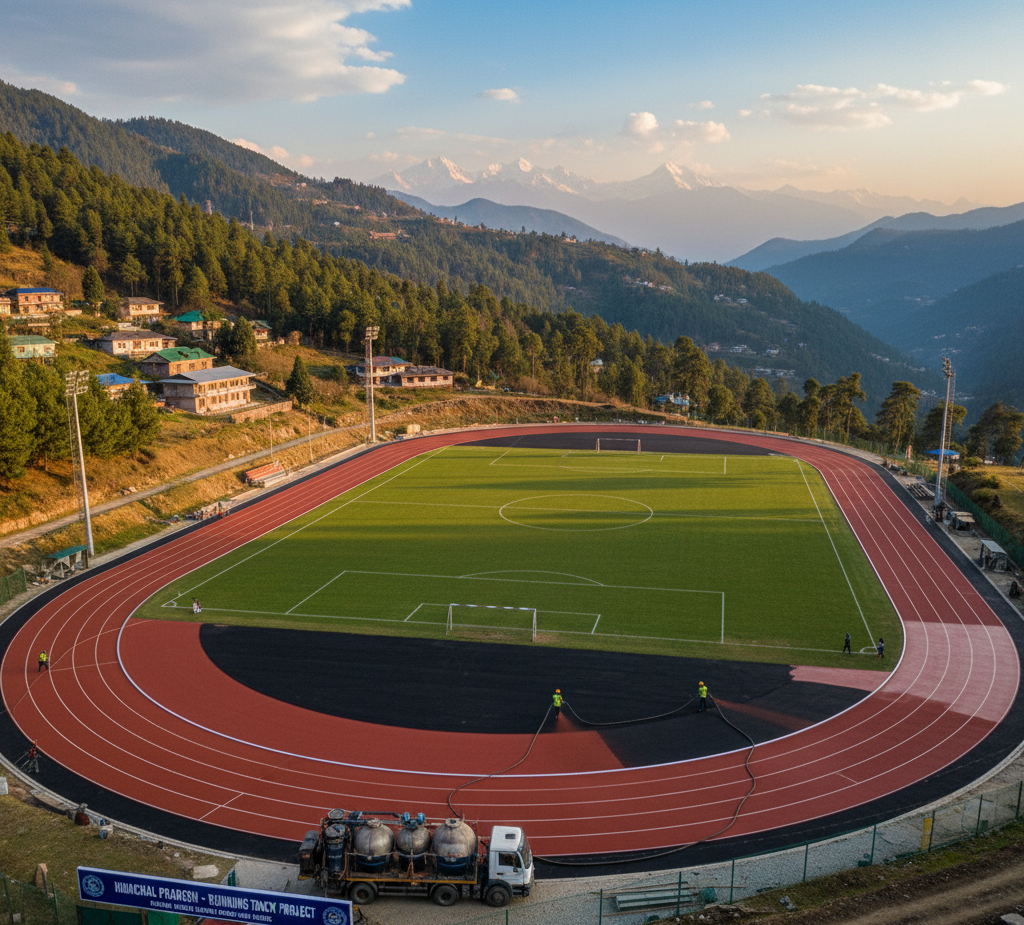
Himachal Pradesh, with its hilly terrain, cool climate, and growing focus on sports infrastructure, is increasingly turning to modern spray-coating technologies for running track construction. Spray-coated tracks offer exceptional durability, flexibility, and weather resistance — making them ideal for the state’s diverse topography and varying weather conditions across cities like Shimla, Dharamshala, Mandi, and Solan.
Why spray-coated tracks are ideal for Himachal Pradesh
Constructing athletic surfaces in a mountainous region requires materials that can withstand temperature fluctuations, moisture, and high-altitude UV exposure. Spray-applied systems like polyurethane (PU), polyurea, and acrylic coatings deliver the perfect balance of performance, comfort, and resilience. Their seamless design prevents water penetration and ensures long-lasting usability.
Key benefits include:
- Weather adaptability: Maintains grip and elasticity in both cold and hot temperatures.
- Waterproof and anti-slip: Prevents damage due to rain, snow, or surface moisture.
- Seamless surface: Eliminates cracks and joints, improving athlete safety.
- UV and frost resistance: Ideal for open-air stadiums at high altitudes.
- Low maintenance: Requires minimal upkeep, even in challenging mountain conditions.
Types of spray-coating systems used in Himachal Pradesh
- Polyurethane (PU) Spray System: Multi-layered system combining elasticity and toughness for professional athletic tracks.
- Acrylic Spray Coating System: Economical, water-based solution for schools and community sports grounds.
- Polyurea Hybrid Coatings: Highly durable and fast-curing coatings that perform well under fluctuating temperatures.
- Rubberized Base Systems: Combine SBR and EPDM rubber for enhanced cushioning and athlete comfort.
Step-by-step process of spray-coating running track construction
- Site analysis and design: Evaluate slope, drainage, and soil condition to ensure stable foundations on uneven terrain.
- Base preparation: Level and compact the concrete or asphalt base to create a smooth surface.
- Priming: Apply high-bond primer to ensure strong adhesion between base and coating.
- Elastic base layer: Lay polyurethane mixed with rubber granules for shock absorption and flexibility.
- Spray coating: Evenly apply PU or polyurea coating for a smooth, weatherproof surface.
- Texturing and coloring: Use EPDM granules or textured finishes for grip and visual appeal.
- Line marking: Apply UV-resistant paints for permanent, non-fading track markings.
Technical and performance features
- Shock absorption: Protects athletes’ joints, especially beneficial for long-distance training.
- Thermal flexibility: Maintains integrity under temperature extremes.
- Slip resistance: Essential for outdoor tracks in rainy or frosty conditions.
- UV and moisture protection: Long-lasting finish even under intense mountain sunlight.
- Eco-friendly: Solvent-free and low-VOC materials available for sustainable construction.
Applications across Himachal Pradesh
- Sports complexes and stadiums – Professional-grade tracks for district and state-level competitions.
- Schools and colleges – Safe, cost-effective surfaces for student athletics.
- Community parks – Jogging and fitness tracks with weather-resistant coatings.
- Tourist resorts and fitness centers – Recreational tracks for guests and athletes.
Maintenance and durability
- Routine cleaning: Keep the surface free from dust, leaves, and moisture.
- Periodic inspection: Check for minor wear after monsoon or snow seasons.
- Re-coating: Add a new top layer every 8–10 years for longevity.
- Drainage maintenance: Ensure effective water flow in hilly installations.
Cost factors in Himachal Pradesh
The total cost depends on the system type, location, and terrain preparation:
- Acrylic System: ₹700–₹1,000 per sq.m
- Polyurethane System: ₹1,000–₹1,400 per sq.m
- Polyurea Hybrid System: ₹1,300–₹1,900 per sq.m
While initial costs may vary, PU and polyurea systems offer superior performance and longer lifespan in challenging weather conditions typical of Himachal Pradesh.
Selecting the right contractor in Himachal Pradesh
When choosing a contractor for spray-coated track construction:
- Look for experience in hill region installations.
- Verify drainage and slope management expertise.
- Ensure IAAF or ASTM certified materials are used.
- Request references from previous projects in hilly or cold-weather zones.
- Insist on maintenance support and long-term warranty.
Local contractors with experience in mountainous terrains can ensure proper leveling, slope design, and material performance suited to the region’s climate.
Safety and environmental compliance
- Use PPE and proper spray control during installation.
- Choose low-VOC, solvent-free materials for eco-friendly construction.
- Follow waste disposal norms to protect Himachal’s fragile ecosystems.
Conclusion
Spray-coated running track construction in Himachal Pradesh is the perfect solution for modern sports facilities that demand durability, safety, and climate adaptability. These advanced systems provide reliable performance across all terrains — from valley stadiums to hillside ca
Spray‑Coating Running Track Construction in Himachal Pradesh – FAQ
1. What is spray‑coating running track construction?
Spray‑coating running track construction is a method of creating athletic tracks by applying a polyurethane (PU) spray coating mixed with rubber granules (such as EPDM) over a prepared base (asphalt or concrete), resulting in a durable, textured, all‑weather running surface ideal for sports, training, and recreational use.
2. Where are spray‑coated running tracks suitable in Himachal Pradesh?
Spray‑coated running tracks are suitable for various settings including:
-
Schools and universities
-
Sports stadiums and athletic facilities
-
Community jogging parks and fitness areas
-
Training grounds and sports academies
Cities and districts like Shimla, Dharamshala, Solan, Mandi, Kangra, and Una can benefit from this cost‑effective and resilient surface.
3. What materials are used in spray‑coated running tracks?
Common components include:
-
PU binder: Provides bonding and flexibility
-
SBR rubber base layer: Offers cushioning and elasticity
-
EPDM granules in the spray layer: Enhances texture, traction, color options, and weather resistance
Together, these materials create a safe and resilient running surface.
4. How is a spray‑coated running track constructed?
The standard construction process involves:
-
Site assessment and base preparation: Leveling and cleaning of the concrete or asphalt base
-
Primer application: Improves adhesion
-
Rubber base layer installation: For shock absorption and resilience
-
PU + EPDM spray coating application: Forms the final textured and colored surface
-
Line marking: According to athletics dimensions and standards
Proper sequencing and quality control are essential for long‑lasting performance.
5. How long does installation take in Himachal Pradesh?
Installation time depends on several factors:
-
Track size (standard 200 m or 400 m)
-
Base condition and required preparation
-
Weather conditions (especially during monsoon or winter)
-
Project complexity
On average, a complete spray‑coated running track can be completed in several days to a few weeks.
6. Is spray‑coating suitable for Himachal Pradesh’s climate?
Yes. With proper materials and drainage planning, spray‑coated running tracks can perform well in Himachal Pradesh’s varied climate:
-
Cooler temperatures and occasional snowfall in hill stations
-
Monsoon rains and wet conditions
-
Sunny and clear weather in valleys
Good drainage design and weather‑resistant materials are essential for long‑term performance.
7. What are the advantages of a spray‑coated track?
Benefits of spray‑coating running tracks include:
-
Shock absorption and traction for athletes
-
Durable surface with weather resistance
-
Textured finish for safety and performance
-
Lower cost compared to fully poured PU systems
-
Various color and design options
These features make spray‑coated tracks suitable for a wide range of facilities.
8. How long does a spray‑coated track last?
When installed by professionals and maintained regularly, spray‑coated running tracks typically last 8–12 years or more, depending on usage and environmental exposure.
9. Does a spray‑coated track require maintenance?
Yes. Essential maintenance includes:
-
Routine cleaning (removing dirt and debris)
-
Inspection for surface wear or damage
-
Minor repairs and touch‑ups as needed
Regular maintenance helps maintain performance and prolong the surface’s life.
10. Can existing running tracks be resurfaced with spray coating?
Yes. If the base layer is structurally sound, an existing track can be resurfaced by applying a new PU spray layer and repainting the lane markings.
11. Are spray‑coated tracks safe and performance‑oriented?
Yes. These tracks are engineered to provide:
-
Impact cushioning for runners and athletes
-
Good traction for starts, turns, and acceleration
-
Reduced slip risk
-
Consistent performance for training and local competitions
Professional construction ensures that safety and performance needs are met.
12. Why hire a professional contractor for spray‑coating track construction in Himachal Pradesh?
A professional contractor ensures:
-
Accurate base assessment and site grading
-
High‑quality selection of PU and EPDM materials
-
Skilled spray application and curing techniques
-
Standard‑compliant line marking and finishing
-
Long‑term durability and warranty support
Professional execution is key to building a reliable and long‑lasting running track.