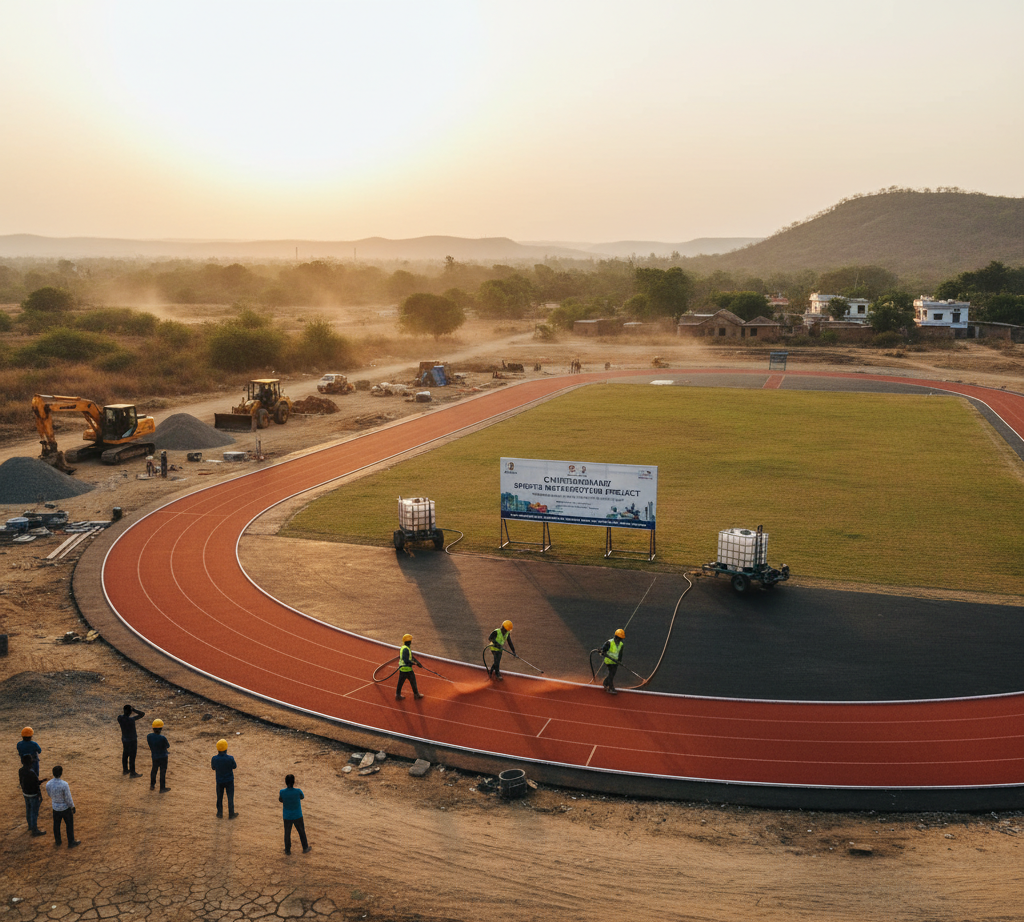
Goa’s growing emphasis on sports and recreation has increased the demand for durable and weather-resistant running tracks in schools, colleges, stadiums, and community parks. Spray-coating running track construction provides an advanced, seamless, and long-lasting solution tailored to the state’s coastal climate. With modern polyurethane, polyurea, and acrylic spray systems, contractors in Goa can deliver athletic surfaces that meet international standards while withstanding the challenges of heat, humidity, and saline air.
Why spray-applied running track systems are ideal for Goa
Goa’s tropical coastal environment subjects outdoor facilities to high humidity, saline air, and intense UV exposure. Spray-applied systems are perfectly suited for such conditions because:
- Seamless waterproofing: Prevents moisture infiltration and delamination during monsoon rains.
- Superior UV and salt resistance: Polyurethane and polyurea coatings resist corrosion and fading caused by salty coastal winds and sunlight.
- Quick-curing application: Ideal for time-sensitive projects and renovation of existing sports facilities.
- Low maintenance: Easy to clean and maintain compared to conventional flooring systems.
- Custom aesthetics: Available in a wide range of colors and finishes to match school, club, or stadium branding.
Types of spray-coated track systems used in Goa
- Polyurethane (PU) Spray System: Multi-layered structure with an elastic base and EPDM top granules, ideal for high-performance athletic tracks.
- Acrylic Spray Coating System: A cost-effective, water-based option suited for multi-purpose courts and smaller community tracks.
- Polyurea and Hybrid Systems: Fast-curing, high-strength coatings resistant to abrasion, weather, and salt — best for coastal stadiums.
- Cementitious + Elastomeric Overlays: For resurfacing old or damaged concrete or asphalt tracks before applying the final coating.
Step-by-step process of spray-coating running track construction
- Site survey and design: Assess base conditions, drainage, and slope to ensure optimal water runoff.
- Surface preparation: Clean, level, and repair the existing asphalt or concrete base using repair mortars or leveling compounds.
- Priming: Apply a high-adhesion primer suitable for coastal environments to prevent detachment.
- Elastic base layer: Spray-apply or pour polyurethane mixed with SBR or EPDM rubber granules for shock absorption.
- Wearing course: Spray or broadcast colored EPDM granules into the top binder layer to create a textured, non-slip surface.
- Curing and inspection: Allow proper curing before line marking and performance testing.
- Line marking: Apply durable, UV-stable paints for track lines and markings.
Technical and performance features
- Shock absorption: Reduces impact stress on athletes’ joints.
- Skid resistance: Maintains safe traction even under humid conditions.
- Thermal flexibility: Resists cracking or softening under Goa’s hot and humid climate.
- UV and salt protection: Essential for open coastal installations.
- Eco-friendly materials: Low-VOC and solvent-free options available for sustainable construction.
Applications across Goa
- Sports complexes and stadiums — For professional athletic events and tournaments.
- Schools and colleges — Safe and cost-effective tracks for physical education programs.
- Community fitness parks and resorts — Walking and jogging tracks with vibrant finishes.
- Private institutions and clubs — Customized athletic zones with branded color schemes.
Maintenance and longevity
- Regular cleaning: Remove sand, debris, and salt deposits to maintain grip.
- Seasonal inspection: Conduct inspections before and after monsoon for cracks or color fading.
- Re-topcoating: Apply new top layers every 8–10 years for optimal performance.
- Drainage upkeep: Keep surface drains clear to avoid standing water.
Safety and environmental standards
- Use PPE and controlled spraying techniques during installation.
- Opt for low-VOC, water-based or solvent-free binders.
- Ensure proper waste collection and disposal to protect Goa’s coastal ecosystem.
Cost factors
The total project cost depends on system selection, base condition, and design requirements. Typical cost ranges:
- Acrylic systems: ₹600–₹900 per sq.m
- Polyurethane systems: ₹900–₹1,300 per sq.m
- Hybrid Polyurea systems: ₹1,200–₹1,800 per sq.m
Though the upfront investment is higher for PU or polyurea, the extended lifespan and minimal maintenance provide the best value for long-term use.
Choosing a contractor in Goa
When selecting a contractor for spray-coated running track construction:
- Check for experience with coastal sports flooring projects.
- Ensure trained applicators with advanced spray equipment.
- Verify product certifications and compliance with IAAF or ASTM standards.
- Request references from previous installations in similar weather conditions.
- Insist on warranty and after-sales service for ongoing support.
Local contractors familiar with Goa’s humidity and coastal weather patterns ensure better performance and reliability.
Conclusion
Spray-coated running track construction in Goa offers a modern, durable, and visually appealing solution for all levels of athletic and recreational use. The combination of high-quality polyurethane or polyurea materials, professional application, and proper maintenance ensures that the track remains safe, vibrant, and weather-resistant for years. Whether for a school playground, sports academy, or a public stadium, spray-coating technology guarantees performance that meets both global standards and Goa’s unique environmental demands.
Spray‑Coating Running Track Construction in Goa – FAQ
1. What is spray‑coating running track construction?
Spray‑coating running track construction is a method of creating athletic tracks where a polyurethane (PU) spray system blended with rubber granules (like EPDM) is applied over a prepared base (asphalt or concrete) to form a durable, textured, weather‑resistant running surface suitable for athletics, training, and recreational running.
2. Where are spray‑coated running tracks used in Goa?
These tracks are suitable for:
-
School and college athletics facilities
-
Stadiums and sports complexes
-
Community jogging tracks and parks
-
Fitness clubs and residential sports areas
Cities and towns like Panaji, Margao, Mapusa, Vasco da Gama, and other regions can benefit from spray‑coated running track installations.
3. What materials are used in spray‑coated running tracks?
Typical components include:
-
PU binder: Provides adhesion and flexibility
-
SBR rubber base layer: Adds shock absorption and elasticity
-
EPDM rubber granules: Mixed with the PU spray top layer for enhanced traction, durability, and color options
This combination results in a resilient and safe surface.
4. How is the spray‑coating running track constructed?
Standard installation steps include:
-
Site assessment and base preparation (leveling and cleaning)
-
Primer application to enhance adhesion
-
Rubber base layer installation for cushioning
-
PU + EPDM spray application to create the final surface
-
Line marking according to standard athletic dimensions
Each step must be executed with precision to ensure performance and longevity.
5. How long does installation take in Goa?
Installation times vary based on:
-
Track size (e.g., 200 m or 400 m)
-
Base condition and preparation work
-
Weather conditions (especially during rainy seasons)
-
Project complexity
Typically, a full track installation can take several days to a few weeks.
6. Is spray‑coating suitable for Goa’s coastal climate?
Yes. With high‑quality materials and proper drainage, spray‑coated systems can withstand:
-
High humidity
-
Monsoon rains
-
Salt‑laden coastal air
-
UV exposure
Proper drainage and weather‑resistant coatings are especially important in coastal regions like Goa.
7. What are the benefits of a spray‑coated running track?
Advantages include:
-
Good shock absorption and traction
-
Durable surface with UV and weather resistance
-
Textured finish for safer running
-
Lower cost compared to poured PU systems
-
Custom color and line marking options
This makes them ideal for community athletics and fitness facilities.
8. How long does a spray‑coated track last?
With professional installation and routine maintenance, spray‑coated running tracks can last 8–12 years or more, depending on usage and environmental exposure.
9. Does a spray‑coated track require maintenance?
Yes, basic maintenance includes:
-
Regular surface cleaning
-
Inspection for damage or wear
-
Minor repair and touch‑up coating as needed
Routine care helps extend the performance and lifespan of the track.
10. Can existing running tracks be resurfaced with spray coating?
Yes. If the base layer is intact and structurally sound, an existing track can be resurfaced by applying a fresh PU spray layer and updating the lane markings.
11. Are spray‑coated tracks safe and performance‑oriented?
Yes. These surfaces are engineered to provide:
-
Impact cushioning for athletes
-
Reliable traction for starts, turns, and sprints
-
Low slip risk
-
Consistent performance for training and competition
Professional installation ensures compliance with performance expectations.
12. Why hire a professional contractor for spray‑coating track construction in Goa?
A professional contractor ensures:
-
Accurate base assessment and preparation
-
Selection of high‑quality PU and EPDM materials
-
Skilled spray application and curing techniques
-
Standard‑accurate line markings and finishing
-
Long‑term durability and warranty support
Professional execution is key for a track that performs well year after year.