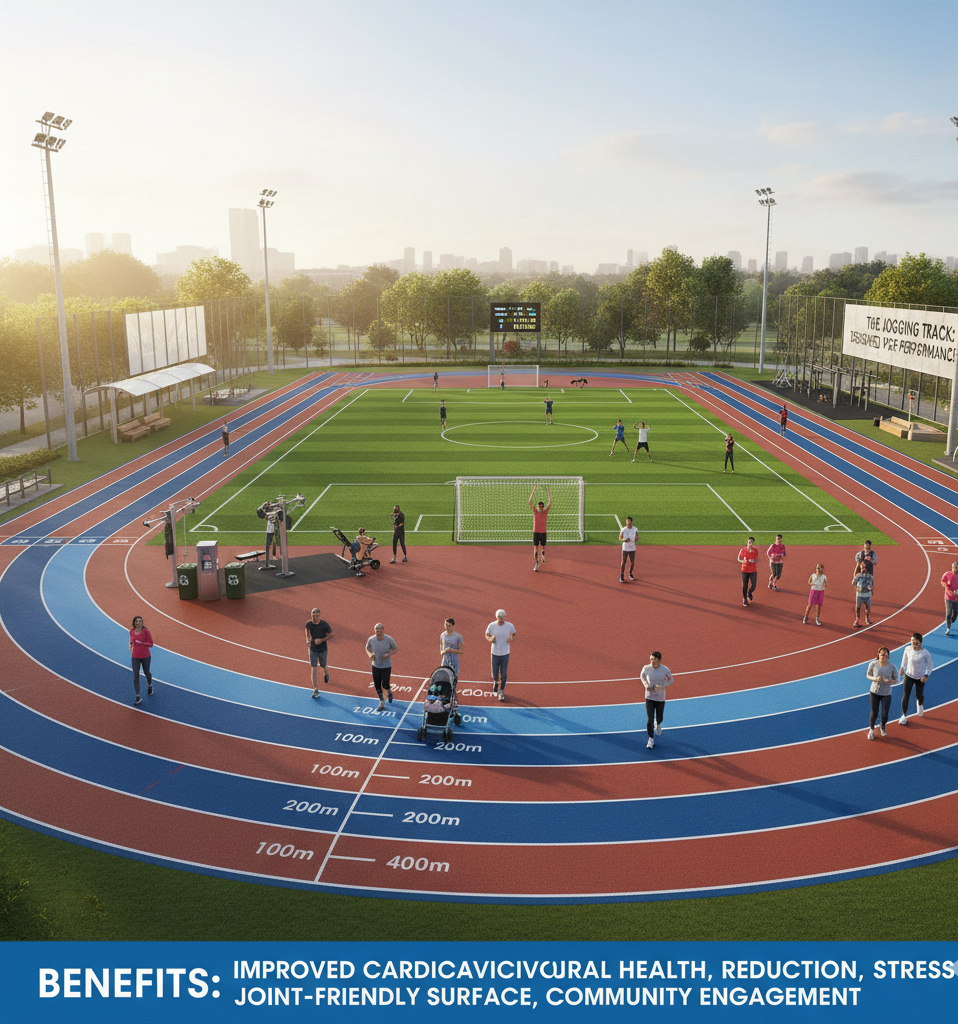
Jogging has become one of the most popular forms of physical activity, combining cardiovascular exercise, mental relaxation, and endurance training. In modern sports complexes, a well-designed jogging track plays a pivotal role in providing safe and efficient space for athletes, fitness enthusiasts, and casual users.
Purpose of a Jogging Track in a Sports Complex
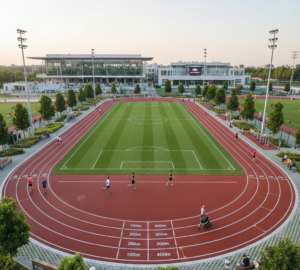
It serves multiple purposes:
-
Fitness Training – Athletes use it for warm-ups, cool-downs, and endurance training.
-
Recreational Exercise – Community members and visitors use the track for walking, jogging, or light running.
-
Event Preparation – Tracks are ideal for training for races, marathons, and timed runs.
-
Safety and Convenience – Provides a controlled environment, separate from vehicles and crowded streets.
By integrating a jogging track, sports complexes ensure holistic health facilities that cater to professional athletes and casual users alike.
Design Considerations
Designing a jogging track in a sports complex requires careful planning. The goal is to balance comfort, durability, safety, and aesthetics.
Track Length and Shape
-
Standard Length: Tracks in sports complexes typically range from 400 meters to 1 km per lap, depending on available space.
-
Shape:
-
Oval tracks are preferred for continuous running.
-
-
Lanes: Multiple lanes (1–4) can separate slow walkers from runners.
Track Width
-
Single Lane: 1.5–2 meters
-
Multi-Lane: 3–5 meters
Surface Material
The track surface impacts running efficiency, comfort, and injury prevention:
-
Synthetic PU or EPDM Rubber: Soft, shock-absorbing, durable, and weather-resistant.
-
Acrylic or Latex Coating: Affordable, smooth, and provides adequate grip.
A good jogging track has even surfaces, consistent traction, and proper cushioning to protect knees and ankles.
Safety Features
-
Perimeter Fencing: Prevents accidental entry by spectators or vehicles.
-
Distance Markers: Marked every 50–100 meters for pacing and measurement.
Drainage and Slope
-
Slope: 1–2% slope ensures water drains off the surface efficiently.
-
Drainage Channels: Prevent water pooling, reducing slips and surface damage.
User Experience
A jogging track in a sports complex is designed for diverse users:
-
Professional Athletes
-
Use the track for speed drills, endurance runs, and interval training.
-
Track design allows consistent lap measurement for timing and performance analysis.
-
-
Fitness Enthusiasts
-
Casual runners and walkers can use the track for daily workouts.
-
Multi-lane tracks reduce interference between faster runners and slower walkers.
-
-
Community Programs
-
Sports complexes often host school fitness programs, community running events, and charity marathons on jogging tracks.
-
Additional Amenities Around the Track
Modern jogging tracks in sports complexes often integrate:
-
Green Landscaping: Trees and shrubs provide shade and improve air quality.
-
Seating Areas: Benches for rest and observation.
-
Hydration Stations: Water dispensers at strategic points.
-
Outdoor Gym Equipment: For warm-ups, stretching, and strength exercises.
-
Lighting: Solar or LED lights for early morning and evening use.
These features make the jogging experience comfortable, safe, and enjoyable.
Benefits of a Jogging Track in a Sports Complex
-
Health and Fitness – Encourages regular physical activity and cardiovascular health.
-
Controlled Environment – Users are safe from traffic, uneven surfaces, and environmental hazards.
-
Measurement and Progress Tracking – Distance markers and lap counters help users monitor progress.
-
Community Engagement – Provides space for group activities, training sessions, and fitness events.
Maintenance and Longevity
A well-maintained jogging track ensures safety and long-term usability:
-
Regular Cleaning: Remove leaves, dust, and debris.
-
Surface Inspection: Check for cracks, uneven areas, or peeling paint.
-
Drainage Maintenance: Clear drains to prevent waterlogging.
-
Lighting and Signage: Regular checks for proper visibility.
-
Resurfacing: Synthetic surfaces may require recoating every 5–8 years depending on usage.
layout
Imagine a sports complex with:
-
A 400-meter oval jogging track around a central football or athletics field.
-
Two lanes: One for slow walkers, one for runners.
-
Distance markers every 100 meters.
-
Water stations, benches, and LED lighting along the perimeter.
A jogging track in a sports complex is a key facility that combines fitness, safety, and convenience. From professional athletes training for competitions to casual visitors seeking daily exercise, the track provides a controlled and measurable environment for running, jogging, and walking.
1. What is a jogging track in a sports complex?
A jogging track in a sports complex is a specially designed pathway for running, jogging, and walking.
2. What are the common materials used for jogging track surfaces?
High-quality surfaces ensure durability, shock absorption, and injury prevention.
3. How long is a standard jogging track in a sports complex?
Some large sports complexes may design tracks up to 1 km or more for long-distance running.
4. What design features make a jogging track safe and comfortable?
Key design features include:
-
Even and smooth surface
-
Proper drainage to avoid waterlogging
-
Adequate width for multiple users
-
Clear lane markings
-
Proper lighting for evening use
-
Surrounding greenery to enhance user experience
5. What are the benefits of having a jogging track in a sports complex?
Jogging tracks offer numerous benefits:
-
Promote cardiovascular health
-
Encourage daily fitness routines
-
Provide a safe and dedicated space for exercise
-
Enhance mental well-being by reducing stress
6. How can I choose the best jogging track for my sports complex?
-
Track surface material and durability
-
Safety and accessibility
-
Proper drainage and maintenance requirements
-
Budget and long-term maintenance costs
7. How often should a jogging track be maintained?
Regular maintenance includes cleaning debris, inspecting surface conditions, repainting markings, and repairing cracks. Ideally, maintenance should be done quarterly, with minor inspections monthly to ensure safety and longevity.
8. Is a jogging track suitable for all age groups?
Yes, jogging tracks can be designed to accommodate children, adults, and seniors. Smooth surfaces, gentle curves, and clear signage make tracks accessible and safe for all fitness levels.
9. How does a jogging track enhance the value of a sports complex?
A well-designed jogging track increases user engagement, promotes a healthy lifestyle, and adds a premium feature that attracts members, athletes, and visitors, making the sports complex more functional and marketable.