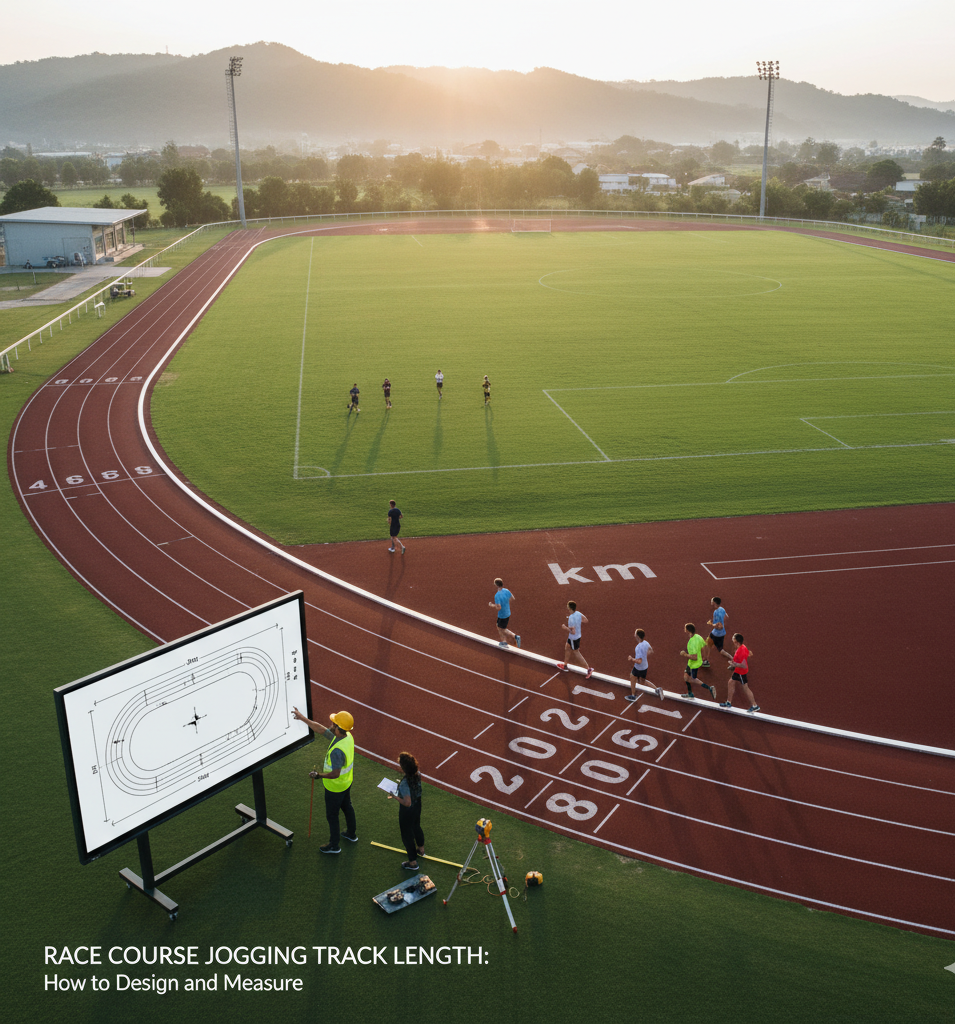
Jogging and running are among the most effective ways to improve physical fitness, mental clarity, and cardiovascular health. As awareness of healthy lifestyles grows, race course jogging tracks have become essential features in parks, sports complexes, residential communities, educational institutions, and urban developments. Among all design elements, race course jogging track length is one of the most critical factors influencing usability, safety, and performance.
The length of a jogging track determines how runners measure distance, plan workouts, track progress, and maintain pacing. Whether designed for professional athletes or casual walkers, understanding the correct race course jogging track length ensures the track serves its purpose efficiently and inclusively.
This comprehensive guide explores race course jogging track length standards, variations, design factors, and long-term benefits.
What Is a Race Course Jogging Track?
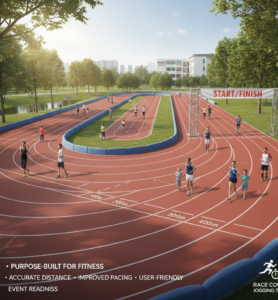
A race course jogging track is a purpose-built running or walking pathway designed specifically for fitness activities. Unlike sidewalks or roadways, these tracks are engineered with precise measurements, smooth surfaces, and safety-focused design elements.
Key characteristics of race course jogging tracks include:
-
Clearly measured and marked distances
-
Shock-absorbing, non-slip surfaces
-
Gentle curves and safe turning radii
-
Dedicated space away from vehicular traffic
Race course jogging tracks are commonly found in public parks, stadiums, schools, residential societies, fitness campuses, and rooftop recreational areas.
Why Race Course Jogging Track Length Matters
The race course jogging track length directly impacts how users interact with the track. An incorrectly planned length can reduce motivation, create confusion, or limit training effectiveness.
Importance of Proper Track Length
Accurate Distance Measurement
Joggers rely on track length to calculate how far they run per lap, helping them achieve fitness goals without guesswork.
Improved Pacing and Endurance
Consistent lap lengths allow runners to manage speed, monitor stamina, and gradually improve endurance.
User-Friendly Experience
Shorter or longer loops can be tailored to specific age groups, fitness levels, and space availability.
Event Readiness
Measured track lengths make it easier to organize races, fitness challenges, and school competitions.
Standard Race Course Jogging Track Lengths

There is no single universal jogging track length. Instead, race course jogging track length varies based on location, usage, and available area.
1. Professional Athletics Race Tracks
The most globally recognized race course jogging track length is the 400-meter track.
-
One complete lap measures 400 meters (inner lane)
-
Used for professional and Olympic-level competitions
-
Suitable for sprinting, endurance training, and structured workouts
This length is ideal for athletes who require precision, consistency, and international standard compliance.
2. Park and Community Race Course Jogging Tracks
Public parks and open fitness spaces usually feature longer loops designed for recreational use.
Typical lengths include:
-
1 kilometer
-
2 kilometers
-
3 kilometers
-
5 kilometers
These longer race course jogging track lengths reduce monotony, support scenic running, and allow runners to complete workouts with fewer laps.
A 1 km loop is particularly popular due to its versatility and ease of distance calculation.
3. Residential Society Jogging Tracks
In gated communities and housing complexes, race course jogging track length is designed for daily convenience.
-
Common lengths: 500 meters to 1 kilometer
-
Ideal for morning walks, light jogging, and senior fitness
-
Encourages consistent exercise habits among residents
These tracks often loop around gardens, buildings, or internal roads.
4. Rooftop and Terrace Jogging Tracks
Urban space limitations have led to the rise of rooftop jogging tracks.
-
Typical race course jogging track length: 100–200 meters per lap
-
Users complete multiple laps to achieve fitness targets
-
Lightweight, waterproof surfaces are essential
Despite shorter lengths, rooftop tracks are highly effective when designed correctly.
5. School and Institutional Jogging Tracks
Schools prioritize safety, accessibility, and motivation for children.
-
Average race course jogging track length: 200–300 meters
-
Short laps help children complete distances without fatigue
-
Encourages participation and confidence
These tracks are often integrated into playgrounds or sports fields.
Factors That Influence Jogging Track Length
Several planning and environmental factors determine the final race course jogging track length.
Available Space
Large parks allow longer loops, while rooftops and courtyards require compact designs.
Intended Users
-
Children and seniors prefer shorter loops
-
Athletes and fitness enthusiasts require longer distances
Track Shape
-
Oval and circular layouts maximize length in limited space
-
Linear or looping paths create visual variety in parks
Safety Requirements
Sharp curves, narrow areas, and pedestrian overlap may limit track length.
Connectivity
Tracks often integrate with fitness zones, cycling paths, or walking trails, affecting total lap distance.
Recommended Jogging Track Lengths by Location
| Location Type | Recommended Track Length | Purpose |
|---|---|---|
| Professional Stadium | 400 meters | Competitive training |
| Public Park | 1–5 kilometers | Casual jogging and walking |
| Residential Society | 500 m – 1 km | Daily fitness |
| School Campus | 200–300 meters | Child-friendly activity |
| Rooftop Track | 100–200 meters | Space-efficient workouts |
Design Tip: A clearly marked race course jogging track length improves user engagement and reduces confusion.
Design Elements Beyond Track Length
While jogging track length is critical, overall design quality determines safety and comfort.
Surface Materials
-
EPDM rubber
-
Polyurethane (PU) systems
-
Acrylic coatings
These materials reduce joint impact and improve traction.
Track Width
-
Minimum 1.5 meters for single-lane tracks
-
Wider paths for two-way movement or group running
Slope and Drainage
A slope of 1–2% prevents water accumulation and enhances safety.
Markings and Signage
-
Distance markers every 100 or 200 meters
-
Start and finish indicators
-
Directional arrows
Safety Features
-
Night lighting
-
Railings or barriers
-
Benches and shaded rest areas
Benefits of a Well-Planned Jogging Track Length
-
Encourages consistent physical activity
-
Helps runners track progress accurately
-
Supports structured training and endurance building
-
Enhances safety and reduces injury risk
-
Promotes community health and engagement
A thoughtfully designed race course jogging track length caters to beginners and advanced runners alike.
Maintenance and Longevity
To preserve jogging track length accuracy and usability:
-
Clean debris regularly
-
Repair surface damage promptly
-
Maintain drainage systems
-
Repaint distance markers
-
Resurface synthetic tracks periodically
With proper maintenance, jogging tracks can remain functional for 8–12 years or longer.
Conclusion
The jogging track length is far more than a measurement—it defines the quality, usability, and success of a jogging facility. From professional 400-meter tracks to 1–5 km park loops and compact rooftop circuits, the right length ensures inclusivity, safety, and motivation.