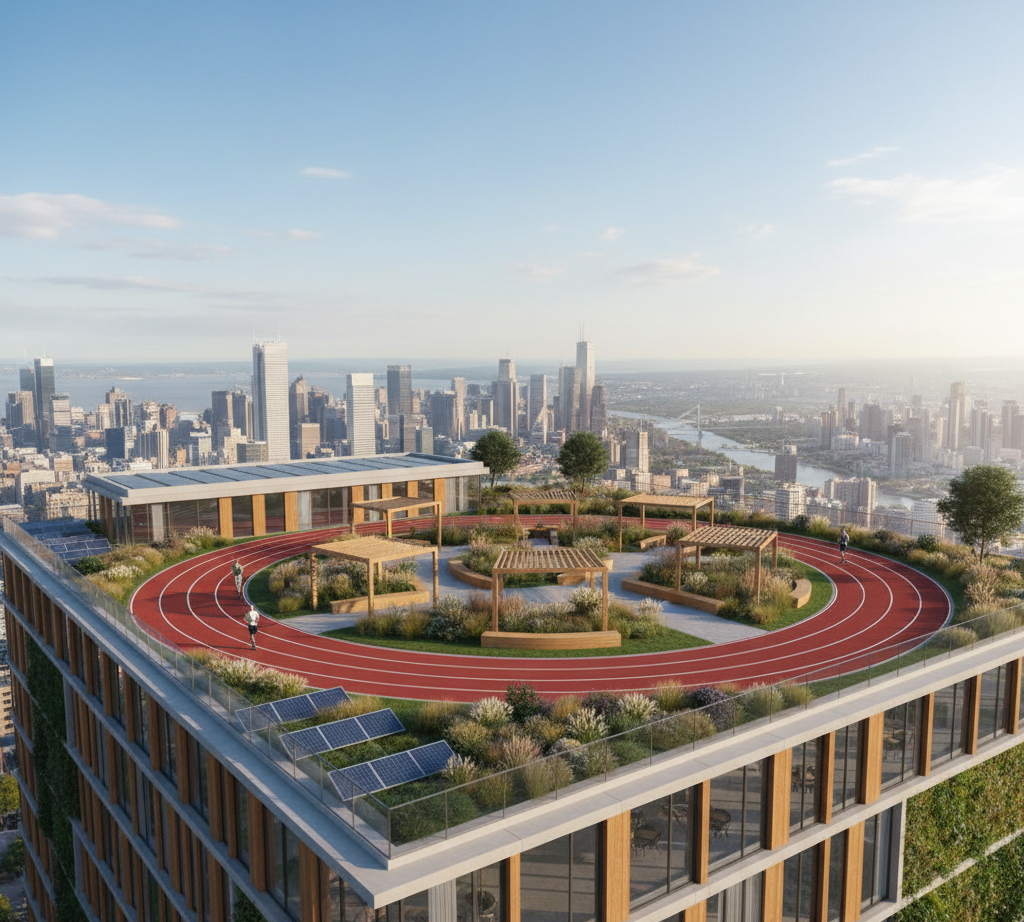
In today’s urban lifestyle, where open spaces are shrinking and fitness is a growing priority, the concept of a terrace jogging track has gained immense popularity. Residential societies, corporate buildings, hotels, and commercial complexes are increasingly utilizing their rooftop spaces to create fitness-friendly zones.
A jogging track on a terrace offers a safe, convenient, and refreshing way to exercise — right above your head, with a scenic skyline view. But constructing one requires careful planning, waterproofing, and material selection to ensure durability, safety, and comfort.
Let’s explore in detail how a terrace jogging track is designed and constructed.
🧭 Step 1: Feasibility and Structural Assessment
Before construction begins, the structural integrity of the building must be carefully assessed. Since terrace tracks add additional load to the structure, this step is non-negotiable.
Key points to check:
-
Load-bearing capacity of the terrace slab.
-
Condition of waterproofing and existing floor finish.
-
Slope and drainage system for rainwater.
-
Access points — stairs, lift, or ramp for users.
Structural engineers should confirm whether the terrace can safely handle the live load (people jogging or walking) and dead load (track material, planters, lighting, etc.).
🧱 Step 2: Surface Preparation and Waterproofing
Terrace surfaces are exposed to sunlight, rain, and temperature variations, so waterproofing is critical. The base preparation must ensure protection against leaks and cracks.
Preparation process:
-
Clean the surface to remove dust, oil, and loose materials.
-
Repair cracks or joints using polymer mortar.
-
Apply a waterproofing membrane — either:
-
Liquid applied membrane (polyurethane, acrylic, or cementitious), or
-
Sheet membrane (APP or SBS modified bitumen).
-
-
Allow curing as per manufacturer’s instructions.
-
Provide a protective screed layer (50–75 mm thick) on top of the membrane.
This ensures that the terrace remains watertight even under heavy rains or cleaning activities.
🧩 Step 3: Base Layer Construction
After waterproofing and protection screed, a base layer is created to give shape, slope, and strength to the jogging track.
Typical materials for the base layer include:
-
Lightweight concrete screed for even surface formation.
-
Rubberized underlay mats for shock absorption (optional).
-
Interlocking tiles or asphalt base if the track surface is synthetic.
A slight slope (1–2%) must be maintained for proper drainage.
🌈 Step 4: Surface Material Options for Terrace Jogging Track
Selecting the right surface material is the most crucial step. It must be lightweight, non-slip, UV-resistant, and weatherproof.
1. EPDM Rubber Flooring (Most Preferred)
-
Composition: Ethylene Propylene Diene Monomer granules with PU binder.
-
Thickness: 15–25 mm.
-
Advantages:
-
Soft and flexible underfoot.
-
Shock absorption reduces joint stress.
-
Non-slip, even when wet.
-
Available in multiple colors.
-
UV and weather resistant.
-
-
Lifespan: 8–10 years with minimal maintenance.
2. PU (Polyurethane) Synthetic Surface
-
Used in professional athletic tracks.
-
Smooth, resilient, and long-lasting.
-
Provides excellent grip and rebound effect.
-
Can be customized with track markings and colors.
3. Acrylic Sports Flooring
-
Water-based acrylic coating applied over the base.
-
Affordable and easy to maintain.
-
Best for moderate use (residential terraces).
4. Interlocking Rubber or PVC Tiles
-
Modular and easy to install or replace.
-
Non-slip and durable.
-
Ideal for small rooftop jogging areas.
Pro Tip: Avoid using heavy concrete or paver surfaces on terraces — they add unnecessary load and may affect waterproofing.
💧 Step 5: Drainage and Water Flow
Water drainage is a key design concern for terrace jogging tracks. Standing water can damage the surface, cause slipperiness, and weaken waterproofing.
Drainage solutions:
-
Maintain a 1–2% slope throughout the track surface.
-
Provide drain outlets or scuppers along the edges.
-
Install gratings or channels to collect and guide runoff.
-
Use perforated synthetic mats below EPDM layers to allow quick drying.
💡 Step 6: Lighting, Railings, and Safety Features
A well-designed terrace track must also be safe and user-friendly.
Include the following elements:
-
LED running lights or bollards spaced every 5–10 meters.
-
Railing or parapet wall at least 1.2 meters high for safety.
-
Non-slip edges near turns and slopes.
-
CCTV cameras and emergency lights for security.
-
Signboards for track distance, direction, and usage guidelines.
If the terrace has an open view, consider adding glass or steel railings for aesthetics and safety.
🪴 Step 7: Landscaping and Aesthetic Integration
To enhance the ambience, terrace jogging tracks often include green elements like:
-
Potted plants and planters along edges.
-
Artificial turf or green zones for relaxation.
-
Pergolas or shaded seating areas.
-
Music or sound systems for a motivating environment.
These features turn the terrace into a complete wellness space, not just a running track.
🧮 Step 8: Dimensions and Layout Guidelines
Recommended specifications:
-
Track width: 1.5 – 2.5 meters (single lane)
-
Track length: As per terrace perimeter (a 100m loop is common in mid-size buildings)
-
Surface slope: 1–2% for drainage
-
Surface thickness: 15–25 mm (EPDM/PU layer)
-
Load limit: Confirm with structural engineer (usually ≤250 kg/m² including finish)
Tracks can be circular, oval, or rectangular, depending on terrace shape.
🛠️ Step 9: Maintenance and Lifespan
Terrace jogging tracks are relatively easy to maintain if built correctly.
Maintenance checklist:
-
Clean surface regularly to remove dust and water.
-
Inspect joints and edges for wear or peeling.
-
Recoat acrylic or PU surfaces every 4–5 years.
-
Avoid sharp objects and heavy equipment on the surface.
-
Ensure drain outlets remain unclogged.
Well-maintained terrace tracks can last 8–12 years before requiring major resurfacing.
💰 Step 10: Approximate Construction Cost
| Surface Type | Approx. Cost (₹ per sq.ft) | Durability | Remarks |
|---|---|---|---|
| EPDM Rubber Flooring | ₹250 – ₹350 | 8–10 years | Best combination of comfort and durability |
| PU Synthetic Track | ₹400 – ₹500 | 10–12 years | Premium professional surface |
| Acrylic Sports Coating | ₹150 – ₹250 | 5–7 years | Cost-effective for residential terraces |
| Interlocking Rubber Tiles | ₹200 – ₹300 | 6–8 years | Modular and easy to maintain |
Note: Prices vary by city, material thickness, and brand.
🌇 Step 11: Advantages of a Terrace Jogging Track
A rooftop jogging track is more than just a fitness feature — it’s a lifestyle upgrade.
Benefits include:
-
Utilizes unused terrace space productively.
-
Encourages residents to stay active.
-
Reduces dependency on crowded parks or gyms.
-
Adds property value and aesthetic appeal.
-
Provides fresh air and scenic views during workouts.
-
Can double up as a walking track, yoga area, or recreation zone.
🏁 Conclusion
A jogging track on the terrace is an innovative and efficient way to blend health, architecture, and sustainability. With the right structural design, waterproofing, lightweight materials, and drainage planning, it can transform any rooftop into a year-round fitness hub.
Whether it’s a residential society, corporate office, or hotel rooftop, terrace jogging tracks enhance wellness, aesthetics, and property value — making them a smart investment in modern urban design.