Introduction
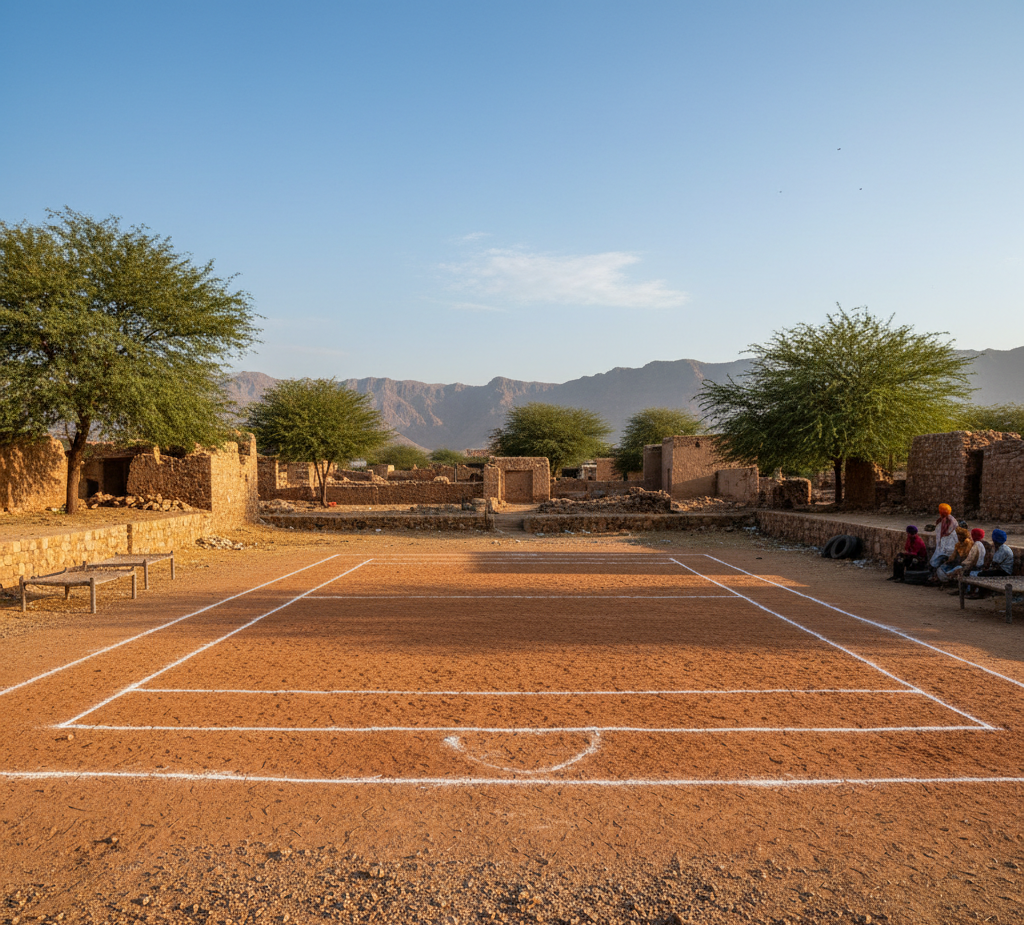
Kabaddi is more than just a game in India—it’s a symbol of teamwork, agility, and tradition. In Rajasthan, the sport holds a special place in both rural and urban communities. From village tournaments to state-level championships, kabaddi continues to grow rapidly across the desert state. With this increasing enthusiasm, the need for professional and durable kabaddi court flooring in Rajasthan has become crucial.
A well-designed kabaddi court not only enhances the performance of players but also ensures their safety and comfort. In Rajasthan’s diverse climate—marked by scorching summers, occasional rains, and dusty winds—the choice of flooring material must be made thoughtfully to withstand harsh conditions while maintaining play quality.
Understanding Rajasthan’s Environment and Challenges
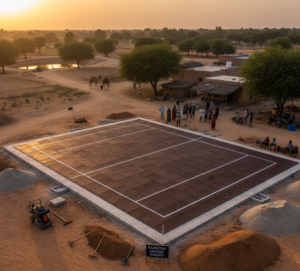
Rajasthan’s geography is dominated by arid and semi-arid regions. The state experiences extreme temperatures, with summers exceeding 45°C and cooler nights during winter. Dust, sand, and heat can affect outdoor flooring materials if not chosen properly. Hence, the kabaddi flooring system must offer:
-
High durability against heat and UV exposure
-
Resistance to dust accumulation and moisture
-
Non-slippery, shock-absorbent surface for safe gameplay
-
Low maintenance and long lifespan
Whether the kabaddi court is built in Jaipur, Jodhpur, Udaipur, or rural areas like Barmer or Bikaner, flooring must be tailored to local soil and climate conditions.
Standard Kabaddi Court Dimensions
Before selecting flooring, it’s important to follow proper kabaddi court measurements as per the Amateur Kabaddi Federation of India (AKFI) standards:
-
Men’s and junior boys’ courts: 13 meters (length) × 10 meters (width)
-
Women’s and junior girls’ courts: 12 meters × 8 meters
-
Safety margins (lobby area): At least 1 meter on all sides
The flooring should cover the entire playfield plus the lobby area to prevent slips or injuries when players dive or tackle near the boundary lines.
Types of Kabaddi Court Flooring for Rajasthan
Different flooring systems can be installed depending on the purpose (school, academy, or competition) and budget. The main options include:
1. Natural Clay or Mud Flooring
-
Traditionally used in rural Rajasthan tournaments
-
Offers good grip and cushioning
-
Very economical, but high maintenance
-
Requires daily watering and frequent leveling
-
Not ideal for year-round or professional use due to dust and unevenness
2. Synthetic Rubber / EVA Interlocking Mats
-
Made of high-density Ethylene Vinyl Acetate (EVA)
-
Interlocking design ensures quick installation
-
Excellent shock absorption and non-slip properties
-
Withstands high temperatures and resists moisture
-
Ideal for both indoor and outdoor use
-
Minimal maintenance and long life
This is currently the most popular flooring type for kabaddi courts in Rajasthan, as it balances comfort, durability, and cost.
3. Polyurethane (PU) or Rubberized Flooring
-
Durable, smooth, and even surface for professional play
-
Suitable for indoor courts or stadiums
-
Can handle temperature variations and heavy usage
-
Slightly higher in cost but excellent long-term value
4. Hybrid Flooring System
-
Combines a concrete base with a synthetic rubber or PU top layer
-
Offers the best of both worlds: stability, grip, and resilience
-
Ideal for academies and multi-purpose sports facilities
Construction Process of a Kabaddi Court in Rajasthan
Building a quality kabaddi court involves careful preparation and technical accuracy. Here’s a step-by-step guide:
1. Site Preparation and Leveling
The first step is to clear and level the ground. For desert or sandy areas, compacting the base soil is essential to prevent shifting. Proper grading ensures evenness and helps water drainage.
2. Laying the Sub-Base
A reinforced concrete slab of about 100–150 mm thickness is recommended. It should have a gentle slope (around 1%) for natural drainage, especially for outdoor installations.
3. Applying a Moisture Barrier
Since certain regions like Kota and Udaipur experience monsoon rainfall, a waterproof membrane or primer layer protects the top flooring from moisture damage.
4. Shock-Absorbent Under-Layer (Optional)
A thin foam or rubber underlay improves player comfort, absorbs impact during tackles, and extends the life of the flooring.
5. Installing the Top Flooring Layer
-
EVA Mats: Interlocked securely over the base, covering the playfield and safety margins.
-
PU or Rubber Flooring: Applied as layers over the sub-base, leveled, and cured before marking lines.
6. Court Marking and Finishing
Lines are marked using contrasting, non-fading paint. The standard lines include:
-
Midline dividing two halves
-
Baulk lines and bonus lines for raids
-
Lobby boundaries and end lines
All lines are usually 5 cm thick and white or yellow in color for high visibility.
7. Inspection and Testing
Before opening the court for use, inspect for:
-
Surface evenness
-
Grip consistency
-
Shock absorption quality
-
Accurate markings
8. Maintenance
-
Sweep and mop regularly to remove dust and sand
-
Avoid heavy water contact on synthetic mats
-
Repaint faded markings annually
-
Replace damaged mats individually if needed
Key Advantages of Modern Kabaddi Flooring in Rajasthan
-
All-Weather Durability: Synthetic and PU floors handle high heat, dust, and light rain without cracking or fading.
-
Player Safety: Shock-absorbent surfaces prevent injuries from falls and tackles.
-
Professional Aesthetics: Smooth, color-coded courts enhance the visual appeal of sports complexes.
-
Low Maintenance: Minimal upkeep compared to traditional clay surfaces.
-
Easy Installation and Portability: Interlocking mats can be quickly installed, removed, or expanded as needed.
-
Long Lifespan: High-quality synthetic mats last up to 8–10 years with proper care.
Recommended Specification for Rajasthan Conditions
| Component | Specification |
|---|---|
| Court Size | 13 m × 10 m (men), 12 m × 8 m (women) |
| Base Layer | 150 mm reinforced concrete with 1% slope |
| Moisture Barrier | Waterproof polymer sealer |
| Under-Layer | 10 mm rubber or foam sheet (optional) |
| Top Surface | EVA interlocking mats, 30–40 mm thick, 120 kg/m³ density |
| Markings | 5 cm white/yellow lines |
| Safety Margin | Minimum 2 m clearance around playfield |
| Maintenance | Dry mop daily, inspect monthly, repaint annually |
Cost and Installation Overview
The cost of kabaddi court flooring in Rajasthan depends on location, material type, and court size. On average:
-
Clay court: ₹40,000 – ₹60,000
-
EVA mat court: ₹2.5 – ₹4 lakh
-
PU flooring: ₹5 – ₹7 lakh
Professional suppliers in Rajasthan such as Jaipur, Ajmer, and Jodhpur offer complete installation services including design, flooring, and marking.
Conclusion
Kabaddi is deeply rooted in Rajasthan’s sporting culture, but to support the next generation of players, modern flooring systems are essential. With proper kabaddi court flooring, the state can provide safe, professional, and durable facilities suitable for year-round play—even in its harsh climate.
Whether it’s a school in Jaipur, a college in Bikaner, or a sports complex in Udaipur, investing in high-quality kabaddi flooring ensures player safety, performance excellence, and long-term value. A well-built court reflects not only athletic passion but also Rajasthan’s commitment to preserving tradition through modern infrastructure.
Kabaddi Court Flooring in Rajasthan – FAQ
1. What types of flooring are commonly used for Kabaddi courts in Rajasthan?
-
Synthetic interlocking mats: PVC or PU mats are ideal for indoor courts, offering excellent cushioning and safety.
-
Wooden flooring: High-quality hardwood is preferred for professional indoor arenas, providing a smooth and durable surface.
-
Clay or soil courts: Traditional outdoor courts, commonly used for local tournaments and village games.
-
Epoxy or rubber flooring: Durable, shock-absorbing, and suitable for indoor sports centers.
2. What is the official size of a Kabaddi court?
-
Men’s court: 13 meters × 10 meters (approximately 42.65 × 32.8 ft)
-
Women’s court: 12 meters × 8 meters (approximately 39.37 × 26.25 ft)
Additional safety space around the court is recommended for players and spectators.
3. Can Kabaddi flooring withstand Rajasthan’s hot and dry climate?
Yes. Synthetic and epoxy floors are heat-resistant and durable in high temperatures. Outdoor clay courts may require regular watering and rolling to maintain softness and prevent cracks due to the dry climate.
4. How long does it take to install a Kabaddi court floor in Rajasthan?
-
Synthetic mats: 2–4 days
-
Wooden indoor flooring: 5–7 days including subfloor preparation
-
Clay/soil outdoor courts: 7–10 days including leveling and compaction
Professional installation ensures safety, even surface, and longevity.
5. What is the approximate cost of Kabaddi flooring in Rajasthan?
-
Synthetic mats: ₹600–₹1,200 per sq. m
-
Wooden flooring: ₹1,500–₹3,000 per sq. m
-
Clay/soil courts: ₹200–₹500 per sq. m
Costs vary based on material quality, installation, and customization.
6. How should Kabaddi flooring be maintained in Rajasthan?
-
Synthetic mats: Clean regularly with mild detergent; inspect for wear.
-
Wooden floors: Annual polishing and resealing; avoid water spillage.
-
Clay courts: Regular watering, leveling, and rolling to maintain softness.
Proper maintenance extends flooring life and ensures player safety.
7. Can schools and sports academies in Rajasthan install Kabaddi courts?
Yes. Indoor synthetic or wooden courts are ideal for professional training, while clay or soil courts are suitable for outdoor recreational use.