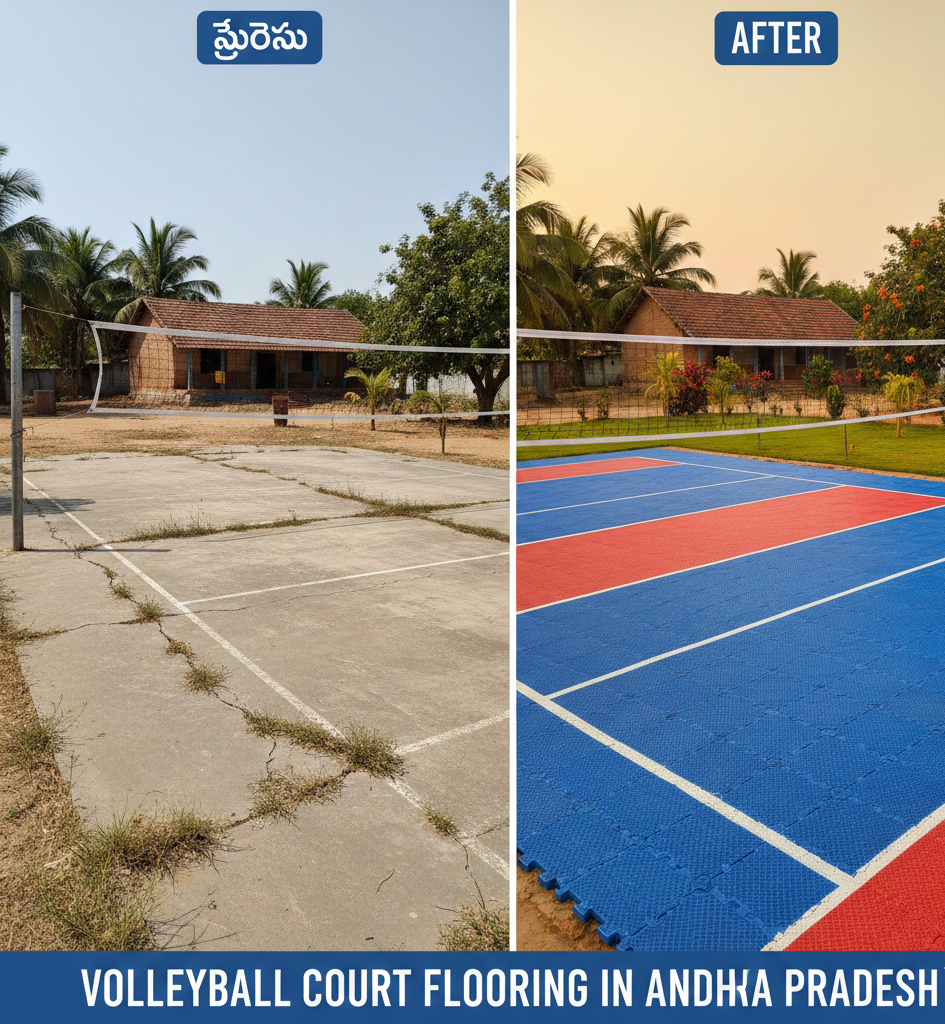
Are you looking for high-quality volleyball court flooring in Andhra Pradesh for a school, college, sports academy, stadium, residential community, or professional sports facility? Choosing the right flooring system is essential for creating a safe, durable, and performance-oriented volleyball court. A professionally constructed court provides better player comfort, reliable traction, consistent ball response, and long-term value for your investment.
We specialize in volleyball court flooring, sports surface installation, and complete volleyball court construction services across Andhra Pradesh. Our solutions are designed to meet the requirements of indoor and outdoor sports facilities, with suitable flooring materials selected according to the project location, playing conditions, usage frequency, and available budget.
From the coastal climate of Visakhapatnam and Kakinada to the warmer inland regions of Anantapur and Kadapa, volleyball courts require carefully selected materials and proper construction techniques. Our approach focuses on surface performance, weather resistance, drainage, structural stability, and ease of maintenance to help clients develop reliable sports facilities.
Whether you are planning a new volleyball court or renovating an existing playing surface, we offer customized solutions using synthetic acrylic flooring, polyurethane (PU) sports flooring, wooden sports floors, PVC vinyl flooring, and modular interlocking tiles. Every project is planned around the specific requirements of the facility to create a practical and long-lasting playing environment.
Why Choose Our Volleyball Court Flooring Solutions in Andhra Pradesh?
Selecting the right sports flooring contractor is an important step in developing a volleyball court that delivers consistent performance. The quality of the playing surface, foundation preparation, installation workmanship, and court markings can all influence player experience and maintenance requirements.
Our volleyball court flooring solutions combine suitable sports surface materials with professional installation methods to support recreational games, regular training sessions, and competitive sports activities.
Key Benefits of Our Volleyball Court Flooring
- Player safety and comfort: Appropriate sports flooring can provide suitable traction and cushioning to support jumping, landing, and quick directional movements.
- Durable playing surfaces: Quality materials and correct installation help withstand regular use and reduce premature surface deterioration.
- Weather-resistant options: Selected outdoor flooring systems can offer resistance to sunlight, rain, and changing environmental conditions.
- Consistent playing characteristics: A properly prepared and installed surface helps create a uniform playing area.
- Customized court designs: Choose suitable surface colours, boundary lines, and selected branding options according to your facility requirements.
- Easy maintenance: Appropriate flooring systems can simplify routine cleaning and reduce the need for frequent repairs.
- Project-specific solutions: Flooring recommendations are based on whether the court is intended for outdoor recreation, indoor training, school sports, or competitive play.
For more information about our services, explore our volleyball court flooring solutions.
Types of Volleyball Court Flooring Available in Andhra Pradesh
Different volleyball facilities require different surface characteristics. An outdoor school court may need resistance to sunlight and rain, while an indoor stadium may require a cushioned sports floor designed for repeated jumping and landing.
We offer multiple volleyball flooring options to help clients choose a suitable system for their site conditions, expected usage, and performance requirements.
1. Synthetic Acrylic Volleyball Court Flooring
Synthetic acrylic flooring is a popular option for outdoor volleyball courts because it provides a coloured, textured playing surface that can be installed over a properly prepared concrete or asphalt base.
This system is suitable for educational institutions, residential communities, recreational centres, and outdoor sports facilities across Andhra Pradesh. Depending on the selected product specification, acrylic systems can offer good surface grip, UV resistance, and relatively straightforward maintenance.
Acrylic flooring is particularly useful for facilities that require a visually appealing court with clearly defined playing boundaries. The surface can be customized with contrasting colours to distinguish the playing area from the surrounding space.
Main benefits of acrylic volleyball flooring:
- Suitable for many outdoor sports applications.
- Available in different colours and surface textures.
- Offers weather-resistant performance when the correct system is selected.
- Supports clear and durable court line marking.
- Requires comparatively simple routine cleaning.
- Can be installed over suitable concrete or asphalt foundations.
The required coating thickness and number of layers depend on the manufacturer’s specifications, base condition, and intended use. A suitable cushioning system may also be considered where additional impact comfort is required.
2. Polyurethane (PU) Volleyball Court Flooring
Polyurethane sports flooring is another option for facilities seeking a resilient and comfortable playing surface. PU systems are available in different constructions, including seamless synthetic surfaces and multi-layer cushioned sports flooring.
Depending on the system design, PU flooring can help absorb impact, support player movement, and provide a uniform finish. It can be suitable for selected indoor facilities and outdoor sports applications when the product is specifically designed for those conditions.
For indoor volleyball courts, a cushioned PU system may be considered where player comfort and repeated impact are important priorities. Outdoor installations require products formulated for exterior exposure, along with proper drainage and substrate preparation.
Advantages of PU volleyball flooring include:
- Seamless surface construction in suitable systems.
- Options with different cushioning levels.
- Good wear resistance when correctly specified.
- Customizable colours and court markings.
- Potential suitability for regular training and sports activities.
- Straightforward maintenance when the manufacturer’s guidelines are followed.
The final system should be selected according to the intended playing level, substrate condition, and applicable sports performance requirements.
3. Wooden Indoor Volleyball Court Flooring
Wooden sports flooring is a traditional choice for indoor volleyball courts, professional training centres, and multipurpose sports halls. A properly engineered wooden sports floor combines a suitable timber surface with an underlying support and cushioning system.
Maple is commonly used in high-performance indoor sports flooring, while other timber species may be considered according to availability, system design, and project requirements. The performance of a wooden court depends on the complete flooring assembly rather than the timber surface alone.
A professionally installed wooden sports floor can provide a consistent playing surface, suitable shock absorption, and a premium appearance for indoor sporting venues.
Key advantages of wooden volleyball flooring:
- Suitable for indoor stadiums and sports complexes.
- Can provide controlled shock absorption when designed as a sports floor system.
- Offers a professional finish for tournaments and training facilities.
- Supports precise court line marking.
- Can be refinished or maintained according to the flooring specification.
- Suitable for multipurpose indoor sports environments when appropriately designed.
Wooden sports flooring requires careful control of moisture, humidity, cleaning practices, and indoor environmental conditions. It is therefore important to consider ventilation and ongoing maintenance before choosing this option.
4. PVC Vinyl Volleyball Court Flooring
PVC vinyl sports flooring is a practical option for indoor sports halls, school facilities, training centres, and multipurpose community spaces. Sports-grade vinyl flooring is available in different thicknesses and constructions, including systems with integrated cushioning.
Compared with conventional hard flooring, an appropriate sports vinyl system can provide a more comfortable surface for movement and landing. Its performance depends on the product’s construction, installation method, and suitability for volleyball.
Benefits of PVC sports flooring include:
- Smooth and uniform playing surfaces.
- Easy-to-clean materials.
- Availability of cushioned flooring options.
- Different colours and finishes.
- Suitability for selected indoor multipurpose facilities.
- Efficient installation when the subfloor is properly prepared.
For volleyball applications, the chosen product should be designed for indoor sports rather than ordinary residential or commercial vinyl use. The floor should also provide suitable traction and impact performance for the intended level of activity.
5. Modular Interlocking Volleyball Court Tiles
Modular interlocking tiles are made from individual components that connect to create a playing surface. They are often considered for outdoor recreational courts, temporary installations, school playgrounds, and multipurpose sports areas.
Many outdoor modular systems incorporate drainage openings that help water pass through the surface. Their suitability depends on the tile design, underlying foundation, local weather conditions, and expected level of play.
Benefits of modular volleyball flooring include:
- Quick installation compared with some traditional flooring systems.
- Replaceable individual tiles in many product designs.
- Options for outdoor use and water drainage.
- Multiple colours for customized court layouts.
- Relatively simple surface cleaning.
- Potential suitability for temporary or multipurpose installations.
Before selecting modular tiles for volleyball, check their stability, traction, impact characteristics, and suitability for jumping and landing movements. The supporting base must also be level and stable to minimize unwanted movement.
Professional Volleyball Court Construction in Andhra Pradesh
A durable volleyball court requires more than high-quality flooring materials. Proper site evaluation, foundation construction, water management, surface installation, and accurate line marking are essential for a successful project.
We provide end-to-end volleyball court construction services in Andhra Pradesh, helping schools, colleges, sports academies, clubs, builders, and private facility owners develop courts suited to their requirements.
Our construction process can be customized for new projects, existing court renovations, and the conversion of suitable open spaces into sports facilities.
Our Volleyball Court Construction Process
1. Site Inspection and Project Planning
The first stage involves evaluating the proposed location, available space, existing ground conditions, and intended usage. We consider drainage, access, sunlight exposure, surrounding structures, and the type of flooring required.
This assessment helps determine the appropriate construction method and identify potential issues before work begins.
2. Foundation and Base Preparation
The foundation plays a major role in the stability and durability of the playing surface. Depending on the site, the base may involve a properly designed sub-base, concrete slab, or asphalt construction.
The preparation process includes checking levels, surface stability, and drainage requirements. Any cracks, uneven areas, or unsuitable substrate conditions should be addressed before flooring installation.
3. Sports Flooring Installation
Once the base is ready, the selected flooring system is installed according to its technical requirements. This may involve applying acrylic coatings, installing a PU sports floor, laying sports-grade vinyl, assembling modular tiles, or constructing a complete wooden sports floor system.
Correct installation helps maintain the intended surface characteristics and minimizes the likelihood of premature damage.
4. Volleyball Court Line Marking
Accurate court markings are essential for training and competitive play. The playing area, boundary lines, and net position must be planned according to the intended rules and usage requirements.
For regulation play, the standard indoor volleyball court measures 18 metres long and 9 metres wide. The surrounding free zone and additional facility clearances should also be considered during planning.
5. Net Posts and Accessories
A volleyball facility may require net posts, sleeves or anchoring systems, a suitable net, and other accessories. These components should be selected and installed to suit the court design and applicable safety requirements.
Post foundations and anchors must be properly designed to maintain stability during use.
6. Final Inspection and Handover
Before the facility is opened for use, the completed court should be inspected for surface uniformity, drainage performance where applicable, line marking accuracy, and installation quality.
The project handover can also include guidance on cleaning, maintenance, and recommended care procedures for the selected flooring system.
Indoor and Outdoor Volleyball Court Flooring Solutions
Understanding the difference between indoor and outdoor flooring is important when planning a new sports facility in Andhra Pradesh.
Outdoor Volleyball Courts
Outdoor courts are exposed to direct sunlight, rainfall, dust, and changing temperatures. Coastal areas may also experience elevated humidity and salt-laden air, making material selection and corrosion protection particularly important.
Acrylic flooring, suitable exterior PU systems, and selected modular tiles can be considered for outdoor projects. The right option depends on the existing base, drainage conditions, expected usage, and maintenance budget.
A well-designed outdoor court should include:
- A stable and level foundation.
- Effective surface water drainage.
- Materials appropriate for exterior exposure.
- Suitable traction under expected playing conditions.
- Durable and clearly visible line markings.
- Weather-resistant net posts and accessories.
Indoor Volleyball Courts
Indoor volleyball courts generally provide greater protection from rain and direct sunlight, allowing a wider selection of sports flooring systems.
Wooden sports flooring, cushioned PU flooring, and suitable sports-grade vinyl are potential choices depending on the facility’s requirements.
Indoor court planning should account for subfloor moisture, ventilation, lighting, ceiling height, player clearance, and the performance characteristics required for the intended level of play.
For competitive facilities, flooring selection should be based on the relevant volleyball regulations and applicable sports flooring standards rather than appearance alone.
Volleyball Court Flooring Services Across Andhra Pradesh
We aim to support sports infrastructure projects throughout Andhra Pradesh, including educational institutions, private sports academies, government facilities, commercial sports centres, and residential developments.
Our service locations include:
- Visakhapatnam: Outdoor volleyball courts, sports academies, and institutional facilities.
- Vijayawada: School playgrounds, indoor sports halls, and recreational courts.
- Guntur: College sports facilities and community volleyball courts.
- Tirupati: Educational campuses, training centres, and sports complexes.
- Anantapur: Outdoor courts designed with suitable materials for hot and dry conditions.
- Kakinada: Coastal sports facilities requiring appropriate drainage and weather-resistant materials.
- Rajahmundry: Volleyball court construction for schools, clubs, and residential communities.
- Nellore: Outdoor recreational facilities and institutional sports infrastructure.
- Chittoor: School courts, private facilities, and sports training spaces.
- Kadapa: Durable outdoor courts and indoor sports flooring projects.
Project availability, travel requirements, and installation schedules can be confirmed during the initial consultation.
Whether your project is in a major city or a developing town, the flooring system should be chosen according to actual site conditions rather than relying on a single solution for every location.
How Andhra Pradesh’s Climate Influences Volleyball Flooring Selection
Andhra Pradesh includes coastal districts, inland plains, and warmer regions with different environmental conditions. These differences can affect the performance and maintenance requirements of sports flooring.
Coastal Humidity and Rainfall
Locations such as Visakhapatnam and Kakinada may experience humid conditions and significant seasonal rainfall. Outdoor courts in these areas benefit from careful drainage planning, moisture-appropriate base construction, and flooring materials suitable for the local exposure.
Metal net posts and accessories should also receive suitable corrosion protection.
High Temperatures and Sunlight
In warmer inland locations, including Anantapur and Kadapa, prolonged sunlight and high surface temperatures can affect certain coatings and materials.
UV-resistant exterior products, correct application procedures, and suitable curing conditions can help improve long-term performance.
Drainage and Seasonal Weather
Rainwater accumulation can damage unsuitable foundations and interrupt court usage. The court design should account for water runoff and prevent standing water wherever possible.
Acrylic coatings and other surface finishes cannot compensate for a poorly constructed base. Proper civil work is therefore a critical part of any durable outdoor volleyball court.
What Is the Cost of Volleyball Court Flooring in Andhra Pradesh?
The cost of volleyball court flooring depends on the type of material, the area to be covered, the condition of the foundation, and the additional facilities required.
A basic outdoor acrylic court may have a different project cost from a cushioned PU system, a modular tile installation, or a complete wooden indoor sports floor.
Factors that influence the overall quotation include:
- Flooring material: Acrylic, PU, PVC vinyl, wood, and modular tiles have different material and installation costs.
- Foundation condition: New concrete or asphalt construction can increase the total project budget.
- Surface preparation: Repairs, levelling, crack treatment, and moisture management may be required.
- Court dimensions: The playing area and surrounding safety zones influence material quantities.
- Drainage requirements: Outdoor sites may require additional civil work.
- Sports accessories: Net posts, nets, protective equipment, and other components affect the final cost.
- Customization: Special colours, logos, and additional markings can influence the quotation.
- Location and logistics: Transportation, site accessibility, and project scheduling may affect expenses.
For an accurate estimate, it is best to arrange a site assessment and specify whether the project involves a new court or the renovation of an existing facility.
A detailed quotation should identify the flooring system, preparation work, installation scope, accessories, and applicable warranty terms. This makes it easier to compare alternatives and understand the long-term value of the investment.
Maintenance Tips for Long-Lasting Volleyball Court Flooring
Regular maintenance helps preserve the playing surface, maintain traction, and identify minor problems before they become expensive repairs.
Recommended practices include:
- Sweep outdoor courts regularly to remove dust, leaves, and debris.
- Clean indoor floors using products approved for the selected material.
- Avoid harsh chemicals that may damage protective coatings or floor finishes.
- Inspect the surface for cracks, peeling, loose tiles, or worn areas.
- Keep drainage channels clear and prevent standing water on outdoor courts.
- Check net posts, anchors, and other accessories periodically.
- Repair damaged markings when necessary to maintain visibility.
- Follow the manufacturer’s instructions for recoating, refinishing, and deep cleaning.
The maintenance schedule should be based on the flooring material, climate exposure, and frequency of use. Outdoor courts generally require more frequent environmental inspections than protected indoor facilities.
Why Invest in Professional Volleyball Court Construction?
A professionally constructed volleyball court provides a dedicated space for skill development, recreation, fitness, and organized competition. For schools and colleges, it can support physical education programmes and inter-school sports events. For private academies and clubs, it can provide a suitable environment for regular training and player development.
The right flooring system also helps facility owners manage maintenance requirements and plan for long-term use.
Working with an experienced sports flooring contractor can simplify material selection, foundation planning, installation coordination, and the finishing process. It also helps ensure that important details such as drainage, line markings, and accessory installation are considered as part of the complete project.
When evaluating contractors, ask about previous sports flooring projects, product specifications, installation methods, references, and written warranty conditions. Where competitive play is intended, confirm that the proposed surface meets the relevant requirements for the intended level of volleyball.
Frequently Asked Questions About Volleyball Court Flooring in Andhra Pradesh
1. Which flooring is best for an outdoor volleyball court in Andhra Pradesh?
Acrylic sports flooring is a common option for outdoor volleyball courts because it offers a coloured playing surface and can provide suitable weather resistance when correctly specified. Exterior-rated PU systems and selected modular tiles are other options. The best choice depends on the foundation, drainage, site conditions, and intended use.
2. What is the standard size of a volleyball court?
A regulation indoor volleyball court measures 18 metres in length and 9 metres in width. Additional free space is required around the playing area, with the exact requirements depending on the level of competition and applicable regulations.
3. Can volleyball courts be constructed in schools and colleges?
Yes. Volleyball courts can be developed for schools, colleges, universities, and sports academies. The flooring material and construction design should reflect the age of the users, frequency of play, available space, safety requirements, and maintenance budget.
4. How long does volleyball court flooring installation take?
The installation period depends on the flooring type, court size, foundation condition, weather, and project complexity. Some flooring installations can be completed relatively quickly once the base is ready, while projects requiring new civil construction, curing, or a complete indoor sports floor may take longer. A project-specific schedule should be confirmed before work begins.
5. Is synthetic flooring suitable for outdoor volleyball courts?
Yes. Appropriate synthetic flooring systems are widely used for outdoor sports courts. However, the product must be designed for exterior conditions and installed over a suitable foundation with effective drainage.
6. Can you customize court colours and markings?
Many sports flooring systems support different colours and custom line markings. Logos and branding may also be possible, depending on the surface material and project specification.
7. What is the expected lifespan of volleyball court flooring?
The lifespan varies according to the material, installation quality, environmental exposure, frequency of use, and maintenance. A properly installed and maintained system can provide years of service, but no single lifespan applies to every flooring type or site.
8. Do you provide volleyball court renovation services?
Existing courts can often be renovated through surface repairs, crack treatment, recoating, replacement of damaged tiles, or refinishing, depending on the flooring system and foundation condition. An inspection is recommended to determine whether the existing base can be retained.
9. Is wooden flooring suitable for professional indoor volleyball?
Yes. Purpose-designed wooden sports flooring can be suitable for indoor volleyball when the complete floor system provides the required performance characteristics and meets the applicable regulations for the intended competition level.
10. How can I get a quotation for volleyball court construction?
You can contact our team through the official enquiry page. Share your project location, proposed court dimensions, indoor or outdoor requirements, preferred flooring type, and whether foundation construction is needed. These details help establish a more accurate project estimate.
Get a Quote for Volleyball Court Flooring in Andhra Pradesh
Planning to build a new volleyball court or upgrade an existing sports facility? We provide flooring and court construction solutions for educational institutions, sports academies, clubs, stadiums, residential communities, and recreational facilities.
From selecting the right flooring material to preparing the foundation, installing the playing surface, and completing the court markings, our objective is to help you develop a durable and functional volleyball facility tailored to your needs.
Whether you require synthetic volleyball court flooring in Visakhapatnam, PU sports flooring in Vijayawada, wooden indoor volleyball flooring in Tirupati, or complete volleyball court construction anywhere in Andhra Pradesh, our team can help you evaluate suitable options for your project.
Contact us today to discuss your requirements and request a project-specific quotation.
Visit: Volleyball Court Flooring Services
Enquire now: Request a Quote
Choose the right flooring system, plan your court carefully, and create a sports facility that supports safe play, regular training, and long-term performance.