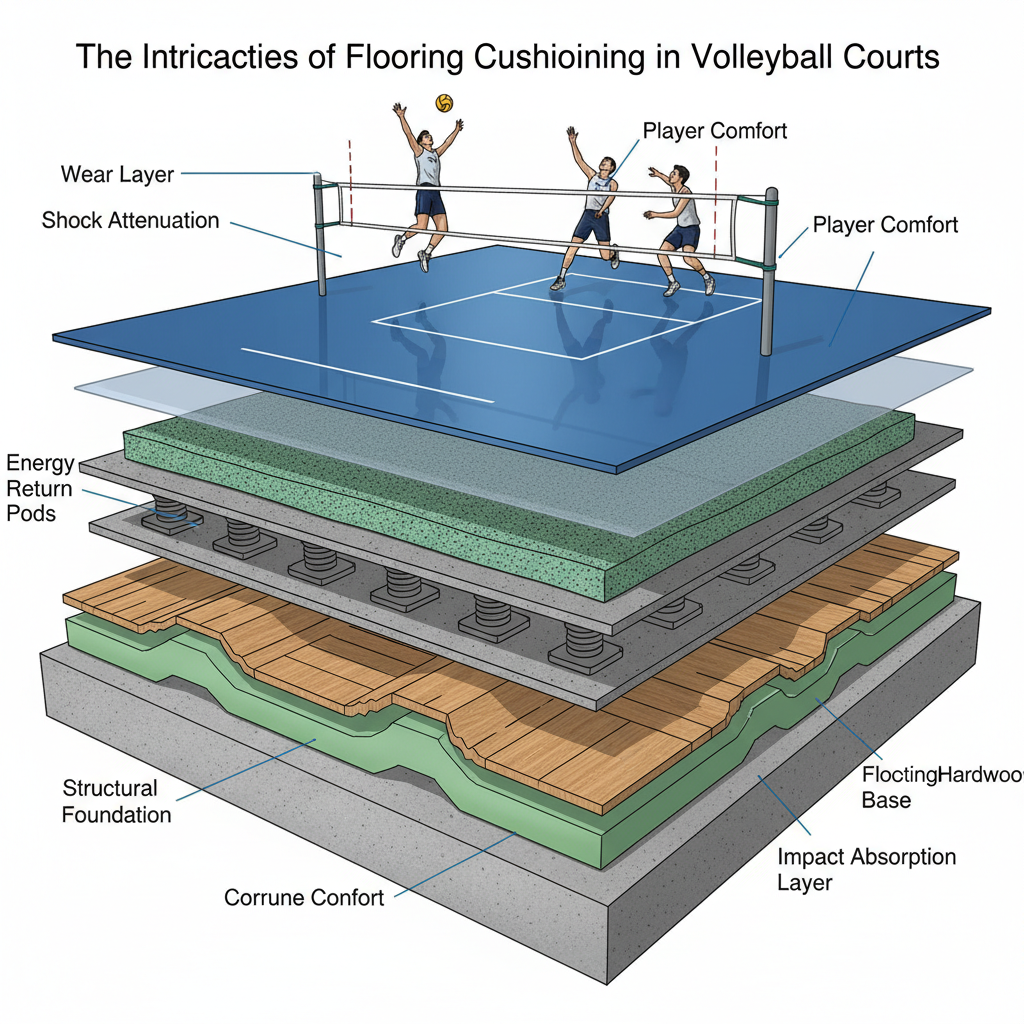
The cushioning system of a volleyball court floor determines how the surface responds to every jump, dive, and sprint. It’s the unseen layer that absorbs shock, reduces fatigue, and ensures the longevity of both the players and the court itself.
At Sports Facility India, we understand that the true strength of a volleyball court lies in its foundation — especially its floor cushioning system. Let’s dive deep into the science, engineering, and design considerations behind volleyball court cushioning and how it influences gameplay at every level.
🧠 What Is Flooring Cushioning in Volleyball Courts?
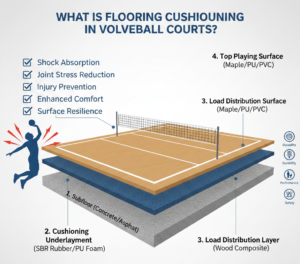
Floor cushioning refers to the layer or combination of layers beneath the visible court surface that provides shock absorption and flexibility. This layer acts as a buffer between the hard subfloor (usually concrete or asphalt) and the top playing surface (wood, PU, PVC, or rubber).
The cushioning’s primary goal is to:
-
Absorb the impact of landings during jumps and dives
-
Reduce stress on joints, ankles, and knees
-
Improve comfort during prolonged gameplay
-
Maintain surface resilience and consistency
Without proper cushioning, even the most premium flooring material can feel harsh, increasing the risk of injuries and player fatigue.
⚙️ Why Cushioning Matters in Volleyball Court Design
Volleyball is a fast-paced sport with repetitive jumping, running, and directional movements. Each landing exerts significant force on the players’ bodies. A well-engineered cushioning system helps distribute this force evenly, preventing overuse injuries and muscle fatigue.
Here’s why cushioning is so crucial:
1. Player Safety and Injury Prevention
Proper cushioning minimizes the risk of injuries such as shin splints, knee pain, or stress fractures. It allows players to train longer and harder without compromising joint health.
2. Shock Absorption Efficiency
When a player lands on the floor after a spike or block, the cushioning layer absorbs much of the kinetic energy, reducing the direct impact transmitted to the legs and spine.
3. Performance and Comfort
A cushioned floor provides a perfect blend of firmness and flexibility — ensuring excellent traction while maintaining comfort. It allows smooth movement transitions and quick recovery after each jump.
4. Longevity of Flooring System
Cushioned systems also extend the lifespan of the surface material by minimizing stress cracks and reducing wear on joints and adhesives.
🧩 Components of a Volleyball Court Cushioning System
A professional volleyball court is not just one layer of flooring — it’s a multi-layered system carefully engineered to balance safety, performance, and durability.
Let’s break down its major components:
1. Subfloor (Base Layer)
The base layer is typically made of concrete or asphalt and provides structural strength and stability. A smooth, level subfloor is essential for even cushioning and performance.
2. Cushioning Underlayment
This is the heart of the cushioning system. Made from materials like SBR rubber, PU foam, or engineered shock pads, this layer provides flexibility and resilience.
-
It absorbs impact forces.
-
Distributes weight evenly.
-
Maintains consistent bounce.
3. Load Distribution Layer (Optional)
In advanced systems, a wooden or composite load-distribution board is placed above the cushion to balance energy return and structural rigidity.
4. Top Playing Surface
This could be Maple wood, PU synthetic flooring, or PVC sports vinyl — each offering unique feel and grip levels.
🔍 Types of Cushioning Systems Used in Volleyball Flooring
Different court flooring systems incorporate cushioning in distinct ways depending on the material, purpose, and budget.
1. Sprung Wooden Flooring Systems
Sprung wood floors are designed with shock-absorbing substructures such as elastic pads or rubber blocks.
Features:
-
Excellent elasticity and vertical deformation
-
Ideal for professional and competitive play
-
Long lifespan and easy to refurbish
Best For: Indoor volleyball arenas, sports complexes, and stadiums.
2. PU (Polyurethane) Synthetic Flooring Systems
PU sports flooring combines a resilient cushioning base mat with multiple PU coating layers.
Benefits:
-
Seamless and uniform surface
-
Adjustable cushioning based on mat thickness
-
High comfort with durable performance
-
Meets EN 14904 standards for sports safety
Best For: Multi-purpose indoor halls and professional volleyball courts.
3. PVC Vinyl Flooring with Foam Backing
PVC or vinyl sports floors often come with an integrated foam underlayer that provides moderate cushioning.
Advantages:
-
Easy to install and maintain
-
Budget-friendly with good comfort levels
-
Available in multiple thickness options
Best For: Schools, training facilities, and community sports centers.
4. Rubberized Flooring Systems (EPDM or SBR)
Rubber-based flooring combines elastic cushioning and strong grip, making it ideal for training and recreational spaces.
Key Points:
-
Excellent shock absorption
-
Slip-resistant and durable
-
Eco-friendly and recyclable
Best For: Indoor practice zones and semi-professional setups.
🧮 How to Choose the Right Cushioning System
Selecting the correct cushioning system depends on your facility’s purpose, expected footfall, and budget. Here’s a quick guide:
| Type of Facility | Recommended Flooring | Cushioning Type | Key Benefit |
|---|---|---|---|
| Professional Stadium | Maple Wood | Elastic Pads / Sprung Base | Superior bounce & performance |
| Multi-Purpose Indoor Hall | PU Synthetic | Rubber Base Mat | Seamless, high durability |
| School / College Court | PVC Vinyl | Foam Backing | Cost-effective & easy to maintain |
| Training Center | Rubberized Floor | EPDM Cushion | High shock absorption & comfort |
🧠 The Science Behind Cushioning: Energy Return and Impact Absorption
The goal of an effective cushioning system is to balance energy absorption with energy return.
-
Too much softness can make the floor feel unstable, slowing down players.
-
Too much stiffness increases the risk of injuries and fatigue.
An ideal volleyball floor absorbs around 50–60% of impact energy and returns the rest, allowing for smooth jumps and quick rebounds.
High-quality systems are tested for parameters like:
-
Vertical deformation (how much the surface flexes under pressure)
-
Energy restitution (how much energy is returned to the player)
-
Force reduction percentage (the cushioning effectiveness)
🧰 Maintenance Tips for Cushioned Volleyball Floors
A well-maintained cushioning system retains its performance for years. Follow these best practices:
-
Keep the floor dry and clean — moisture weakens cushion integrity.
-
Avoid dragging heavy objects across the court.
-
Regularly inspect for soft spots or surface unevenness.
-
Recoat or reseal the top surface as recommended.
-
Maintain controlled indoor humidity and temperature.
With proper care, cushioned flooring can last 10–15 years or longer without losing its elasticity.
🏗️ How Sports Facility India Ensures Perfect Cushioning
At Sports Facility India, every volleyball court we build is designed with precision-engineered cushioning layers to achieve optimal comfort and playability.
Our process includes:
-
Site Evaluation: Analyzing subfloor level, humidity, and temperature.
-
Material Selection: Choosing appropriate cushion type and thickness.
-
Layer Installation: Applying the base mat and top surface with specialized adhesives.
-
Quality Testing: Checking force reduction, elasticity, and rebound values.
-
Finishing & Marking: Ensuring the court meets international FIVB standards.
We use certified materials sourced from global brands, ensuring your flooring delivers maximum safety, resilience, and performance.
🏅 Conclusion: Cushioning — The Unsung Hero of Volleyball Court Design
While most attention goes to the visible beauty of the court, the real performance lies beneath the surface. A well-designed cushioning system not only enhances play but also protects athletes, reduces fatigue, and ensures a longer flooring lifespan.
Whether it’s a professional indoor stadium or a community volleyball court, choosing the right cushioning system is the foundation of quality, comfort, and success.
At Sports Facility India, we believe every court should feel as good as it looks — safe, resilient, and built for champions.
📞 Ready to Build Your Dream Volleyball Court?
Contact Sports Facility India today for expert consultation and installation of world-class cushioned volleyball court flooring systems.
(FAQ) – The Intricacies of Flooring Cushioning in Volleyball Courts
1. What is flooring cushioning in volleyball courts?
Flooring cushioning refers to a layer of material beneath the playing surface that absorbs impact, reduces stress on players’ joints, and enhances safety. It is commonly incorporated in synthetic, wooden, or vinyl sports flooring systems.
2. Why is cushioning important in volleyball courts?
-
Reduces injury risk: Minimizes stress on knees, ankles, and lower back
-
Enhances performance: Provides better energy return and comfort for jumps and dives
-
Improves playability: Reduces fatigue and allows longer training sessions
-
Durability: Helps the flooring withstand repeated impact over time
3. What types of cushioning are used in volleyball courts?
-
Foam or polyurethane layers: Common in synthetic and modular courts
-
Sprung wooden subfloor systems: Often used in professional indoor arenas
-
Rubber underlays: Provides additional shock absorption and anti-slip properties
4. How thick should volleyball court cushioning be?
-
Thickness varies depending on the flooring system and level of play
-
Professional indoor courts: 8–15 mm cushioning beneath wooden or synthetic surface
-
Recreational courts: 5–10 mm cushioning is usually sufficient
-
Proper thickness balances shock absorption with ball bounce performance
5. Does cushioning affect ball behavior?
Yes. Well-engineered cushioning:
-
Maintains predictable ball bounce for fair play
-
Avoids excessive softness that could slow down the ball or cause uneven bounces
-
Ensures consistent court performance for competitive matches
6. Can all volleyball flooring systems have cushioning?
Most modern volleyball flooring systems can incorporate cushioning:
-
Wooden sports floors: Use sprung subfloor systems or foam underlays
-
Synthetic PVC or vinyl courts: Include built-in cushioned layers
-
Rubberized modular floors: Naturally offer shock absorption
7. How does cushioning affect player comfort and safety?
-
Reduces impact during jumps, dives, and sudden stops
-
Lowers fatigue and risk of overuse injuries
-
Provides a safer environment for high-intensity training or competitive play
8. Does flooring cushioning require maintenance?
-
Regular cleaning and inspection are essential
-
Check for compression, tears, or unevenness
-
Properly maintained cushioning can last 10–15 years depending on use and quality
9. How much does cushioning impact the cost of a volleyball court?
-
Cushioned flooring costs more than standard hard surfaces
-
Price depends on the type of cushioning, thickness, and flooring system
-
Long-term benefits like injury prevention and durability often justify the higher upfront cost
10. Why hire professionals for volleyball court cushioning installation?
-
Ensures correct thickness, uniformity, and shock absorption
-
Prevents issues like uneven surfaces or excessive softness
-
Guarantees compliance with FIVB (International Volleyball Federation) standards
-
Increases lifespan of the court and enhances player safety