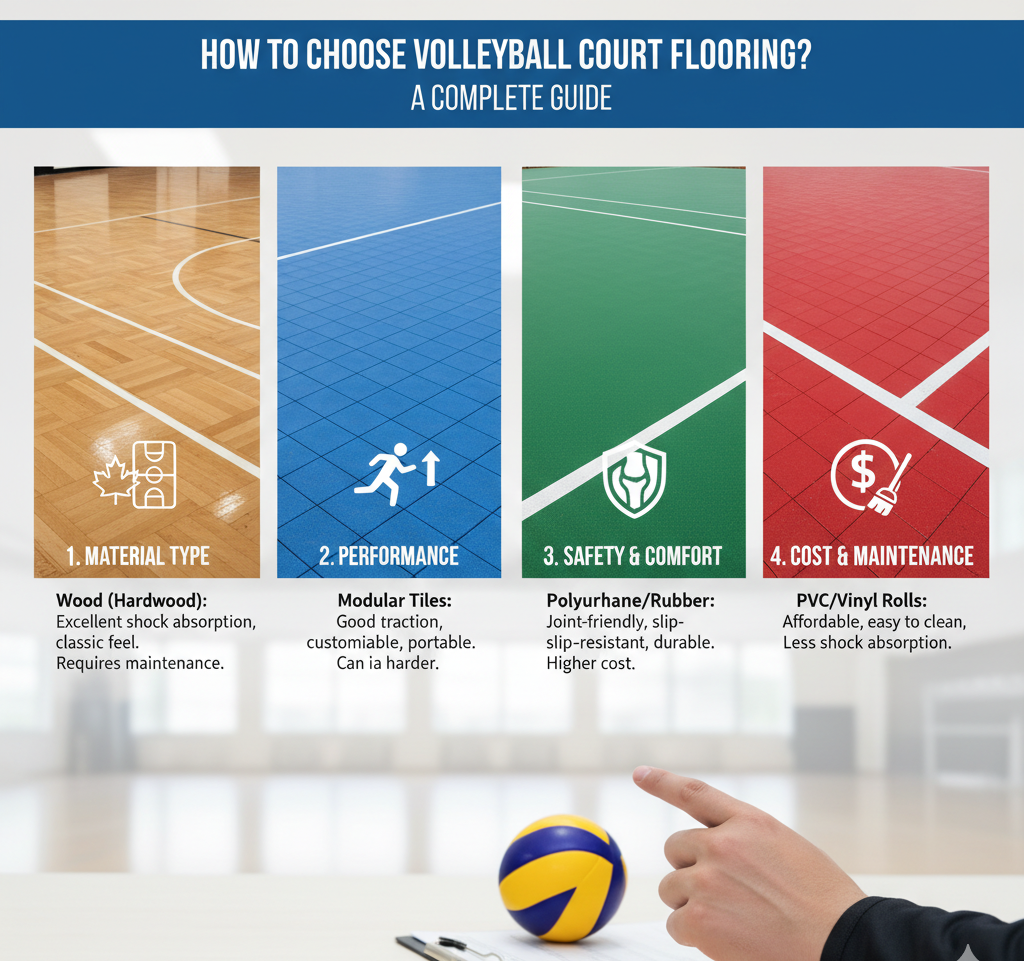
Choosing the right volleyball court flooring is one of the most important decisions when designing or constructing a sports facility. The flooring you select determines not only the performance and safety of players but also the overall durability and maintenance needs of your court.
Whether you’re planning an indoor volleyball arena for competitive play or an outdoor recreational court, understanding flooring materials, surface types, and essential design factors is key. This comprehensive guide will help you explore the best volleyball court flooring options and choose one that perfectly suits your project.
1. Why Volleyball Court Flooring Matters
Volleyball is a fast-paced, high-intensity game that demands speed, agility, and precision. Players jump, dive, and make rapid movements throughout the match — meaning the flooring must provide the right balance of shock absorption, grip, and bounce consistency.
The ideal volleyball court surface should:
-
Prevent injuries through adequate cushioning
-
Support quick movements and sudden stops
-
Offer reliable traction and slip resistance
-
Maintain a consistent ball rebound
-
Withstand frequent use and easy maintenance
In short, the right floor enhances player comfort, performance, and safety, while also ensuring a long-lasting court that stays in top condition.
2. Types of Volleyball Court Flooring
Let’s look at the different types of flooring available for both indoor and outdoor volleyball courts.
A. Wooden Sports Flooring
Overview:
Wooden floors are the traditional and professional choice for indoor volleyball courts, especially in international tournaments and gymnasiums. They are typically made from maple or teak wood, known for their excellent elasticity and smooth finish.
Features & Benefits:
-
Provides perfect ball bounce and uniform performance
-
Offers natural shock absorption and joint protection
-
Delivers a premium aesthetic and classic look
-
Can be refinished multiple times to extend lifespan
Ideal For:
Indoor stadiums, professional academies, and multi-sport arenas.
Maintenance Tip:
Regular polishing and cleaning are essential to preserve grip and prevent surface damage.
B. Synthetic PU (Polyurethane) Flooring
Overview:
PU flooring has emerged as one of the most advanced volleyball flooring solutions, offering excellent resilience, comfort, and durability. It’s a seamless elastic surface that provides both grip and shock absorption, making it perfect for high-performance environments.
Features & Benefits:
-
Non-slip and seamless finish
-
Excellent cushioning to reduce impact on joints
-
Resistant to scratches, moisture, and wear
-
Easy to clean and maintain
-
Long-lasting performance with minimal upkeep
Ideal For:
Indoor volleyball courts, schools, sports complexes, and multipurpose halls.
C. PVC Vinyl Flooring
Overview:
Vinyl flooring is another popular choice for indoor volleyball courts. It consists of multiple layers of synthetic materials, providing excellent flexibility, anti-slip properties, and durability.
Features & Benefits:
-
Cost-effective alternative to wood
-
Soft and comfortable underfoot
-
Good shock absorption and traction
-
Available in various colors and textures
-
Easy to install and maintain
Ideal For:
Indoor school gyms, training centers, and recreational facilities.
D. Modular PP Tiles (Polypropylene)
Overview:
Modular tile flooring is ideal for outdoor volleyball courts due to its durability and weather resistance. These interlocking tiles are made from high-quality polypropylene plastic, designed to endure sun, rain, and temperature changes.
Features & Benefits:
-
UV-resistant and all-weather durable
-
Quick and easy installation
-
Excellent drainage system prevents water stagnation
-
Low maintenance and portable design
-
Can be customized in color and markings
Ideal For:
Outdoor sports courts, community centers, and temporary event setups.
E. Acrylic Synthetic Flooring
Overview:
Acrylic flooring is a versatile, cost-effective, and low-maintenance option for outdoor volleyball courts. It provides a non-slip, uniform surface with vibrant color options and long-lasting finish.
Features & Benefits:
-
Weatherproof and UV-resistant
-
Offers consistent ball bounce and grip
-
Economical and easy to maintain
-
Available in multiple colors and thickness levels
Ideal For:
Outdoor sports complexes, schools, and recreation zones.
3. Factors to Consider When Choosing Volleyball Court Flooring
Selecting the right volleyball flooring involves balancing performance, safety, and practicality. Here are the key factors to consider before installation:
| Factor | Description | Recommended Flooring |
|---|---|---|
| Indoor or Outdoor Use | Indoor courts need cushioned and smooth flooring, while outdoor courts need weather resistance. | Indoor: PU or Wood / Outdoor: Acrylic or Modular Tiles |
| Budget | The total cost depends on material type, preparation, and area size. | Vinyl or Acrylic for economical options |
| Shock Absorption | Reduces stress on players’ joints and prevents injuries. | PU or Wooden Flooring |
| Durability | High-traffic courts require long-lasting, low-maintenance surfaces. | Modular Tiles or PU |
| Maintenance | Consider cleaning, resurfacing, and recoating needs. | Vinyl or Acrylic Flooring |
| Aesthetics & Branding | Choose colors and markings that match your institution or club theme. | Acrylic or PU with custom design |
4. Indoor vs Outdoor Volleyball Flooring
Understanding the distinction between indoor and outdoor surfaces will help you choose more effectively:
Indoor Volleyball Flooring
-
Prioritize shock absorption, smoothness, and traction.
-
Recommended materials: Wooden, PU, or Vinyl flooring.
-
Controlled environment, so humidity and sunlight aren’t major issues.
Outdoor Volleyball Flooring
-
Must be UV-stable, non-slip, and weather-resistant.
-
Recommended materials: Acrylic or Modular Tile flooring.
-
Should allow for drainage and easy cleaning after rain or dust exposure.
5. Installation and Maintenance Tips
Proper installation ensures long-term performance and safety. Always hire experienced sports flooring contractors who specialize in volleyball court construction.
Key Installation Points:
-
Ensure a leveled and well-prepared sub-base.
-
Choose appropriate shock pad or cushion layer for indoor surfaces.
-
Maintain correct court dimensions: 18m x 9m (standard FIVB size).
-
Mark court lines accurately with non-fading paint.
Maintenance Guidelines:
-
Clean the surface regularly using mild detergents.
-
Avoid using harsh chemicals or abrasive tools.
-
Inspect for cracks, gaps, or worn-out patches periodically.
-
Recoat or re-polish every few years depending on material type.
6. Expert Recommendations
If you’re unsure which flooring fits your project, here’s a quick guide:
-
Professional Indoor Volleyball Courts: Choose PU or Maple Wooden Flooring for premium performance.
-
School or College Courts: Opt for Vinyl Flooring for durability and affordability.
-
Community or Outdoor Facilities: Go for Acrylic Flooring or Modular PP Tiles for longevity and easy upkeep.
-
Multi-Sport Arenas: PU Flooring offers versatility for multiple sports like badminton, basketball, and volleyball.
7. Conclusion
Selecting the right volleyball court flooring is about combining safety, performance, and durability. Each material—from traditional wooden floors to modern PU and modular surfaces—has its advantages depending on your environment, usage, and budget.
For indoor courts, PU or maple wood flooring remains the gold standard, offering superior playability and comfort. For outdoor settings, acrylic or modular tile systems provide weather-resistant and cost-effective solutions.