Basketball is a sport that thrives on precision, speed, and agility—and the right flooring can make all the difference between a good game and a great one. The surface of a basketball court directly influences performance, safety, and the longevity of the court itself. Whether it’s for a professional arena, school gym, sports club, or community playground, selecting the best basketball court flooring requires understanding the different materials, their properties, and their suitability for specific environments.
In this comprehensive guide, we’ll explore the top flooring options for basketball courts, their benefits, and how to choose the perfect one for your needs.
Importance of Basketball Court Flooring
The flooring of a basketball court is more than just a surface—it’s a foundation for athletic performance. A well-designed court improves playability, reduces injury risk, and ensures consistent ball bounce and traction.
Here’s why choosing the right basketball flooring is essential:
-
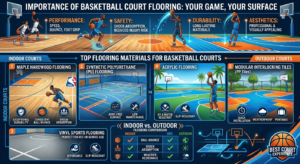
Performance: The right surface enhances speed, bounce, and foot grip, allowing players to move efficiently.
-
Safety: Shock-absorbing floors reduce the impact on joints and prevent slipping or twisting injuries.
-
Durability: Quality flooring materials last longer and withstand heavy usage without deteriorating.
-
Aesthetics: A polished and vibrant surface creates a professional and visually appealing playing environment.
Factors to Consider Before Choosing Basketball Flooring
Before deciding which flooring to install, several key aspects must be evaluated:
-
Indoor or Outdoor Use:
-
Indoor courts require smooth, high-performance surfaces such as maple wood or polyurethane.
-
Outdoor courts need weather-resistant materials like acrylic or modular interlocking tiles.
-
-
Budget:
Each material varies in cost—from high-end maple wood to more economical synthetic options. Consider both installation and long-term maintenance costs. -
Climate Conditions:
Wood reacts to humidity and temperature, while synthetic surfaces are more climate-tolerant. -
Usage Level:
Professional and high-traffic courts require durable, impact-resistant materials. Recreational or school courts may use flexible synthetic flooring. -
Maintenance Requirements:
Some surfaces demand regular refinishing or recoating, while others only need basic cleaning.
Top Flooring Materials for Basketball Courts
Let’s explore the leading basketball flooring materials and their benefits.
1. Maple Hardwood Flooring
Best for: Professional indoor basketball courts
Overview:
Maple wood is the traditional and most prestigious choice for basketball court flooring. It’s the standard material used in NBA and international sports arenas.
Features & Benefits:
-
Exceptional Durability: Withstands intense gameplay and heavy foot traffic.
-
Consistent Ball Bounce: Provides the ideal level of rebound for precision play.
-
Superior Aesthetics: Offers a premium, polished appearance.
-
Shock Absorption: Reduces player fatigue and impact on joints.
-
Longevity: Can last over 25 years with proper maintenance.
Limitations:
-
Higher installation and maintenance cost.
-
Sensitive to humidity and temperature changes.
Why Choose Maple Wood:
If your goal is to build a professional indoor basketball court with elite-level performance, maple hardwood is unmatched in quality and feel.
2. Synthetic Polyurethane (PU) Flooring
Best for: Indoor multipurpose sports halls and training courts
Overview:
PU flooring is a seamless, synthetic surface that combines flexibility and durability. It’s ideal for multi-sport facilities and institutions.
Features & Benefits:
-
Smooth and Joint-Free: Prevents dust accumulation and ensures even ball response.
-
Shock Absorbing: Provides a comfortable, injury-free play experience.
-
Low Maintenance: Requires simple cleaning without polishing.
-
Customizable: Available in various colors and markings.
-
Eco-Friendly Options: Modern PU floors use sustainable materials.
Limitations:
-
Slightly softer feel than wood, which affects ball bounce marginally.
Why Choose PU Flooring:
PU flooring is a cost-effective, long-lasting alternative for indoor courts that require performance and versatility.
3. Vinyl Sports Flooring
Best for: Indoor recreational or school courts
Overview:
Vinyl flooring is a layered synthetic material that provides both comfort and resilience. It’s a popular choice for budget-friendly indoor basketball courts.
Features & Benefits:
-
Affordable: Lower installation cost than wood.
-
Slip-Resistant: Provides excellent grip for players.
-
Easy to Maintain: Simple cleaning and minimal repairs.
-
Multipurpose Use: Suitable for basketball, volleyball, and other indoor sports.
Limitations:
-
Not as durable as hardwood for professional use.
-
Can fade under sunlight if used outdoors.
Why Choose Vinyl Flooring:
Vinyl is perfect for schools or community centers that want durable yet economical flooring.
4. Acrylic Flooring
Best for: Outdoor basketball courts
Overview:
Acrylic flooring is applied over a concrete or asphalt base, forming a smooth, weatherproof surface that’s ideal for outdoor courts.
Features & Benefits:
-
UV and Water Resistant: Perfect for outdoor environments.
-
Slip-Resistant: Ensures safe play even in humid or rainy conditions.
-
Colorful & Customizable: Available in vibrant color combinations.
-
Cost-Effective: Offers long life with low maintenance.
Limitations:
-
Harder surface compared to indoor wood or PU.
-
Slightly reduced cushioning and bounce.
Why Choose Acrylic Flooring:
For outdoor use, acrylic flooring is the best combination of performance, durability, and visual appeal.
5. Modular Interlocking Tiles (PP Tiles)
Best for: Outdoor or temporary basketball setups
Overview:
Made from polypropylene, modular interlocking tiles are a versatile and easy-to-install flooring system.
Features & Benefits:
-
Quick Installation: No adhesives required; tiles snap together easily.
-
Weatherproof: Resistant to heat, rain, and UV radiation.
-
Portable: Can be relocated or expanded.
-
Shock Absorbing: Minimizes joint stress during play.
-
Customizable Colors: Allows team or brand color integration.
Limitations:
-
Slightly harder feel compared to wooden or PU surfaces.
-
May produce sound during play.
Why Choose Modular Tiles:
Perfect for community parks or private properties looking for durable, flexible, and low-maintenance outdoor flooring.
Indoor vs. Outdoor Basketball Flooring Comparison
| Feature | Indoor (Maple / PU / Vinyl) | Outdoor (Acrylic / PP Tiles) |
|---|---|---|
| Ball Bounce | Excellent | Moderate to Good |
| Shock Absorption | High | Medium |
| Weather Resistance | Low | High |
| Maintenance | Moderate | Low |
| Installation Cost | Higher | Moderate |
| Durability | Long-lasting (with care) | Very High |
| Best For | Professional and School Courts | Parks, Residential, Clubs |
Maintenance Tips for Basketball Court Flooring
-
Clean Regularly: Remove dust, dirt, and moisture to prevent surface damage.
-
Inspect Frequently: Address cracks or scuffs early to avoid spreading.
-
Avoid Water Accumulation: Especially crucial for wood and acrylic courts.
-
Use Non-Marking Shoes: Prevent scuffs and improve traction.
-
Resurface When Needed: Recoating and polishing extend the floor’s lifespan.
Choosing the Right Flooring Partner
Selecting the right material is only half the job—the quality of installation determines performance and durability. Always work with an experienced sports flooring contractor who provides:
-
Certified and high-grade materials.
-
Expert installation with proper sub-base preparation.
-
Line marking as per FIBA or NBA standards.
-
Long-term maintenance and support.
Final Thoughts
There’s no universal “best” flooring for every basketball court. The choice depends on where the court is located and how it will be used:
-
For indoor professional play: Maple hardwood remains the gold standard.
-
For indoor multi-purpose or training use: PU or vinyl flooring offers flexibility and comfort.
-
For outdoor use: Acrylic or modular tile surfaces provide durability and weather resistance.
By balancing performance, safety, cost, and longevity, you can create a basketball court that delivers the perfect playing experience—game after game.
FAQ – Best Basketball Court Flooring 🏀
1. What is the best flooring for an indoor basketball court?
Maple hardwood flooring is the best option for indoor courts due to its excellent ball bounce, traction, and professional-level performance.
2. What is the best flooring for an outdoor basketball court?
Outdoor courts perform best with acrylic synthetic flooring, modular interlocking tiles, or rubber/EPDM surfaces. These options are weather-resistant, durable, and low-maintenance.
3. Can I use hardwood for an outdoor basketball court?
No. Hardwood is not suitable for outdoor use because it can warp or crack when exposed to moisture, sun, and temperature changes.
4. What is acrylic basketball court flooring?
Acrylic flooring is a multi-layer synthetic coating applied over concrete or asphalt. It is UV-stable, slip-resistant, and weatherproof, making it ideal for outdoor courts.
5. Are modular interlocking tiles good for basketball courts?
Yes. Modular tiles are easy to install, durable, and provide excellent drainage and traction, making them ideal for recreational outdoor courts.
6. Is rubber or EPDM flooring suitable for basketball?
Yes. Rubber/EPDM surfaces absorb shock, protect joints, and provide a safe playing surface, though ball bounce may be slightly softer than hardwood or acrylic.
7. How much does basketball court flooring cost?
-
Hardwood indoor courts: ₹450–₹900 per sq. ft.
-
Outdoor acrylic surfacing: ₹300–₹600 per sq. ft.
-
Modular tiles: ₹250–₹500 per sq. ft.
-
Rubber/EPDM: ₹300–₹600 per sq. ft.