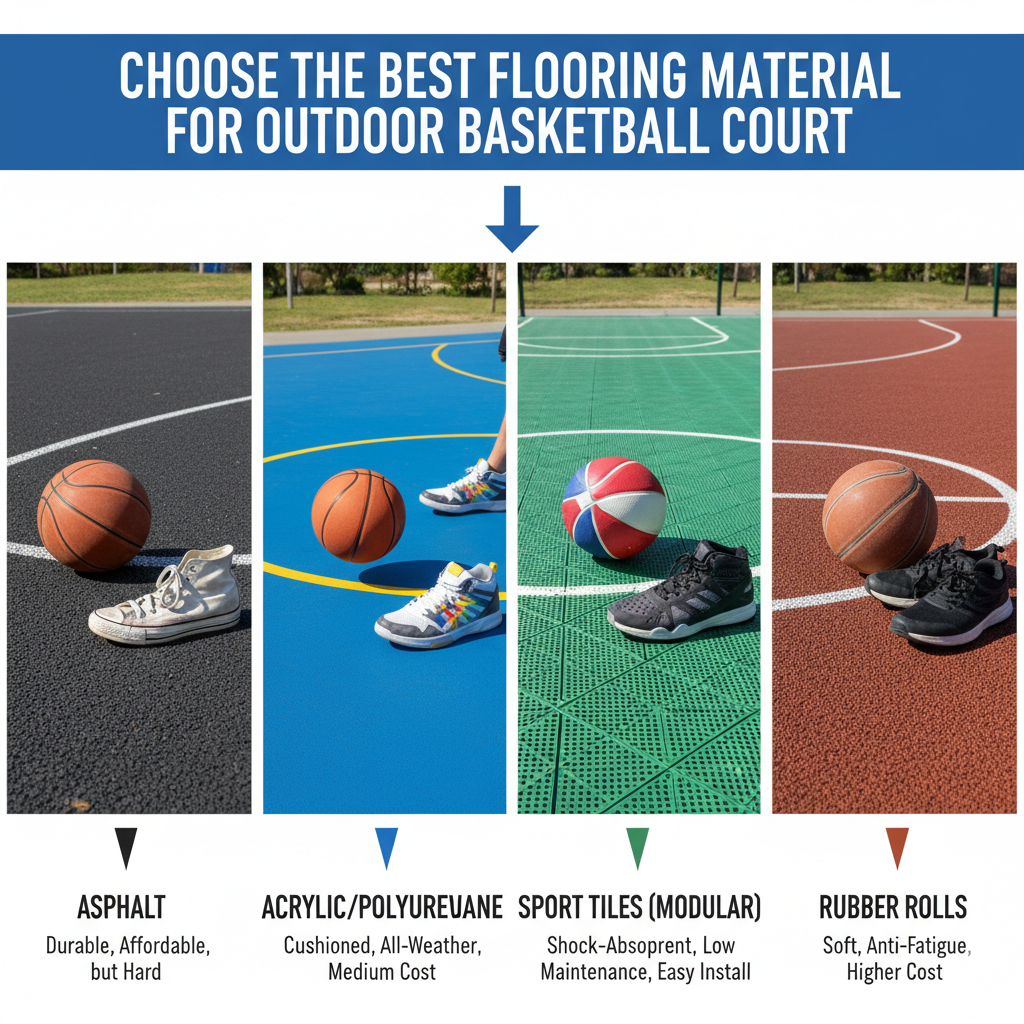
Building an outdoor basketball court is a powerful investment in fitness, recreation, and community engagement. Whether the court is for a school, residential society, public park, or sports academy, one decision plays a defining role in its success—the flooring material.
To choose the best flooring material for an outdoor basketball court, you must consider durability, player safety, weather resistance, maintenance, and long-term performance. Unlike indoor courts, outdoor courts are constantly exposed to sunlight, rain, dust, and temperature fluctuations. The wrong flooring choice can lead to slippery surfaces, cracks, fading, or frequent repairs.
This complete guide will help you understand the best flooring options available, compare their performance, and make an informed decision based on your budget, usage, and climate.
Why Flooring Choice Is Critical for Outdoor Basketball Courts
When you choose the best flooring material for an outdoor basketball court, you are not just selecting a surface—you are defining how the game will be played.
A high-quality outdoor basketball surface should:
-
Provide excellent grip and traction
-
Offer consistent ball bounce
-
Be safe for fast movements and sudden stops
-
Resist weather damage and UV exposure
-
Require minimal maintenance
-
Maintain color and texture over time
The right flooring enhances player confidence, reduces injuries, and ensures the court remains usable for years.
Key Factors to Consider Before Choosing Outdoor Basketball Flooring
Before finalizing a flooring material, it is important to evaluate the following aspects:
1. Climate and Weather Conditions
Regions with strong sunlight, heavy rain, or humidity require flooring that is UV-stable, waterproof, and crack-resistant.
2. Frequency of Use
Courts used daily for training or tournaments need high-durability flooring, while recreational courts can work with more economical options.
3. Budget and Lifecycle Cost
Some flooring materials have a lower upfront cost but higher maintenance, while others offer long-term savings despite higher initial investment.
4. Base Surface Quality
A solid concrete or asphalt base is essential for smooth installation, drainage, and long-term performance.
5. Player Safety and Comfort
Shock absorption and slip resistance are crucial to reduce stress on joints and prevent injuries.
Best Flooring Options for Outdoor Basketball Courts
To help you choose the best flooring material for an outdoor basketball court, here are the most widely used and reliable options.
1. Acrylic Flooring – The Most Popular Outdoor Choice
Overview
Acrylic flooring is one of the most commonly used surfaces for outdoor basketball courts. It is created by applying multiple layers of acrylic coating over a concrete or asphalt base.
Advantages
-
Excellent weather resistance
-
UV-stable colors that do not fade easily
-
Anti-slip texture for safe play
-
Consistent ball bounce
-
Easy cleaning and low maintenance
-
Wide range of color combinations
Ideal For
Schools, housing societies, public parks, and club courts.
Durability
8–10 years with periodic resurfacing.
Why Acrylic Is a Top Choice
If you want to choose the best flooring material for an outdoor basketball court that balances cost, performance, and durability, acrylic flooring is often the smartest option—especially in Indian climatic conditions.
2. Polyurethane (PU) Flooring – Professional Performance Surface
Overview
PU flooring is a seamless synthetic surface known for its cushioning and uniform play characteristics. Outdoor-grade PU systems are designed to withstand weather exposure.
Advantages
-
Superior shock absorption
-
Seamless, joint-free surface
-
Smooth and consistent gameplay
-
High durability and crack resistance
-
Customizable thickness and colors
Ideal For
Professional practice courts, multi-sport outdoor complexes, and high-use facilities.
Durability
10–15 years with proper care.
Why Choose PU Flooring
If player comfort and professional-level performance are priorities, PU flooring is an excellent choice despite a slightly higher initial cost.
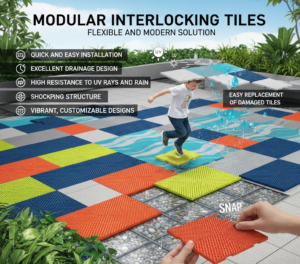
3. Modular Interlocking Tiles – Flexible and Modern Solution
Overview
Modular polypropylene (PP) tiles are interlocking sports tiles installed over a solid base. They are increasingly popular for outdoor basketball courts.
Advantages
-
Quick and easy installation
-
Excellent drainage design
-
High resistance to UV rays and rain
-
Shock-absorbing structure
-
Easy replacement of damaged tiles
-
Vibrant, customizable designs
Ideal For
Community courts, schools, rooftop courts, event setups, and temporary installations.
Durability
10–15 years.
Why Choose Modular Tiles
They are ideal when flexibility, portability, and low maintenance are important. This option is perfect for locations that may need future relocation or expansion.
4. EPDM Rubber Flooring – Safety-Focused Surface
Overview
EPDM rubber flooring is a cushioned, elastic surface mainly used for recreational and children’s sports areas.
Advantages
-
Excellent shock absorption
-
Slip-resistant and joint-friendly
-
Weatherproof and UV-resistant
-
Soft surface reduces injury risk
Ideal For
Children’s play courts, residential complexes, and multi-use recreational areas.
Durability
8–10 years.
Why Choose EPDM
While not ideal for competitive basketball, EPDM is perfect for safe, recreational play and mixed-use environments.
5. Concrete Flooring – Basic Budget Option
Overview
Concrete is the most basic and affordable outdoor basketball court surface. However, it performs best when combined with an acrylic or synthetic coating.
Advantages
-
Low initial cost
-
Long structural lifespan
-
Easy availability
Disadvantages
-
Very hard on joints
-
Slippery when wet
-
Poor grip and comfort without coating
Ideal For
Budget-restricted projects or temporary courts.
Recommendation
Concrete alone is not ideal for basketball. Adding an acrylic coating significantly improves performance and safety.
Comparison Table: Outdoor Basketball Flooring Materials
| Flooring Type | Durability | Shock Absorption | Weather Resistance | Maintenance | Best Use |
|---|---|---|---|---|---|
| Acrylic | High | Moderate | Excellent | Low | Permanent outdoor courts |
| PU Flooring | Very High | Excellent | Good | Moderate | Professional & multi-sport |
| Modular Tiles | Very High | Good | Excellent | Very Low | Portable & community courts |
| EPDM Rubber | Moderate | Excellent | Very Good | Low | Recreational / kids courts |
| Concrete | High | Low | Moderate | Moderate | Budget projects |
Maintenance Tips for Outdoor Basketball Flooring
To protect your investment after you choose the best flooring material for an outdoor basketball court, regular maintenance is essential.
-
Sweep and clean the surface regularly
-
Ensure proper drainage to avoid water stagnation
-
Repair cracks or damage immediately
-
Recoat acrylic or PU surfaces every 5–7 years
-
Encourage use of non-marking sports shoes
Good maintenance extends lifespan and preserves play quality.
Why Professional Installation Is Essential
Even the best flooring material can fail if installed incorrectly. Professional installation ensures:
-
Proper leveling of the base
-
Correct material thickness and bonding
-
Effective drainage planning
-
Accurate line marking and finishing
A professional installer also helps you choose the best flooring material for an outdoor basketball court based on climate, usage, and budget.
Final Thoughts
Choosing the right surface is the foundation of a successful outdoor basketball court. When you choose the best flooring material for an outdoor basketball court, you ensure safety, durability, performance, and long-term value.
-
Choose Acrylic Flooring for affordability and all-weather durability
-
Choose PU Flooring for professional performance and comfort
-
Choose Modular Tiles for flexibility and low maintenance
-
Choose EPDM Rubber for recreational safety
-
Use Concrete only with protective coatings
With the right flooring choice and professional execution, your outdoor basketball court will deliver years of reliable, enjoyable gameplay for players of all ages.