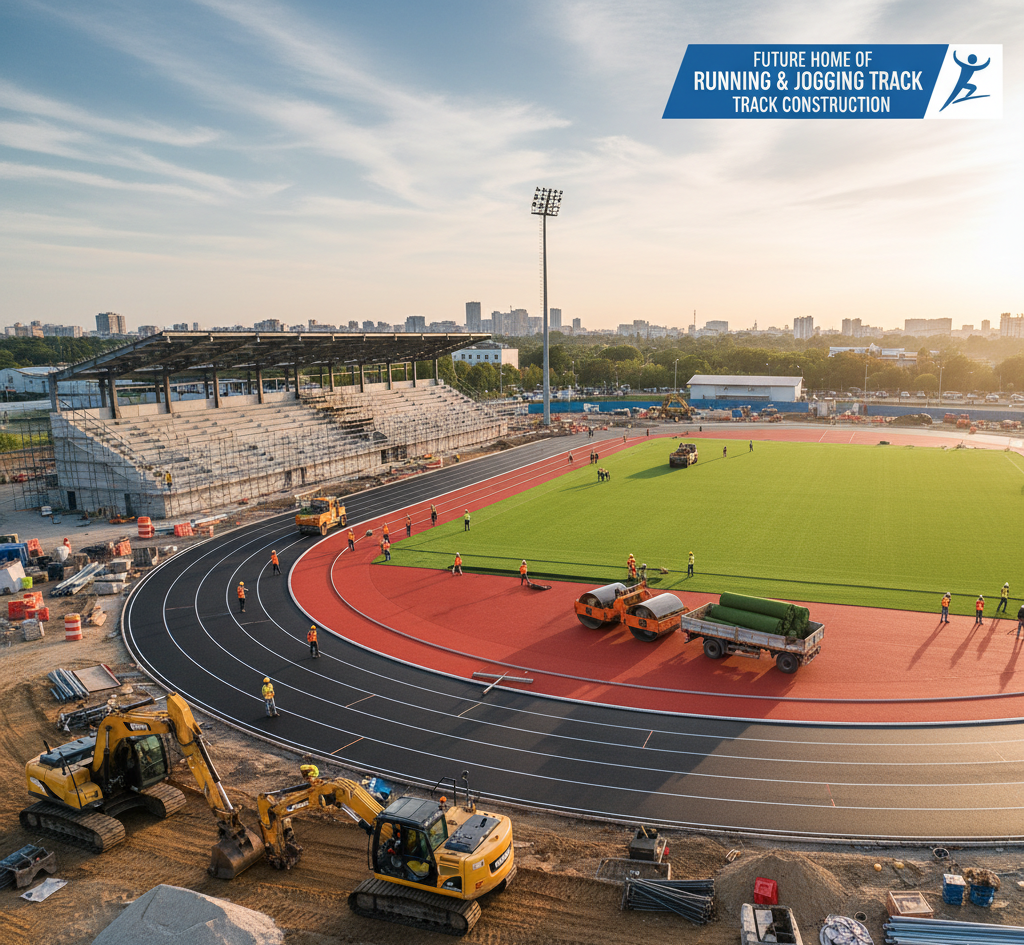
The foundation of every great athlete and fitness enthusiast lies in the surface beneath their feet. Whether it’s a high-performance running track for competition or a recreational jogging track for daily exercise, precision-built infrastructure ensures safety, comfort, and durability.
Modern sports infrastructure blends engineering expertise, premium materials, and sustainable design to deliver tracks that meet global standards and enhance every step you take.
🧱 Understanding the Difference: Running Track vs Jogging Track
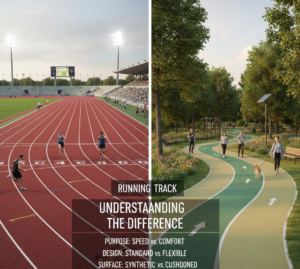
Before delving into construction details, it’s essential to understand how these two types of tracks differ in purpose and design.
| Feature | Running Track | Jogging Track |
|---|---|---|
| Purpose | Professional athletic training and competitions | Recreational fitness and wellness |
| Design Standard | Built as per World Athletics (formerly IAAF) regulations | Flexible design, customized layouts |
| Size | Standard 400 meters (oval) | 100m to 400m, depending on space |
| Surface Type | Polyurethane, acrylic, or EPDM synthetic layers | Rubber, clay, or cushioned acrylic |
| Markings | Lane lines, start/finish lines, measurement accuracy | Simple direction or lane markings |
| Usage | Athletes, schools, and sports complexes | Parks, residential societies, schools |
| Cost | Higher (precision and specification required) | Moderate to economical |
In essence, running tracks emphasize speed and performance, while jogging tracks focus on comfort and endurance.
⚙️ Construction Process of Running & Jogging Tracks
Though their purposes differ, both tracks share similar construction stages, adapted for the intended use and site conditions.
1️⃣ Site Survey and Design Layout
The process starts with a topographical survey to analyze:
-
Site dimensions
-
Drainage slope and soil strength
-
Accessibility and surrounding facilities
Designers then develop:
-
Layout plans (straight, oval, or customized shape)
-
Lane width, curve radius, and track gradient
-
Entry/exit points and peripheral amenities
For running tracks, precise measurements (400m circumference, 1.22m lane width) must align with World Athletics standards.
2️⃣ Excavation and Subgrade Preparation
The topsoil and organic materials are removed to achieve the desired depth.
The subgrade is then:
-
Compacted and leveled using rollers
-
Stabilized with lime or cement if required
-
Sloped (1–2%) to ensure proper drainage
This layer forms the base foundation of both jogging and running tracks.
3️⃣ Foundation and Base Layer
The base layer provides structural strength, uniformity, and durability.
A typical structure includes:
| Layer | Material | Function |
|---|---|---|
| Sub-base | Crushed stone / granular material | Drainage and load distribution |
| Base Course | Wet mix macadam or concrete | Structural stability |
| Wearing Course | Asphalt, PU, or Acrylic | Smooth finish for running surface |
The foundation must be compacted to achieve high load-bearing capacity and prevent surface deformation.
4️⃣ Drainage Infrastructure
Efficient drainage design is crucial for long-term surface performance.
It includes:
-
Perimeter drains and catch basins
-
PVC or concrete piping systems
-
Cross slopes that direct water away from the track
For professional running tracks, precise laser leveling ensures no water stagnation, protecting the surface from cracks or soft spots.
5️⃣ Surfacing and Layer Application
The surface layer determines comfort, speed, and safety. Depending on the type of track, the materials vary:
🟠 For Running Tracks:
-
Polyurethane (PU) Synthetic Surface: Used in Olympic-standard facilities. Offers elasticity, spike resistance, and uniform traction.
-
Acrylic Coating Systems: UV-resistant, durable, and suitable for multi-sport usage.
-
EPDM Rubber Granules: Shock-absorbent and slip-resistant.
🟢 For Jogging Tracks:
-
EPDM or Rubber Tiles: Ideal for soft impact and barefoot comfort.
-
Natural Clay or Red Soil: Traditional, cost-effective option.
-
Acrylic Coating or PU Hybrid Systems: Low-maintenance and visually appealing.
Each layer is applied with precision, ensuring perfect bonding and a consistent surface texture.
6️⃣ Line Marking and Finishing Details
Once the surface cures, line marking is applied using PU or thermoplastic paint:
-
Running tracks: lane lines, start/finish marks, staggered start curves.
-
Jogging tracks: simple lanes, directional arrows, or branding graphics.
The paint used is UV-resistant and ensures long-lasting visibility.
7️⃣ Lighting, Landscaping & Accessories
For comfort, usability, and aesthetics, several external features enhance the track infrastructure:
-
LED or solar-powered lighting for evening workouts.
-
Perimeter fencing for security.
-
Drainage outlets and curbs for safety.
-
Landscaped areas with greenery, benches, and rest zones.
-
Signage boards and fitness stations for public motivation.
These additions turn the track into a complete fitness ecosystem.
🧪 Quality Control & Standards
Throughout construction, strict quality assurance ensures performance longevity:
-
Soil compaction tests
-
CBR (California Bearing Ratio) for base strength
-
Level and slope checks
-
Water drainage testing
-
Surface friction and hardness analysis
Professional contractors follow World Athletics, IS, and ASTM standards, ensuring the track is both technically accurate and athlete-safe.
🏗️ Maintenance of Running & Jogging Tracks
Proper maintenance increases the track’s life and usability:
-
Regular cleaning to remove debris and dirt.
-
Inspection for cracks, peeling, or fading.
-
Surface recoating every 5–7 years (for PU or acrylic systems).
-
Drainage and lighting checks after monsoon seasons.
Preventive maintenance ensures consistent performance and a longer lifespan.
💰 Approximate Cost (India)
| Type of Track | Size | Estimated Cost (INR) |
|---|---|---|
| Jogging Track (100–200m) | Residential / Park | ₹1.5 – ₹4 lakh |
| Standard Running Track (400m) | School / Stadium | ₹7 – ₹15 lakh |
| Synthetic Athletic Track (8 lanes) | Professional Facility | ₹20 – ₹40 lakh |
Costs vary depending on surface type, lighting, drainage, and location.
🌿 Sustainability in Track Construction
Modern track systems prioritize eco-friendly and energy-efficient solutions:
-
Use of recycled rubber granules and low-VOC adhesives.
-
Permeable layers to support rainwater harvesting.
-
Solar lighting systems to reduce energy consumption.
-
Native landscaping for low-water maintenance.
Sustainable construction not only protects the environment but also reduces long-term operational costs.
🏆 Benefits of Professionally Built Tracks
-
Performance Optimization: Perfect grip and bounce for athletes.
-
Safety Assurance: Shock-absorbent and non-slip surfaces reduce injuries.
-
Low Maintenance: Durable and weather-resistant materials.
-
Aesthetic Value: Visually appealing layouts with modern designs.
-
Versatility: Suitable for walking, jogging, and multi-sport use.
-
Community Impact: Encourages fitness culture and active lifestyles.
⚠️ Common Mistakes to Avoid
❌ Poor drainage design → leads to puddles and surface damage.
❌ Low-quality surfacing → cracks and fading within months.
❌ Ignoring slope gradients → uneven running surface.
❌ No soil testing → weak foundation stability.
❌ Lack of maintenance plan → reduced lifespan.
✅ Always partner with experienced sports infrastructure experts who follow technical standards and use certified materials.
🏁 Conclusion
Both running tracks and jogging tracks play vital roles in promoting health, fitness, and sports excellence. While running tracks focus on competitive precision and speed, jogging tracks prioritize comfort and daily use.
Running Track and Jogging Track Construction – FAQ
❓ 1. What is the difference between a running track and a jogging track?
A running track is typically designed for competitive athletics, training, and sprinting events, often built to standard dimensions (like 200m or 400m tracks).
A jogging track is usually constructed for recreational use in parks, schools, residential communities, and fitness zones.
Running tracks focus on performance and standards, while jogging tracks focus on comfort and durability.
❓ 2. What materials are used in running and jogging track construction?
Common materials include:
-
PU (Polyurethane) systems – Professional athletic tracks
-
EPDM rubber flooring – Colorful, weather-resistant surfaces
-
SBR rubber base layer – Shock-absorbing foundation
-
Acrylic surfaces – Budget-friendly options
-
Asphalt or concrete base – Structural foundation
Material selection depends on budget, usage, and required performance level.
❓ 3. What is the standard size of a running track?
Standard outdoor athletic tracks are:
-
400 meters (8 lanes) – International standard
-
200 meters – Smaller facilities
-
Custom dimensions for schools and training centers
Jogging tracks can be customized based on available land area.
❓ 4. What are the main steps in track construction?
Construction generally includes:
-
Site preparation and leveling
-
Sub-base installation (WMM/compacted soil)
-
Asphalt or concrete base laying
-
Primer application
-
Rubber/PU surface installation
-
Line marking and finishing
-
Curing and inspection
Proper drainage planning is essential during the base stage.
❓ 5. How long does construction take?
The timeline depends on track size and weather conditions:
-
Small jogging tracks: 2–4 weeks
-
Standard 400m athletic tracks: 6–10 weeks
Curing time for asphalt and PU layers must be considered.
❓ 6. How much does running track construction cost?
Costs depend on:
-
Track size
-
Surface type (PU, EPDM, Acrylic)
-
Base preparation
-
Drainage system
-
Location and site condition
Professional athletic tracks cost more than recreational jogging tracks due to higher material standards.
❓ 7. Why is proper drainage important?
Without proper drainage:
-
Water accumulation can damage the surface
-
Slippery conditions may cause injuries
-
Surface lifespan reduces significantly
Tracks usually have a 1% slope for water runoff.
❓ 8. How long does a running track last?
With proper maintenance:
-
PU athletic tracks: 10–15 years
-
EPDM jogging tracks: 8–12 years
-
Acrylic tracks: 5–8 years
Lifespan depends on usage intensity and maintenance quality.
❓ 9. Is maintenance difficult?
Maintenance is simple and includes:
-
Regular cleaning
-
Removing debris and dust
-
Periodic inspection of high-wear areas
-
Re-coating or resurfacing after several years
Heavy machinery should not be allowed on rubber tracks.
❓ 10. Are rubber running tracks safe for joints?
Yes. Rubberized surfaces provide:
-
Shock absorption
-
Reduced knee and ankle stress
-
Better grip and traction
-
Improved running comfort
They are safer than concrete or hard pavement.
❓ 11. Can tracks be customized with colors and markings?
Yes. Tracks can include:
-
Custom lane markings
-
Logos and branding
-
Multi-color surfaces
-
Distance markers
EPDM systems especially allow vibrant color combinations.
❓ 12. Who should construct a running or jogging track?
It is important to hire experienced sports infrastructure contractors who ensure:
-
Correct layer thickness
-
Proper compaction
-
Quality PU binders
-
Accurate measurements
-
Compliance with athletic standards
Professional installation ensures long-term durability and safety.