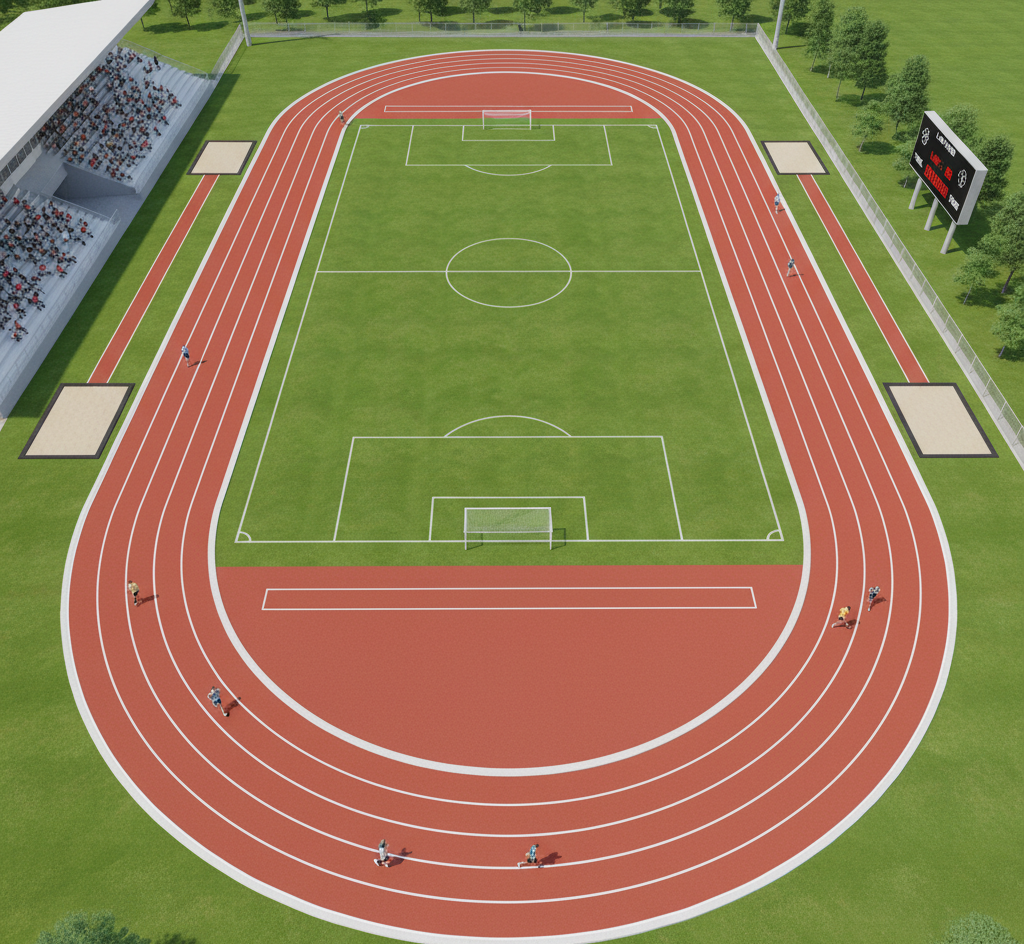
A standard jogging track is an essential feature in modern fitness facilities, schools, residential complexes, and sports complexes. Designed to provide a safe, comfortable, and consistent running surface, a jogging track allows users to stay active, improve endurance, and maintain overall health.
Understanding the standard jogging track size is crucial for anyone planning to build a professional or recreational running facility. From its dimensions and shape to the materials used and space required, every detail ensures that the track offers optimal performance, durability, and user comfort.
🏃 What Is a Standard Jogging Track?
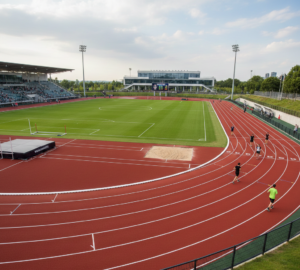
A standard jogging track is a continuous looped pathway built with synthetic or rubberized surfaces that provide a cushioned, anti-slip, and weather-resistant running surface. Unlike rough concrete or mud paths, professional jogging tracks are designed to minimize joint impact and enhance running efficiency.
The 400-meter oval track is the globally recognized standard size used for athletic training, competitions, and professional jogging. However, smaller or mini versions are also developed for limited spaces like schools, societies, or rooftops.
⚙️ Standard Jogging Track Dimensions
The standard jogging track size typically follows the specifications laid out by the World Athletics (formerly IAAF) for professional use.
Here’s a detailed breakdown of the standard 400-meter oval track dimensions:
| Component | Specification |
|---|---|
| Total Track Length (1 lap) | 400 meters |
| Track Shape | Oval (2 straights + 2 semicircles) |
| Lane Width | 1.22 meters (each lane) |
| Number of Lanes | 6 to 8 lanes |
| Width of Full Track (8 lanes) | 9.76 meters |
| Inner Radius (Curve) | 36.50 meters |
| Straight Section Length | 84.39 meters each |
| Curve Radius (measured from lane 1) | 36.5 meters |
| Area Required | 5,500 – 6,000 square meters |
| Surface Type | PU, EPDM, or Acrylic Synthetic |
| Life Span | 10–15 years with maintenance |
📏 Measurement Note:
The 400-meter distance is measured 30 cm from the inner edge of the first lane. This ensures that lane 1 always provides an exact 400m loop.
🧭 Jogging Track Size for Different Purposes
Depending on the available area and user needs, jogging tracks can be built in several configurations:
| Track Type | Length (Per Lap) | Area Required | Common Use |
|---|---|---|---|
| Standard Track | 400 meters | 5,500 – 6,000 sq. m. | Professional training & athletics |
| Semi-Standard Track | 200 meters | 2,500 – 3,000 sq. m. | Schools, fitness centers |
| Mini Track | 100 meters | 1,000 – 1,500 sq. m. | Parks, societies, rooftops |
| Compact Track | 50 meters | 400 – 800 sq. m. | Indoor or compact fitness areas |
Each of these can be customized in oval, circular, or straight loop formats depending on site layout and usage goals.
🧱 Design Layout of a Standard Jogging Track
A jogging track’s design consists of three major parts:
1. Straight Sections
-
Two opposite straight lines in the oval track.
-
Each measures approximately 84.39 meters in a 400m layout.
-
Used for acceleration and speed consistency.
2. Curved Sections
-
Two semicircular ends connecting the straights.
-
Radius of 36.5 meters in a standard track.
-
Designed for smooth, safe turns at higher speeds.
3. Inner & Outer Edges
-
Inner edge: Often has a low concrete or rubber curb (~5 cm high).
-
Outer edge: May include fencing, landscaping, or walking lanes.
🌍 Different Types of Standard Jogging Tracks
Based on purpose, material, and location, jogging tracks can vary in construction style:
1. Synthetic PU Jogging Track
-
Premium quality surface for professional use.
-
Elastic, durable, and weatherproof.
-
Common in stadiums and universities.
2. EPDM Rubber Jogging Track
-
Made from environment-friendly rubber granules.
-
Soft, shock-absorbent, and anti-slip.
-
Perfect for schools, parks, and residential projects.
3. Acrylic Jogging Track
-
Cost-effective and UV-resistant surface.
-
Suitable for multi-sport and community tracks.
-
Easy to install and maintain.
4. Prefabricated Rubber Tile Track
-
Modular, quick installation.
-
Ideal for indoor gyms or terrace jogging spaces.
🛠️ Construction Process of a Standard Jogging Track
Building a professional jogging track requires precision, technical expertise, and high-quality materials. Here’s a step-by-step process:
-
Site Inspection & Planning
-
Evaluate available land, soil condition, and drainage needs.
-
Create design layout and drawings as per standard dimensions.
-
-
Base Preparation
-
Level and compact the soil.
-
Lay sub-base (gravel/sand) and top it with asphalt or concrete.
-
-
Surface Application
-
Apply a primer or binder coat.
-
Install the synthetic surface (PU, EPDM, or Acrylic) in multiple layers.
-
-
Line Marking & Finishing
-
Mark lanes, start/finish lines, and event zones using durable paint.
-
-
Inspection & Quality Testing
-
Ensure the surface has uniform thickness, proper drainage, and grip before handover.
-
💰 Cost of Standard Jogging Track Construction in India (Approx.)
The cost of building a jogging track depends on surface type, base quality, and project size. Here’s a general estimate:
| Surface Type | Cost (₹/sq.ft) | Recommended For |
|---|---|---|
| Acrylic Track | ₹250 – ₹500 | Budget-friendly community tracks |
| EPDM Rubber Track | ₹400 – ₹800 | Schools, societies, parks |
| PU Synthetic Track | ₹700 – ₹1,200 | Professional sports & athletics |
| Rubber Tile Track | ₹350 – ₹700 | Indoor or rooftop tracks |
A 400-meter standard track typically costs between ₹60 – ₹100 lakhs, depending on specifications and customization.
🧩 Key Features of a Standard Jogging Track
-
Smooth, anti-slip surface
-
Excellent shock absorption
-
All-weather performance
-
UV and wear resistance
-
Available in custom colors (red, blue, green, etc.)
-
Easy to clean and maintain
-
10–15 years lifespan with proper care
🧰 Maintenance Tips
To ensure your jogging track performs well and lasts long:
-
Clean regularly to remove dust, leaves, and debris.
-
Avoid using sharp footwear or vehicles on the track.
-
Repair small cracks immediately.
-
Reapply surface coating every few years.
-
Inspect drainage systems periodically.
🏆 Advantages of a Standard Jogging Track
-
Promotes fitness and wellness
-
Safe and joint-friendly surface
-
Ideal for all age groups
-
Enhances property and facility value
-
Reduces injury risk
-
Long-term durability and low maintenance
🏁 Conclusion
A standard jogging track size of 400 meters offers the perfect balance between space efficiency, performance, and comfort. Whether you’re building for an educational institution, sports facility, or residential community, this size ensures smooth, continuous running while meeting international standards.
Standard Jogging Track Size – FAQs
1. What is the standard length of a jogging track?
-
Common standard: 400 meters per lap (oval shape) for professional and stadium tracks
-
Shorter recreational tracks can be 200–300 meters per lap
-
Outdoor park jogging tracks may vary based on available space
2. What is the standard width of a jogging track?
-
Lane width: Minimum 1.2 meters (≈4 ft) per lane
-
Number of lanes: Usually 2–4 lanes for recreational or public use
-
For professional stadium tracks, 6–8 lanes may be used
Adequate width ensures safety and comfortable spacing between joggers.
3. What shapes are standard for jogging tracks?
-
Oval (most common): Two straights and two curves
-
Circular: Often for parks or school playgrounds
-
Custom shapes: For limited space or scenic routes in parks/residential areas
Oval tracks are preferred for pacing and distance measurement.
4. What surfaces are used for jogging tracks?
-
Synthetic PU or polyurethane tracks: Professional, durable, and weather-resistant
-
Rubberized tracks: Shock-absorbing and ideal for recreational users
-
Asphalt or concrete: Common for outdoor public tracks, cost-effective but harder on joints
-
Gravel or compacted soil: Budget-friendly and natural aesthetic, less durable
5. Why is a shock-absorbing surface important?
-
Reduces stress on joints, knees, and ankles
-
Prevents injuries from repeated impact
-
Provides comfortable running and jogging experience
-
Enhances performance for serious runners
6. What slope or drainage is recommended for jogging tracks?
-
Slight slope of 1–2% for water runoff
-
Proper drainage prevents puddles and slippery surfaces
-
For synthetic tracks, subsurface drainage pipes may be installed
7. How is a jogging track constructed?
Typical layers:
-
Base layer: Compacted gravel or stone for stability
-
Binder layer: Asphalt or concrete for structural support
-
Top layer: Synthetic PU, rubberized, or tartan surface for shock absorption
Construction quality affects durability, comfort, and safety.
8. What maintenance is required for jogging tracks?
-
Regular cleaning of dirt, leaves, and debris
-
Inspection for cracks, surface wear, or water accumulation
-
Resurfacing synthetic layers every 7–10 years
-
Maintaining proper drainage to avoid damage and ensure safety
9. Can jogging tracks be multi-purpose?
Yes. They can also be used for:
-
Walking lanes
-
Warm-up or cool-down areas for athletes
-
Fitness or aerobics sessions
-
Recreational cycling or skating (if surface allows)
10. Are there lighting requirements for jogging tracks?
-
Recommended for evening or early morning use
-
Uniform illumination with no glare
-
LED or low-energy floodlights preferred for safety
11. What is the typical diameter or curve radius for jogging tracks?
-
For a 400 m oval track:
-
Curve radius: 36–37 meters for the inner lane
-
Straights: ~84 meters each
-
-
Smaller recreational tracks may adjust radius based on available space
12. Why is professional design and construction recommended?
-
Ensures safe slope and proper drainage
-
Correct lane width and track dimensions
-
Long-lasting surface durability
-
Comfortable, injury-free jogging experience