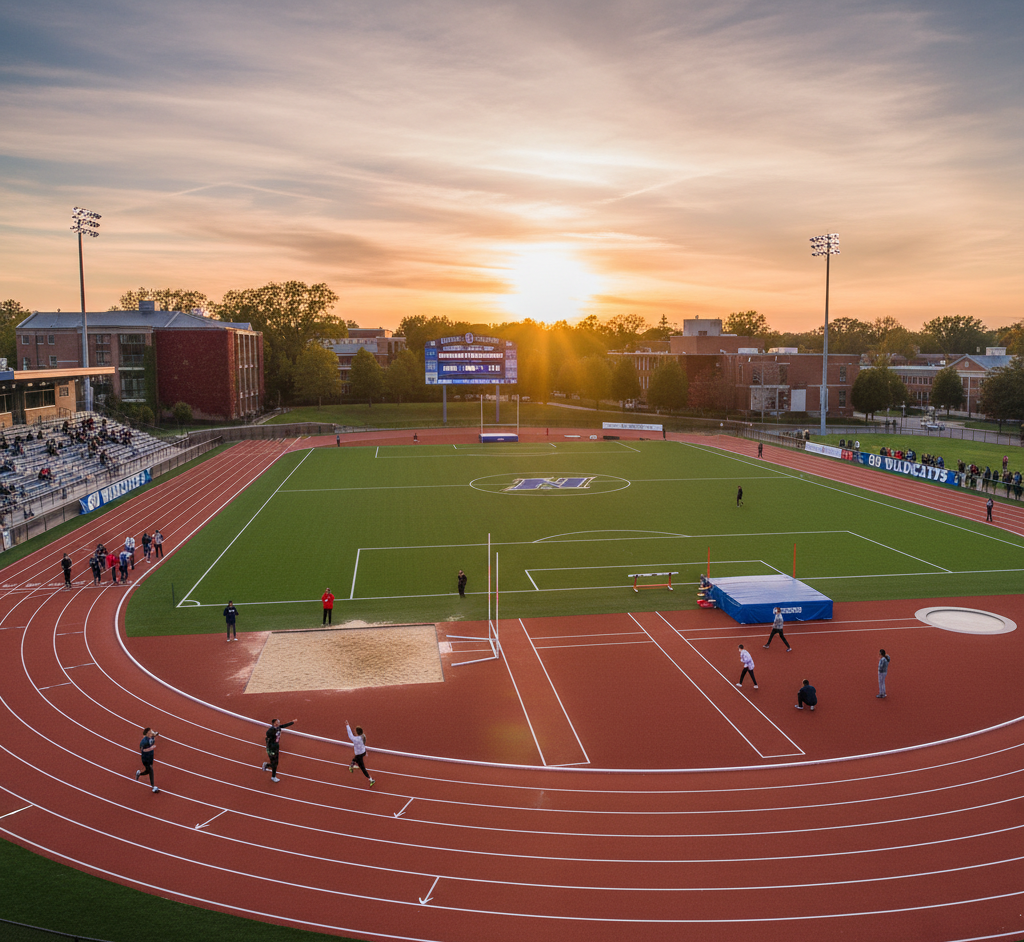
A college athletics track is far more than a circular running surface—it is a central pillar of campus sports infrastructure that supports physical education, competitive athletics, student wellness, and community engagement. A professionally designed and constructed athletics track empowers students to train safely, perform efficiently, and compete confidently at inter-college, state, and national levels.
In today’s academic institutions, sports facilities play a critical role in holistic student development. A high-quality college athletics track not only promotes fitness and discipline but also reflects the institution’s commitment to excellence in sports education. From sprint training and endurance runs to field events and large-scale competitions, a well-planned track delivers functionality, durability, and long-term value.
This blog explores the importance, components, construction process, benefits, maintenance, and long-term advantages of a professionally built college athletics track.
1. Importance of a College Athletics Track
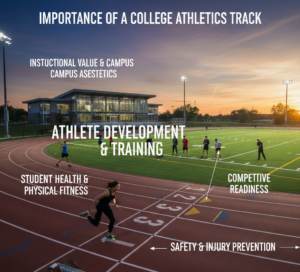
Athlete Development and Training
A dedicated athletics track provides students with a structured environment for systematic training. It supports:
-
Sprint, middle-distance, and long-distance running
-
Speed, endurance, and agility development
-
Technical training for track events such as hurdles and relays
-
Field events including long jump, triple jump, javelin throw, shot put, and discus
Access to a professional-grade track helps students improve performance while learning proper techniques under safe conditions.
Student Health and Physical Fitness
An athletics track encourages regular physical activity across the student body. It supports:
-
Cardiovascular fitness through jogging and running
-
Daily physical education programs
-
Fitness drills, warm-ups, and conditioning exercises
-
Stress relief and mental well-being through outdoor activity
A well-maintained track motivates students to stay active, contributing to a healthier campus culture.
Competitive Readiness
Colleges with standard-compliant tracks gain a competitive edge by:
-
Preparing athletes for inter-college and national competitions
-
Hosting official meets and athletic events
-
Providing exposure to professional training environments
Tracks designed according to World Athletics (formerly IAAF) guidelines ensure that students train under conditions similar to competitive arenas.
Safety and Injury Prevention
High-quality track surfaces are engineered for:
-
Shock absorption to reduce joint and muscle strain
-
Proper traction to prevent slips and falls
-
Smooth, uniform finishes that minimize trip hazards
Safety-focused design significantly lowers the risk of training-related injuries.
Institutional Value and Campus Aesthetics
A professionally constructed athletics track:
-
Enhances the visual appeal of the campus
-
Strengthens the institution’s sports identity
-
Demonstrates investment in student development and infrastructure
Such facilities positively influence admissions, reputation, and community perception.
2. Key Components of a College Athletics Track
Track Layout and Dimensions
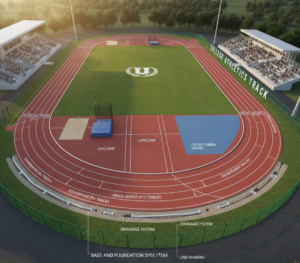
Standard college athletics tracks typically include:
-
400-meter oval track, measured in lane 1
-
6 to 8 lanes, depending on available space and competition needs
-
Uniform lane widths and precisely engineered curves and straights
Accurate geometry ensures fair competition, consistent performance, and athlete safety.
Surface Materials
Choosing the right surface is critical for performance and longevity. Common options include:
-
Polyurethane (PU) Tracks
Durable, weather-resistant, and suitable for high-intensity use. Ideal for competitive and multi-purpose college tracks. -
EPDM Rubber Tracks
Flexible and shock-absorbing, offering comfort for daily training and recreational use. -
Tartan or Multi-Layer Synthetic Tracks
High-performance systems designed for professional-level athletics with excellent energy return and durability.
Surface selection depends on budget, usage frequency, climate conditions, and competition requirements.
Base and Foundation System
The longevity of an athletics track depends heavily on its foundation, which includes:
-
Compacted sub-grade soil
-
Granular layers or asphalt base
-
Shock-absorbing underlayers
A stable foundation prevents surface deformation, cracks, and premature wear.
Drainage System
Efficient drainage is essential, especially in regions with heavy rainfall. Proper systems include:
-
Subtle surface slopes for water runoff
-
Side drains and gutters
-
Permeable base layers where required
Good drainage prevents water pooling, surface damage, and safety hazards.
Line Marking and Field Event Integration
Accurate markings are essential for compliance and usability:
-
Lane lines, start and finish lines
-
Exchange zones and hurdle markings
-
Integration of field event areas within or around the track
Durable, UV-resistant paints ensure long-lasting visibility.
Safety and Perimeter Features
Additional safety elements include:
-
Shock-absorbing track edges
-
Curbs or borders to define lanes
-
Fencing and barriers for crowd control
-
Safe access points for athletes and officials
3. Steps in College Athletics Track Construction
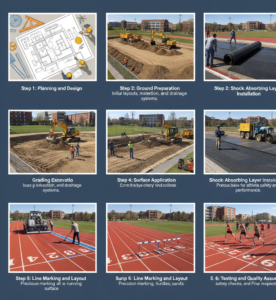
Step 1: Planning and Design
The process begins with:
-
Site evaluation (soil type, slope, drainage)
-
Determining track size, lanes, and orientation
-
Planning for field events, spectator zones, and access routes
Professional planning ensures efficient land use and compliance with standards.
Step 2: Ground Preparation
This stage involves:
-
Clearing and leveling the site
-
Compaction of sub-grade
-
Installation of granular or asphalt base layers
-
Precise grading to support drainage
Proper groundwork is vital for long-term performance.
Step 3: Shock-Absorbing Layer Installation
Elastic layers or rubber underlays are applied to:
-
Reduce impact on joints
-
Enhance athlete comfort
-
Improve energy return during running
This layer is critical for injury prevention.
Step 4: Surface Application
The selected synthetic surface is installed with:
-
Uniform thickness
-
Seamless bonding
-
Smooth, slip-resistant finish
Strict quality control ensures consistency across all lanes.
Step 5: Line Marking and Layout
Markings are applied using professional equipment to ensure:
-
Accuracy
-
Durability
-
Compliance with athletic standards
Field event areas are also clearly defined.
Step 6: Testing and Quality Assurance
Final inspections include:
-
Surface evenness checks
-
Shock absorption and traction testing
-
Drainage efficiency evaluation
Only after passing quality benchmarks is the track approved for use.
4. Maintenance and Upkeep
Regular maintenance preserves performance and appearance:
-
Routine Cleaning: Removing dust, leaves, and debris
-
Periodic Inspections: Identifying cracks, fading lines, or surface wear
-
Minor Repairs: Addressing issues early to prevent costly damage
-
Drainage Maintenance: Keeping drains clear
-
Surface Recoating: Restoring elasticity and grip over time
Proper maintenance significantly extends the track’s lifespan.
5. Benefits of a Professionally Constructed College Athletics Track
-
Enhanced athlete safety and reduced injury risks
-
Consistent performance and training conditions
-
Long-term durability under heavy usage
-
Compliance with international athletic standards
-
Improved campus sports infrastructure and aesthetics
6. Cost Considerations
The cost of a college athletics track depends on:
-
Number of lanes and overall size
-
Choice of surface material
-
Extent of site preparation and drainage
-
Line markings, accessories, and field event facilities
-
Long-term maintenance planning
Investing in quality construction reduces future repair and replacement costs.
7. Applications of College Athletics Tracks
-
Daily physical education classes
-
Professional athletic training programs
-
Inter-college and state-level competitions
-
Fitness programs for staff and students
-
Community sports and wellness events
A well-designed track serves multiple purposes throughout the year.
8. Advantages of Professional Construction
-
Adherence to safety and performance standards
-
Reduced lifecycle costs
-
Multi-functional usage
-
Improved training outcomes
-
Enhanced institutional reputation
9. Conclusion
A college athletics track is a vital asset that supports student fitness, competitive excellence, and holistic campus development. From precise planning and robust foundation work to advanced surface installation and accurate line marking, professional construction ensures a safe, durable, and high-performance facility.
By investing in a well-designed athletics track, colleges create an environment that encourages physical activity, nurtures athletic talent, and strengthens their identity as institutions committed to sports and student well-being. Over time, such infrastructure becomes a lasting symbol of excellence, opportunity, and growth on campus.