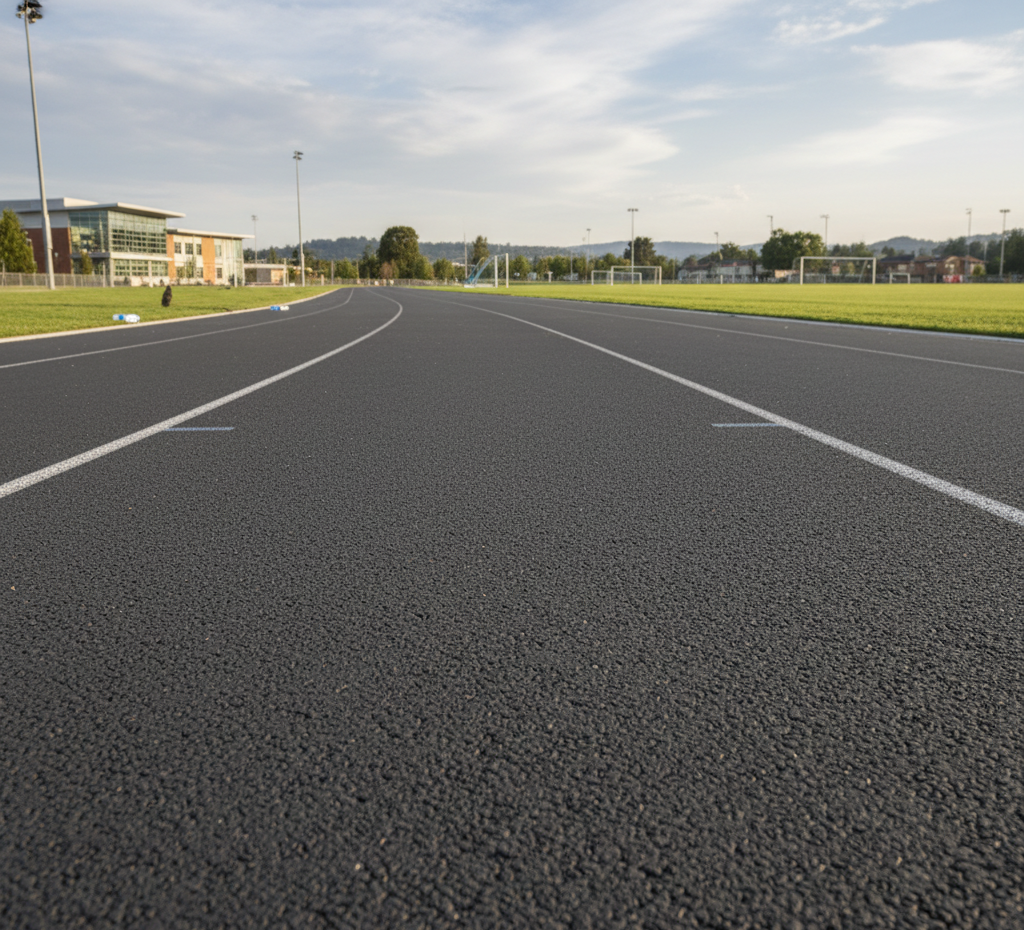
An asphalt running track is one of the most commonly used base systems for outdoor athletics facilities worldwide. Known for its durability, affordability, and structural strength, asphalt forms the ideal foundation for various synthetic track surfaces like polyurethane or rubber. It provides a smooth, stable, and long-lasting platform that ensures consistent performance and minimal maintenance.
While advanced polyurethane and all-weather tracks dominate modern athletics, asphalt remains the backbone of most track installations, providing the solid base that supports safety, performance, and longevity.
1. What is an Asphalt Running Track?
An asphalt running track is a surface constructed using a combination of bitumen, crushed stone, and sand, carefully compacted to create a uniform and stable base layer. In most cases, the asphalt base is not the final running surface itself, but rather the foundation layer beneath synthetic coatings such as polyurethane or rubber.
However, for budget-friendly installations, some institutions also use asphalt as the top running surface — especially in schools, training grounds, or community facilities where cost efficiency and low maintenance are priorities.
2. Why Asphalt is Used in Running Tracks
Asphalt has been a key construction material for athletic tracks for decades due to its stability, affordability, and easy installation. It provides:
-
A solid and even surface that ensures accurate slope and drainage.
-
Excellent load-bearing capacity for synthetic surface installation.
-
A cost-effective alternative to full synthetic systems for smaller projects.
-
Compatibility with various top coatings like polyurethane, acrylic, or rubber.
The versatility of asphalt makes it a trusted choice for both base construction and surface layers, depending on the performance level required.
3. Structure of an Asphalt Running Track
A well-designed asphalt running track consists of multiple layers engineered for performance and durability:
-
Sub-Base Layer:
Usually composed of compacted gravel or crushed stone, it ensures proper drainage and ground stability. -
Asphalt Base Layer:
This is the core structural layer that provides a flat, stable, and weather-resistant surface for further coatings. -
Synthetic Surface Layer (Optional):
A polyurethane, rubber, or acrylic coating may be added on top of the asphalt to enhance traction, comfort, and weather resistance.
This multi-layered construction allows the track to deliver both mechanical strength and athletic performance.
4. Types of Asphalt Running Tracks
Depending on budget and performance requirements, asphalt running tracks are available in several types:
a. Basic Asphalt Track
A simple and economical version used mainly for school playgrounds and training areas. It offers good durability but limited cushioning and traction compared to synthetic systems.
b. Asphalt Base with Acrylic Coating
A thin acrylic coating is applied on top of the asphalt surface to provide better grip, aesthetics, and UV protection. This option enhances performance and surface life.
c. Asphalt Base with Polyurethane Surface
The most common system for professional athletics. A polyurethane (PU) layer is installed over the asphalt base, delivering world-class shock absorption, resilience, and weatherproofing.
d. Asphalt Base with Rubberized Top Layer
Combining asphalt stability with a rubberized finish offers both durability and comfort — perfect for multi-sport complexes and community running tracks.
5. Benefits of Asphalt Running Tracks
1. High Durability
Asphalt provides a long-lasting and weather-resistant foundation that can endure heavy use and climatic stress without significant deterioration.
2. Cost-Effective Construction
Compared to fully synthetic tracks, asphalt systems offer excellent performance at a fraction of the cost, making them ideal for schools and community projects.
3. Easy Maintenance
Asphalt surfaces require minimal maintenance. Occasional cleaning, sealing, or resurfacing ensures years of reliable use.
4. Smooth and Even Surface
Asphalt offers exceptional smoothness and uniformity, ensuring fair competition and safety for athletes.
5. Compatibility with Synthetic Coatings
Asphalt can easily be combined with polyurethane, rubber, or acrylic top layers to achieve specific performance requirements.
6. Quick Installation
With modern paving equipment, asphalt tracks can be installed relatively quickly, reducing project time and costs.
6. Construction Process of an Asphalt Running Track
Building a durable asphalt track requires skilled workmanship and precise engineering. The typical process includes:
7. Maintenance and Longevity
Proper maintenance ensures long life and consistent performance:
-
Regular Cleaning: Remove debris, leaves, and dirt buildup.
-
Crack Sealing: Repair small cracks early to prevent surface damage.
-
Drainage Checks: Ensure water outlets remain unclogged.
-
Re-Coating: Apply protective layers or sealants every few years for optimal durability.
-
Professional Inspection: Periodic evaluations help detect and address issues before they worsen.
With good maintenance, an asphalt running track can last 10–20 years, depending on usage and environmental conditions.
8. Applications of Asphalt Running Tracks
Asphalt-based tracks are suitable for various athletic and recreational facilities, including:
-
School and College Tracks
-
Training Facilities
-
Community Playgrounds
-
University Sports Complexes
-
Multi-sport Fields
-
Public Fitness Parks
Their versatility and cost-effectiveness make them ideal for both small-scale and large-scale projects.
9. Comparison: Asphalt vs Other Track Surfaces
| Feature | Asphalt Track | Polyurethane Track | Rubber Track |
|---|---|---|---|
| Cost | Low | High | Moderate |
| Shock Absorption | Moderate | Excellent | Very Good |
| Weather Resistance | High | High | High |
| Maintenance | Low | Low | Moderate |
| Durability | 10–20 Years | 12–15 Years | 10–15 Years |
| Comfort | Moderate | Excellent | High |
While asphalt may not match the elasticity of polyurethane or rubber, it excels in affordability and structural reliability, making it an essential part of most track systems.
10. Environmental Benefits
Modern asphalt production uses eco-friendly materials and can incorporate recycled aggregates or reclaimed asphalt pavement (RAP). This sustainable approach reduces waste and lowers the carbon footprint of sports facility construction. Additionally, asphalt’s long lifespan minimizes the need for frequent replacements, further reducing environmental impact.
11. Why Choose Asphalt for Your Track Project
Choosing asphalt as a running track surface offers a balance of performance, cost, and longevity. Its versatility makes it suitable for both base layers in synthetic systems and standalone tracks. When installed by experienced professionals, asphalt provides a smooth, durable, and weather-resistant foundation for decades of athletic use.
12. Conclusion
An asphalt running track is the unsung hero of sports infrastructure — strong, reliable, and cost-efficient. Whether used as a base for polyurethane or rubber surfaces or as a standalone running surface, it offers exceptional durability and smooth performance in all conditions.
FAQ – Asphalt Running Track: Complete Guide for Construction and Maintenance
1. What is an asphalt running track?
An asphalt running track is a durable outdoor track made from asphalt or bituminous materials, providing a smooth, weather-resistant surface for running, jogging, and walking. It is widely used in schools, parks, residential societies, and athletic facilities.
2. What are the benefits of an asphalt running track?
- Durable and long-lasting
- Cost-effective compared to synthetic tracks
- Weather-resistant for outdoor use
- Smooth surface for safe running and jogging
- Low maintenance
3. Where can asphalt running tracks be constructed?
- Public parks and urban fitness zones
- Residential communities and gated societies
- Schools, colleges, and universities
- Sports academies and stadiums
4. What is the standard width and length of an asphalt running track?
- Standard oval track length: 400 meters per lap
- Lane width: 1.22 meters per lane (commonly 4–8 lanes)
- Total width: 5–10 meters depending on number of lanes
Tracks can also be customized based on available space.
5. How much does asphalt running track construction cost?
- Basic asphalt track: ₹15–25 lakh for a 400-meter track
- Track with lining and minor landscaping: ₹20–30 lakh
- Costs vary based on size, surface thickness, and site preparation.
6. How long does it take to construct an asphalt running track?
Construction typically takes 3–5 weeks, depending on track size, site preparation, and weather conditions.
7. How to maintain an asphalt running track?
- Clean debris, leaves, and dust regularly
- Inspect for cracks and potholes; repair immediately
- Repaint lane markings as needed
- Ensure proper drainage to prevent waterlogging
8. Can asphalt running tracks be used for professional sports?
Yes, asphalt tracks are suitable for schools, colleges, and community athletics, but synthetic or PU tracks are preferred for professional competitions due to better shock absorption and performance consistency.
9. Are asphalt running tracks safe for beginners and kids?
Yes. Asphalt provides a stable, even surface for running and jogging. However, adding a thin rubberized or PU overlay can enhance safety by reducing joint impact.