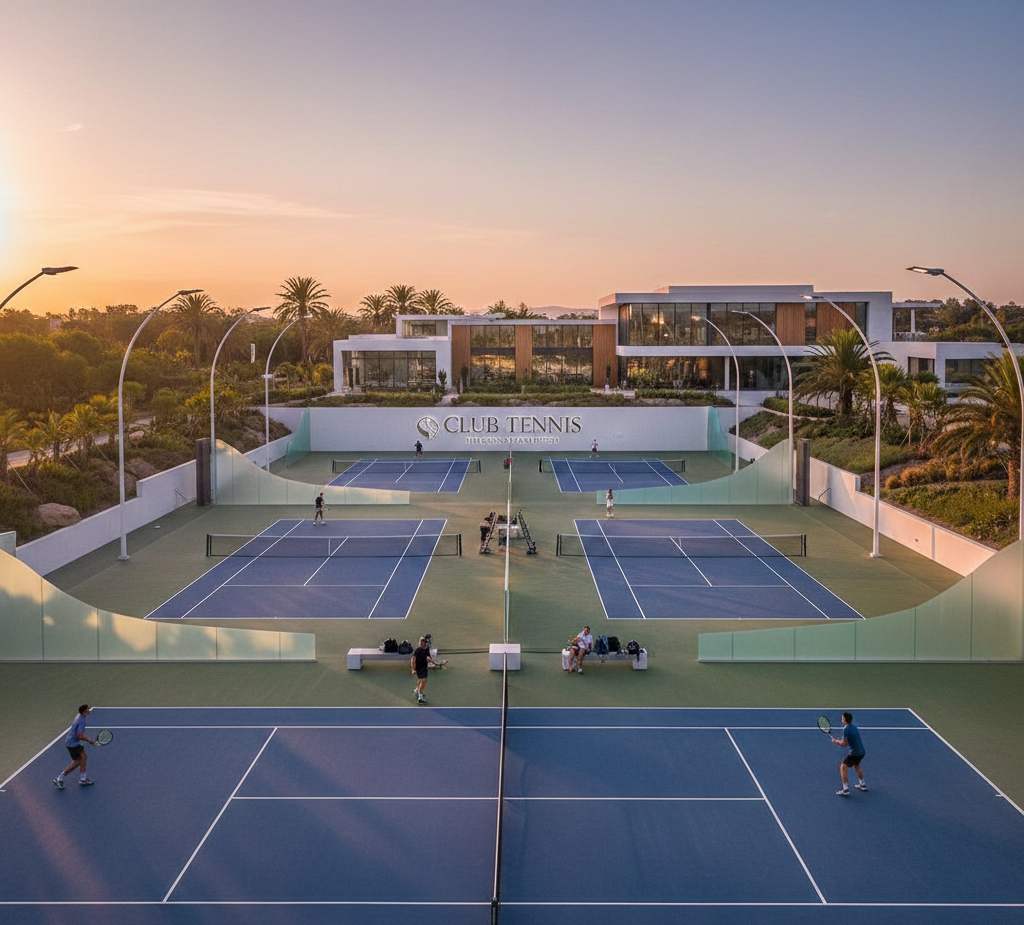
A tennis court is far more than a simple playing surface—it is a space that blends functionality, safety, aesthetics, and player experience into a cohesive design. For sports clubs, resorts, and recreational facilities, investing in professional-grade club tennis court design not only ensures high-quality gameplay but also elevates the facility’s reputation and visual appeal. A thoughtfully designed court serves as both a sporting asset and a signature feature, attracting members and enhancing their engagement with the club.
At [sports-facility], we specialize in delivering customized tennis court solutions for clubs across India. Our designs integrate strategic space utilization, high-performance surface selection, advanced lighting, durable fencing, and amenities that maximize comfort for players and spectators alike. Each court is created in strict compliance with International Tennis Federation (ITF) standards, ensuring proper dimensions, safety, and playability.
Why Professional Club Tennis Court Design Matters
Designing a tennis court for a club or resort is a complex task that demands technical expertise, meticulous planning, and an understanding of player needs. A poorly constructed court can result in uneven surfaces, excessive maintenance, safety hazards, and a subpar user experience. Professional design addresses these challenges while delivering a court that combines performance, durability, and visual appeal.
The key advantages of professional tennis court design include:
-
Optimal Player Experience: Smooth, even surfaces provide predictable ball bounce, consistent traction, and reduced risk of injury.
-
Compliance with International Standards: Adhering to ITF regulations ensures accurate court dimensions, line marking, net placement, and overall playability suitable for competitive or recreational play.
-
Enhanced Safety: Proper drainage, anti-slip surfaces, and protective fencing minimize injury risks for players and spectators.
-
Aesthetic Appeal: Harmonized color schemes, landscaping, seating arrangements, and surroundings create an elegant, professional environment.
-
Long-Term Durability: Correct base construction, surface material selection, and drainage design prevent early wear and reduce ongoing maintenance costs.
A well-designed court is an investment in both member satisfaction and the long-term value of the facility.
Key Considerations in Club Tennis Court Design
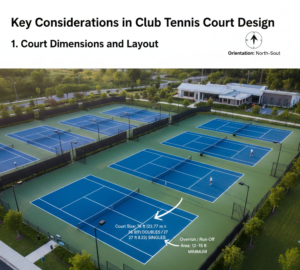
Designing a tennis court for a club involves careful planning across multiple dimensions, from technical specifications to player comfort and operational efficiency.
1. Court Dimensions and Layout
A standard club tennis court follows ITF specifications:
-
Court Size: 78 ft (23.77 m) long × 36 ft (10.97 m) wide for doubles; 27 ft (8.23 m) wide for singles.
-
Overrun / Run-Off Area: Minimum 12–15 ft around the court for safety and player mobility.
-
Orientation: Ideally north-south to reduce glare from sunlight during day play.
The court layout also considers multiple courts, spectator seating, pathways, and accessibility, allowing clubs to efficiently accommodate players while maintaining smooth circulation around the facility. Proper planning ensures optimal use of available space without compromising safety or aesthetics.
2. Surface Selection
The choice of surface profoundly affects gameplay, player safety, and maintenance requirements. Clubs typically select from the following options:
-
Acrylic Hard Courts: Durable, low-maintenance, and suitable for year-round play. Acrylic surfaces offer consistent ball bounce and excellent traction, making them ideal for both recreational and competitive use.
-
Synthetic Turf Courts: Soft and visually appealing, synthetic turf reduces joint impact while providing a comfortable, professional playing experience.
-
Clay Courts: Traditional clay courts slow the ball and encourage longer rallies, fostering endurance and strategy. They require regular maintenance but provide a classic tennis experience.
-
Indoor Courts: Climate-controlled indoor courts allow uninterrupted play regardless of weather, ensuring consistent conditions for practice and tournaments.
Surface choice influences gameplay characteristics, long-term maintenance, and overall visual appeal, making it a critical decision in court design.
3. Drainage and Slope Design
Effective drainage is essential, particularly in India’s diverse climate zones with heavy monsoons. Courts are designed with subtle slopes of 1–1.5%, allowing water to flow efficiently to drainage channels. This prevents waterlogging, protects the playing surface from damage, and ensures rapid usability after rain.
Proper drainage also minimizes the risk of slips and surface deterioration, contributing to player safety and long-term durability of the court.
4. Lighting Design
For clubs that offer evening or night play, professional lighting design is essential:
-
Evenly distributed LED floodlights reduce glare, shadows, and uneven illumination.
-
Recreational play typically requires a minimum of 300 lux, while professional or competitive play may require 500 lux.
-
Strategic placement prevents light spillage to neighboring properties, maintaining compliance with local regulations and minimizing environmental impact.
Well-designed lighting extends play hours, enhances visual clarity, and contributes to a premium court experience.
5. Fencing and Perimeter Design
High-quality fencing is vital for safety, security, and aesthetics:
-
Chain-Link Fences: Standard 6–10 ft high fencing prevents stray balls and restricts unauthorized access.
-
Acrylic or Vinyl-Coated Fencing: Adds visual appeal while maintaining durability.
-
Gates and Access Points: Facilitate controlled entry for players, maintenance personnel, and spectators.
Thoughtful perimeter design ensures the court remains secure while complementing the overall club environment.
6. Amenities and Player Comfort
A premium club tennis court goes beyond the playing surface to include player-centric amenities:
-
Seating and Shaded Areas: For spectators and players during breaks.
-
Storage Facilities: Dedicated spaces for nets, balls, and training equipment.
-
Walkways and Landscaping: Contribute to a professional, inviting atmosphere.
-
Windbreaks or Screens: Enhance gameplay by reducing environmental interference.
These elements create a comfortable, attractive, and functional environment, enhancing overall member experience.
Our Club Tennis Court Design Process
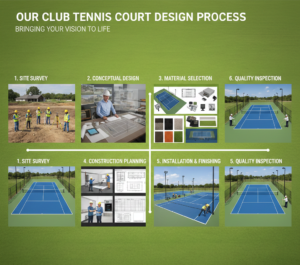
At [sports-facility], we follow a structured design and execution process to ensure every court meets professional standards and client expectations:
-
Site Survey: Evaluation of soil quality, terrain, sunlight orientation, drainage potential, and available space.
-
Conceptual Design: Preparation of 3D layouts and schematic plans showing court placement, surface selection, fencing, lighting, and amenities for client review.
-
Material Selection: Recommendation of high-quality ITF-approved surfaces tailored to usage, climate, and budget.
-
Construction Planning: Development of foundation, sub-base, and drainage systems for durable, level, and safe courts.
-
Installation & Finishing: Precise layering of surfaces, line marking, net installation, and lighting setup.
-
Quality Inspection: Verification of surface evenness, drainage efficiency, lighting uniformity, and overall functionality before handing over the completed court.
Benefits of Professional Club Tennis Court Design
Investing in professionally designed tennis courts yields numerous advantages:
-
Enhanced Member Experience: High-quality surfaces, safety measures, and amenities provide superior play.
-
Reduced Maintenance Costs: Correct base construction and drainage prevent common issues such as cracks, waterlogging, and early surface deterioration.
-
Long-Term Durability: Premium materials and expert construction extend the lifespan of the court.
-
Attractive Facility: Well-designed courts improve club reputation, member retention, and appeal to prospective clients.
-
Customizable Solutions: Surface type, lighting, fencing, and amenities can be tailored to meet specific club requirements.
A professional court not only improves gameplay but also becomes a valuable asset for the facility’s growth and brand image.
Why Choose Us for Club Tennis Court Design in India
-
Expertise in designing club and resort tennis courts nationwide.
-
ITF-compliant construction and surface standards.
-
Customized solutions considering space, climate, and intended usage.
-
Timely execution and project delivery across India.
-
Use of premium materials and modern construction techniques.
-
Post-construction support for maintenance, resurfacing, and cleaning.
Our approach ensures that every court is functional, visually appealing, and built to provide a lasting, high-quality playing experience.
Cost Considerations for Club Tennis Court Design
The cost of constructing a club tennis court varies depending on surface type, size, drainage, lighting, and amenities. Approximate guidelines include:
| Item | Cost (₹) |
|---|---|
| Acrylic Hard Court (per court) | 12–25 lakhs |
| Clay Court Construction | 8–15 lakhs |
| Synthetic Turf Court | 10–18 lakhs |
| Lighting & Floodlight Setup | 2–5 lakhs |
| Fencing & Net Installation | 1–3 lakhs |
Site surveys and customized project assessments allow us to provide accurate quotes, ensuring a balance between budget and professional-quality standards.
Conclusion – Build a Professional Club Tennis Court
Investing in professional club tennis court design guarantees a safe, functional, and visually appealing environment for players and members. From precise layout planning and surface selection to advanced lighting, drainage, fencing, and player amenities, every detail plays a critical role in the court’s performance and longevity.
Professional design not only enhances member satisfaction but also strengthens the club’s prestige and reputation. By combining aesthetic appeal, durability, and compliance with ITF standards, a well-executed tennis court becomes a signature facility that attracts and retains members for years to come.