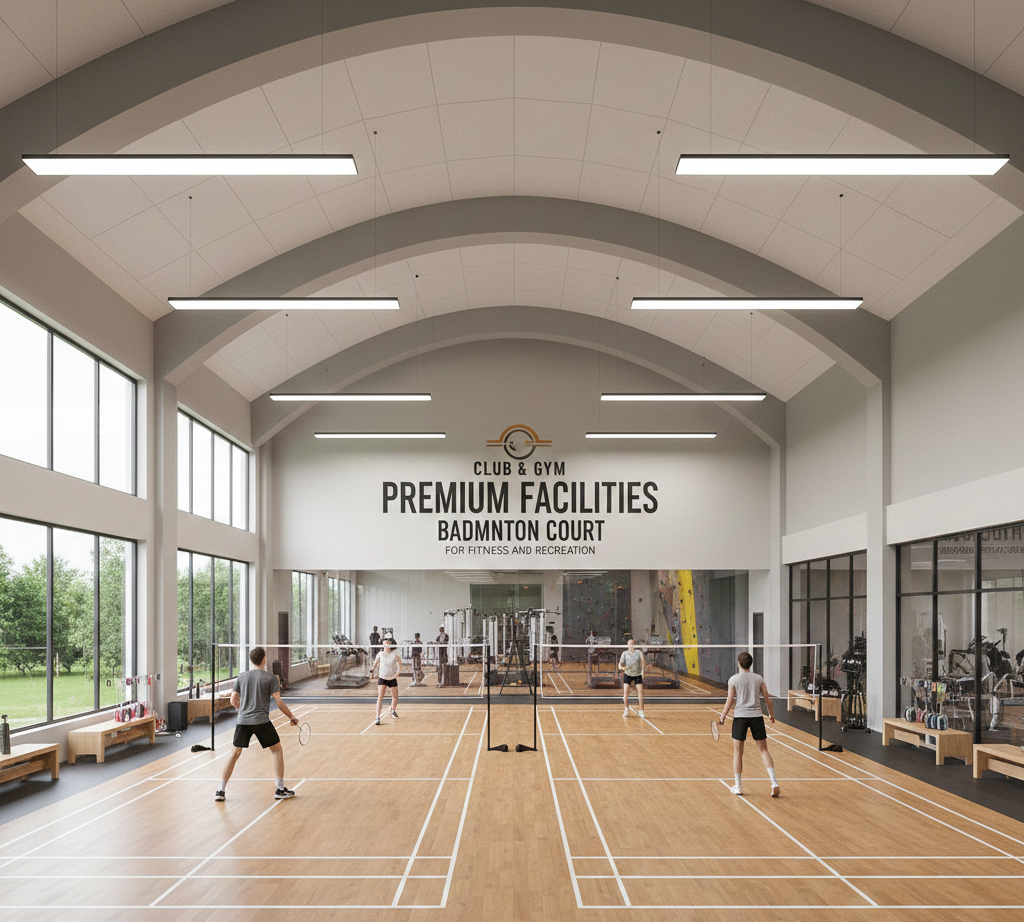
Badminton has emerged as one of the most popular indoor sports worldwide, transcending its traditional role as a schoolyard or community game to become a core activity in fitness centers, sports clubs, and gyms. Its blend of agility, speed, and social interaction makes it an ideal choice for people of all ages seeking both recreation and fitness. In modern fitness facilities, the presence of a well-designed badminton court not only elevates the member experience but also contributes to the overall value and appeal of the club.
Constructing and maintaining a premium badminton court for clubs or gyms is a meticulous process that requires attention to design, materials, installation, and ongoing care. Every aspect—from flooring selection and lighting design to ventilation, multi-use adaptability, and resurfacing—directly impacts player safety, comfort, and satisfaction. This guide delves into the essential considerations for developing a professional-grade badminton court that meets international standards while serving as a versatile recreational asset.
1. The Significance of Badminton Courts in Clubs and Gyms
The inclusion of badminton courts in fitness and recreational centers provides an array of benefits for members and facility owners alike.
-
Enhanced Fitness: Badminton is a high-intensity sport that engages multiple muscle groups, improves cardiovascular health, enhances reflexes, and sharpens coordination. Regular play boosts stamina and contributes to overall physical well-being.
-
Engaging Recreational Option: For members looking to diversify their exercise routines, badminton offers a dynamic and interactive alternative to conventional gym workouts. Unlike repetitive treadmill sessions, badminton keeps participants mentally and physically stimulated.
-
Social Interaction: Beyond fitness, badminton fosters community engagement. Friendly matches, internal tournaments, and coaching sessions encourage networking and camaraderie among members, strengthening club culture.
-
Multi-Purpose Functionality: Modern courts are increasingly designed to accommodate multiple activities. The same space can host aerobics, small group fitness classes, table tennis practice, or other recreational sports, optimizing facility usage.
Providing a high-quality badminton court differentiates clubs from competitors and serves as a valuable selling point for prospective members, enhancing retention and attracting new clientele.
2. Standard Specifications for Club and Gym Courts
Ensuring that badminton courts adhere to recognized standards is crucial for player safety, performance, and comfort. Clubs and gyms aiming for premium facilities typically follow the guidelines set by the Badminton World Federation (BWF):
-
Court Dimensions: A standard doubles court measures 13.4 meters in length and 6.1 meters in width, while singles play requires a slightly narrower width of 5.18 meters.
-
Ceiling Height: Indoor courts should maintain a minimum clearance of 7–9 meters to allow for unobstructed shuttlecock flight.
-
Lighting: Uniform lighting is essential. Recreational courts require 300–500 lux, whereas competitive or professional-level courts should be illuminated at 750–1000 lux.
-
Flooring: Floors must be shock-absorbing, non-slip, and durable to minimize the risk of injuries.
-
Surrounding Clearance: Adequate free space of at least 2 meters around the court ensures safe movement and prevents accidents.
Adhering to these specifications ensures that players experience consistent gameplay, optimal safety, and a professional-level environment.
3. Flooring Options for Club and Gym Badminton Courts
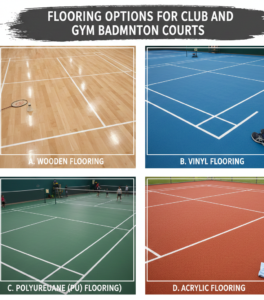
The flooring material is arguably the most critical component of any badminton court, as it directly affects player performance, injury prevention, and long-term maintenance costs. Several flooring options are commonly used in club and gym environments:
A. Wooden Flooring
Ideal For: Premium indoor club courts.
-
Advantages: Natural wood provides excellent shock absorption, a consistent bounce, and a professional aesthetic that enhances the facility’s overall appearance.
-
Maintenance: Wooden floors require controlled humidity, regular polishing, and prompt repair of scratches or damaged planks.
-
Cost: While the upfront investment is higher, the longevity and premium feel justify the expense, particularly in high-end clubs.
B. Vinyl Flooring
Ideal For: Multi-purpose gym courts with moderate budgets.
-
Advantages: Vinyl is cushioned, slip-resistant, and easy to clean. It accommodates various indoor sports and fitness activities without compromising safety.
-
Maintenance: Requires routine sweeping, mopping, and periodic repainting of line markings.
-
Cost: Moderately priced, making it suitable for small and medium-sized facilities seeking versatility.
C. Polyurethane (PU) Flooring
Ideal For: Gyms needing a seamless, durable surface.
-
Advantages: PU floors offer excellent shock absorption, slip resistance, and durability. They are seamless, reducing maintenance issues related to cracks or gaps.
-
Maintenance: Periodic recoating is necessary to retain elasticity and surface quality.
-
Cost: Mid-range investment with long-term value due to durability in high-traffic areas.
D. Acrylic Flooring
Ideal For: Outdoor club courts.
-
Advantages: Acrylic surfaces withstand weather variations, are low-maintenance, and are cost-effective.
-
Maintenance: Simple periodic cleaning and recoating are sufficient to maintain traction and aesthetics.
-
Cost: Economical for open-air facilities where protection from environmental factors is necessary.
4. Lighting and Ventilation Considerations
Proper lighting and ventilation are crucial for ensuring a comfortable and high-quality playing experience:
-
Lighting: Use high-efficiency LED fixtures mounted at 7–9 meters to prevent shadows and glare. Adjustable brightness allows the court to transition between recreational and competitive lighting levels efficiently.
-
Ventilation: Adequate airflow helps maintain floor integrity, prevents moisture buildup, and ensures player comfort. Ceiling fans, HVAC systems, and strategically placed windows contribute to effective ventilation.
Optimized lighting and ventilation directly impact player performance, reduce fatigue, and enhance the overall atmosphere of the facility.
5. Multi-Use Court Design
Modern fitness centers often maximize space efficiency by creating multi-purpose courts:
-
Flexible Line Markings: Use different colors to delineate badminton, basketball, volleyball, or futsal zones.
-
Cushioned Flooring: Ensures suitability for yoga, aerobics, and other fitness classes.
-
Storage Solutions: Retractable nets, foldable posts, and movable equipment facilitate quick transitions between activities.
-
Safety Measures: Wall padding, non-slip flooring, and clear boundaries minimize the risk of injury during diverse activities.
Multi-use design maximizes return on investment, making a single court suitable for multiple recreational and fitness purposes.
6. Maintenance and Resurfacing
Regular maintenance is vital for ensuring safety, longevity, and consistent playability:
-
Daily Cleaning: Sweep and mop to remove dust and debris.
-
Line Inspection: Refresh court markings annually to maintain clarity and compliance with standards.
-
Surface Repairs: Address minor scratches, cracks, or peeling promptly to prevent further damage.
-
Resurfacing: PU and vinyl courts typically require professional resurfacing every 4–6 years, while acrylic outdoor courts can last 5–8 years with resurfacing.
-
Wooden Floor Care: Maintain indoor humidity, polish annually, and replace damaged planks immediately.
Routine maintenance enhances the court’s visual appeal, ensures consistent shuttlecock bounce, and improves player safety.
7. Cost Considerations
The cost of constructing a premium badminton court varies depending on size, flooring choice, lighting, and additional features. An estimated breakdown for a single indoor court is as follows:
| Component | Approx. Cost (₹) |
|---|---|
| Flooring Material (Wood/Vinyl/PU/Acrylic) | 2,50,000 – 6,00,000 |
| Base Preparation & Leveling | 50,000 – 1,00,000 |
| Lighting & Ventilation | 50,000 – 1,00,000 |
| Net, Posts & Accessories | 25,000 – 50,000 |
| Line Marking & Painting | 15,000 – 30,000 |
| Miscellaneous (Labor & Transport) | 30,000 – 50,000 |
| Total Estimated Cost | 4,20,000 – 8,50,000 |
Multi-purpose court designs can reduce overall costs by accommodating various sports within the same space.
8. Safety and Accessibility
A premium badminton court prioritizes player safety and inclusivity:
-
Shock-Absorbing Floors: Minimize joint strain and enhance comfort during high-impact movements.
-
Non-Slip Surfaces: Reduce the risk of falls during fast-paced rallies.
-
Clear Surroundings: Minimum 2-meter clearance ensures safe movement around the court.
-
Accessible Design: Facilitate access for all members, including beginners, seniors, and differently-abled individuals.
By incorporating these safety measures, clubs create an environment that encourages confident, injury-free play.
9. Benefits of a Premium Club or Gym Court
Investing in a high-quality badminton court provides a wide range of advantages:
-
Member Engagement: Encourages frequent activity, fostering loyalty and satisfaction.
-
Versatility: Supports multiple sports, training sessions, and recreational activities.
-
Professional Experience: Premium courts emulate tournament conditions, attracting serious players.
-
Revenue Generation: Hosting events, coaching sessions, and tournaments can create additional income streams.
-
Long-Term Durability: Proper construction and maintenance extend the court’s lifespan, protecting investment value.
A professionally designed court is more than a recreational asset; it is a strategic investment in club growth, member retention, and reputation.
10. Choosing the Right Contractor
The quality of a badminton court largely depends on the expertise of the contractor. Key considerations include:
-
Experience in club and gym projects.
-
Knowledge of BWF-approved dimensions and flooring standards.
-
Use of certified materials and professional installation techniques.
-
Transparent cost estimates and post-installation support.
-
Warranty coverage for flooring and installation.
Selecting a reliable contractor ensures a safe, durable, and aesthetically appealing court that serves members for years to come.
Conclusion
A premium badminton court in a club or gym is more than a facility—it is a cornerstone of fitness, recreation, and community engagement. From careful flooring selection and precise lighting design to multi-purpose functionality and diligent maintenance, every detail contributes to player safety, comfort, and performance.
By investing in high-quality materials such as wooden, vinyl, PU, or acrylic surfaces, following international standards, and scheduling regular maintenance, clubs and gyms can offer members an unparalleled playing experience. Multi-use designs enhance space utilization, increase operational efficiency, and create additional revenue opportunities.