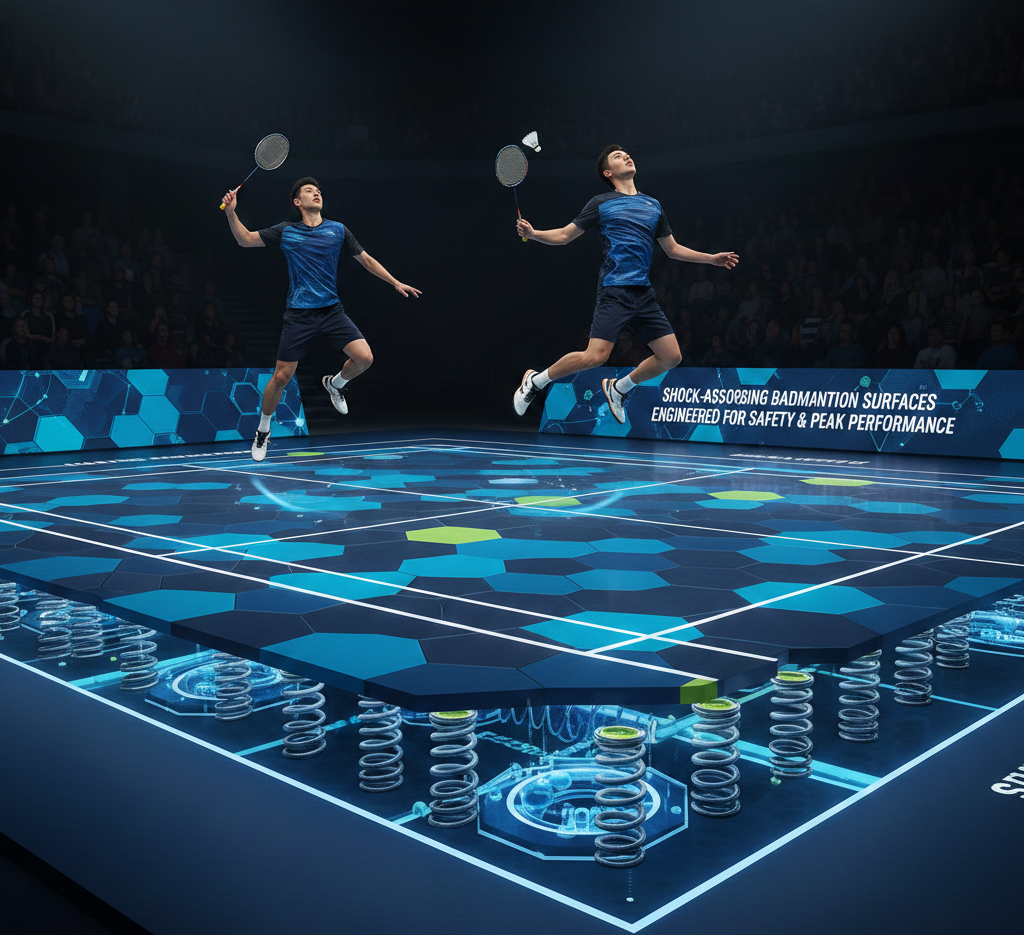
Introduction
In modern sports infrastructure, the surface beneath an athlete’s feet plays a crucial role in determining performance, comfort, and safety. When it comes to badminton—a sport that demands agility, speed, and precision—shock-absorbing badminton surfaces are an absolute necessity.
These advanced flooring systems are designed to reduce the impact on joints, prevent injuries, and enhance gameplay performance. Whether you are constructing a professional badminton academy, a school court, or a recreational facility, a shock-absorbing surface ensures every movement is supported by the right balance of flexibility, grip, and durability.
What Are Shock-Absorbing Badminton Surfaces?
A shock-absorbing badminton surface is a specially engineered flooring system that minimizes the impact forces generated during play. When players jump, land, or make quick lateral movements, the floor absorbs and redistributes the energy—preventing strain on knees, ankles, and hips.
These surfaces are built using multi-layered systems that combine cushioning foam, rubber pads, and synthetic or wooden top layers. The result is a court that offers consistent bounce, superior traction, and long-lasting comfort for players of all skill levels.
Shock absorption is typically measured by a metric known as “force reduction”, which indicates how much of the impact is absorbed by the surface rather than the athlete’s body. Certified badminton courts are designed to meet Badminton World Federation (BWF) and EN standards, ensuring professional-grade safety and performance.
Why Shock Absorption Matters in Badminton
Badminton is one of the fastest racket sports in the world. Players frequently accelerate, decelerate, and jump during rallies. Without proper flooring, this repetitive impact can lead to fatigue, muscle strain, and long-term injuries.
A shock-absorbing surface offers several key benefits:
-
Reduces stress on joints and muscles.
-
Enhances stability during quick directional changes.
-
Improves player comfort and endurance.
-
Minimizes risk of sports injuries such as shin splints and ligament damage.
By cushioning every step and jump, the flooring provides a safer environment that supports long-term athletic development and high performance.
Types of Shock-Absorbing Badminton Flooring
The type of flooring chosen depends on the location (indoor or outdoor), usage level, and budget. Below are the most popular shock-absorbing badminton surfaces used worldwide:
1. Wooden Sports Flooring
-
The traditional and most preferred surface for professional indoor badminton courts.
-
Made from high-quality hardwood (such as maple or teak) with a resilient undercarriage system.
-
The wooden planks rest on elastic pads or shock-absorbing substructures that provide excellent impact reduction.
-
Delivers a natural feel, consistent bounce, and long service life.
-
Commonly used in international tournaments and academies.
2. Vinyl Synthetic Flooring
-
A cost-effective and durable alternative for schools, clubs, and training facilities.
-
Multi-layered structure with a cushioned foam backing that provides efficient shock absorption.
-
Anti-slip texture ensures superior grip and player safety.
-
Easy to clean, maintain, and available in various colors and finishes.
3. Polyurethane (PU) Sports Flooring
-
Seamless, joint-free surface offering excellent shock absorption and resilience.
-
Ideal for indoor multi-sport halls that include badminton among other games.
-
Resistant to scratches, abrasions, and high foot traffic.
-
Offers consistent playability and long-term performance.
4. Rubber Flooring Systems
-
Primarily used in gyms and training areas, but also suitable for multipurpose sports zones.
-
Exceptional energy absorption and anti-fatigue comfort.
-
Eco-friendly and easy to maintain.
5. Acrylic Flooring
-
Best suited for outdoor badminton courts.
-
Weatherproof, UV-resistant, and engineered for consistent bounce.
-
While it offers moderate cushioning, it can be combined with rubberized base layers for enhanced shock absorption.
Key Features of Shock-Absorbing Badminton Surfaces
-
High Impact Reduction
Advanced underlayers reduce up to 40–60% of impact force, ensuring comfort during intense play. -
Optimal Grip and Friction
Anti-slip textures prevent accidental slips or skids while maintaining smooth movement across the surface. -
Uniform Rebound
Consistent bounce across the court ensures fairness and reliability in every game. -
Durability and Longevity
Made from high-quality materials that withstand continuous use, humidity, and temperature variations. -
Low Maintenance
Easy to clean, water-resistant, and designed to maintain performance without frequent resurfacing. -
Aesthetic Appeal
Available in multiple finishes and colors to match the branding or design theme of the facility.
Benefits of Installing Shock-Absorbing Badminton Surfaces
-
Enhanced Player Safety
The cushioning reduces the risk of common injuries like knee pain, ankle sprains, and lower back strain. -
Improved Comfort and Endurance
Players can train longer and perform better without excessive fatigue. -
Professional-Level Playability
Certified shock-absorbing surfaces replicate tournament-level conditions, ensuring a superior gameplay experience. -
Better Energy Return
These surfaces efficiently absorb and redistribute kinetic energy, helping players maintain balance and agility. -
Long-Term Investment Value
High-quality materials offer years of reliable performance with minimal maintenance costs. -
Compliance with Global Standards
Surfaces approved by BWF, EN 14904, and ISO standards are suitable for international-level matches.
Applications of Shock-Absorbing Badminton Flooring
-
Professional badminton academies
-
School and college indoor stadiums
-
Multipurpose sports halls
-
Fitness and training centers
-
Residential sports clubs
-
Community sports complexes
Every space designed for badminton can benefit from the comfort, safety, and longevity that a shock-absorbing floor provides.
Maintenance and Care Tips
-
Regular cleaning with soft mops or vacuum cleaners.
-
Avoid sharp or hard objects on the surface.
-
Maintain humidity between 45–60% for wooden courts.
-
Reapply protective coatings or polish periodically.
-
Conduct surface inspection twice a year for wear and tear.
With proper care, a well-constructed shock-absorbing surface can last over a decade while maintaining its professional quality.
Conclusion
A shock-absorbing badminton surface is not just an upgrade—it’s a commitment to athlete health, performance, and long-term facility value.
Shock-Absorbing Badminton Surfaces – Frequently Asked Questions (FAQ)
❓ 1. What are shock-absorbing badminton surfaces?
Shock-absorbing badminton surfaces are specially designed flooring systems that reduce impact on players’ joints and muscles during movements like jumps, lunges, and rapid directional changes. They provide safety, comfort, and better performance.
❓ 2. Why are shock-absorbing surfaces important for badminton?
These surfaces:
-
Reduce stress on knees, ankles, and lower back
-
Minimize risk of injuries
-
Provide consistent bounce and traction
-
Improve player agility and comfort
-
Extend long-term playing potential for athletes
❓ 3. What types of shock-absorbing badminton floors are available?
Common options include:
-
Modular vinyl sprung floors – Lightweight, portable, and cushioned
-
PU (Polyurethane) sports floors – Durable, seamless, and resilient
-
Wooden sprung floors – Premium option for indoor stadiums
-
PVC or Rubberized floors – Budget-friendly and slip-resistant
❓ 4. How does a shock-absorbing floor reduce injuries?
These floors distribute impact forces evenly, reducing strain on joints and ligaments. The cushioning effect absorbs landing forces from jumps and sudden directional changes, lowering the chance of sprains, fractures, and overuse injuries.
❓ 5. What is the recommended thickness for badminton shock-absorbing floors?
-
Modular vinyl: 6–9 mm
-
PU flooring: 8–15 mm (including base layer)
-
Wooden sprung floors: 45–60 mm (with subfloor and elastic system)
Thickness depends on usage intensity and facility type.
❓ 6. Can these surfaces be used for multi-purpose sports halls?
Yes. Shock-absorbing floors are ideal for multi-sport setups, supporting:
-
Badminton
-
Table tennis
-
Volleyball
-
Indoor training exercises
-
Fitness and aerobics
Modular or PU systems allow line markings for multiple sports.
❓ 7. How do these floors affect game performance?
-
Provide uniform bounce of shuttlecock and ball
-
Ensure stable footing for rapid lateral movements
-
Enhance grip and reduce slipping
-
Allow quick acceleration and deceleration without strain
Players experience better agility and confidence.
❓ 8. What maintenance is required?
-
Daily dusting and dry mopping
-
Weekly wet cleaning with recommended mild solutions
-
Inspecting for tears, bumps, or lifting edges
-
Avoiding heavy objects or sharp equipment on the floor
-
Recoating PU or vinyl surfaces every few years
Regular maintenance extends lifespan and safety.
❓ 9. How long do shock-absorbing badminton floors last?
-
PU floors: 10–15 years
-
Modular vinyl: 8–12 years
-
Wooden sprung floors: 15–20 years
Longevity depends on maintenance, usage intensity, and quality of installation.
❓ 10. Are shock-absorbing floors safe for children and beginners?
Yes. These floors provide:
-
Reduced joint impact
-
Safer landing during jumps
-
Lower risk of slips and falls
-
Comfortable practice environment for all age groups
They are ideal for school and academy courts.
❓ 11. Can the flooring be customized?
Yes. Customization options include:
-
Multi-color line markings for badminton and other sports
-
School, club, or academy logos
-
Different surface textures and grip levels
-
Modular layouts for easy relocation