Introduction
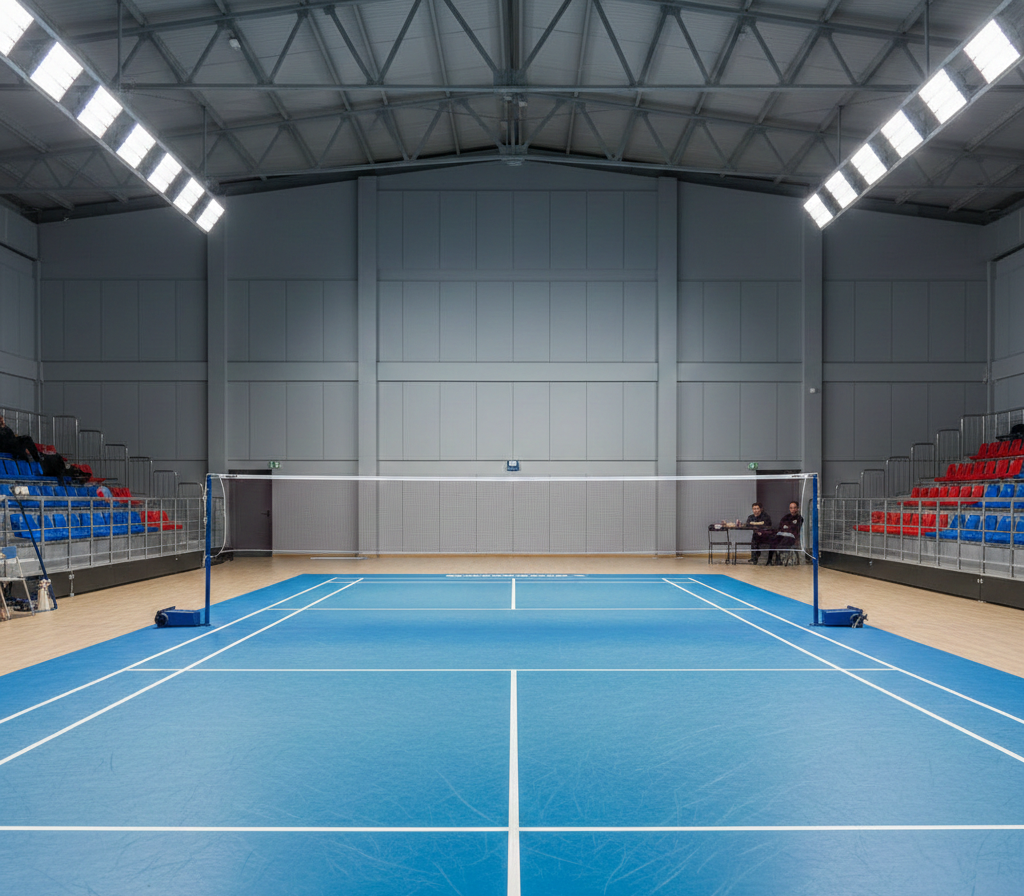
Badminton is one of the fastest-growing indoor sports in India, loved by people of all ages. From schools and sports academies to residential complexes and commercial gyms, the demand for synthetic badminton court flooring has seen tremendous growth in recent years.
A well-constructed badminton court is not just about marking boundaries — it’s about creating a safe, high-performance surface that enhances gameplay, reduces injuries, and ensures long-term durability. Among all available options, synthetic flooring has become the preferred choice for both professional and recreational courts due to its comfort, consistency, and easy maintenance.
If you are planning to build a badminton court, understanding the types, benefits, materials, and construction process of synthetic flooring is essential. Let’s explore everything you need to know.
What is Synthetic Badminton Court Flooring?
Synthetic flooring is a man-made sports surface designed to offer superior grip, shock absorption, and resilience. It provides an even, cushioned surface ideal for fast-paced games like badminton.
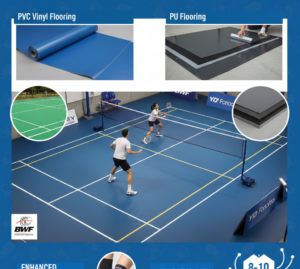
Typically, PVC (Polyvinyl Chloride) or PU (Polyurethane) is used as the main material for synthetic floors. These materials are layered over a prepared base, resulting in a comfortable and high-performance surface that meets international standards set by BWF (Badminton World Federation).
Types of Synthetic Flooring for Badminton Courts
There are several types of synthetic flooring systems used for badminton courts, each with distinct features and performance levels.
1. PVC Vinyl Flooring
PVC vinyl flooring is one of the most popular and widely used surfaces for badminton courts in India. It offers excellent traction, comfort, and durability.
Features:
-
Shock-absorbent and slip-resistant
-
Seamless finish with uniform bounce
-
Water-resistant and easy to clean
-
Available in multiple thicknesses (4.5mm to 7mm)
Ideal for: Indoor sports halls, schools, academies, and commercial complexes.
2. PU (Polyurethane) Flooring
PU flooring is a seamless synthetic surface applied directly over a concrete base. It offers high flexibility and cushioning.
Features:
-
Seamless, joint-free finish
-
High elasticity and wear resistance
-
Long life and low maintenance
-
Suitable for multi-sport indoor use
Ideal for: Indoor stadiums, sports clubs, and professional badminton arenas.
3. Rubberized Synthetic Flooring
This system uses a rubber base with synthetic coatings to improve elasticity and impact resistance.
Features:
-
Excellent shock absorption
-
Eco-friendly and non-toxic
-
Strong grip and player comfort
Ideal for: Multi-purpose sports complexes and high-traffic training centers.
4. Acrylic Synthetic Flooring
Acrylic coatings are usually applied to outdoor badminton courts, offering a durable and weather-resistant surface.
Features:
-
UV-resistant and anti-slip
-
Long-lasting and low-cost
-
Suitable for outdoor play
Ideal for: Outdoor recreation areas, schools, and housing societies.
Construction Process of Synthetic Badminton Court Flooring
Constructing a high-quality badminton court involves multiple steps to ensure stability, precision, and durability. Here’s a detailed step-by-step overview:
1. Site Preparation and Base Construction
The first step is to prepare a strong and level base. Usually, RCC (Reinforced Cement Concrete) or asphalt base is laid to provide a stable foundation.
Proper leveling and surface finishing are essential for the final synthetic layers to bond perfectly.
Key steps:
-
Soil compaction and leveling
-
Base layer installation (RCC or asphalt)
-
Finishing with smooth plaster and primer coating
3. Line Marking and Finishing
-
Singles Court: 13.4m × 5.18m
-
Doubles Court: 13.4m × 6.1m
High-quality, non-fading paint is used for accurate markings and professional aesthetics.
4. Accessories and Lighting Installation
Additional components such as badminton poles, nets, boundary fencing, and LED lighting are installed to complete the setup. Proper indoor lighting is critical for visibility and game quality.
Advantages of Synthetic Badminton Court Flooring
Investing in synthetic flooring offers numerous benefits over traditional wooden or concrete surfaces.
1. Enhanced Player Comfort
Synthetic surfaces provide superior shock absorption, reducing stress on joints, knees, and ankles during play.
2. High Durability
Synthetic flooring can last for 8–10 years with minimal maintenance, making it a cost-effective option.
3. Consistent Performance
The surface ensures uniform bounce and grip, giving players a professional experience every time they play.
4. Easy Maintenance
Unlike wooden courts, synthetic floors are resistant to moisture, termites, and warping. They require simple cleaning and occasional polishing.
5. Aesthetic Appeal
Available in vibrant colors like green, blue, and red, synthetic floors give a modern and premium look to any sports facility.
6. Multi-Sport Compatibility
PU and PVC surfaces are ideal for badminton as well as other indoor games like volleyball, basketball, and futsal.
Maintenance Tips for Synthetic Flooring
To ensure the longevity and performance of your badminton court, regular maintenance is essential.
-
Sweep or vacuum the surface daily to remove dust and debris.
-
Avoid dragging heavy objects across the floor.
-
Wipe off water or sweat immediately to prevent slipping.
-
Use non-marking sports shoes only.
-
Recoat or polish every few years for surface rejuvenation.
Following these simple steps can extend your court’s lifespan and maintain its professional look.
Cost of Synthetic Badminton Court Construction in India
The cost of constructing a synthetic badminton court depends on the type of flooring, site conditions, and additional features.
Approximate Cost Breakdown:
-
PVC Synthetic Flooring: ₹4.5 – ₹7.5 lakh per court
-
PU Flooring: ₹6 – ₹10 lakh per court
-
Acrylic Flooring (Outdoor): ₹3.5 – ₹6 lakh per court
Prices may vary based on brand, thickness, and customization. However, synthetic courts offer an excellent return on investment due to their low maintenance and long service life.
Why Choose Us for Synthetic Badminton Court Construction
As one of India’s leading sports flooring contractors, we specialize in designing and building world-class badminton courts that meet BWF standards.
Our Key Advantages:
-
100+ successful installations across India
-
Use of international-grade synthetic materials
-
Skilled workforce and advanced technology
-
Complete turnkey solutions (design, supply, installation, maintenance)
-
Custom color and branding options available
Whether it’s a school, club, academy, or residential complex, we provide tailored solutions to meet every requirement and budget.
Conclusion
A well-designed synthetic badminton court is the foundation for safe, enjoyable, and high-quality play. From PVC and PU to acrylic flooring, modern synthetic materials provide unmatched performance, durability, and aesthetics.
If you’re planning to build a badminton court that meets international standards, investing in synthetic flooring is the smartest choice. It combines comfort, consistency, and low maintenance — ensuring years of flawless gameplay and professional appeal.https://www.sports-facility.in/index.php
Transform your space into a world-class badminton arena with expert construction, premium materials, and precision installation.
FAQ – Synthetic Flooring for Badminton Court
1. What is synthetic flooring for a badminton court?
Synthetic badminton court flooring is a high-performance sports surface made from materials like acrylic, PVC vinyl, or polyurethane (PU). Installed over a well-prepared concrete base, it provides:
-
Anti-slip traction for players
-
Shock absorption to reduce joint stress
-
Consistent shuttle bounce
-
Enhanced durability and safety
It is suitable for indoor and outdoor badminton courts.
2. Why choose synthetic flooring for badminton courts?
Synthetic flooring is popular because it:
-
Reduces risk of injuries with anti-slip and shock-absorbing properties
-
Ensures uniform shuttle bounce for professional gameplay
-
Offers weather resistance and long-term durability
-
Can be customized with colors, logos, and line markings
Ideal for schools, colleges, sports academies, community centers, and professional stadiums.
3. What types of synthetic flooring are used for badminton courts?
Acrylic Flooring
-
Best for outdoor courts
-
UV-resistant and weatherproof
-
Cost-effective
PVC Vinyl Flooring
-
Ideal for indoor stadiums and academies
-
Provides excellent cushioning and player comfort
PU (Polyurethane) Flooring
-
Premium seamless sports surface
-
High durability and professional-grade performance
The choice depends on indoor/outdoor setup, usage frequency, and budget.
4. What is the cost of synthetic flooring for badminton courts?
Approximate costs:
-
₹150 to ₹400 per sq. ft., depending on material type and thickness
-
Full court installation includes base preparation, fencing, lighting, and customization
Costs vary depending on location, project size, and contractor expertise.
5. Is synthetic flooring suitable for outdoor badminton courts?
Yes. Acrylic and PU synthetic surfaces are designed for outdoor use. Proper base preparation, waterproofing, and drainage are essential to prevent damage during rainy seasons.
6. How long does synthetic badminton flooring last?
-
Acrylic surfaces: 5–8 years
-
PU flooring: 8–10+ years
-
PVC indoor flooring: 8–12 years
Longevity depends on installation quality, usage intensity, and maintenance.
7. What base is required for synthetic badminton flooring?
A smooth, well-cured RCC or PCC concrete base is necessary. The base must be:
-
Level and crack-free
-
Moisture-resistant
-
Properly sloped for outdoor drainage
High-quality base preparation ensures adhesion and long-term durability.
8. Is synthetic flooring safe for players?
Yes. Synthetic flooring provides:
-
Anti-slip surface
-
Shock absorption to reduce knee and ankle strain
-
Consistent traction for fast movements
-
Lower risk of injuries
Suitable for schools, colleges, academies, and professional training centers.
9. What maintenance is required?
-
Daily sweeping or dust removal
-
Weekly damp mopping
-
Periodic inspection for surface wear
-
Recoating acrylic surfaces every few years if needed
Proper maintenance ensures longevity and consistent performance.
10. Can badminton courts with synthetic flooring be customized?
Yes. Options include:
-
Court color combinations (green, blue, red, etc.)
-
Standard badminton line markings
-
School, academy, or club logos
-
Sponsor branding
Customization enhances aesthetics, branding, and professional appeal.