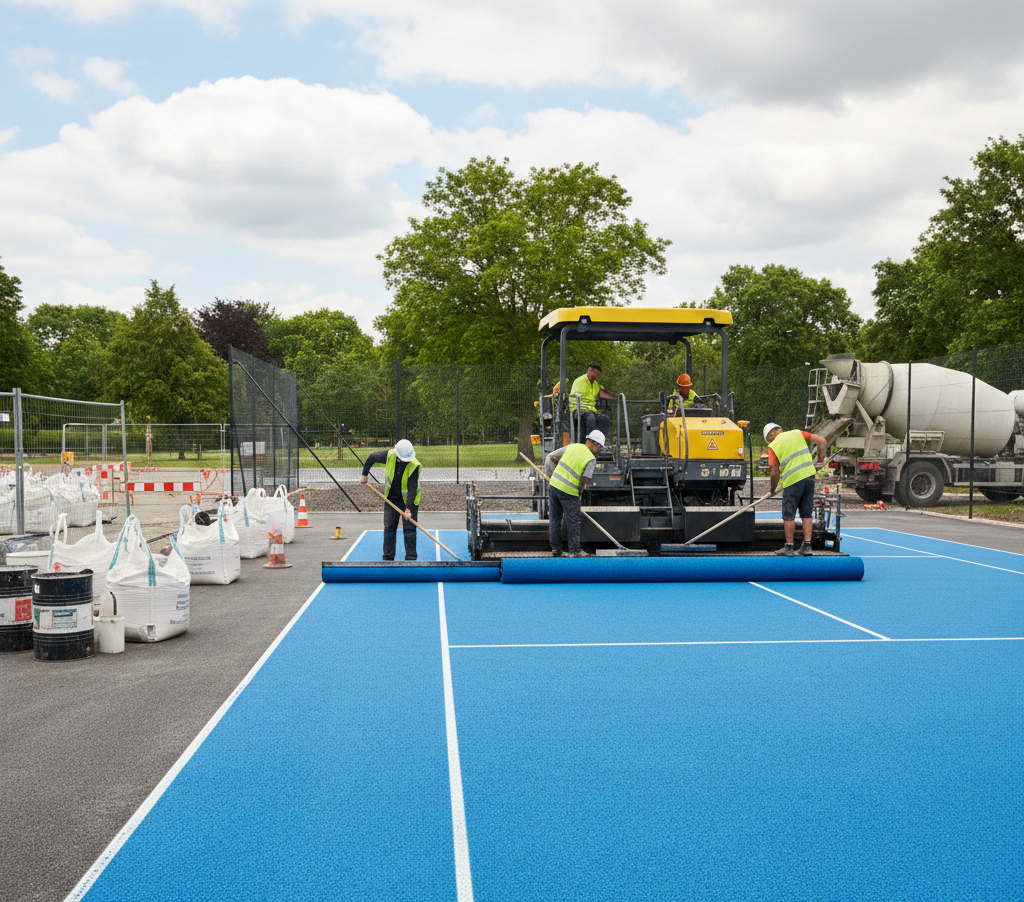
Building a tennis court with rubber flooring is becoming increasingly popular due to its superior comfort, safety, and long-lasting performance. Whether you’re developing a professional sports facility, school playground, or private residential court, rubber flooring offers a modern, high-quality surface that enhances playability and reduces maintenance.
In this complete guide, we’ll cover everything you need to know about tennis court rubber flooring construction, including benefits, materials, installation process, cost, and maintenance — all written in clear, SEO-optimized, plagiarism-free content.
1. Introduction: What Is Rubber Flooring for Tennis Courts?
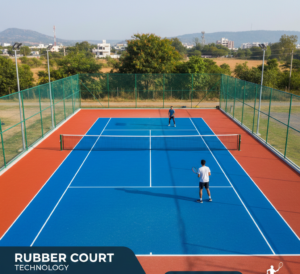
Rubber flooring for tennis courts is a resilient surface made from synthetic rubber compounds such as EPDM (Ethylene Propylene Diene Monomer) or SBR (Styrene Butadiene Rubber). These materials are known for their elasticity, durability, and ability to withstand extreme weather conditions.
Unlike traditional acrylic or clay surfaces, rubber flooring provides shock absorption, reducing the risk of injuries and joint strain. It is ideal for both indoor and outdoor tennis courts, offering a perfect blend of performance and comfort.
2. Why Choose Rubber Flooring for Tennis Courts
Rubber flooring has several unique advantages that make it one of the best modern solutions for court construction:
✅ Shock Absorption and Player Safety
Rubber surfaces absorb impact during play, minimizing stress on players’ knees and ankles. This makes it perfect for professional athletes and regular players alike.
✅ All-Weather Durability
Rubber floors are UV resistant, non-slip, and water-resistant. They perform well in hot, humid, and rainy climates, which makes them perfect for Indian weather conditions.
✅ Low Maintenance
Unlike clay or grass courts, rubber flooring requires very little upkeep. Occasional cleaning and inspection are enough to keep the court in top condition for years.
✅ Noise Reduction
Rubber absorbs sound effectively, making gameplay quieter — especially useful for indoor courts or residential complexes.
✅ Eco-Friendly and Recyclable
Modern rubber flooring systems use recycled materials, contributing to sustainable construction practices.
3. Types of Rubber Flooring for Tennis Courts
There are several types of rubber flooring available, each designed for different levels of play and budgets.
1. EPDM Rubber Flooring
-
Made from high-grade synthetic rubber granules.
-
Offers vibrant color options and long-lasting elasticity.
-
UV and weather-resistant — perfect for outdoor tennis courts.
2. SBR Rubber Flooring
-
Made from recycled tires and rubber.
-
Cost-effective and durable but less UV resistant than EPDM.
-
Ideal for indoor or shaded courts.
3. PU-Bound Rubber System (Hybrid)
-
Combines rubber base layers with polyurethane top coats.
-
Smooth, seamless finish that enhances gameplay.
-
Offers excellent cushioning and slip resistance.
4. Tennis Court Rubber Flooring Construction Process
Building a tennis court with rubber flooring requires precision, engineering, and quality control. Here’s the step-by-step construction process:
Step 1: Site Assessment and Design
Professionals start by analyzing the location, soil condition, and drainage. The court layout follows ITF standards — 78 feet long and 36 feet wide (for doubles). Proper planning ensures drainage efficiency and even surface levels.
Step 2: Ground Preparation
-
Excavation and leveling are done to create a stable foundation.
-
A compacted crushed stone base or concrete base is laid to provide strength and support.
-
Proper slope (usually 1%) is maintained to allow water runoff.
Step 3: Rubber Base Layer Installation
A mixture of rubber granules and polyurethane binder is poured and leveled evenly. This creates the first cushioning layer, ensuring flexibility and shock absorption.
Step 4: EPDM Top Layer Application
A colorful EPDM granule layer is applied using a trowel or spray technique. The thickness usually ranges between 10mm and 15mm, depending on desired performance.
This top layer provides traction, UV resistance, and visual appeal.
Step 5: Line Marking and Finishing
After the surface cures, white acrylic or PU lines are marked precisely according to ITF standards. Finishing touches like fencing, nets, benches, and lighting are then added.
Step 6: Quality Inspection
Experts inspect the surface for evenness, elasticity, and durability before handing it over for play.
5. Advantages of Rubber Tennis Court Flooring
Rubber courts provide a superior playing experience with many benefits over traditional options:
| Feature | Rubber Flooring | Hard Court | Clay Court |
|---|---|---|---|
| Comfort | Excellent | Moderate | High |
| Maintenance | Very Low | Medium | High |
| Durability | 10–15 years | 8–10 years | 5–8 years |
| Shock Absorption | Excellent | Moderate | High |
| Weather Resistance | Excellent | Good | Poor |
| Cost | Medium | High | Medium |
6. Cost of Tennis Court Rubber Flooring Construction
The total cost depends on location, material quality, and additional features like lighting and fencing.
Here’s a general cost breakdown for India (2025 estimates):
| Component | Estimated Cost (INR) |
|---|---|
| Site Preparation | ₹1,50,000 – ₹2,50,000 |
| Rubber Base & EPDM Top Layer | ₹5,00,000 – ₹10,00,000 |
| Fencing & Net Installation | ₹1,00,000 – ₹2,00,000 |
| Lighting (Optional) | ₹1,00,000 – ₹5,00,000 |
| Total Cost | ₹8,00,000 – ₹18,00,000 |
💡 Tip: Always choose ITF-certified materials and experienced contractors to ensure durability and long-term performance.
7. Maintenance Tips for Rubber Flooring Courts
Maintaining a rubber tennis court is simple and cost-effective. Follow these practices to extend its lifespan:
-
Clean regularly using mild soap and water to remove dirt and dust.
-
Avoid sharp objects or heavy equipment on the surface.
-
Inspect for wear or cracks annually and reseal if needed.
-
Ensure proper drainage to prevent water pooling during heavy rains.
-
Repaint lines every few years to maintain visibility and professional appearance.
8. Applications of Rubber Tennis Court Flooring
Rubber flooring is versatile and suitable for many sports and institutions:
-
Sports academies and tennis clubs
-
Schools and universities
-
Corporate or residential complexes
-
Indoor sports facilities
-
Recreational centers
Its non-slip surface and long lifespan make it a perfect investment for multipurpose use beyond tennis, including badminton, volleyball, or basketball.
9. Why Choose Professional Rubber Flooring Experts
Hiring a professional tennis court construction company ensures that every step — from base preparation to finishing — meets international standards.
Professional contractors provide:
-
Accurate leveling and alignment
-
Use of premium EPDM materials
-
Seamless surface finish
-
Proper slope and drainage engineering
-
Maintenance support and warranty
At Sports-Facility.in, we specialize in rubber flooring tennis court construction across India, offering customized design, certified materials, and end-to-end solutions. Our courts are known for durability, comfort, and world-class performance
10. Conclusion
Rubber flooring tennis courts combine innovation, comfort, and performance — making them one of the most preferred choices for modern sports infrastructure. They offer shock absorption, slip resistance, durability, and low maintenance, ensuring a premium playing experience for years.
Whether you’re constructing a court for professional tournaments or private recreational use, investing in high-quality rubber flooring will deliver both player satisfaction and long-term value.
Choose expert builders who understand surface science, follow ITF standards, and use certified materials — because a great tennis court starts from the ground up.
(FAQ) – Tennis Court Rubber Flooring Construction
1. What is tennis court rubber flooring?
Tennis court rubber flooring is a specialized cushioned surface made of rubber granules bound with polyurethane. It provides shock absorption, anti-slip properties, and enhanced player comfort, making it ideal for high-performance training and recreational play.
2. Why choose rubber flooring for a tennis court?
-
Shock absorption: Reduces stress on knees, ankles, and joints
-
Anti-slip surface: Safe even during humid or wet conditions
-
Durable: Resistant to wear, UV rays, and temperature fluctuations
-
Consistent ball bounce: Maintains high playability over time
-
Low maintenance: Easy to clean and repair
3. What types of rubber flooring are used for tennis courts?
-
Poured-in-place rubber: Seamless, smooth, and cushioned surface
-
Interlocking rubber tiles: Modular and easy to replace damaged sections
-
Rubberized cushioned layers under acrylic: Combines shock absorption with a traditional acrylic playing surface
4. How is tennis court rubber flooring constructed?
-
Site preparation: Excavation, leveling, and base preparation (concrete or asphalt)
-
Drainage installation: Proper slope and drainage to prevent waterlogging
-
Rubber layer installation: Poured or modular rubber is applied on the prepared base
-
Finishing: Acrylic or polyurethane topcoat, line markings, and optional surface texturing for ball bounce
5. How long does it take to construct a rubber tennis court?
Construction typically takes 2–4 weeks, depending on:
-
Court size and type of rubber flooring
-
Base condition and drainage work
-
Weather conditions (especially for outdoor courts)
6. Can rubber flooring be customized?
Yes. Customizations include:
-
Color options: For base and topcoat
-
Cushion thickness: Varies from 8 mm to 20 mm for shock absorption
-
Line markings: ITF-standard or personalized logos
-
Surface texture: Smooth or slightly textured for traction
7. How long does rubber flooring last?
With proper installation and maintenance, rubber tennis court surfaces can last 10–15 years. Routine cleaning and inspection help maintain performance and durability.
8. Does rubber flooring require maintenance?
Yes. Maintenance includes:
-
Regular sweeping and cleaning to remove dust and debris
-
Checking for cracks or damaged sections
-
Repainting lines when faded
-
Periodic inspection of drainage and base integrity
9. Is rubber flooring suitable for professional or recreational courts?
Yes. Rubber flooring is suitable for:
-
Professional tennis academies and training centers
-
School and college courts
-
Residential or recreational community courts
Its shock-absorbing properties make it ideal for frequent use and long playing sessions.
10. Why hire professional contractors for rubber tennis court construction?
Professional contractors ensure:
-
Correct base preparation and drainage
-
Precise rubber layer installation
-
Accurate ITF-standard line markings
-
Long-lasting performance and safety
-
Warranty-backed installation