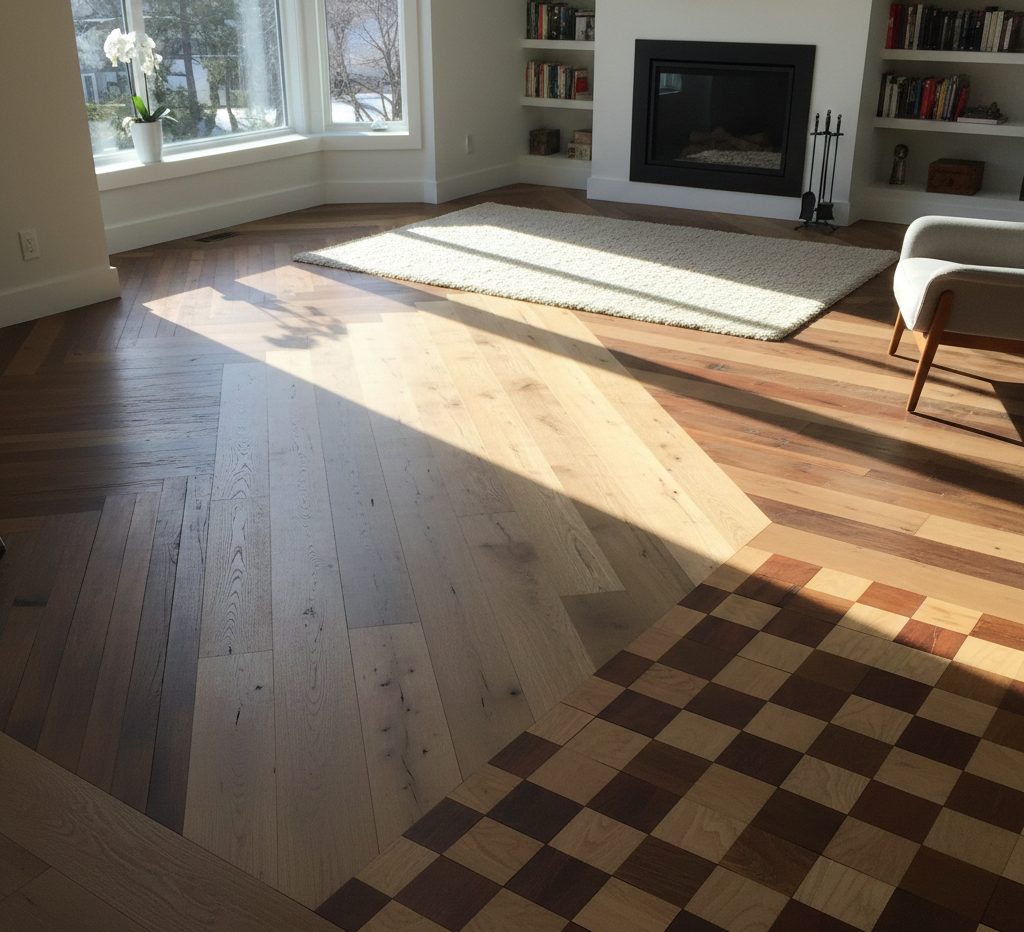
Wood flooring has always been one of the most timeless, elegant, and durable choices for residential and commercial interiors. Beyond selecting the right wood species, finish, or thickness, one important design element that significantly impacts both aesthetics and functionality is the direction in which the wood planks are installed. While most people choose traditional straight layouts, wood floors can be installed in several different directions—each offering unique visual effects, structural benefits, and spatial behavior.
In this detailed blog, we explore how wood floors behave when installed in different directions, the pros and cons of each layout, and key factors to consider before deciding the direction of your flooring. Whether you’re designing a home, studio, office, or retail space, understanding directional installation can help you achieve the perfect look and performance.
Why Direction Matters in Wood Flooring
Wood is a natural material that expands, contracts, absorbs light, and influences spatial perception. The direction in which planks are placed affects:
-
Room size appearance
-
Lighting reflection
-
Depth and spaciousness
-
Structural stability
-
Traffic flow and durability
-
Overall interior design style
Running wood floors in different directions is not just a design choice—it is a strategy that blends function, style, and performance.
1. Straight Direction (Traditional Layout)
The most common installation method is placing wood planks parallel to the longest wall or the main direction of traffic.
Advantages
-
Creates a long, clean, and continuous look
-
Makes narrow rooms appear larger
-
Offers uniformity and simplicity
-
Works well with almost all interior styles
Best For
-
Living rooms
-
Hallways
-
Bedrooms
-
Minimalistic interiors
Performance Insight
Straight layouts evenly distribute foot pressure and reduce stress on planks, making them ideal for households and offices with consistent walking patterns.
2. Perpendicular Direction (Across the Room)
In this layout, the planks run across the shorter side of the room, perpendicular to the longest wall.
Advantages
-
Adds visual width to narrow or long rooms
-
Great for balancing awkward room proportions
-
Highlights certain architectural lines
Best For
-
Narrow bedrooms
-
Long corridors that need a wider appearance
-
Rooms with statement furniture
Performance Insight
Perpendicular flooring may have slightly more joint stress but remains stable with proper subfloor preparation.
3. Diagonal Wood Flooring
Running planks at a 45° angle creates a deeply modern, expansive, and luxurious appearance.
Advantages
-
Adds movement and depth to any room
-
Makes small spaces appear larger
-
Reduces the “boxy” feel of square rooms
-
Highlights corners and creates visual flow
Best For
-
Modern living rooms
-
Hotel lobbies
-
Designer homes
-
Premium commercial interiors
Performance Insight
Diagonal flooring increases material usage by 10–15% due to cutting, but the final aesthetic is worth the investment for luxury spaces.
4. Herringbone Pattern (Multi-Directional)
Herringbone is one of the most iconic wood floor patterns, featuring planks arranged in a zig-zag style.
Advantages
-
Visually striking and elegant
-
Works extremely well in both small and large rooms
-
Adds rhythm and sophistication
-
Enhances the luxury factor of the space
Best For
-
High-end homes
-
Corporate offices
-
Boutique stores
-
Living and dining areas
Performance Insight
Because planks meet at precise angles, herringbone flooring is highly stable and handles foot traffic in multiple directions better than straight layouts.
5. Chevron Pattern (Directional Angle Cut)
Chevron floors look similar to herringbone but feature angled cuts, creating a V-shaped pattern.
Advantages
-
Adds a modern, geometric appearance
-
Perfectly symmetrical patterning
-
Creates elegant flow and directional movement
-
Enhances lighting and reflection
Best For
-
Luxury apartments
-
Premium commercial settings
-
Feature walls or statement flooring
Performance Insight
Chevron requires precise installation and high craftsmanship but offers excellent durability and uniformity.
6. Parquet Flooring (Multi-Directional Blocks)
Parquet flooring uses small wood blocks arranged in artistic patterns like basketweave, mosaic, or Versailles style.
Advantages
-
Ultimate visual appeal and craftsmanship
-
Rich, traditional, and premium aesthetic
-
Adds dimension and artistic value
-
Works for both classic and modern interiors
Best For
-
Heritage homes
-
Luxury villas
-
Formal living areas
-
Reception zones
Performance Insight
Because of multiple directional joints, parquet floors are extremely stable and resistant to warping.
7. Mixed-Direction Installation (Customized Designs)
Modern interior designers sometimes blend multiple directions in the same room. For example:
-
Straight planks in the living area + diagonal planks near the entrance
-
Herringbone pattern in the center + straight border around it
-
Chevron floor for main room + perpendicular in a connecting hallway
Advantages
-
Unique design identity
-
Customizable layout
-
Highlights different parts of a room
-
Creates architectural zoning
Best For
-
Open-concept homes
-
Large halls
-
Restaurants & resorts
-
High-end residential projects
Performance Insight
Requires expert craftsmanship and a clear design plan to ensure smooth transitions between directions.
Choosing the Right Direction: Key Factors
Here are the top considerations when deciding how to run your wood floors:
1. Room Size & Shape
-
Long rooms benefit from planks running lengthwise
-
Square rooms look larger with diagonal or herringbone
2. Natural Light Direction
Planks running parallel to sunlight reduce visible shadows and seams.
3. Architectural Features
Fireplaces, entryways, or accent walls often determine the best flooring direction.
4. Traffic Flow
Choose the direction that aligns with daily walking patterns for smoother movement.
5. Structural Considerations
In older buildings, floors are often laid perpendicular to joists for additional strength.
Maintenance Tips for All Directional Wood Floors
No matter which direction you choose, proper maintenance enhances durability:
-
Sweep and vacuum regularly to remove grit
-
Use soft pads under heavy furniture
-
Avoid excessive moisture
-
Refinish when surface wear becomes visible
-
Use rugs in high-traffic zones
Directional flooring doesn’t affect maintenance frequency, but patterned floors like herringbone may require detailed cleaning due to more joints.
Conclusion
Wood floors running in different directions offer endless possibilities for enhancing interior spaces. Whether you prefer the simplicity of straight layouts, the elegance of herringbone, or the modern flair of diagonal designs, the direction of wood flooring plays a crucial role in shaping the character, perception, and functionality of a room.
By carefully considering room size, lighting, architectural features, and personal style, you can choose a wood flooring direction that not only enriches your interiors but also provides long-lasting performance. With the right installation and maintenance, multi-directional wood floors remain a timeless investment that elevates any space with warmth, beauty, and sophistication.