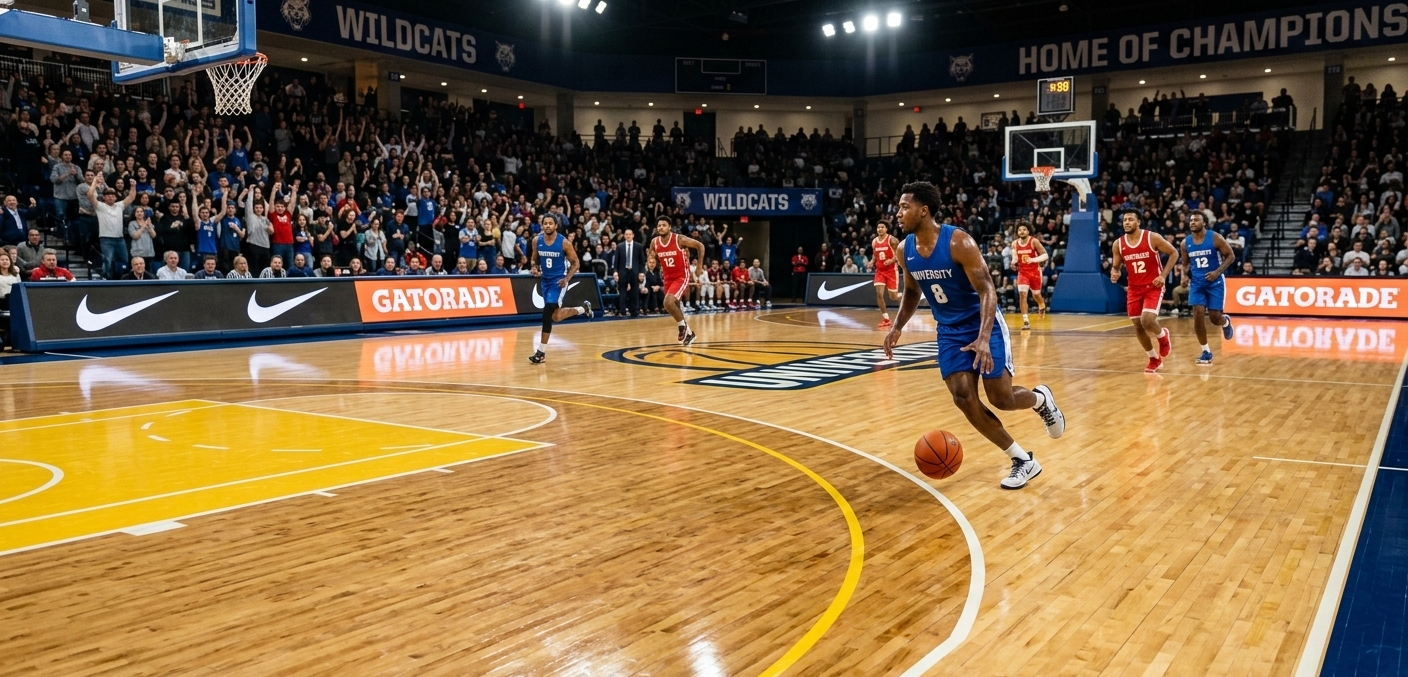
Basketball is one of the world’s most dynamic and fast-paced sports, demanding agility, precision, and endurance from players. However, beyond athletic skills, one of the most crucial elements that defines the quality of the game is the flooring material. The surface of a basketball court directly impacts player performance, safety, and overall experience. Whether the court is built for professional tournaments, schools, residential complexes, or outdoor recreation, the choice of flooring material plays a pivotal role in ensuring optimal gameplay.
In this detailed guide, we’ll explore the types of flooring materials usually used for basketball courts, their properties, benefits, and why each type is best suited for specific environments.
Why Flooring Material Matters in Basketball
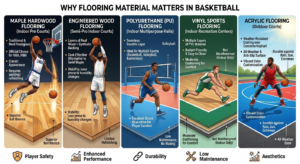
Basketball involves intense movements—running, jumping, quick turns, and sudden stops. The surface beneath the players must provide the right balance between grip, bounce, and shock absorption. A well-designed basketball court flooring ensures:
-
Enhanced performance: Consistent ball bounce and smooth player movement.
-
Player safety: Shock absorption to protect knees and ankles.
-
Durability: Resistance to wear, tear, and environmental damage.
-
Low maintenance: Easy to clean and maintain for long-term use.
-
Aesthetics: A professional and visually appealing playing surface.
With these factors in mind, let’s understand the most common flooring materials used across various types of basketball courts.
1. Maple Hardwood Flooring
Commonly used in: Indoor professional basketball courts, stadiums, and gyms
Overview:
Hard maple wood is the traditional and most prestigious material used for basketball court flooring. It’s the official choice for NBA, FIBA, and most professional sports arenas. Maple is known for its fine grain, strength, and resilience, providing an unmatched playing experience.
Advantages:
-
Superior Ball Bounce: Delivers consistent rebound and performance.
-
Shock Absorption: Protects players’ joints and reduces fatigue.
-
Durability: With proper maintenance, it can last for 25–30 years.
-
Classic Appearance: Gives a professional, high-end look.
-
Renewable Surface: Can be sanded and refinished multiple times.
Disadvantages:
-
High Cost: Installation and maintenance are expensive.
-
Sensitive to Moisture: Can warp or expand with humidity changes.
Why Choose Maple Hardwood:
For indoor courts aiming for professional standards, maple wood flooring remains the gold standard. It offers the perfect blend of aesthetics, performance, and long-term value.
2. Engineered Wood Flooring
Commonly used in: Semi-professional indoor courts and training facilities
Overview:
Engineered wood combines layers of real wood veneer with synthetic backing for improved stability. It provides a similar appearance and performance to solid maple but with better resistance to temperature and humidity.
Advantages:
-
Cost-Effective Alternative: Lower price than solid maple.
-
Stability: Less prone to expansion or contraction.
-
Easier Installation: Can be installed over multiple surfaces.
-
Good Ball Response: Suitable for practice and training use.
Disadvantages:
-
Limited Refinishing: Can be sanded only a few times.
-
Slightly Less Durability: Compared to solid hardwood.
Why Choose Engineered Wood:
Perfect for indoor facilities that require wooden aesthetics but at a more affordable cost and lower maintenance level.
3. Polyurethane (PU) Flooring
Commonly used in: Indoor multipurpose sports halls and schools
Overview:
PU flooring is a synthetic surface that provides a seamless, flexible, and durable layer ideal for multiple sports, including basketball, volleyball, and badminton.
Advantages:
-
Seamless Surface: Prevents dirt accumulation and ensures uniform play.
-
Shock Absorbing: Excellent for player comfort and injury prevention.
-
Easy Maintenance: No polishing or waxing required.
-
Customizable Design: Available in multiple colors and line markings.
-
Long Life: Can last 10–15 years with minimal upkeep.
Disadvantages:
-
Softer Feel: Slightly less ball bounce than wooden flooring.
Why Choose PU Flooring:
PU is a great option for schools, sports complexes, and clubs that need a versatile, durable, and low-maintenance solution for both training and competitions.
4. Vinyl Sports Flooring
Commonly used in: Indoor recreation centers and multipurpose gymnasiums
Overview:
Vinyl flooring is made from multiple layers of PVC material and is known for its comfort, resilience, and affordability. It’s ideal for facilities that host a variety of sports, including basketball.
Advantages:
-
Budget-Friendly: More affordable than wood or PU.
-
Easy to Clean: Simple maintenance routine.
-
Anti-Slip Surface: Enhances safety during play.
-
Shock Absorption: Offers moderate cushioning for comfort.
-
Variety of Designs: Can mimic wooden textures and sports markings.
Disadvantages:
-
Less Authentic Feel: Doesn’t fully replicate hardwood bounce.
-
Not Weatherproof: Limited to indoor use.
Why Choose Vinyl Flooring:
Vinyl is a practical choice for school gyms, community centers, or recreational facilities looking for cost efficiency and multi-sport functionality.
5. Acrylic Flooring
Commonly used in: Outdoor basketball courts
Overview:
Acrylic flooring is applied over a concrete or asphalt base, forming a smooth, durable, and weather-resistant coating. It’s one of the most common materials for outdoor basketball courts in schools, parks, and residential areas.
Advantages:
-
All-Weather Resistant: Handles rain, sunlight, and temperature extremes.
-
Anti-Slip Surface: Ensures traction in all conditions.
-
Color Customization: Available in vibrant shades for attractive designs.
-
Low Maintenance: Simple to clean and maintain.
-
Durable: Resists cracking and fading for years.
Disadvantages:
-
Hard Surface: Less cushioning compared to wood or PU.
Why Choose Acrylic Flooring:
Acrylic is the most reliable and economical choice for outdoor basketball courts, offering long-term performance and safety under varying weather conditions.
6. Modular Interlocking Tiles (PP Tiles)
Commonly used in: Outdoor and temporary courts
Overview:
Made from high-impact polypropylene, these tiles are designed to interlock and create a flexible, shock-absorbing sports surface.
Advantages:
-
Quick Installation: Can be assembled without adhesives.
-
Weatherproof: UV-resistant and durable under all climates.
-
Easy to Replace: Individual tiles can be swapped if damaged.
-
Portable: Can be relocated or resized.
-
Shock Absorbing: Protects players from impact injuries.
Disadvantages:
-
Slightly Noisy: Tiles may produce sound under impact.
-
Different Feel: Not identical to indoor wooden floors.
Why Choose Modular Tiles:
Perfect for community setups or multi-sport outdoor courts where durability, flexibility, and portability are essential.
Comparison of Common Basketball Court Materials
| Material | Location | Durability | Shock Absorption | Maintenance | Cost Level | Best Use |
|---|---|---|---|---|---|---|
| Maple Hardwood | Indoor | Very High | Excellent | Moderate | High | Professional arenas |
| Engineered Wood | Indoor | High | Excellent | Moderate | Medium | Training facilities |
| PU Flooring | Indoor | High | High | Low | Medium | Multipurpose courts |
| Vinyl Flooring | Indoor | Moderate | Medium | Low | Low | Recreational centers |
| Acrylic Flooring | Outdoor | Very High | Moderate | Low | Low | Outdoor courts |
| Modular Tiles | Outdoor | Very High | Good | Very Low | Medium | Parks & community areas |
Maintenance Tips for Basketball Court Flooring
-
Regular Cleaning: Remove dust, sweat, and debris to maintain traction.
-
Avoid Moisture: Keep indoor floors dry to prevent warping or damage.
-
Resurfacing: Wooden and acrylic courts may need periodic refinishing.
-
Inspect Frequently: Repair cracks or damaged areas early.
-
Proper Footwear: Encourage use of non-marking shoes.
Final Thoughts
The best flooring material for a basketball court depends on its intended use, location, and budget.
-
For professional indoor courts, maple hardwood remains the ultimate choice for performance and prestige.
-
For indoor multipurpose or training facilities, PU or vinyl flooring provides flexibility and cost savings.
-
For outdoor courts, acrylic flooring or modular interlocking tiles offer durability, safety, and weather resistance.
No matter which material you choose, always ensure professional installation and regular maintenance to achieve the perfect balance of performance, safety, and longevity.