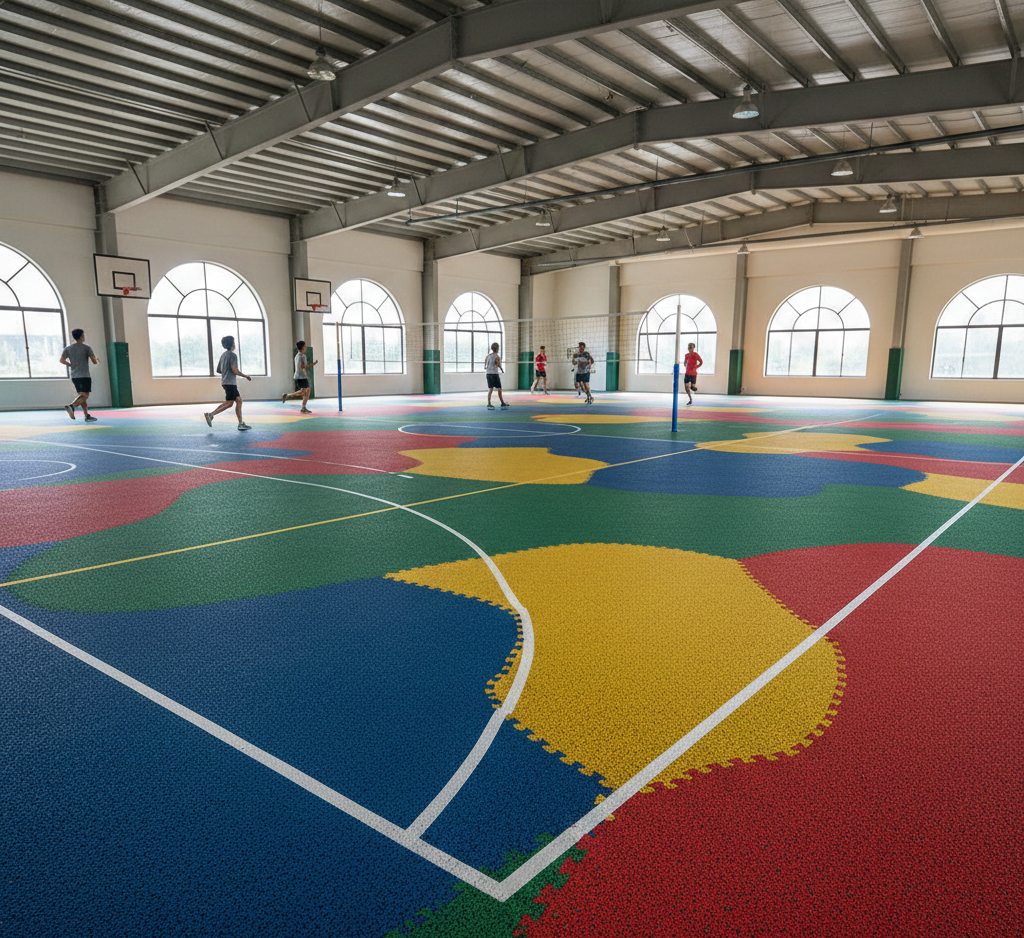
EPDM rubber flooring is a high-quality, durable, and flexible surface made from EPDM (Ethylene Propylene Diene Monomer) rubber granules. It is widely used in children’s play areas, jogging tracks, sports zones, parks, schools, gyms, and recreational spaces due to its excellent safety, comfort, and weather-resistant properties.
Designed to combine performance with aesthetics, EPDM flooring is available in a wide range of vibrant colors and patterns, making it both functional and visually appealing.
Composition of EPDM Rubber Flooring
EPDM rubber flooring is created by mixing:
-
Premium EPDM colored rubber granules
-
Polyurethane (PU) binder
-
Optional shock-absorbing base layer (SBR or recycled rubber)
This mixture is either poured in-situ (on site) or installed in pre-made tiles, resulting in a seamless, long-lasting surface.
Key Features of EPDM Rubber Flooring
1. Safety First
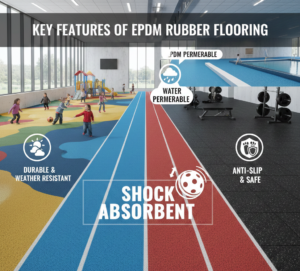
EPDM flooring offers excellent shock absorption, reducing the risk of injuries from falls. This makes it ideal for children’s playgrounds and fitness areas.
2. Weather & UV Resistant
It performs well in extreme heat, rain, and sunlight without cracking, fading, or becoming slippery.
3. Non-Slip Surface
The textured finish ensures good grip, even in wet conditions, providing a safe walking and running experience.
4. Eco-Friendly
EPDM flooring is environmentally responsible, using non-toxic materials and often incorporating recycled rubber in its base layer.
5. Low Maintenance
It is easy to clean and requires minimal maintenance, saving time and long-term costs.
6. Customizable Designs
Available in multiple colors, thicknesses, and patterns, EPDM flooring can be designed to match theme parks, school branding, or sports layouts.
Applications of EPDM Rubber Flooring
EPDM rubber flooring is suitable for a wide range of applications, including:
-
Children’s playgrounds
-
Jogging and walking tracks
-
Outdoor gyms and fitness zones
-
Sports courts and training areas
-
School and kindergarten play zones
-
Amusement parks and recreational areas
-
Rooftop play areas and terraces
Installation Process
EPDM flooring can be installed using two methods:
1. In-Situ (Poured) Installation
Granules and binder are mixed on site and applied directly to the prepared base, creating a seamless and smooth surface.
2. Tile Installation
Pre-manufactured EPDM tiles are fixed onto the base, allowing faster installation and easy replacement.
Both methods ensure durability and safety when installed by trained professionals.
Advantages Over Traditional Flooring
-
Softer and safer than concrete or tiles
-
More durable than grass or sand
-
Better shock absorption than synthetic turf
-
All-weather usability
-
Long lifespan with consistent performance
Thickness Options
EPDM flooring thickness typically ranges from:
-
10–15 mm – Walking paths and light activity areas
-
20–30 mm – Playgrounds and fitness zones
-
40 mm and above – High-impact fall zones under play equipment
Why Choose EPDM Rubber Flooring?
Choosing EPDM rubber flooring means investing in:
-
Safety and comfort
-
Long-term durability
-
Attractive design
-
Sustainable construction
-
Low maintenance costs
It is an ideal flooring solution for modern outdoor and indoor recreational spaces that prioritize user safety and performance.
Conclusion
EPDM rubber flooring is a smart, safe, and sustainable flooring solution that enhances both the functionality and appearance of recreational areas. Whether it’s a children’s playground, a jogging track, or a sports facility, EPDM flooring delivers comfort, safety, and durability in every step.
FAQ – EPDM Rubber Flooring
1. What is EPDM rubber flooring?
EPDM rubber flooring is a durable, synthetic rubber surface made from Ethylene Propylene Diene Monomer (EPDM). It is widely used in playgrounds, sports courts, gyms, and outdoor areas due to its shock absorption, slip resistance, and weather-resistant properties.
2. What are the benefits of EPDM rubber flooring?
-
Excellent shock absorption and cushioning
-
Slip-resistant and safe for children and athletes
-
UV and weather-resistant for outdoor use
-
Low maintenance and long-lasting
-
Available in various colors and thicknesses
3. Where is EPDM rubber flooring used?
Common applications include:
-
Playgrounds and kids’ activity areas
-
Indoor gyms and fitness centers
-
Badminton, basketball, and multi-sport courts
-
Running tracks and walking paths
-
Commercial and residential landscapes
4. What types of EPDM flooring are available?
-
Interlocking rubber tiles – Easy to install and replace
-
Rolled rubber sheets – Seamless, ideal for gyms and large surfaces
-
Poured-in-place EPDM – Custom, seamless, and flexible surface for playgrounds and outdoor courts
5. Is EPDM flooring safe for children?
Yes. EPDM flooring is non-toxic, slip-resistant, and cushioned, reducing the risk of injuries in playgrounds and sports areas.
6. Is EPDM flooring weather-resistant?
Yes. EPDM is highly resistant to UV rays, rain, extreme temperatures, and aging, making it ideal for outdoor applications.
7. How long does EPDM flooring last?
With proper installation and maintenance, EPDM flooring can last 10–15 years or more, depending on usage and environmental exposure.