
At SPORTS FACILITY, we frequently get asked: “What is a running track?” Simply put, a running track—also known as an athletics track or track and field track—is a specially designed, oval-shaped surface for athletes to run, jog, or sprint. It forms the backbone of track and field events and is used in stadiums, schools, universities, and sports complexes worldwide.
In this comprehensive guide, we will explain what running tracks are, the different types, how they are constructed, and why choosing the right track matters for athletic performance and safety.
The Purpose of a Running Track
Running tracks are designed to:
- Provide a consistent and safe surface for running and training
- Reduce the risk of injuries by offering shock absorption
- Enable athletes to measure distances accurately in competitions
A standard running track is 400 meters in circumference and includes multiple lanes, usually six to eight, marked clearly for competitive events.
Evolution of Running Tracks
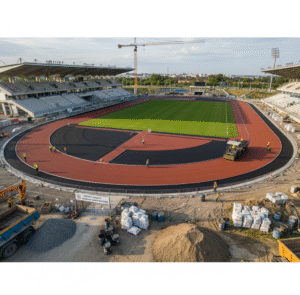
Over time, synthetic tracks made of polyurethane, rubber, and other high-performance materials became popular. These modern surfaces offer better grip, shock absorption, and weather resistance, making them suitable for professional competitions.
Types of Running Tracks
1. Synthetic Tracks
They provide excellent traction, durability, and cushioning.
2. Modular Rubber Tracks
Some facilities opt for pre-fabricated interlocking rubber tiles. These tracks are easy to install and repair, making them ideal for schools, colleges, and temporary sports setups.
3. Hybrid Tracks
Hybrid tracks combine PU and rubber granules to balance cost, performance, and athlete comfort. They offer moderate shock absorption and durability, suitable for multi-purpose training areas.
Construction of a Running Track
Building a high-quality running track involves several steps:
- Site Preparation: Leveling, grading, and compacting the ground.
- Base Layer Installation: Crushed stone or gravel forms a stable sub-base.
Key Features of a Quality Running Track
- Shock Absorption: Minimizes stress on joints and reduces injury risk
- Durability: Withstands heavy use and varying weather conditions
Why Choose SPORTS FACILITY for Your Track
At SPORTS FACILITY, we specialize in constructing world-class running tracks across India. Our advantages include:
- Expertise in PU and synthetic track installation
- Compliance with international athletics standards
- Efficient project planning and execution
- Post-installation maintenance and repair services
- Customized solutions for schools, stadiums, colleges, and sports complexes
We ensure every running track we build is safe, durable, and designed for optimal athletic performance.
Conclusion
Trust SPORTS FACILITY to design and construct tracks that inspire athletes and meet international standards. Contact us today to bring a premium-quality running track to your facility.
Running Track FAQ
1. What are the standard dimensions of a running track?
-
Outdoor track (standard): 400 meters per lap
-
Indoor track: Usually 200 meters per lap, often with banked curves
-
Lane width: Typically 1.22 meters (4 feet) per lane
-
Number of lanes: Usually 6–8 lanes for competition tracks
3. What materials are used for running tracks?
-
Tartan / Synthetic tracks: Polyurethane or rubberized surfaces for professional competitions
-
Cinder tracks: Made from crushed stone or ash (older tracks, less common now)
-
Asphalt / concrete tracks: Often for schools or recreational use
4. What are the types of running tracks?
-
Outdoor standard track: 400-meter oval
-
Indoor track: 200-meter oval, often banked
-
Rubberized or synthetic track: High-performance surface for competitions
-
Recreational track: Asphalt or concrete for jogging and training
5. Why are running tracks oval-shaped?
The oval shape allows for continuous running without sharp turns and provides consistent distances for races. It also maximizes space efficiency for stadiums.
6. What are the key markings on a running track?
-
Start and finish lines for various distances
-
Lane lines to separate runners
-
Hurdle and relay exchange markings
-
Finish line photo-finish area
7. What is the ideal surface for a running track?
-
Professional competitions: Synthetic polyurethane tracks (Tartan)
-
Schools or parks: Asphalt or rubberized tracks for durability and safety
-
The surface should provide good traction, shock absorption, and weather resistance.
8. Can running tracks be used for sports other than athletics?
Yes, they are often used for:
-
Fitness jogging/walking
-
Relay practice and training drills
-
Multi-purpose stadium events like soccer or football inside the track