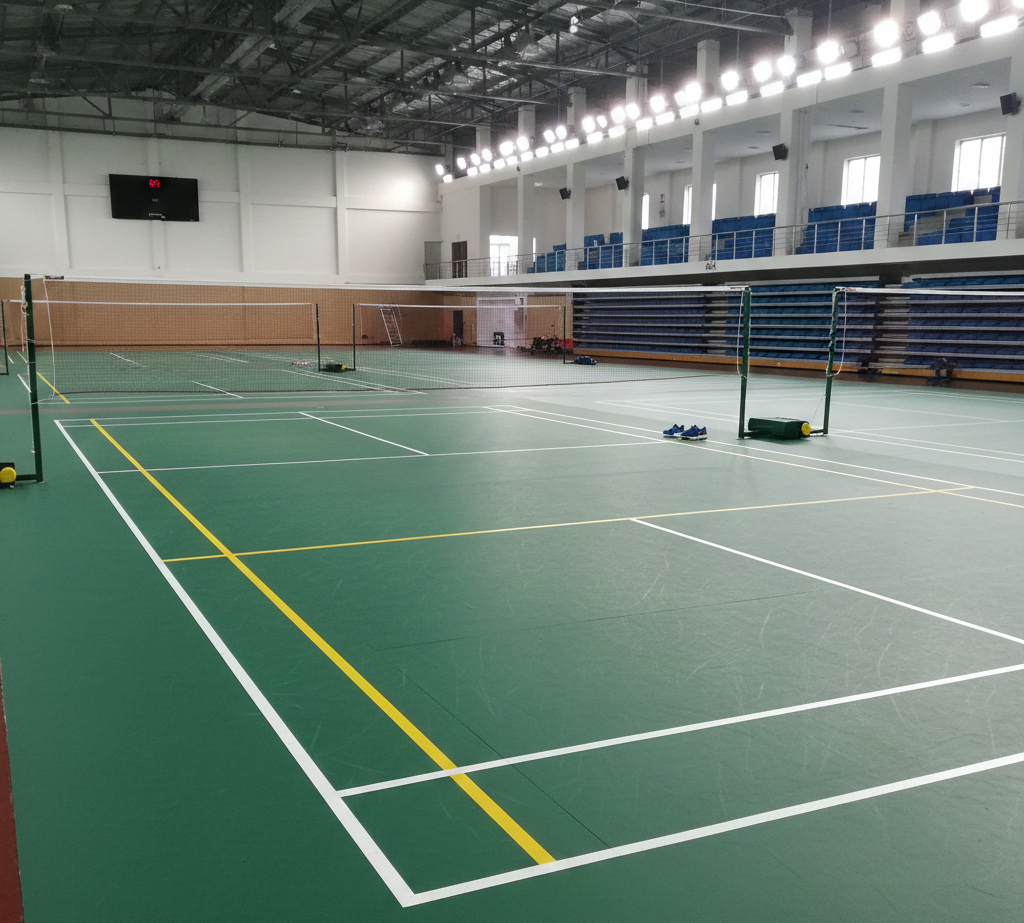
Badminton is a fast-paced, high-intensity sport that demands agility, speed, and precision. While players’ skills and equipment are essential, one often overlooked but crucial factor in enhancing performance and safety is the court flooring. The right flooring not only ensures better traction and shock absorption but also reduces the risk of injuries and provides consistent bounce for the shuttle. In this blog, we’ll explore the types of flooring used in badminton courts, their benefits, drawbacks, and the factors you should consider before choosing the ideal surface.
Why Flooring Matters in Badminton
A badminton court may appear simple — a rectangular surface with boundary lines and a net in the middle. However, the flooring forms the foundation of the game. The right flooring:
-
Enhances Performance – Proper flooring ensures predictable bounce and allows players to move quickly without slipping.
-
Reduces Injuries – High-quality surfaces provide shock absorption, reducing strain on knees, ankles, and joints.
-
Improves Durability – Good flooring withstands heavy foot traffic, intense gameplay, and frequent cleaning.
-
Ensures Compliance – For professional tournaments, flooring must comply with Badminton World Federation (BWF) standards.
Choosing the correct flooring requires understanding the types available and their suitability for indoor or outdoor courts.
Standard Requirements for Badminton Court Flooring
According to international standards, badminton court flooring should:
-
Provide a non-slippery surface to ensure safety during fast movements.
-
Offer shock absorption to reduce injuries from sudden jumps and directional changes.
-
Be durable to withstand heavy foot traffic and routine maintenance.
-
Be level and smooth, without bumps or irregularities, to maintain consistent shuttle bounce.
-
Comply with BWF standards if intended for competitive or professional play.
With these requirements in mind, let’s examine the main types of flooring used in badminton courts.
1. Wooden Flooring
Wooden flooring is the most traditional and widely preferred option for indoor badminton courts, especially at professional levels.
Types of Wooden Flooring
-
Maple Wood – Highly durable and commonly used in professional indoor courts.
-
Teak Wood – Strong, shock-absorbent, and ideal for sports courts with frequent use.
Features & Benefits
-
Excellent Shock Absorption – Reduces strain on joints during jumps and fast movements.
-
Consistent Bounce – Offers predictable rebound, essential for competitive gameplay.
-
Aesthetic Appeal – Polished wooden floors look premium and professional.
-
Long Lifespan – With proper maintenance, wooden courts can last for decades.
Drawbacks
-
High Cost – Wooden flooring is significantly more expensive than synthetic options.
-
Maintenance – Requires regular polishing, cleaning, and humidity control.
-
Indoor Use Only – Cannot be used outdoors as exposure to moisture damages the wood.
Best For
-
Professional indoor courts, sports academies, and tournament-level venues.
2. Synthetic Flooring
Synthetic flooring has gained popularity due to its durability, affordability, and low maintenance. These surfaces are usually made from PVC, PU, or vinyl and are available in sheets or modular tiles.
Types of Synthetic Flooring
-
PVC Flooring – Affordable, durable, and commonly used for recreational and club courts.
-
PU (Polyurethane) Flooring – Offers better cushioning and slip resistance than standard PVC.
-
Vinyl Sports Flooring – Lightweight and versatile, suitable for multi-purpose halls.
Features & Benefits
-
Shock Absorption – Reduces stress on knees and joints during fast movements.
-
Slip Resistance – Provides traction to prevent accidents.
-
Weather Resistance – Some synthetic surfaces can be used outdoors with proper coating.
-
Low Maintenance – Easy to clean and does not require polishing like wooden flooring.
-
Cost-Effective – Lower upfront cost compared to wood, making it ideal for schools, gyms, and community centers.
Drawbacks
-
Shorter Lifespan – Generally lasts 8–12 years depending on usage.
-
Lower Professional Appeal – Not always preferred for high-level tournaments.
-
Surface Heat – Synthetic surfaces can get warm in direct sunlight if used outdoors.
Best For
-
Recreational indoor and outdoor courts, community centers, and schools.
3. Acrylic / PU Coated Flooring
Acrylic or PU-coated surfaces are often used for outdoor badminton courts. These are essentially concrete or cement bases covered with specialized coatings that provide smooth, durable, and weather-resistant playing surfaces.
Features & Benefits
-
Weather Resistant – Can withstand rain, UV rays, and temperature fluctuations.
-
Cost-Effective – Less expensive than wood or full synthetic flooring.
-
Customizable Colors & Lines – Coatings can be colored and pre-marked for court boundaries.
-
Moderate Shock Absorption – Provides basic cushioning for recreational play.
Drawbacks
-
Limited Cushioning – Not suitable for competitive indoor-level play.
-
Surface Hardness – Can be tough on joints for frequent or professional players.
Best For
-
Outdoor courts in schools, housing societies, parks, and public spaces.
4. Rubber Flooring
Rubber flooring is an emerging choice for recreational badminton courts. It’s mainly used for multi-purpose gyms and sports halls.
Features & Benefits
-
High Shock Absorption – Extremely gentle on joints, ideal for beginners.
-
Slip Resistant – Provides good traction even when slightly damp.
-
Durable – Can last several years with minimal maintenance.
Drawbacks
-
Surface Rebound – May affect shuttle bounce consistency.
-
Installation Costs – Slightly higher than basic synthetic surfaces.
-
Limited Professional Use – Not suitable for competitive tournaments.
Best For
-
Recreational centers, home gyms, and multi-purpose sports halls.
Factors to Consider Before Choosing Flooring
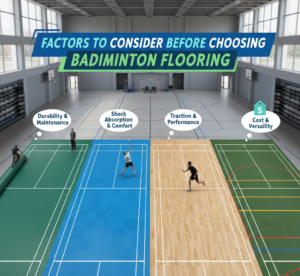
Selecting the right badminton flooring depends on several considerations:
-
Usage Frequency – High-traffic professional courts need durable, shock-absorbent surfaces like wood or PU flooring.
-
Indoor vs Outdoor – Wood is ideal for indoor courts; acrylic, PU, or rubber is preferred outdoors.
-
Budget – Wooden floors are expensive; synthetic and acrylic options are budget-friendly.
-
Maintenance – Wooden courts require polishing and humidity control; synthetic surfaces are easier to maintain.
-
Player Safety – Ensure flooring has adequate slip resistance and shock absorption to prevent injuries.
-
Compliance with Standards – If hosting tournaments, choose surfaces that comply with BWF regulations.
Comparing Flooring Options
| Flooring Type | Shock Absorption | Durability | Maintenance | Cost | Indoor/Outdoor | Professional Use |
|---|---|---|---|---|---|---|
| Wooden (Maple/Teak) | Excellent | High | High | High | Indoor | Yes |
| Synthetic (PVC/PU) | Good | Moderate | Low | Medium | Indoor/Outdoor | Limited |
| Acrylic/PU Coated | Moderate | Moderate | Low | Low | Outdoor | No |
| Rubber | Very Good | High | Low | Medium | Indoor/Outdoor | No |
This table helps decision-makers choose flooring based on budget, use, and performance needs.
Maintenance Tips for Badminton Flooring
Regardless of the type of flooring, regular maintenance ensures longevity and safety:
-
Wooden Flooring: Regular polishing, keeping humidity constant, cleaning with soft mop, and avoiding water pooling.
-
Synthetic Flooring: Sweep and mop regularly, remove stains, avoid dragging heavy furniture.
-
Acrylic/PU Flooring: Clean debris and dirt regularly; check for cracks and recoating every few years.
-
Rubber Flooring: Sweep and wash regularly; avoid sharp objects that can puncture the surface.
Conclusion
Choosing the right badminton court flooring is a critical decision that affects performance, safety, durability, and aesthetics. Wooden floors remain the gold standard for professional indoor courts, providing excellent shock absorption, consistent shuttle bounce, and longevity. Synthetic and PU flooring offer a balance of affordability, low maintenance, and decent performance for recreational or club-level courts. Acrylic-coated surfaces are perfect for outdoor use, while rubber flooring is emerging as a good option for gyms and multi-purpose courts.
Frequently Asked Questions (FAQ)
What Flooring Is Used in a Badminton Court?
1. What type of flooring is commonly used in badminton courts?
Badminton courts typically use wooden flooring or synthetic vinyl sports flooring. Professional indoor courts often feature hardwood, while many modern facilities use PVC or polyurethane-based synthetic mats designed specifically for badminton.
2. What wood is used for badminton court flooring?
High-quality indoor badminton courts commonly use hardwood such as maple or beech. Courts approved by the Badminton World Federation (BWF) usually have wooden subfloors that provide proper shock absorption and consistent bounce.
3. What is synthetic badminton flooring?
Synthetic badminton flooring is usually made of PVC or polyurethane material layered over a cushioned base. It provides:
-
Anti-slip surface
-
Shock absorption
-
Joint protection
-
Easy maintenance
Many international tournaments under the Badminton World Federation use synthetic court mats laid over wooden flooring.
4. Why is shock absorption important in badminton courts?
Badminton involves quick movements, jumps, and lunges. Shock-absorbing floors reduce stress on players’ knees and ankles, helping prevent injuries and improving comfort during long matches.
5. Are outdoor badminton courts different?
Yes. Outdoor courts are usually made from concrete or asphalt. However, these surfaces are not ideal for professional play because they lack cushioning and can increase the risk of injury.
6. What is the best flooring for professional badminton?
For professional and tournament-level play, a wooden sprung floor with a high-quality synthetic badminton mat on top is considered the best setup. It meets international standards and ensures player safety.
7. How thick is badminton court flooring?
Synthetic badminton mats are generally 4.5 mm to 8 mm thick. The total thickness increases when installed over a wooden or cushioned subfloor system.
8. What color is a badminton court floor?
Most professional badminton courts are green or blue with white boundary lines. Tournament courts under the Badminton World Federation often use dark green mats for better shuttle visibility.
9. How is badminton flooring maintained?
Proper maintenance includes:
-
Regular cleaning
-
Avoiding moisture buildup
-
Periodic inspection of joints and seams
-
Re-coating wooden floors when required
10. Can badminton flooring be used for other sports?
Yes, many multi-purpose sports halls use synthetic sports flooring suitable for badminton, volleyball, and indoor training activities. However, specialized badminton mats provide the best grip and performance for competitive play.