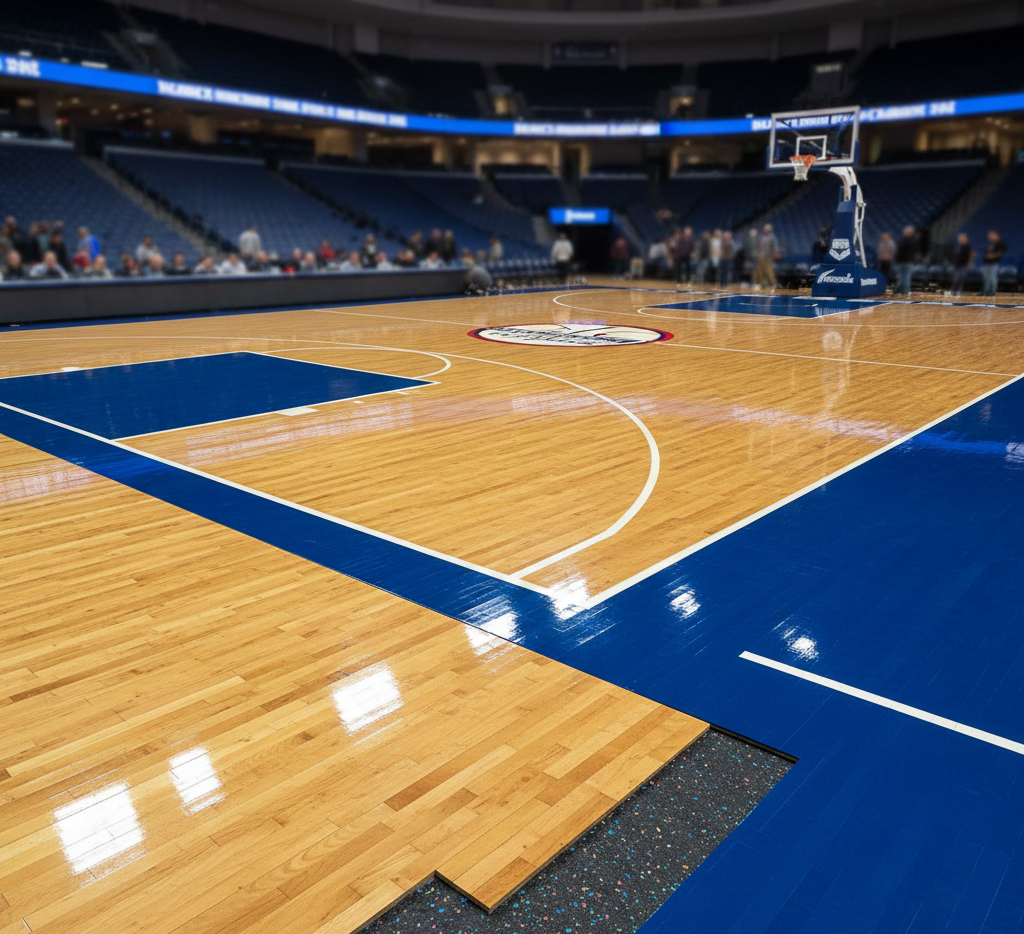
Basketball is a fast, explosive, and high-impact sport that demands a playing surface engineered specifically for speed, agility, ball response, and player safety. Every professional, school, or community basketball court is built using flooring materials designed to withstand intense footwork, rapid movements, and frequent ball bounce. But what exactly are basketball court floors made of? Why do indoor and outdoor courts use different materials? And how do these materials affect gameplay and athlete performance?
In this complete guide, we break down the types of materials used in basketball court floors, their features, performance advantages, and why they are selected for different environments. Whether you’re building a new court or simply curious about the science behind the sport, this comprehensive breakdown will give you clear insights into what makes a basketball court floor truly world-class.
What Are Basketball Court Floors Made Of?
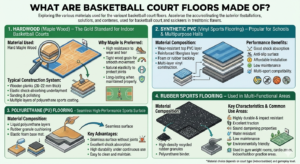
Basketball court floors are typically made from wood, synthetic PVC, polyurethane, acrylic, or modular PP tiles. Each material is chosen based on the type of court—indoor or outdoor—and the level of gameplay.
Here’s a complete, detailed explanation of each flooring type and what makes them suitable for basketball.
1. Hardwood (Maple Wood) – The Gold Standard for Indoor Basketball Courts
Hardwood is the most prestigious and widely used material for indoor basketball courts, especially professional leagues like the NBA and FIBA.
Material Used: Hard Maple Wood
-
Hard maple is dense, smooth, and durable.
-
Offers excellent shock absorption.
-
Provides consistent ball bounce.
Why Maple Is Preferred:
-
High resistance to wear and tear
-
Tight wood grain for smooth movement
-
Natural elasticity to protect joints
-
Long-lasting when maintained properly
Typical Construction System:
-
Wooden planks (usually 20–22 mm thick)
-
Elastic shock-absorbing underlayment
-
Sanding & polishing
-
Multiple layers of polyurethane sports coating
Hard maple wood gives indoor basketball courts that iconic golden appearance and professional playing speed.
2. Synthetic PVC (Vinyl Sports Flooring) – Popular for Schools & Multipurpose Halls
PVC sports flooring is one of the most widely installed surfaces in schools, gyms, recreation centers, and multi-sport halls.
Material Composition:
-
Wear-resistant top PVC layer
-
Reinforced fiberglass layer
-
Foam or rubber backing
-
Multi-layer vinyl construction
Performance Benefits:
-
Good shock absorption
-
Anti-slip surface
-
Affordable installation
-
Low maintenance
-
Multi-sport compatibility
PVC is ideal for facilities that need high performance without the high cost of hardwood.
3. Polyurethane (PU) Flooring – Seamless High-Performance Sports Surface
PU flooring is a poured-in-place seamless sports surface, commonly seen in modern sports complexes.
Material Composition:
-
Liquid polyurethane layers
-
Rubber granule cushioning
-
Elastic foam base mat
Key Advantages:
-
Seamless surface without joints
-
Excellent shock absorption
-
High durability under continuous use
-
Easy to clean and maintain
This makes it suitable for professional-level indoor multi-sport courts.
4. Rubber Sports Flooring – Used in Multi-Functional Areas
Rubber flooring is often used not for the main basketball courts but for training zones, practice areas, and fitness sections in sports facilities.
Basketball court floors are typically made from wood, synthetic PVC, polyurethane, acrylic, or modular PP tiles. Each material is chosen based on the type of court—indoor or outdoor—and the level of gameplay.
Here’s a complete, detailed explanation of each flooring type and what makes them suitable for basketball.
1. Hardwood (Maple Wood) – The Gold Standard for Indoor Basketball Courts
Hardwood is the most prestigious and widely used material for indoor basketball courts, especially professional leagues like the NBA and FIBA.
Material Used: Hard Maple Wood
-
Hard maple is dense, smooth, and durable.
-
Offers excellent shock absorption.
-
Provides consistent ball bounce.
Why Maple Is Preferred:
-
High resistance to wear and tear
-
Tight wood grain for smooth movement
-
Natural elasticity to protect joints
-
Long-lasting when maintained properly
Typical Construction System:
-
Wooden planks (usually 20–22 mm thick)
-
Elastic shock-absorbing underlayment
-
Sanding & polishing
-
Multiple layers of polyurethane sports coating
Hard maple wood gives indoor basketball courts that iconic golden appearance and professional playing speed.
2. Synthetic PVC (Vinyl Sports Flooring) – Popular for Schools & Multipurpose Halls
PVC sports flooring is one of the most widely installed surfaces in schools, gyms, recreation centers, and multi-sport halls.
Material Composition:
-
Wear-resistant top PVC layer
-
Reinforced fiberglass layer
-
Foam or rubber backing
-
Multi-layer vinyl construction
Performance Benefits:
-
Good shock absorption
-
Anti-slip surface
-
Affordable installation
-
Low maintenance
-
Multi-sport compatibility
PVC is ideal for facilities that need high performance without the high cost of hardwood.
3. Polyurethane (PU) Flooring – Seamless High-Performance Sports Surface
PU flooring is a poured-in-place seamless sports surface, commonly seen in modern sports complexes.
Material Composition:
-
Liquid polyurethane layers
-
Rubber granule cushioning
-
Elastic foam base mat
Key Advantages:
-
Seamless surface without joints
-
Excellent shock absorption
-
High durability under continuous use
-
Easy to clean and maintain
This makes it suitable for professional-level indoor multi-sport courts.
4. Rubber Sports Flooring – Used in Multi-Functional Areas
Rubber flooring is often used not for the main basketball courts but for training zones, practice areas, and fitness sections in sports facilities.
Material Composition:
-
Natural rubber
-
Recycled EPDM rubber granules
-
Vulcanized rubber sheets
Benefits:
-
High shock resistance
-
Anti-fatigue comfort
-
Slip-resistant even when wet
5. Acrylic Flooring – The Most Popular Outdoor Basketball Court Material
Outdoor basketball courts require flooring that can withstand harsh weather, UV rays, heavy play, and temperature changes. Acrylic flooring is the #1 choice for outdoor courts in parks, schools, societies, and sports complexes.
Material Composition:
-
Acrylic resurfacer coats
-
Cushion layers (optional)
-
Base paint coats
-
Anti-skid texture finish
Why Acrylic Is Ideal for Outdoors:
-
UV-resistant surface
-
Waterproof and weatherproof
-
Non-slip even during rains
-
Customizable in multiple colors
-
Durable and low maintenance
Acrylic courts are attractive, affordable, and long-lasting in outdoor environments.
6. Modular PP Tiles – Modern Outdoor & Temporary Court Flooring
Polypropylene (PP) modular tiles are becoming very popular due to their ease of installation and portability.
Material Composition:
-
High-impact polypropylene
-
UV-stabilized compounds
-
Interlocking grid design
Advantages:
-
Quick installation without adhesives
-
Efficient drainage during rains
-
Suitable for uneven or old surfaces
-
Tile-by-tile replacement
-
Bright, vibrant court look
How the Flooring Material Affects Game Performance
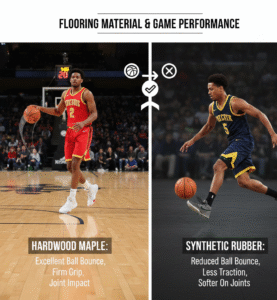
Choosing the right flooring material is crucial because it directly impacts:
1. Ball Bounce
-
Hardwood gives the truest ball bounce.
-
PVC and PU offer consistent bounce for multi-sport use.
-
Outdoor acrylic and tiles provide medium bounce suitable for recreation.
2. Player Grip & Speed
-
Indoor hardwood offers the smoothest speed control.
-
PVC & PU provide cushioned movement.
-
Outdoor floors use anti-skid textures for traction.
3. Injury Prevention
-
Every flooring material includes shock-absorbing layers:
-
Wooden courts: elastic subfloor
-
PVC floors: foam backing
-
PU floors: rubber cushion mat
-
Acrylic floors: optional cushioned layers
-
Better shock absorption reduces stress on knees, ankles, and hips.
4. Durability
-
Indoor wood and PU floors last 10–20 years with proper care.
-
Outdoor acrylic and PP tiles last 5–10 years depending on climate and usage.
Where Each Flooring Type Is Commonly Used
| Flooring Type | Best Suitability | Examples |
|---|---|---|
| Hardwood | Professional Indoor Play | NBA, FIBA level courts |
| PVC/Vinyl | Schools, Gyms, Multi-purpose Halls | Indoor recreational courts |
| PU | Premium Sports Complexes | Indoor multi-sport stadiums |
| Acrylic | Outdoor Courts | Parks, societies, playgrounds |
| Modular PP Tiles | Outdoor community courts & events | Clubs, residential areas |
Final Thoughts: Choosing the Right Material for Basketball Court Floors
Basketball court floors are not simple surfaces—they are engineered sports systems designed to enhance performance, absorb impact, protect athletes, and withstand years of intense activity. The right material depends on the court environment, usage level, and budget:
-
Choose Hardwood → For professional indoor performance
-
Choose PVC or PU → For indoor multi-sport schools or clubs
-
Choose Acrylic → For durable outdoor courts
-
Choose PP Tiles → For portable and stylish outdoor courts
Understanding what basketball court floors are made of helps facility owners, architects, and sports planners make the right investment for long-term safety, quality, and gameplay experience.