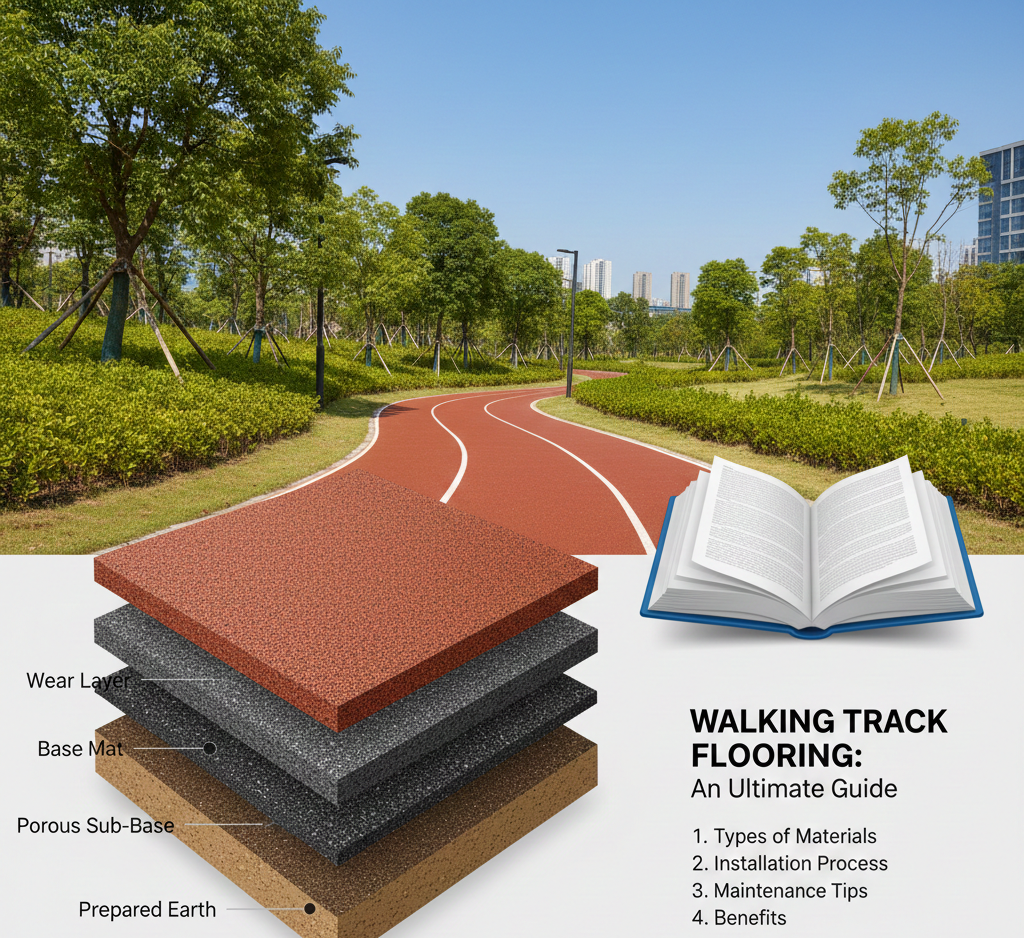
Walking tracks play a crucial role in promoting fitness, wellness, and an active lifestyle across all age groups. From public parks and residential complexes to schools, stadiums, and fitness centers, walking tracks are designed to provide a safe, comfortable, and durable surface for daily exercise. However, the performance, safety, and longevity of a walking track depend heavily on one key factor—the flooring.
Choosing the right walking track flooring is not just about aesthetics; it directly impacts user comfort, injury prevention, maintenance costs, and overall usability. This ultimate guide explores everything you need to know about walking track flooring, including types, materials, benefits, installation considerations, and maintenance tips.
What Is Walking Track Flooring?
Walking track flooring refers to the specialized surface installed on designated walking paths to provide traction, cushioning, durability, and weather resistance. Unlike ordinary concrete or tiles, walking track flooring is engineered to absorb impact, reduce joint stress, and offer slip resistance, making it ideal for repetitive foot movement.
Modern walking track surfaces are designed to cater to different environments—indoor and outdoor—while meeting safety standards and user expectations.
Importance of Proper Walking Track Flooring
A well-designed walking track surface offers several advantages:
1. Safety and Injury Prevention
High-quality flooring reduces the risk of slips, trips, and falls. Shock-absorbing materials help minimize stress on joints, knees, ankles, and the lower back, especially for elderly walkers and fitness enthusiasts.
2. Comfort and Performance
Cushioned surfaces enhance walking comfort, allowing users to walk longer distances without fatigue. Proper grip ensures stability in both dry and wet conditions.
3. Durability and Longevity
Walking tracks experience continuous foot traffic. A durable flooring system resists wear, cracking, and surface degradation over time.
4. Weather Resistance
Outdoor walking track flooring must withstand sunlight, rain, temperature fluctuations, and humidity without losing performance or appearance.
Types of Walking Track Flooring
There are several flooring options available, each suited to specific applications and budgets.
1. Synthetic Rubber Flooring
Rubber flooring is one of the most popular choices for walking tracks.
Key Features:
-
Excellent shock absorption
-
Slip-resistant surface
-
Comfortable underfoot
-
Suitable for both indoor and outdoor use
Rubber flooring is ideal for parks, fitness trails, and senior-friendly walking tracks due to its joint-friendly properties.
2. Acrylic Flooring Systems
Acrylic flooring is widely used in multi-purpose sports and walking tracks.
Key Features:
-
Smooth yet textured surface
-
UV and weather resistant
-
Customizable colors and markings
-
Easy to maintain
Acrylic walking tracks are often installed over asphalt or concrete bases, making them cost-effective and visually appealing.
3. PU (Polyurethane) Flooring
PU flooring is a premium option known for its seamless finish and flexibility.
Key Features:
-
High elasticity and comfort
-
Seamless and hygienic surface
-
Long lifespan
-
Excellent performance in high-traffic areas
PU walking track flooring is commonly used in indoor stadiums, commercial gyms, and high-end recreational facilities.
4. Interlocking Tiles
Interlocking flooring tiles offer a modular solution for walking paths.
Key Features:
-
Easy installation and replacement
-
Good drainage for outdoor use
-
Slip-resistant texture
-
Suitable for temporary or semi-permanent tracks
These tiles are often used in residential complexes and landscaped areas.
5. Natural Surfaces (Gravel, Clay, and Wood Chips)
Some walking tracks use natural materials for an eco-friendly approach.
Key Features:
-
Natural appearance
-
Lower initial cost
-
Softer feel than concrete
However, natural surfaces require frequent maintenance and may not be suitable for all weather conditions.
Key Factors to Consider When Choosing Walking Track Flooring
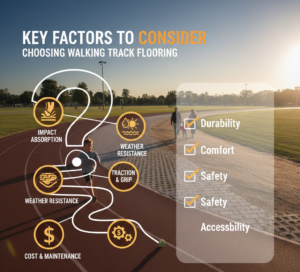
Selecting the right walking track surface depends on several important factors:
1. Location
-
Indoor tracks require smooth, controlled surfaces.
-
Outdoor tracks need weather-resistant and UV-stable flooring.
2. User Demographics
-
Tracks for seniors benefit from extra cushioning.
-
Fitness-focused tracks may prioritize durability and traction.
3. Foot Traffic
High-traffic areas need stronger, wear-resistant flooring systems.
4. Budget
While premium flooring may have a higher upfront cost, it often reduces long-term maintenance and replacement expenses.
5. Maintenance Requirements
Low-maintenance flooring saves time and operational costs in the long run.
Installation Process of Walking Track Flooring
The installation method depends on the chosen material, but the general process includes:
-
Base Preparation
A strong and level base (concrete or asphalt) is essential for long-lasting performance. -
Surface Cleaning
Dust, moisture, and debris are removed to ensure proper bonding. -
Application of Flooring Layers
This may include primers, cushioning layers, and top coats. -
Curing and Finishing
Adequate curing time ensures durability and optimal performance.
Professional installation is highly recommended to achieve uniform thickness and surface quality.
Maintenance Tips for Walking Track Flooring
Proper maintenance extends the life and performance of walking track surfaces.
-
Regular cleaning to remove dust and debris
-
Periodic inspection for cracks or wear
-
Prompt repairs to prevent further damage
-
Avoid sharp objects or heavy equipment on the surface
-
Use recommended cleaning agents only
Outdoor tracks may require seasonal maintenance due to weather exposure.
Benefits of Investing in Quality Walking Track Flooring
-
Enhances user safety and comfort
-
Encourages regular physical activity
-
Improves the visual appeal of the space
-
Reduces long-term maintenance costs
-
Adds value to residential and commercial properties
A well-designed walking track becomes a long-term asset for any facility.
Future Trends in Walking Track Flooring
The walking track flooring industry is evolving with innovative solutions such as:
-
Eco-friendly and recyclable materials
-
Permeable surfaces for better drainage
-
Enhanced cushioning technologies
-
Custom-designed color patterns and branding
These advancements aim to combine sustainability, performance, and aesthetics.
Conclusion
Walking track flooring is far more than just a surface—it is a foundation for health, fitness, and community well-being. Choosing the right flooring ensures safety, comfort, durability, and long-term value. Whether it’s a public park, residential complex, school campus, or fitness facility, investing in high-quality walking track flooring creates an inviting and functional space for users of all ages.
By understanding the different flooring options, installation requirements, and maintenance practices, you can make an informed decision that meets both performance needs and budget expectations. A thoughtfully designed walking track not only supports physical activity but also enhances the overall environment for years to come.