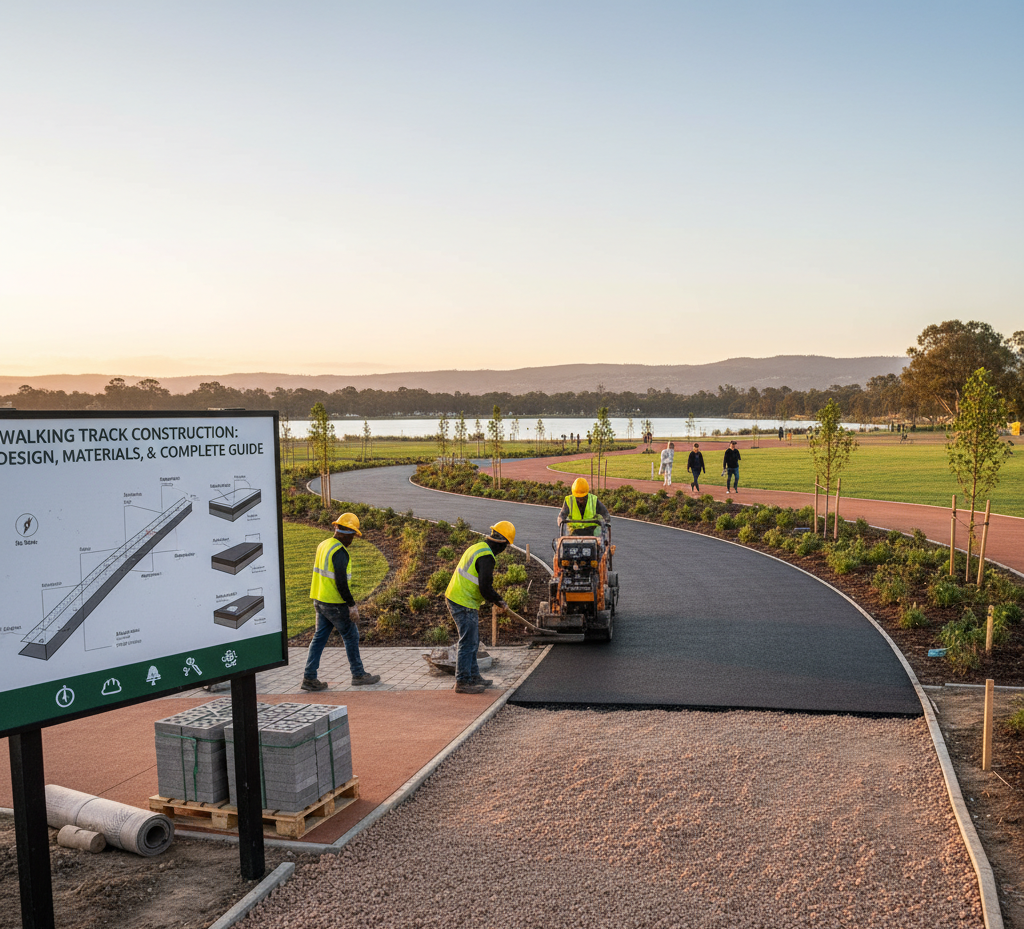
Walking has become one of the most popular and accessible forms of exercise worldwide. From local parks to residential communities, well-designed walking tracks encourage people of all ages to stay active and healthy. But behind every smooth, well-marked pathway lies careful planning, engineering, and construction.
This detailed guide explains everything about walking track construction — from initial design and layout to choosing the right materials, surface finishing, and long-term maintenance.
What Is a Walking Track?
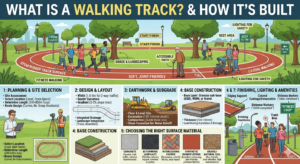
A walking track is a dedicated path or loop designed for safe, comfortable, and consistent walking. Unlike rough trails or random park pathways, a walking track is intentionally constructed with the right surface materials, width, gradient, and drainage to support regular use.
Walking tracks are common in:
-
Public parks
-
Residential societies
-
Schools and colleges
-
Sports complexes
-
Corporate campuses
-
Fitness and wellness centers
They can be designed for both casual walking and brisk fitness walks, depending on the layout and surface type.
1: Planning and Site Selection
The first step in walking track construction is site assessment and planning. Proper planning ensures the track is safe, functional, and fits naturally into the landscape.
Key planning steps include:
-
Selecting the Location: Choose an area with open space, good visibility, and minimal slope. Avoid regions prone to flooding or waterlogging.
-
Determining the Track Length: Most walking tracks are between 300 and 800 meters per loop, depending on available land.
-
Designing the Route: The path can be circular, oval, or curvilinear, depending on the site. Avoid sharp turns or steep gradients.
-
Considering Accessibility: The track should be easily accessible for all — including children, elderly people, and persons with disabilities.
During the planning phase, architects and engineers consider user capacity, surrounding landscape, lighting, and safety features.
2: Design and Layout
A well-designed walking track balances functionality, aesthetics, and comfort.
Key design elements include:
-
Width: A walking track should be at least 1.5 to 3 meters wide to accommodate two-way traffic.
-
Curvature: Gentle curves enhance the flow and visual appeal while avoiding sharp turns.
-
Gradient: Ideally, the slope should not exceed 2–3% for user comfort and accessibility.
-
Drainage: Proper drainage systems prevent water accumulation and surface damage.
-
Landscape Integration: Adding trees, shrubs, benches, and lighting enhances the experience and comfort of walkers.
Many modern walking tracks are constructed alongside jogging or cycling tracks, separated by landscape buffers or color-coded surfaces.
3: Earthwork and Subgrade Preparation
Once the design is finalized, the next step is earthwork preparation.
-
Clearing and Leveling: The site is cleared of vegetation, debris, and rocks.
-
Excavation: Soil is excavated to the required depth — usually around 150–300 mm, depending on the surface material.
-
Compaction: The base soil (subgrade) is compacted using rollers to achieve uniform density and stability.
-
Slope Formation: A gentle side slope is formed for water runoff.
A strong and stable subgrade ensures the track remains smooth and crack-free over time.
Step 4: Base Construction
The base layer acts as the foundation for the walking track. It provides strength, drainage, and load-bearing capacity.
Common base materials include:
-
Granular sub-base (GSB): A mix of crushed stone and sand.
-
WMM (Wet Mix Macadam): A blend of aggregates and binding material for better strength.
-
Murram or Gravel Base: Used in economical or rural track projects.
The base layer thickness typically ranges between 100–150 mm, depending on soil type and expected foot traffic.
5: Choosing the Right Surface Material
The choice of surface material is one of the most important factors in walking track construction. It affects comfort, safety, maintenance, and aesthetics.
Below are the most common types of walking track surfaces:
1. Concrete Track
-
Durability: Very high, lasts 10–15 years.
-
Maintenance: Minimal.
-
Comfort: Hard surface; not ideal for elderly walkers or long sessions.
-
Use: Suitable for public parks or high-traffic areas.
2. Bituminous (Asphalt) Track
-
Durability: Good, flexible surface.
-
Comfort: Softer than concrete, reduces impact on joints.
-
Use: Common in outdoor parks and recreational spaces.
3. Interlocking Paver Block Track
-
Appearance: Decorative and colorful.
-
Durability: Medium to high.
-
Maintenance: Easy to repair by replacing damaged blocks.
-
Use: Housing societies, gardens, and parks.
4. Synthetic Rubber or EPDM Track
-
Material: Polyurethane or EPDM rubber.
-
Comfort: Excellent cushioning; joint-friendly surface.
-
Use: Premium fitness parks, stadiums, and school grounds.
5. Natural Soil or Gravel Track
-
Eco-friendly and cost-effective.
-
Maintenance: Requires periodic leveling and water spraying.
-
Use: Rural or eco-park developments.
6: Edging and Finishing
Proper edge support prevents erosion and maintains the track’s shape. In decorative projects, designers add colored coatings, anti-slip finishes, or demarcation lines.
7: Lighting, Landscaping, and Amenities
A walking track is more than just a path — it’s a wellness environment.
To enhance usability and safety:
-
Signboards and distance markers (e.g., “100m completed,” “500m loop”) encourage motivation.
-
Green buffers with trees and flowering plants provide shade and beauty.
These amenities make the track more inviting and promote community engagement.
Step 8: Drainage and Water Management
Proper drainage design is crucial to prevent puddles and surface erosion.
-
Tracks are built with a 2% cross slope to channel water away.
-
Perforated drains or side gutters carry water out of the area.
-
For gravel or natural tracks, permeable layers allow water absorption into the ground.
Good drainage ensures year-round usability, even during the rainy season.
Step 9: Maintenance and Lifespan
Maintenance needs vary by material type, but some general practices include:
-
Regular sweeping and cleaning.
-
Checking for cracks or uneven sections.
-
Repainting faded markings.
-
Watering plants and trimming nearby greenery.
-
Recoating or resurfacing every few years (for synthetic or asphalt tracks).
With proper care, a walking track can last 10–20 years, providing excellent value and community benefit.
Environmental and Health Benefits
Building walking tracks supports sustainability and wellness together.
-
Encourages outdoor activity and fitness.
-
Reduces pollution by promoting walking over driving.
-
Enhances green cover when combined with landscaping.
-
Improves social wellbeing through safe, shared spaces.
Walking tracks are low-impact investments that deliver long-term health and environmental gains.
Final Thoughts
A well-constructed walking track is more than just a recreational feature — it’s a pathway to a healthier community. From precise earthwork and material selection to aesthetic landscaping and safety lighting, every stage of walking track construction requires thoughtful planning and execution.