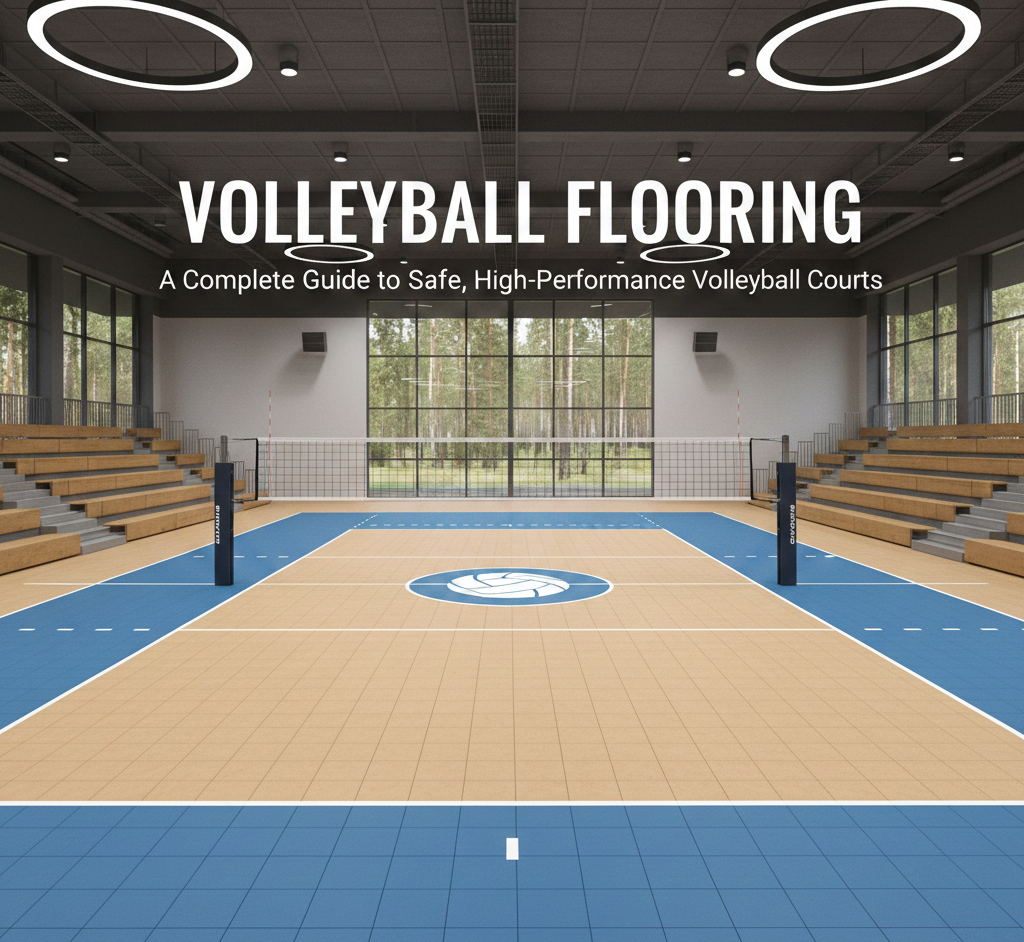
Volleyball flooring plays a crucial role in player safety, game performance, and the long-term durability of volleyball courts. Whether for indoor sports halls, schools, colleges, academies, beach-style setups, or outdoor recreational courts, choosing the right system ensures optimal traction, shock absorption, and consistent play. This comprehensive guide explains everything you need to know about volleyball flooring, including types, materials, installation process, costs, maintenance, and how to select the best solution for your facility.
1. Why Volleyball Flooring Is Important
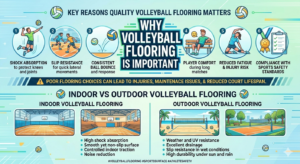
Volleyball is a high-impact sport involving jumping, quick lateral movements, dives, and sudden stops. The flooring beneath players must be engineered to reduce injury risk while supporting peak athletic performance.
Key reasons quality volleyball flooring matters:
- Shock absorption to protect knees and joints
- Slip resistance for quick movements
- Consistent ball bounce and response
- Player comfort during long matches
- Reduced fatigue and injury risk
- Compliance with sports safety standards
Poor flooring choices can lead to injuries, frequent maintenance issues, and reduced court lifespan.
2. Indoor vs Outdoor Flooring
Before selecting a surface, it is essential to decide whether the volleyball court will be indoor or outdoor.
Indoor Flooring
Indoor volleyball courts are commonly found in schools, colleges, sports complexes, and professional arenas.
Key requirements:
- High shock absorption
- Smooth yet non-slip surface
- Controlled indoor traction
- Noise reduction
Outdoor Volleyball Flooring
Outdoor volleyball courts are popular in schools, recreational areas, resorts, and community parks.
Key requirements:
- Weather and UV resistance
- Excellent drainage
- Slip resistance in wet conditions
- High durability under sun and rain
Each environment demands a specialized flooring solution.
3. Best Types of Volleyball Flooring
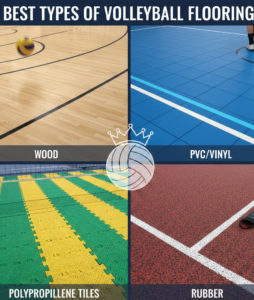
Modern volleyball flooring solutions are designed to meet different performance, budget, and usage needs.
Hardwood Volleyball Flooring
Hardwood flooring, typically maple wood, is considered the professional standard for indoor volleyball.
Benefits:
- Excellent shock absorption
- Consistent ball bounce
- Professional-level play experience
- Long lifespan with proper maintenance
Ideal for:
- Professional volleyball courts
- Indoor stadiums
- Sports academies
Synthetic Vinyl (PVC) Volleyball Flooring
PVC sports flooring is one of the most popular choices for indoor volleyball courts.
Benefits:
- Cushioned underlayers for impact protection
- Slip-resistant surface
- Easy installation and maintenance
- Cost-effective alternative to hardwood
Ideal for:
- School gymnasiums
- Multi-purpose indoor halls
- Training facilities
Polyurethane (PU) Flooring
Polyurethane flooring systems offer a seamless, high-performance surface.
Benefits:
- Excellent elasticity and shock absorption
- Seamless finish with no joints
- Durable under heavy use
- Professional-grade performance
Ideal for:
- Indoor sports halls
- Competition venues
- Multi-sport facilities
Rubber Volleyball Flooring
Rubber flooring is commonly used in training and recreational volleyball areas.
Benefits:
- Superior impact absorption
- Anti-slip texture
- Noise reduction
- Long-lasting performance
Ideal for:
- Practice courts
- Training centers
- Recreational facilities
Acrylic Volleyball Flooring (Outdoor)
Acrylic sports flooring is widely used for outdoor volleyball courts.
Benefits:
- Weather and UV resistance
- Textured, slip-resistant surface
- Cost-effective installation
- Easy resurfacing
Ideal for:
- Outdoor volleyball courts
- School playgrounds
- Community sports areas
Modular Interlocking Sports Tiles
Interlocking sports tiles provide a modern and flexible volleyball flooring solution.
Benefits:
- Fast installation
- Excellent water drainage
- Shock-absorbing design
- Easy replacement of damaged tiles
Ideal for:
- Outdoor volleyball courts
- Multi-sport courts
- Temporary or portable setups
4. Court Dimensions and Flooring Requirements
Standard volleyball court dimensions influence flooring design and installation.
- Court size: 18 m × 9 m
- Free zone: Minimum 3 m on all sides (professional courts require more)
- Ceiling height (indoor): Minimum 7 m
Proper flooring must extend beyond the playing area to ensure player safety during dives and fast movements.
5. Installation Process
Professional installation ensures maximum performance and durability.
Step 1: Site Inspection
- Measuring court dimensions
- Assessing subfloor condition
- Checking moisture and drainage
Subfloor Preparation
- Leveling and smoothing
- Crack repair (concrete base)
- Moisture barrier installation for indoor floors
Flooring Installation
- Laying shock-absorption layers
- Installing material
- Ensuring seamless joints or tile locking
Line Marking and Finishing
- Accurate volleyball court markings
- Anti-slip surface finishing
- Final inspection and testing
6. Cost
The cost of varies based on material, location, and installation complexity.
Cost-influencing factors:
- Indoor or outdoor court
- Flooring material type
- Court size
- Subfloor preparation
- Custom branding or logos
Cost categories:
- Budget: Acrylic and basic rubber flooring
- Mid-range: PVC vinyl and modular tiles
- Premium: Hardwood and polyurethane systems
Choosing the right flooring balances budget with long-term performance.
7. Maintenance and Care
Proper maintenance extends the lifespan of volleyball courts.
- Daily sweeping or vacuuming
- Periodic deep cleaning
- Inspection for wear or damage
- Equipment and net checks
Low-maintenance flooring options reduce operational costs over time.
8. Safety Standards and Compliance
High-quality complies with international safety standards.
- Shock absorption ratings
- Slip resistance testing
- Load-bearing capacity
- Fire resistance for indoor courts
Certified installers ensure flooring meets sport-specific requirements.
9. Sustainability and Eco-Friendly
Modern solutions support sustainable construction.
- Recycled and recyclable materials
- Low-VOC adhesives and coatings
- Long-life flooring systems reducing waste
- Energy-efficient manufacturing
Eco-friendly combines performance with environmental responsibility.
10. Choosing the Right Volleyball Flooring Solution
- Type of players (recreational or professional)
- Usage frequency
- Indoor or outdoor environment
- Budget and maintenance capability
- Long-term performance goals
Expert consultation helps identify the best flooring system for your needs.
Conclusion
is a critical component of any successful volleyball court. From professional indoor hardwood systems to durable outdoor acrylic and modular tile solutions, modern offers a balance of safety, performance, and durability.