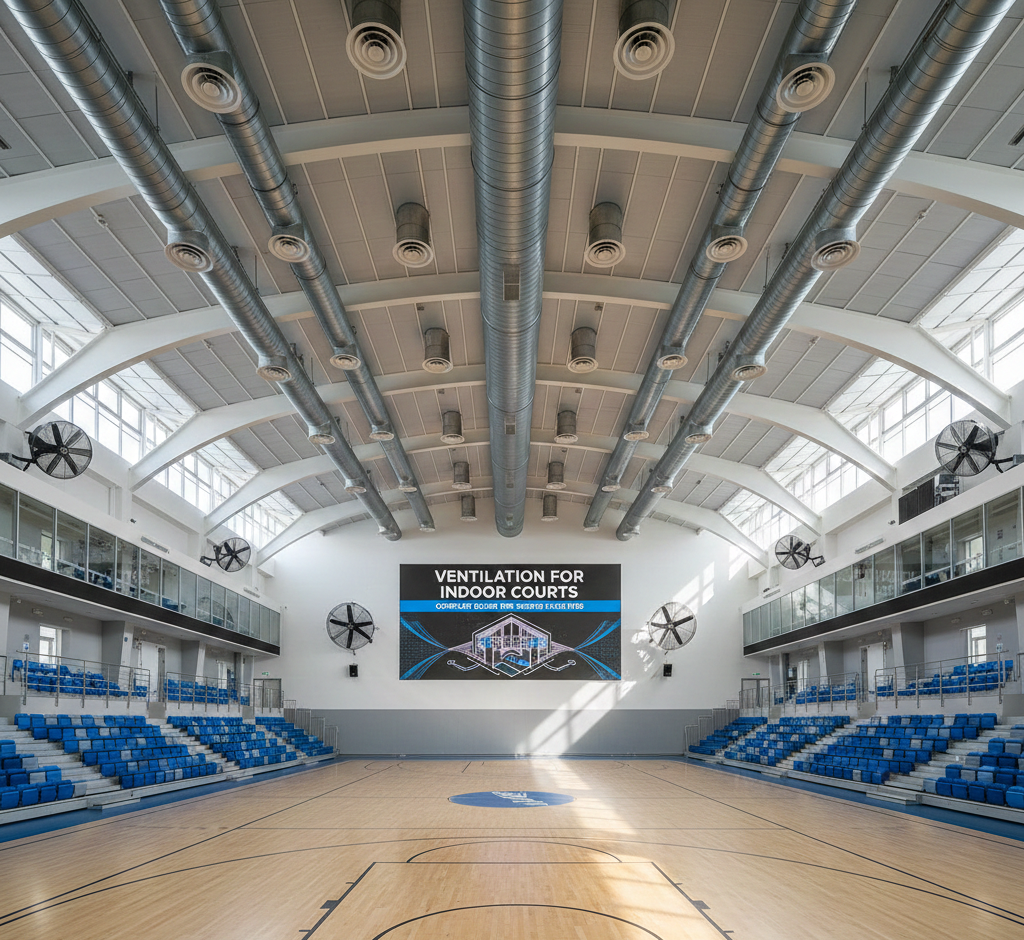
Indoor sports courts, including badminton, basketball, volleyball, and tennis, are highly popular for training and competitions. While flooring, lighting, and court dimensions are often prioritized, proper ventilation is equally critical for ensuring player comfort, safety, and performance. Ventilation systems in indoor courts manage airflow, temperature, humidity, and air quality, creating an optimal environment for both athletes and spectators. This article provides a complete guide on indoor court ventilation, its importance, design considerations, standards, and maintenance practices.
1. Importance of Ventilation in Indoor Courts
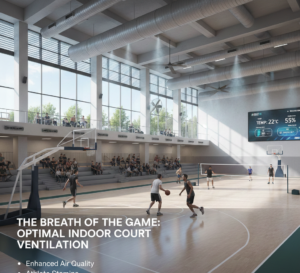
Ventilation is essential for maintaining a safe, healthy, and comfortable environment in indoor sports facilities:
-
Air Quality: Proper airflow reduces the concentration of carbon dioxide, dust, and airborne pathogens, improving oxygen availability for athletes.
-
Temperature Regulation: Indoor courts can become extremely warm due to human activity, lighting, and equipment. Ventilation helps maintain a comfortable temperature.
-
Humidity Control: High humidity can make floors slippery, increase injury risk, and affect shuttlecock flight in badminton. Ventilation helps regulate moisture levels.
-
Player Performance: Adequate ventilation ensures athletes can breathe comfortably, maintain stamina, and perform at peak levels.
-
Spectator Comfort: In courts with seating areas, good airflow ensures fans enjoy the game without feeling suffocated or overheated.
Inadequate ventilation can lead to fatigue, poor concentration, and increased risk of dehydration or heat-related issues.
2. Types of Ventilation Systems for Indoor Courts
There are two main types of ventilation systems used in indoor sports facilities:
a. Natural Ventilation
-
Description: Utilizes openings such as windows, louvers, vents, and roof ventilators to allow fresh air circulation.
-
Advantages: Cost-effective, energy-saving, environmentally friendly.
-
Limitations: Depends on external weather conditions; may not provide consistent airflow in extreme climates.
-
Best Use: Smaller courts or recreational halls in regions with moderate climate.
b. Mechanical Ventilation
-
Description: Uses HVAC (Heating, Ventilation, and Air Conditioning) systems, fans, and ducts to circulate and control air.
-
Advantages: Consistent temperature and airflow, humidity control, filtration of dust and pollutants.
-
Limitations: Higher initial installation cost, requires regular maintenance.
-
Best Use: Large indoor courts, multi-court halls, professional training centers, and tournament venues.
Modern indoor sports halls often use a combination of natural and mechanical ventilation to optimize energy efficiency and comfort.
3. Ventilation Standards for Indoor Courts
Proper ventilation should comply with international and national standards to ensure player safety and facility efficiency:
-
Air Changes per Hour (ACH): Minimum 6–12 air changes per hour are recommended for indoor sports facilities to maintain fresh air circulation.
-
Temperature Range: 20°C–28°C is ideal for indoor courts; temperatures above this can reduce performance and increase heat stress.
-
Humidity Control: Relative humidity between 40–60% is optimal; higher levels can cause slippery floors and discomfort, while lower levels can dry out airways.
-
Air Velocity: Airflow should be moderate, around 0.1–0.3 m/s, to prevent interference with lightweight shuttlecocks in badminton or volleyball trajectories.
Meeting these standards ensures player comfort, safety, and optimal conditions for professional competitions.
4. Design Considerations for Indoor Court Ventilation
Designing an effective ventilation system requires careful planning of airflow, equipment placement, and facility layout:
a. Placement of Vents and Diffusers
-
Supply vents should be installed at strategic locations along the ceiling or walls to provide uniform airflow.
-
Return air vents should be positioned to remove warm, humid, or stale air efficiently.
-
Avoid placing vents directly above the playing area to prevent drafts affecting shuttlecock or ball movement.
b. Air Filtration
-
High-efficiency filters help remove dust, allergens, and airborne bacteria.
-
Regular filter maintenance is essential for optimal air quality and system efficiency.
c. HVAC Integration
-
Combine heating, cooling, and ventilation in a centralized system to maintain consistent indoor climate.
-
Zoned control systems allow individual adjustment for courts, spectator areas, and training zones.
d. Noise Control
-
Fans and HVAC systems should be selected for low noise to avoid distraction during matches and practice sessions.
-
Acoustic dampeners and insulated ducts reduce sound transmission within the hall.
5. Impact of Ventilation on Player Performance
Proper ventilation significantly influences player performance:
-
Endurance: Adequate airflow ensures oxygen-rich air, supporting cardiovascular efficiency and stamina.
-
Concentration: Reduced heat and humidity prevent fatigue and maintain mental focus.
-
Injury Prevention: Controlled humidity reduces the risk of slippery surfaces and related injuries.
-
Consistent Game Conditions: Even airflow prevents shuttle or ball deviations, ensuring fair play.
Professional players often consider ventilation as critical as flooring and lighting when evaluating indoor courts.
6. Ventilation for Multi-Court Halls
Indoor facilities with multiple courts require careful airflow planning:
-
Each court should receive uniform ventilation without creating drafts that affect shuttlecock or ball trajectories.
-
Overlapping airflow between courts can cause turbulence; duct design should minimize cross-court interference.
-
Zoning allows selective cooling, heating, or airflow management depending on occupancy and usage patterns.
Proper multi-court ventilation ensures comfort for multiple players and spectators simultaneously.
7. Maintenance of Ventilation Systems
Regular maintenance is essential to ensure consistent performance:
-
Filter Cleaning/Replacement: Prevents dust accumulation and ensures fresh air circulation.
-
Fan and Duct Inspection: Checks for blockages, noise, or inefficiencies in airflow.
-
Temperature and Humidity Monitoring: Sensors can provide real-time data to adjust HVAC settings for optimal conditions.
-
System Calibration: Periodic calibration ensures air changes per hour and airflow velocity remain within recommended standards.
Well-maintained ventilation systems extend equipment life, improve energy efficiency, and provide a healthier environment for players.
8. Energy Efficiency and Sustainability
Modern ventilation systems focus on energy efficiency and sustainable design:
-
Heat Recovery Units: Reuse heat from outgoing air to reduce energy consumption.
-
Variable Speed Fans: Adjust airflow according to occupancy, reducing unnecessary energy use.
-
Smart HVAC Controls: Automate temperature, humidity, and airflow management for optimized energy efficiency.
-
Natural Ventilation Integration: Combining windows, vents, and roof exhausts with mechanical systems reduces energy load.
Energy-efficient systems lower operational costs while maintaining optimal indoor conditions.
9. Conclusion
Ventilation is a vital yet often overlooked component of indoor sports courts. Proper airflow, temperature regulation, and humidity control are essential for player performance, safety, and comfort. Whether designing a recreational hall, a professional tournament venue, or a multi-court facility, adequate ventilation ensures optimal game conditions and improves the overall experience for athletes and spectators.
By integrating modern HVAC systems, high-efficiency fans, smart controls, and natural ventilation strategies, sports facilities can maintain fresh air, moderate temperatures, and ideal humidity levels. Regular maintenance and compliance with international standards ensure that indoor courts provide a safe, comfortable, and performance-oriented environment.
FAQ:
1. Why is proper ventilation important in indoor sports courts?
Proper ventilation ensures:
-
Adequate fresh air circulation
-
Regulation of temperature and humidity
-
Reduction of airborne pollutants, dust, and odors
-
Prevention of mold, mildew, and condensation
-
Better athlete performance and comfort
Without proper ventilation, players may experience fatigue, breathing discomfort, and increased risk of infections.
2. What types of indoor sports courts need ventilation?
All indoor sports facilities benefit from proper airflow, including:
-
Basketball courts
-
Badminton courts
-
Volleyball courts
-
Indoor cricket and box cricket arenas
-
Multi-purpose gymnasiums
-
Tennis and squash courts
3. What are the key ventilation methods for indoor courts?
Common methods include:
-
Natural Ventilation: Use of windows, vents, and louvers to allow airflow. Suitable for smaller gyms.
-
Mechanical Ventilation: Exhaust fans, HVAC systems, and air handling units (AHUs) for controlled airflow.
-
Hybrid Ventilation: Combination of natural and mechanical systems for efficiency.
4. How much airflow is recommended for indoor courts?
-
ASHRAE and sports facility guidelines suggest 6–10 air changes per hour for medium-sized courts.
-
Airflow should keep CO₂ levels below 1000 ppm for optimal indoor air quality.
5. What factors affect ventilation design?
-
Court dimensions and ceiling height
-
Number of athletes and spectators
-
Climate and humidity levels
-
Type of sports activity (high-intensity games require more airflow)
-
Lighting and HVAC heat loads
6. Can HVAC systems handle both cooling and ventilation?
Yes. Modern HVAC systems provide:
-
Temperature control
-
Humidity regulation
-
Fresh air supply
-
Filtration of dust and allergens
For high-traffic courts, air purifiers or MERV-rated filters may be recommended.
7. Is humidity control necessary?
Yes. High humidity can:
-
Make surfaces slippery
-
Cause damage to flooring and walls
-
Encourage mold growth
Ideal indoor sports court humidity: 40–60%.
8. Are ceiling fans or exhaust fans sufficient?
Ceiling fans and exhaust fans help, but alone they may not meet professional sports ventilation standards. They work best in combination with an HVAC system or proper natural airflow paths.
9. How often should ventilation systems be maintained?
-
HVAC systems: Filter replacement every 3–6 months, annual servicing recommended
-
Exhaust fans: Quarterly checks for dust and motor function
-
Air ducts: Annual cleaning to prevent dust buildup
10. Can ventilation affect indoor turf or flooring?
Yes. Proper airflow prevents:
-
Moisture accumulation on synthetic turf or wooden flooring
-
Warping, delamination, or fungal growth
-
Odor buildup
11. Are there energy-efficient ventilation solutions for sports facilities?
Yes. Options include:
-
Heat recovery ventilators (HRV)
-
Energy recovery ventilators (ERV)
-
Smart sensors for CO₂ and temperature-based airflow control
These systems maintain air quality while reducing electricity costs.